kerykeion
This is part of Kerykeion (C) 2025 Giacomo Battaglia
Kerykeion




⭐ Like this project? Star it on GitHub and help it grow! ⭐
Kerykeion is a Python library for astrology. It computes planetary and house positions, detects aspects, and generates SVG charts—including birth, synastry, transit, and composite charts. You can also customize which planets to include in your calculations.
The main goal of this project is to offer a clean, data-driven approach to astrology, making it accessible and programmable.
Kerykeion also integrates seamlessly with LLM and AI applications.
Here is an example of a birthchart:
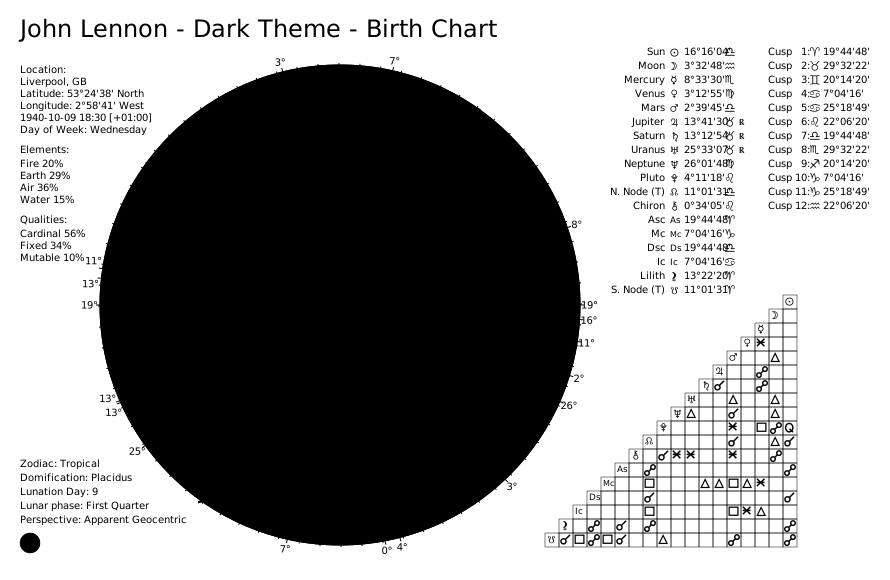
📘 For AI Agents & LLMs If you're building LLM-powered applications (or if you are an AI agent 🙂), see
AI_AGENT_GUIDE.mdfor a comprehensive, concise reference optimized for programmatic use and AI context.
Web API
If you want to use Kerykeion in a web application or for commercial or _closed-source_ purposes, you can try the dedicated web API:
It is open source and directly supports this project.
Donate
Maintaining this project requires substantial time and effort. The Astrologer API alone cannot cover the costs of full-time development. If you find Kerykeion valuable and would like to support further development, please consider donating:

Table of Contents
- Web API
- Donate
- Table of Contents
- Installation
- Quick Start
- Documentation Map
- Basic Usage
- Generate a SVG Chart
- Wheel Only Charts
- Report Generator
- AI Context Serializer
- Example: Retrieving Aspects
- Element \& Quality Distribution Strategies
- Ayanamsa (Sidereal Modes)
- House Systems
- Perspective Type
- Themes
- Alternative Initialization
- Lunar Nodes (Rahu \& Ketu)
- JSON Support
- Auto Generated Documentation
- Development
- Kerykeion v5.0 – What's New
- Integrating Kerykeion into Your Project
- License
- Contributing
- Citations
Installation
Kerykeion requires Python 3.9 or higher.
pip3 install kerykeion
Quick Start
from pathlib import Path
from kerykeion import AstrologicalSubjectFactory
from kerykeion.chart_data_factory import ChartDataFactory
from kerykeion.charts.chart_drawer import ChartDrawer

subject = AstrologicalSubjectFactory.from_birth_data(
    name="Example Person",
    year=1990, month=7, day=15,
    hour=10, minute=30,
    lng=12.4964,
    lat=41.9028,
    tz_str="Europe/Rome",
    online=False,
)

chart_data = ChartDataFactory.create_natal_chart_data(subject)
chart_drawer = ChartDrawer(chart_data=chart_data)

output_dir = Path("charts_output")
output_dir.mkdir(exist_ok=True)

chart_drawer.save_svg(output_path=output_dir, filename="example-natal")
print("Chart saved to", (output_dir / "example-natal.svg").resolve())
This script shows the recommended workflow:
- Create an
AstrologicalSubjectwith explicit coordinates and timezone (offline mode). - Build a
ChartDataModelthroughChartDataFactory. - Render the SVG via
ChartDrawer, saving it to a controlled folder (charts_output).
Use the same pattern for synastry, composite, transit, or return charts by swapping the factory method.
Documentation Map
- README (this file): Quick start, common recipes, and v5 overview. Full migration guide: MIGRATION_V4_TO_V5.md.
site-docs/(offline Markdown guides): Deep dives for each factory (chart_data_factory.md,charts.md,planetary_return_factory.md, etc.) with runnable snippets. Runpython scripts/test_markdown_snippets.py site-docsto validate them locally.- Auto-generated API Reference: Detailed model and function signatures straight from the codebase.
- Kerykeion website: Rendered documentation with additional context, tutorials, and showcase material.
Basic Usage
Below is a simple example illustrating the creation of an astrological subject and retrieving astrological details:
from kerykeion import AstrologicalSubjectFactory

# Create an instance of the AstrologicalSubjectFactory class.
# Arguments: Name, year, month, day, hour, minutes, city, nation
john = AstrologicalSubjectFactory.from_birth_data(
    "John Lennon", 1940, 10, 9, 18, 30,
    lng=-2.9833,
    lat=53.4,
    tz_str="Europe/London",
    online=False,
)

# Retrieve information about the Sun:
print(john.sun.model_dump_json())
# > {"name":"Sun","quality":"Cardinal","element":"Air","sign":"Lib","sign_num":6,"position":16.26789199474399,"abs_pos":196.267891994744,"emoji":"♎️","point_type":"AstrologicalPoint","house":"Sixth_House","retrograde":false}

# Retrieve information about the first house:
print(john.first_house.model_dump_json())
# > {"name":"First_House","quality":"Cardinal","element":"Fire","sign":"Ari","sign_num":0,"position":19.74676624176799,"abs_pos":19.74676624176799,"emoji":"♈️","point_type":"House","house":null,"retrograde":null}

# Retrieve the element of the Moon sign:
print(john.moon.element)
# > 'Air'
Working offline: pass
online=Falseand specifylng,lat, andtz_stras shown above.
Working online: setonline=Trueand providecity,nation, and a valid GeoNames username (seeAstrologicalSubjectFactory.from_birth_data()for details).
To avoid using GeoNames online, specify longitude, latitude, and timezone instead of city and nation:
john = AstrologicalSubjectFactory.from_birth_data(
    "John Lennon", 1940, 10, 9, 18, 30,
    lng=-2.9833,  # Longitude for Liverpool
    lat=53.4000,  # Latitude for Liverpool
    tz_str="Europe/London",  # Timezone for Liverpool
    city="Liverpool",
)
Generate a SVG Chart
All chart-rendering examples below create a local charts_output/ folder so the tests can write without touching your home directory. Feel free to change the path when integrating into your own projects.
To generate a chart, use the ChartDataFactory to pre-compute chart data, then ChartDrawer to create the visualization. This two-step process ensures clean separation between astrological calculations and chart rendering.
Tip:
The optimized way to open the generated SVG files is with a web browser (e.g., Chrome, Firefox).
To improve compatibility across different applications, you can use the remove_css_variables parameter when generating the SVG. This will inline all styles and eliminate CSS variables, resulting in an SVG that is more broadly supported.
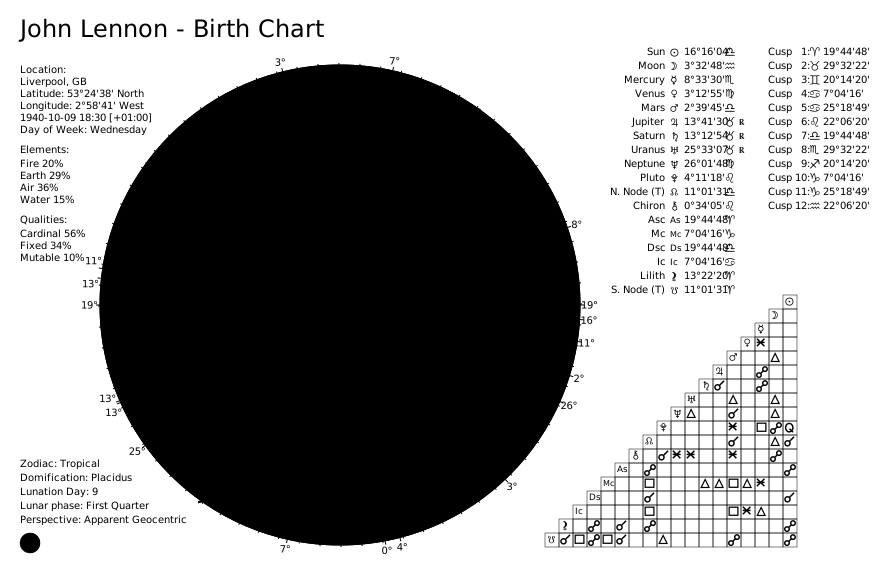
Birth Chart
from pathlib import Path
from kerykeion import AstrologicalSubjectFactory
from kerykeion.chart_data_factory import ChartDataFactory
from kerykeion.charts.chart_drawer import ChartDrawer

# Step 1: Create subject
john = AstrologicalSubjectFactory.from_birth_data(
    "John Lennon", 1940, 10, 9, 18, 30,
    lng=-2.9833,
    lat=53.4,
    tz_str="Europe/London",
    online=False,
)

# Step 2: Pre-compute chart data
chart_data = ChartDataFactory.create_natal_chart_data(john)

# Step 3: Create visualization
birth_chart_svg = ChartDrawer(chart_data=chart_data)

output_dir = Path("charts_output")
output_dir.mkdir(exist_ok=True)
birth_chart_svg.save_svg(output_path=output_dir, filename="john-lennon-natal")
The SVG file is saved under charts_output/john-lennon-natal.svg.
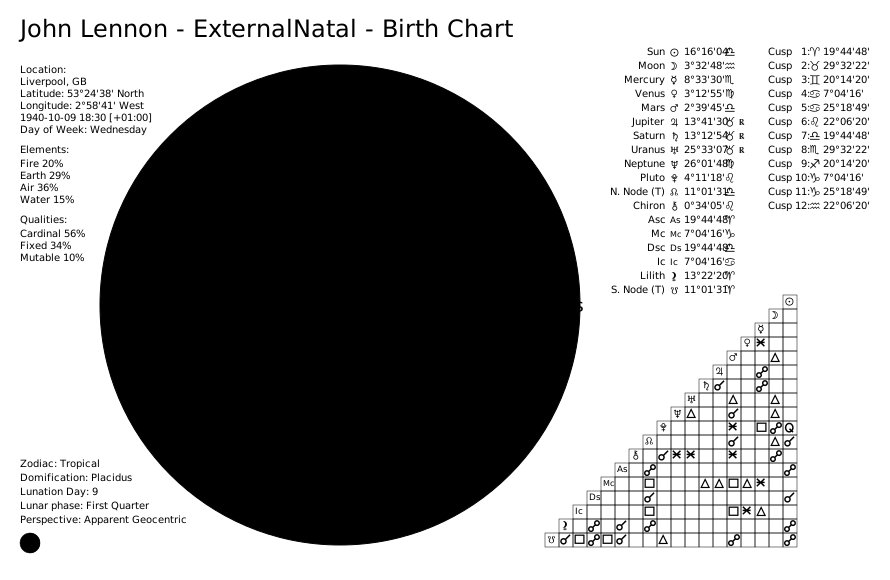
External Birth Chart
from pathlib import Path
from kerykeion import AstrologicalSubjectFactory
from kerykeion.chart_data_factory import ChartDataFactory
from kerykeion.charts.chart_drawer import ChartDrawer

# Step 1: Create subject
birth_chart = AstrologicalSubjectFactory.from_birth_data(
    "John Lennon", 1940, 10, 9, 18, 30,
    lng=-2.9833,
    lat=53.4,
    tz_str="Europe/London",
    online=False,
)

# Step 2: Pre-compute chart data for external natal chart
chart_data = ChartDataFactory.create_natal_chart_data(birth_chart)

# Step 3: Create visualization
birth_chart_svg = ChartDrawer(chart_data=chart_data)

output_dir = Path("charts_output")
output_dir.mkdir(exist_ok=True)
birth_chart_svg.save_svg(output_path=output_dir, filename="john-lennon-natal-external")
Synastry Chart
from pathlib import Path
from kerykeion import AstrologicalSubjectFactory
from kerykeion.chart_data_factory import ChartDataFactory
from kerykeion.charts.chart_drawer import ChartDrawer

# Step 1: Create subjects
first = AstrologicalSubjectFactory.from_birth_data(
    "John Lennon", 1940, 10, 9, 18, 30,
    lng=-2.9833,
    lat=53.4,
    tz_str="Europe/London",
    online=False,
)
second = AstrologicalSubjectFactory.from_birth_data(
    "Paul McCartney", 1942, 6, 18, 15, 30,
    lng=-2.9833,
    lat=53.4,
    tz_str="Europe/London",
    online=False,
)

# Step 2: Pre-compute synastry chart data
chart_data = ChartDataFactory.create_synastry_chart_data(first, second)

# Step 3: Create visualization
synastry_chart = ChartDrawer(chart_data=chart_data)

output_dir = Path("charts_output")
output_dir.mkdir(exist_ok=True)
synastry_chart.save_svg(output_path=output_dir, filename="lennon-mccartney-synastry")

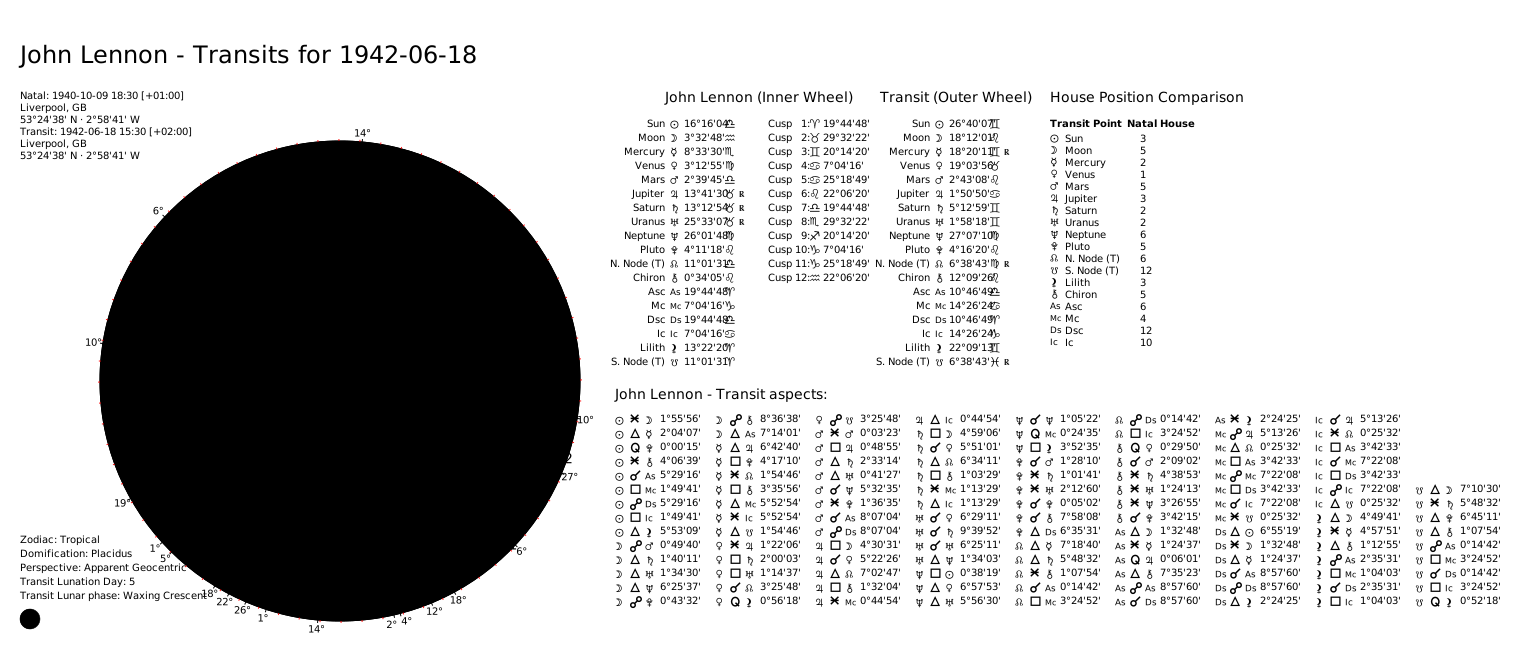
Transit Chart
from pathlib import Path
from kerykeion import AstrologicalSubjectFactory
from kerykeion.chart_data_factory import ChartDataFactory
from kerykeion.charts.chart_drawer import ChartDrawer

# Step 1: Create subjects
transit = AstrologicalSubjectFactory.from_birth_data(
    "Transit", 2025, 6, 8, 8, 45,
    lng=-84.3880,
    lat=33.7490,
    tz_str="America/New_York",
    online=False,
)
subject = AstrologicalSubjectFactory.from_birth_data(
    "John Lennon", 1940, 10, 9, 18, 30,
    lng=-2.9833,
    lat=53.4,
    tz_str="Europe/London",
    online=False,
)

# Step 2: Pre-compute transit chart data
chart_data = ChartDataFactory.create_transit_chart_data(subject, transit)

# Step 3: Create visualization
transit_chart = ChartDrawer(chart_data=chart_data)

output_dir = Path("charts_output")
output_dir.mkdir(exist_ok=True)
transit_chart.save_svg(output_path=output_dir, filename="john-lennon-transit")
Solar Return Chart (Dual Wheel)
from pathlib import Path
from kerykeion import AstrologicalSubjectFactory
from kerykeion.planetary_return_factory import PlanetaryReturnFactory
from kerykeion.chart_data_factory import ChartDataFactory
from kerykeion.charts.chart_drawer import ChartDrawer

# Step 1: Create natal subject
john = AstrologicalSubjectFactory.from_birth_data(
    "John Lennon", 1940, 10, 9, 18, 30,
    lng=-2.9833,
    lat=53.4,
    tz_str="Europe/London",
    online=False,
)

# Step 2: Calculate Solar Return subject (offline example with manual coordinates)
return_factory = PlanetaryReturnFactory(
    john,
    lng=-2.9833,
    lat=53.4000,
    tz_str="Europe/London",
    online=False
)
solar_return_subject = return_factory.next_return_from_date(1964, 10, 1, return_type="Solar")

# Step 3: Pre-compute return chart data (dual wheel: natal + solar return)
chart_data = ChartDataFactory.create_return_chart_data(john, solar_return_subject)

# Step 4: Create visualization
solar_return_chart = ChartDrawer(chart_data=chart_data)

output_dir = Path("charts_output")
output_dir.mkdir(exist_ok=True)
solar_return_chart.save_svg(output_path=output_dir, filename="john-lennon-solar-return-dual")
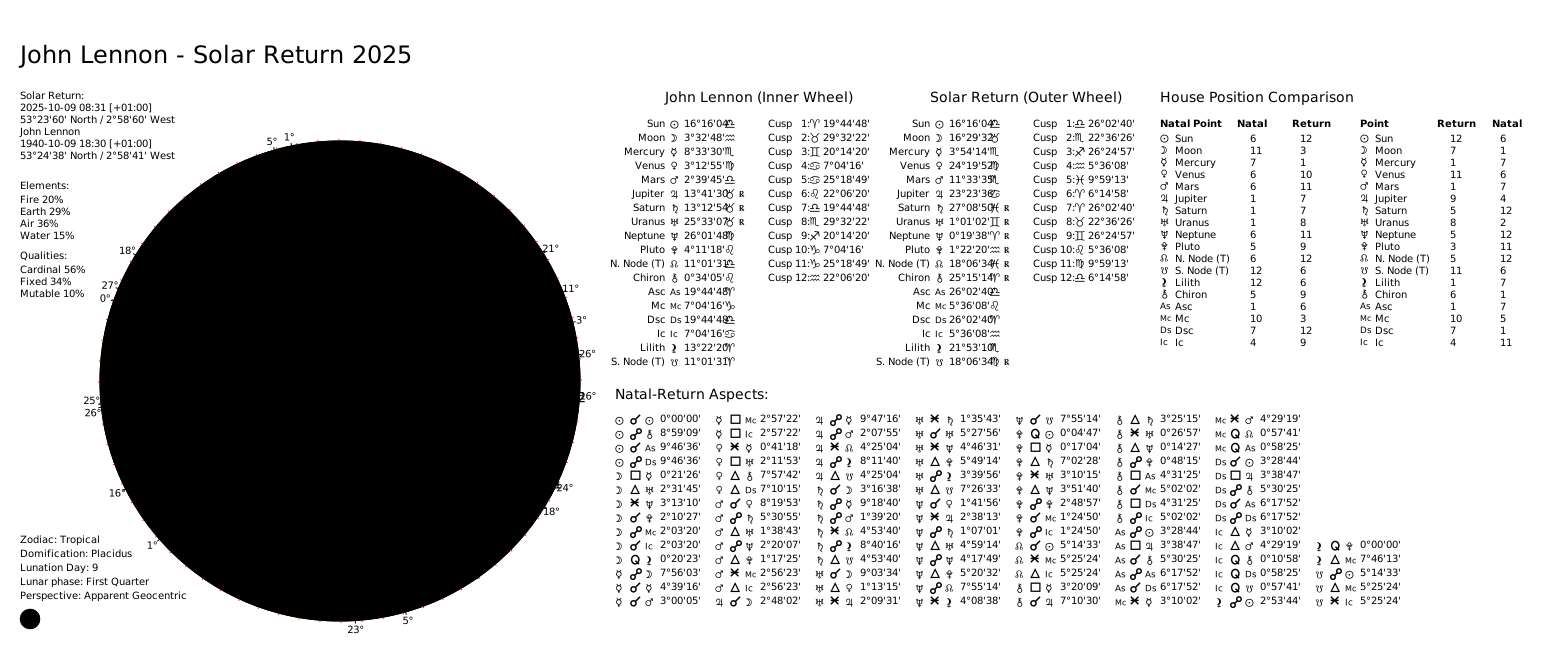
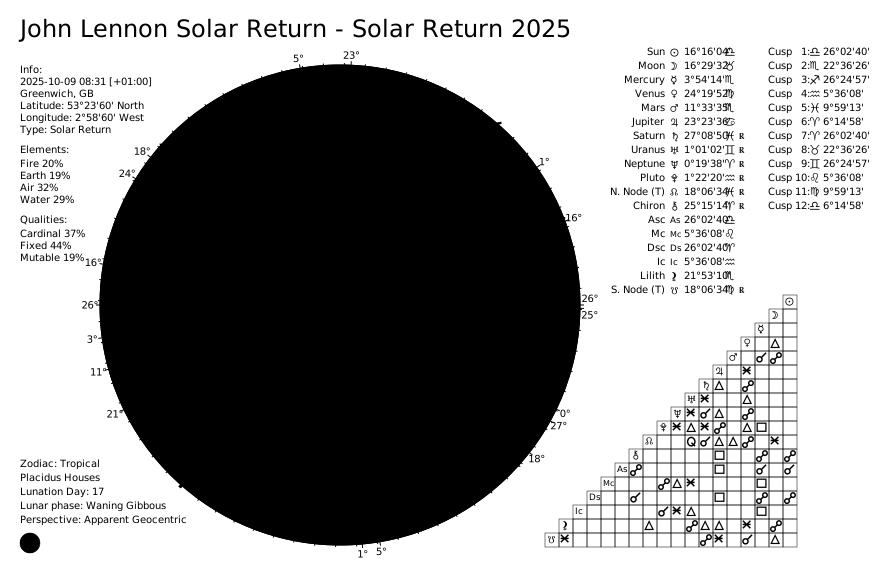
Solar Return Chart (Single Wheel)
from pathlib import Path
from kerykeion import AstrologicalSubjectFactory
from kerykeion.planetary_return_factory import PlanetaryReturnFactory
from kerykeion.chart_data_factory import ChartDataFactory
from kerykeion.charts.chart_drawer import ChartDrawer

# Step 1: Create natal subject
john = AstrologicalSubjectFactory.from_birth_data(
    "John Lennon", 1940, 10, 9, 18, 30,
    lng=-2.9833,
    lat=53.4,
    tz_str="Europe/London",
    online=False,
)

# Step 2: Calculate Solar Return subject (offline example with manual coordinates)
return_factory = PlanetaryReturnFactory(
    john,
    lng=-2.9833,
    lat=53.4000,
    tz_str="Europe/London",
    online=False
)
solar_return_subject = return_factory.next_return_from_date(1964, 10, 1, return_type="Solar")

# Step 3: Build a single-wheel return chart
chart_data = ChartDataFactory.create_single_wheel_return_chart_data(solar_return_subject)

# Step 4: Create visualization
single_wheel_chart = ChartDrawer(chart_data=chart_data)

output_dir = Path("charts_output")
output_dir.mkdir(exist_ok=True)
single_wheel_chart.save_svg(output_path=output_dir, filename="john-lennon-solar-return-single")
Lunar Return Chart
from pathlib import Path
from kerykeion import AstrologicalSubjectFactory
from kerykeion.planetary_return_factory import PlanetaryReturnFactory
from kerykeion.chart_data_factory import ChartDataFactory
from kerykeion.charts.chart_drawer import ChartDrawer

# Step 1: Create natal subject
john = AstrologicalSubjectFactory.from_birth_data(
    "John Lennon", 1940, 10, 9, 18, 30,
    lng=-2.9833,
    lat=53.4,
    tz_str="Europe/London",
    online=False,
)

# Step 2: Calculate Lunar Return subject
return_factory = PlanetaryReturnFactory(
    john,
    lng=-2.9833,
    lat=53.4000,
    tz_str="Europe/London",
    online=False
)
lunar_return_subject = return_factory.next_return_from_date(1964, 1, 1, return_type="Lunar")

# Step 3: Build a dual wheel (natal + lunar return)
lunar_return_chart_data = ChartDataFactory.create_return_chart_data(john, lunar_return_subject)
dual_wheel_chart = ChartDrawer(chart_data=lunar_return_chart_data)

output_dir = Path("charts_output")
output_dir.mkdir(exist_ok=True)
dual_wheel_chart.save_svg(output_path=output_dir, filename="john-lennon-lunar-return-dual")

# Optional: create a single-wheel lunar return
single_wheel_data = ChartDataFactory.create_single_wheel_return_chart_data(lunar_return_subject)
single_wheel_chart = ChartDrawer(chart_data=single_wheel_data)
single_wheel_chart.save_svg(output_path=output_dir, filename="john-lennon-lunar-return-single")
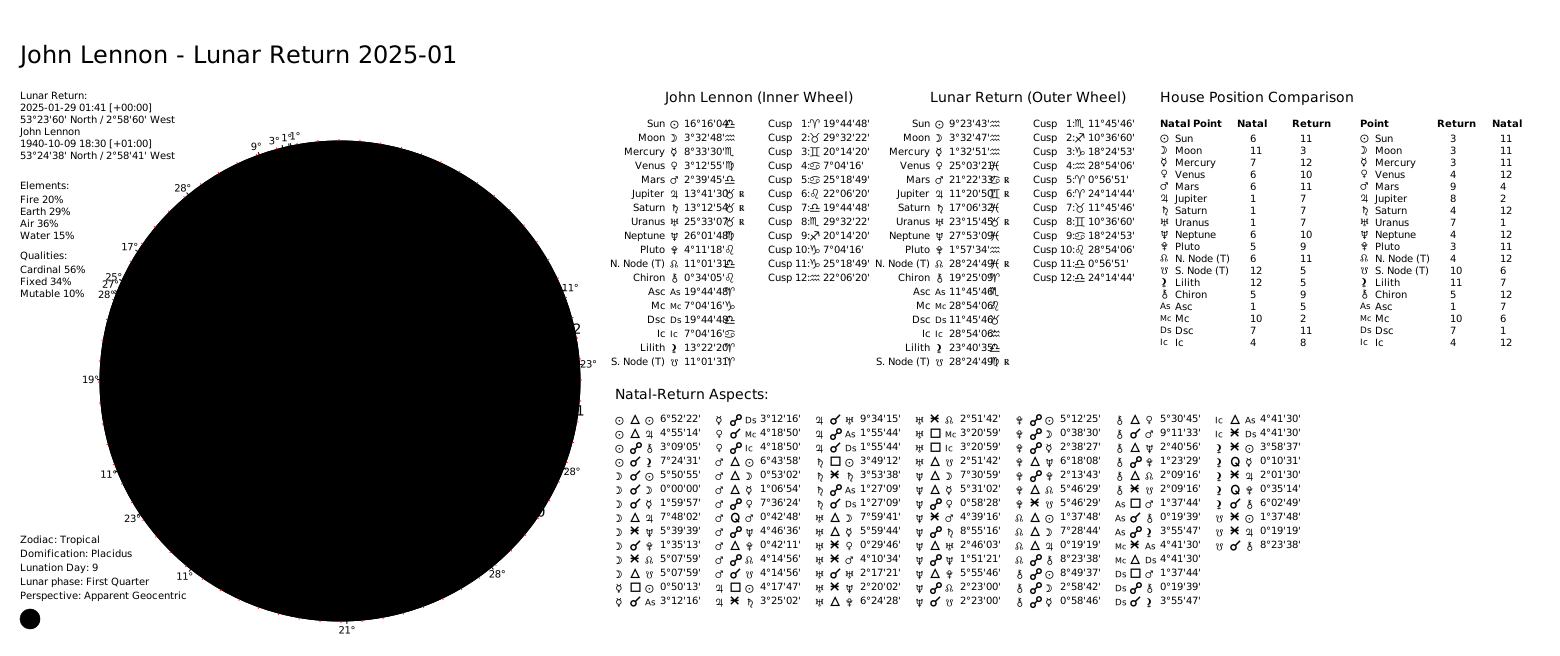
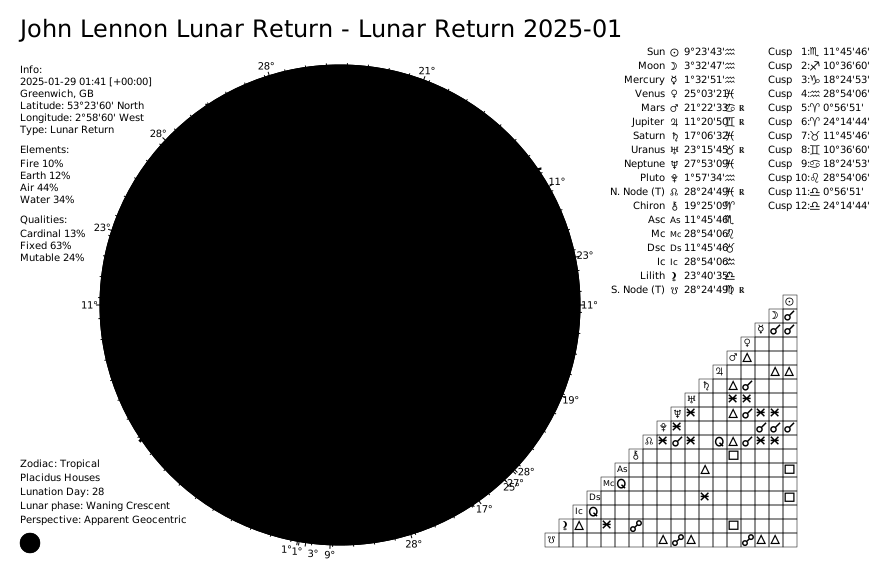
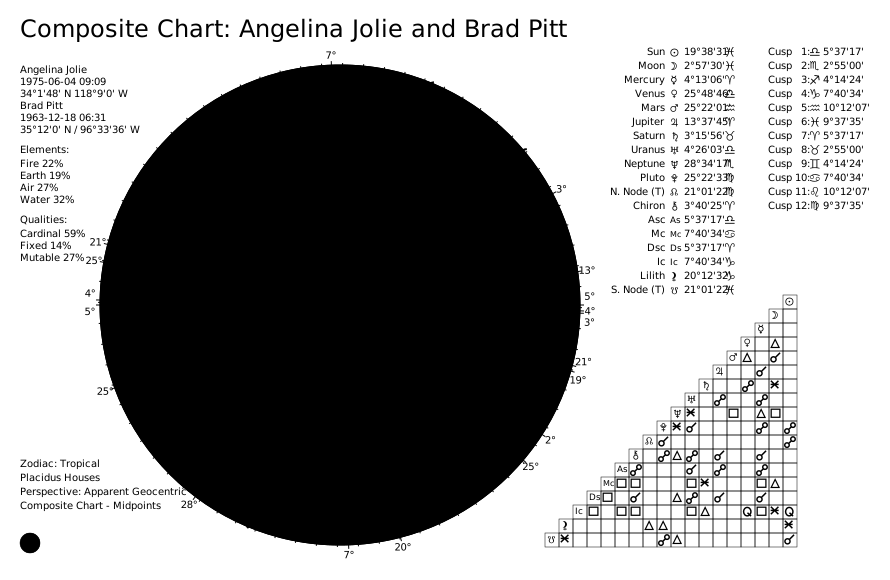
Composite Chart
from pathlib import Path
from kerykeion import CompositeSubjectFactory, AstrologicalSubjectFactory
from kerykeion.chart_data_factory import ChartDataFactory
from kerykeion.charts.chart_drawer import ChartDrawer

# Step 1: Create subjects (offline configuration)
angelina = AstrologicalSubjectFactory.from_birth_data(
    "Angelina Jolie", 1975, 6, 4, 9, 9,
    lng=-118.2437,
    lat=34.0522,
    tz_str="America/Los_Angeles",
    online=False,
)

brad = AstrologicalSubjectFactory.from_birth_data(
    "Brad Pitt", 1963, 12, 18, 6, 31,
    lng=-96.7069,
    lat=35.3273,
    tz_str="America/Chicago",
    online=False,
)

# Step 2: Create composite subject
factory = CompositeSubjectFactory(angelina, brad)
composite_model = factory.get_midpoint_composite_subject_model()

# Step 3: Pre-compute composite chart data
chart_data = ChartDataFactory.create_composite_chart_data(composite_model)

# Step 4: Create visualization
composite_chart = ChartDrawer(chart_data=chart_data)

output_dir = Path("charts_output")
output_dir.mkdir(exist_ok=True)
composite_chart.save_svg(output_path=output_dir, filename="jolie-pitt-composite")
Wheel Only Charts
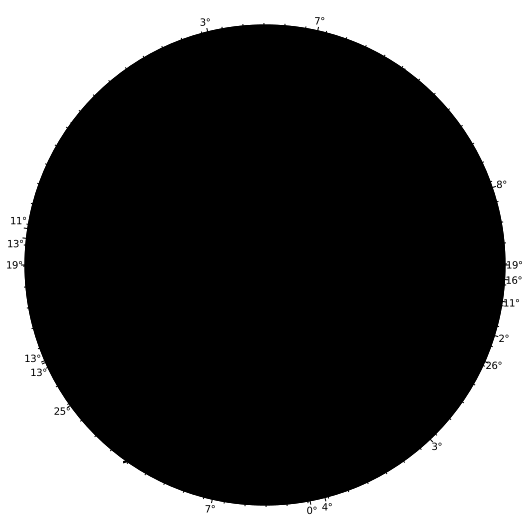
For _all_ the charts, you can generate a wheel-only chart by using the method makeWheelOnlySVG():
Birth Chart
from pathlib import Path
from kerykeion import AstrologicalSubjectFactory
from kerykeion.chart_data_factory import ChartDataFactory
from kerykeion.charts.chart_drawer import ChartDrawer

# Step 1: Create subject
birth_chart = AstrologicalSubjectFactory.from_birth_data(
    "John Lennon", 1940, 10, 9, 18, 30,
    lng=-2.9833,
    lat=53.4,
    tz_str="Europe/London",
    online=False,
)

# Step 2: Pre-compute chart data
chart_data = ChartDataFactory.create_natal_chart_data(birth_chart)

# Step 3: Create visualization
birth_chart_svg = ChartDrawer(chart_data=chart_data)

output_dir = Path("charts_output")
output_dir.mkdir(exist_ok=True)
birth_chart_svg.save_wheel_only_svg_file(output_path=output_dir, filename="john-lennon-natal-wheel")
Wheel Only Birth Chart (External)
from pathlib import Path
from kerykeion import AstrologicalSubjectFactory
from kerykeion.chart_data_factory import ChartDataFactory
from kerykeion.charts.chart_drawer import ChartDrawer

# Step 1: Create subject
birth_chart = AstrologicalSubjectFactory.from_birth_data(
    "John Lennon", 1940, 10, 9, 18, 30,
    lng=-2.9833,
    lat=53.4,
    tz_str="Europe/London",
    online=False,
)

# Step 2: Pre-compute external natal chart data
chart_data = ChartDataFactory.create_natal_chart_data(birth_chart)

# Step 3: Create visualization (external wheel view)
birth_chart_svg = ChartDrawer(chart_data=chart_data, external_view=True)

output_dir = Path("charts_output")
output_dir.mkdir(exist_ok=True)
birth_chart_svg.save_wheel_only_svg_file(output_path=output_dir, filename="john-lennon-natal-wheel-external")

Synastry Chart
from pathlib import Path
from kerykeion import AstrologicalSubjectFactory
from kerykeion.chart_data_factory import ChartDataFactory
from kerykeion.charts.chart_drawer import ChartDrawer

# Step 1: Create subjects
first = AstrologicalSubjectFactory.from_birth_data(
    "John Lennon", 1940, 10, 9, 18, 30,
    lng=-2.9833,
    lat=53.4,
    tz_str="Europe/London",
    online=False,
)
second = AstrologicalSubjectFactory.from_birth_data(
    "Paul McCartney", 1942, 6, 18, 15, 30,
    lng=-2.9833,
    lat=53.4,
    tz_str="Europe/London",
    online=False,
)

# Step 2: Pre-compute synastry chart data
chart_data = ChartDataFactory.create_synastry_chart_data(first, second)

# Step 3: Create visualization
synastry_chart = ChartDrawer(chart_data=chart_data)

output_dir = Path("charts_output")
output_dir.mkdir(exist_ok=True)
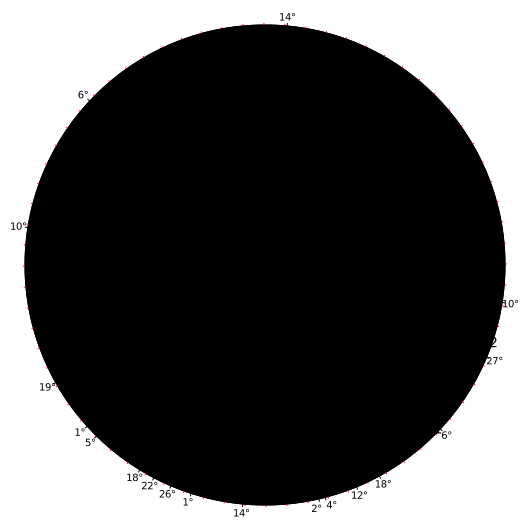
synastry_chart.save_wheel_only_svg_file(output_path=output_dir, filename="lennon-mccartney-synastry-wheel")
Change the Output Directory
To save the SVG file in a custom location, specify the output_path parameter in save_svg():
from pathlib import Path
from kerykeion import AstrologicalSubjectFactory
from kerykeion.chart_data_factory import ChartDataFactory
from kerykeion.charts.chart_drawer import ChartDrawer

# Step 1: Create subjects
first = AstrologicalSubjectFactory.from_birth_data(
    "John Lennon", 1940, 10, 9, 18, 30,
    lng=-2.9833,
    lat=53.4,
    tz_str="Europe/London",
    online=False,
)
second = AstrologicalSubjectFactory.from_birth_data(
    "Paul McCartney", 1942, 6, 18, 15, 30,
    lng=-2.9833,
    lat=53.4,
    tz_str="Europe/London",
    online=False,
)

# Step 2: Pre-compute synastry chart data
chart_data = ChartDataFactory.create_synastry_chart_data(first, second)

# Step 3: Create visualization with custom output directory
synastry_chart = ChartDrawer(chart_data=chart_data)

output_dir = Path("charts_output")
output_dir.mkdir(exist_ok=True)
synastry_chart.save_svg(output_path=output_dir)
print("Saved to", (output_dir / f"{synastry_chart.first_obj.name} - Synastry Chart.svg").resolve())
Change Language
You can switch chart language by passing chart_language to the ChartDrawer class:
from pathlib import Path
from kerykeion import AstrologicalSubjectFactory
from kerykeion.chart_data_factory import ChartDataFactory
from kerykeion.charts.chart_drawer import ChartDrawer

# Step 1: Create subject
birth_chart = AstrologicalSubjectFactory.from_birth_data(
    "John Lennon", 1940, 10, 9, 18, 30,
    lng=-2.9833,
    lat=53.4,
    tz_str="Europe/London",
    online=False,
)

# Step 2: Pre-compute chart data
chart_data = ChartDataFactory.create_natal_chart_data(birth_chart)

# Step 3: Create visualization with Italian language
birth_chart_svg = ChartDrawer(
    chart_data=chart_data,
    chart_language="IT"  # Change to Italian
)

output_dir = Path("charts_output")
output_dir.mkdir(exist_ok=True)
birth_chart_svg.save_svg(output_path=output_dir, filename="john-lennon-natal-it")
You can also provide custom labels (or introduce a brand-new language) by passing
a dictionary to language_pack. Only the keys you supply are merged on top of the
built-in strings:
from pathlib import Path
from kerykeion import AstrologicalSubjectFactory
from kerykeion.chart_data_factory import ChartDataFactory
from kerykeion.charts.chart_drawer import ChartDrawer

birth_chart = AstrologicalSubjectFactory.from_birth_data(
    "John Lennon", 1940, 10, 9, 18, 30,
    lng=-2.9833,
    lat=53.4,
    tz_str="Europe/London",
    online=False,
)
chart_data = ChartDataFactory.create_natal_chart_data(birth_chart)

custom_labels = {
    "PT": {
        "info": "Informações",
        "celestial_points": {"Sun": "Sol", "Moon": "Lua"},
    }
}

custom_chart = ChartDrawer(
    chart_data=chart_data,
    chart_language="PT",
    language_pack=custom_labels["PT"],
)

output_dir = Path("charts_output")
output_dir.mkdir(exist_ok=True)
custom_chart.save_svg(output_path=output_dir, filename="john-lennon-natal-pt")
More details here.
The available languages are:
- EN (English)
- FR (French)
- PT (Portuguese)
- ES (Spanish)
- TR (Turkish)
- RU (Russian)
- IT (Italian)
- CN (Chinese)
- DE (German)
Minified SVG
To generate a minified SVG, set minify_svg=True in the makeSVG() method:
from pathlib import Path
from kerykeion import AstrologicalSubjectFactory
from kerykeion.chart_data_factory import ChartDataFactory
from kerykeion.charts.chart_drawer import ChartDrawer

# Step 1: Create subject
birth_chart = AstrologicalSubjectFactory.from_birth_data(
    "John Lennon", 1940, 10, 9, 18, 30,
    lng=-2.9833,
    lat=53.4,
    tz_str="Europe/London",
    online=False,
)

# Step 2: Pre-compute chart data
chart_data = ChartDataFactory.create_natal_chart_data(birth_chart)

# Step 3: Create visualization
birth_chart_svg = ChartDrawer(chart_data=chart_data)

output_dir = Path("charts_output")
output_dir.mkdir(exist_ok=True)
birth_chart_svg.save_svg(
    output_path=output_dir,
    filename="john-lennon-natal-minified",
    minify=True,
)
SVG without CSS Variables
To generate an SVG without CSS variables, set remove_css_variables=True in the makeSVG() method:
from pathlib import Path
from kerykeion import AstrologicalSubjectFactory
from kerykeion.chart_data_factory import ChartDataFactory
from kerykeion.charts.chart_drawer import ChartDrawer

# Step 1: Create subject
birth_chart = AstrologicalSubjectFactory.from_birth_data(
    "John Lennon", 1940, 10, 9, 18, 30,
    lng=-2.9833,
    lat=53.4,
    tz_str="Europe/London",
    online=False,
)

# Step 2: Pre-compute chart data
chart_data = ChartDataFactory.create_natal_chart_data(birth_chart)

# Step 3: Create visualization
birth_chart_svg = ChartDrawer(chart_data=chart_data)

output_dir = Path("charts_output")
output_dir.mkdir(exist_ok=True)
birth_chart_svg.save_svg(
    output_path=output_dir,
    filename="john-lennon-natal-no-css-variables",
    remove_css_variables=True,
)
This will inline all styles and eliminate CSS variables, resulting in an SVG that is more broadly supported.
Grid Only SVG
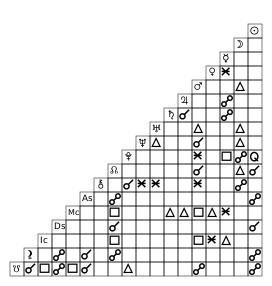
It's possible to generate a grid-only SVG, useful for creating a custom layout. To do this, use the save_aspect_grid_only_svg_file() method:
from pathlib import Path
from kerykeion import AstrologicalSubjectFactory
from kerykeion.chart_data_factory import ChartDataFactory
from kerykeion.charts.chart_drawer import ChartDrawer

# Step 1: Create subjects
birth_chart = AstrologicalSubjectFactory.from_birth_data(
    "John Lennon", 1940, 10, 9, 18, 30,
    lng=-2.9833,
    lat=53.4,
    tz_str="Europe/London",
    online=False,
)
second = AstrologicalSubjectFactory.from_birth_data(
    "Paul McCartney", 1942, 6, 18, 15, 30,
    lng=-2.9833,
    lat=53.4,
    tz_str="Europe/London",
    online=False,
)

# Step 2: Pre-compute synastry chart data
chart_data = ChartDataFactory.create_synastry_chart_data(birth_chart, second)

# Step 3: Create visualization with dark theme
aspect_grid_chart = ChartDrawer(chart_data=chart_data, theme="dark")

output_dir = Path("charts_output")
output_dir.mkdir(exist_ok=True)
aspect_grid_chart.save_aspect_grid_only_svg_file(output_path=output_dir, filename="lennon-mccartney-aspect-grid")
Report Generator
ReportGenerator mirrors the chart-type dispatch of ChartDrawer. It accepts raw AstrologicalSubjectModel instances as well as any ChartDataModel produced by ChartDataFactory—including natal, composite, synastry, transit, and planetary return charts—and renders the appropriate textual report automatically.
Quick Examples
from kerykeion import ReportGenerator, AstrologicalSubjectFactory, ChartDataFactory

# Subject-only report
subject = AstrologicalSubjectFactory.from_birth_data(
    "Sample Natal", 1990, 7, 21, 14, 45,
    lng=12.4964,
    lat=41.9028,
    tz_str="Europe/Rome",
    online=False,
)
ReportGenerator(subject).print_report(include_aspects=False)

# Single-chart data (elements, qualities, aspects enabled)
natal_data = ChartDataFactory.create_natal_chart_data(subject)
ReportGenerator(natal_data).print_report(max_aspects=10)

# Dual-chart data (synastry, transit, dual return, …)
partner = AstrologicalSubjectFactory.from_birth_data(
    "Sample Partner", 1992, 11, 5, 9, 30,
    lng=12.4964,
    lat=41.9028,
    tz_str="Europe/Rome",
    online=False,
)
synastry_data = ChartDataFactory.create_synastry_chart_data(subject, partner)
ReportGenerator(synastry_data).print_report(max_aspects=12)
Each report contains:
- A chart-aware title summarising the subject(s) and chart type
- Birth/event metadata and configuration settings
- Celestial points with sign, position, daily motion, declination, retrograde flag, and house
- House cusp tables for every subject involved
- Lunar phase details when available
- Element/quality distributions and active configuration summaries (for chart data)
- Aspect listings tailored for single or dual charts, with symbols for type and movement
- Dual-chart extras such as house comparisons and relationship scores (when provided by the data)
Section Access
All section helpers remain available for targeted output:
from kerykeion import ReportGenerator, AstrologicalSubjectFactory, ChartDataFactory

subject = AstrologicalSubjectFactory.from_birth_data(
    "Sample Natal", 1990, 7, 21, 14, 45,
    lng=12.4964,
    lat=41.9028,
    tz_str="Europe/Rome",
    online=False,
)
natal_data = ChartDataFactory.create_natal_chart_data(subject)

report = ReportGenerator(natal_data)
sections = report.generate_report(max_aspects=5).split("\n\n")
for section in sections[:3]:
    print(section)
Refer to the refreshed Report Documentation for end-to-end examples covering every supported chart model.
AI Context Serializer
The context_serializer module transforms Kerykeion data models into precise, non-qualitative text optimized for LLM consumption. It provides the essential "ground truth" data needed for AI agents to generate accurate astrological interpretations.
Quick Example
from kerykeion import AstrologicalSubjectFactory, to_context

# Create a subject
subject = AstrologicalSubjectFactory.from_birth_data(
    "John Doe", 1990, 1, 1, 12, 0, "London", "GB"
)

# Generate AI-ready context
context = to_context(subject)
print(context)
Output:
Chart for John Doe
Birth data: 1990-01-01 12:00, London, GB
...
Celestial Points:
  - Sun at 10.81° in Capricorn in Tenth House, quality: Cardinal, element: Earth...
  - Moon at 25.60° in Aquarius in Eleventh House, quality: Fixed, element: Air...
Key Features:
- Standardized Output: Consistent format for Natal, Synastry, Composite, and Return charts.
- Non-Qualitative: Provides raw data (positions, aspects) without interpretive bias.
- Prompt-Ready: Designed to be injected directly into system prompts.
For comprehensive documentation and examples, see site/docs/context_serializer.md.
Example: Retrieving Aspects
Kerykeion provides a unified AspectsFactory class for calculating astrological aspects within single charts or between two charts:
from kerykeion import AspectsFactory, AstrologicalSubjectFactory

# Create astrological subjects
jack = AstrologicalSubjectFactory.from_birth_data(
    "Jack", 1990, 6, 15, 15, 15,
    lng=12.4964,
    lat=41.9028,
    tz_str="Europe/Rome",
    online=False,
)
jane = AstrologicalSubjectFactory.from_birth_data(
    "Jane", 1991, 10, 25, 21, 0,
    lng=12.4964,
    lat=41.9028,
    tz_str="Europe/Rome",
    online=False,
)

# For single chart aspects (natal, return, composite, etc.)
single_chart_result = AspectsFactory.single_chart_aspects(jack)
print(f"Found {len(single_chart_result.aspects)} aspects in Jack's chart")
print(single_chart_result.aspects[0])

# For dual chart aspects (synastry, transits, comparisons, etc.)
dual_chart_result = AspectsFactory.dual_chart_aspects(jack, jane)
print(f"Found {len(dual_chart_result.aspects)} aspects between Jack and Jane's charts")
print(dual_chart_result.aspects[0])

# Each AspectModel includes:
# - p1_name, p2_name: Planet/point names
# - aspect: Aspect type (conjunction, trine, square, etc.)
# - orbit: Orb tolerance in degrees
# - aspect_degrees: Exact degrees for the aspect (0, 60, 90, 120, 180, etc.)
# - color: Hex color code for visualization
Advanced Usage with Custom Settings:
# You can also customize aspect calculations with custom orb settings
from kerykeion.settings.config_constants import DEFAULT_ACTIVE_ASPECTS

# Modify aspect settings if needed
custom_aspects = DEFAULT_ACTIVE_ASPECTS.copy()
# ... modify as needed

# The factory automatically uses the configured settings for orb calculations
# and filters aspects based on relevance and orb thresholds
Element & Quality Distribution Strategies
ChartDataFactory now offers two strategies for calculating element and modality totals. The default "weighted" mode leans on a curated map that emphasises core factors (for example sun, moon, and ascendant weight 2.0, angles such as medium_coeli 1.5, personal planets 1.5, social planets 1.0, outers 0.5, and minor bodies 0.3–0.8). Provide distribution_method="pure_count" when you want every active point to contribute equally.
You can refine the weighting without rebuilding the dictionary: pass lowercase point names to custom_distribution_weights and use "__default__" to override the fallback value applied to entries that are not listed explicitly.
from kerykeion import AstrologicalSubjectFactory, ChartDataFactory

subject = AstrologicalSubjectFactory.from_birth_data(
    "Sample", 1986, 4, 12, 8, 45,
    lng=11.3426,
    lat=44.4949,
    tz_str="Europe/Rome",
    online=False,
)

# Equal weighting: every active point counts once
pure_data = ChartDataFactory.create_natal_chart_data(
    subject,
    distribution_method="pure_count",
)

# Custom emphasis: boost the Sun, soften everything else
weighted_data = ChartDataFactory.create_natal_chart_data(
    subject,
    distribution_method="weighted",
    custom_distribution_weights={
        "sun": 3.0,
        "__default__": 0.75,
    },
)

print(pure_data.element_distribution.fire)
print(weighted_data.element_distribution.fire)
All convenience helpers (create_synastry_chart_data, create_transit_chart_data, returns, and composites) forward the same keyword-only parameters, so you can keep a consistent weighting scheme across every chart type.
For an extended walkthrough (including category breakdowns of the default map), see site-docs/element_quality_distribution.md.
Ayanamsa (Sidereal Modes)
By default, the zodiac type is Tropical. To use Sidereal, specify the sidereal mode:
johnny = AstrologicalSubjectFactory.from_birth_data(
    "Johnny Depp", 1963, 6, 9, 0, 0,
    lng=-87.1112,
    lat=37.7719,
    tz_str="America/Chicago",
    online=False,
    zodiac_type="Sidereal",
    sidereal_mode="LAHIRI"
)
More examples here.
Full list of supported sidereal modes here.
House Systems
By default, houses are calculated using Placidus. Configure a different house system as follows:
johnny = AstrologicalSubjectFactory.from_birth_data(
    "Johnny Depp", 1963, 6, 9, 0, 0,
    lng=-87.1112,
    lat=37.7719,
    tz_str="America/Chicago",
    online=False,
    houses_system_identifier="M"
)
More examples here.
Full list of supported house systems here.
So far all the available houses system in the Swiss Ephemeris are supported but the Gauquelin Sectors.
Perspective Type
By default, Kerykeion uses the Apparent Geocentric perspective (the most standard in astrology). Other perspectives (e.g., Heliocentric) can be set this way:
johnny = AstrologicalSubjectFactory.from_birth_data(
    "Johnny Depp", 1963, 6, 9, 0, 0,
    lng=-87.1112,
    lat=37.7719,
    tz_str="America/Chicago",
    online=False,
    perspective_type="Heliocentric"
)
More examples here.
Full list of supported perspective types here.
Themes
Kerykeion provides several chart themes:
- Classic (default)
- Dark
- Dark High Contrast
- Light
- Strawberry
- Black & White (optimized for monochrome printing)
Each theme offers a distinct visual style, allowing you to choose the one that best suits your preferences or presentation needs. If you prefer more control over the appearance, you can opt not to set any theme, making it easier to customize the chart by overriding the default CSS variables. For more detailed instructions on how to apply themes, check the documentation
The Black & White theme renders glyphs, rings, and aspects in solid black on light backgrounds, designed for crisp B/W prints (PDF or paper) without sacrificing legibility.
Here's an example of how to set the theme:
from pathlib import Path
from kerykeion import AstrologicalSubjectFactory
from kerykeion.chart_data_factory import ChartDataFactory
from kerykeion.charts.chart_drawer import ChartDrawer

# Step 1: Create subject
dark_theme_subject = AstrologicalSubjectFactory.from_birth_data(
    "John Lennon - Dark Theme", 1940, 10, 9, 18, 30,
    lng=-2.9833,
    lat=53.4,
    tz_str="Europe/London",
    online=False,
)

# Step 2: Pre-compute chart data
chart_data = ChartDataFactory.create_natal_chart_data(dark_theme_subject)

# Step 3: Create visualization with dark high contrast theme
dark_theme_natal_chart = ChartDrawer(chart_data=chart_data, theme="dark-high-contrast")

output_dir = Path("charts_output")
output_dir.mkdir(exist_ok=True)
dark_theme_natal_chart.save_svg(output_path=output_dir, filename="john-lennon-natal-dark-high-contrast")

Alternative Initialization
Create an AstrologicalSubjectModel from a UTC ISO 8601 string:
from kerykeion import AstrologicalSubjectFactory

subject = AstrologicalSubjectFactory.from_iso_utc_time(
    name="Johnny Depp",
    iso_utc_time="1963-06-09T05:00:00Z",
    city="Owensboro",
    nation="US",
    lng=-87.1112,
    lat=37.7719,
    tz_str="America/Chicago",
    online=False,
)

print(subject.iso_formatted_local_datetime)
If you prefer automatic geocoding, set online=True and provide your GeoNames credentials via geonames_username.
Lunar Nodes (Rahu & Ketu)
Kerykeion supports both True and Mean Lunar Nodes:
- True North Lunar Node:
"true_node"(name kept without "north" for backward compatibility). - True South Lunar Node:
"true_south_node". - Mean North Lunar Node:
"mean_node"(name kept without "north" for backward compatibility). - Mean South Lunar Node:
"mean_south_node".
In instances of the classes used to generate aspects and SVG charts, only the mean nodes are active. To activate the true nodes, you need to pass the active_points parameter to the ChartDataFactory methods.
Example:
from pathlib import Path
from kerykeion import AstrologicalSubjectFactory
from kerykeion.chart_data_factory import ChartDataFactory
from kerykeion.charts.chart_drawer import ChartDrawer

# Step 1: Create subject
subject = AstrologicalSubjectFactory.from_birth_data(
    "John Lennon", 1940, 10, 9, 18, 30,
    lng=-2.9833,
    lat=53.4,
    tz_str="Europe/London",
    online=False,
)

# Step 2: Pre-compute chart data with custom active points including true nodes
chart_data = ChartDataFactory.create_natal_chart_data(
    subject,
    active_points=[
        "Sun",
        "Moon",
        "Mercury",
        "Venus",
        "Mars",
        "Jupiter",
        "Saturn",
        "Uranus",
        "Neptune",
        "Pluto",
        "Mean_Node",
        "Mean_South_Node",
        "True_Node",       # Activates True North Node
        "True_South_Node", # Activates True South Node
        "Ascendant",
        "Medium_Coeli",
        "Descendant",
        "Imum_Coeli"
    ]
)

# Step 3: Create visualization
chart = ChartDrawer(chart_data=chart_data)

output_dir = Path("charts_output")
output_dir.mkdir(exist_ok=True)
chart.save_svg(output_path=output_dir, filename="johnny-depp-custom-points")
JSON Support
You can serialize the astrological subject (the base data used throughout the library) to JSON:
from kerykeion import AstrologicalSubjectFactory

johnny = AstrologicalSubjectFactory.from_birth_data(
    "Johnny Depp", 1963, 6, 9, 0, 0,
    lng=-87.1112,
    lat=37.7719,
    tz_str="America/Chicago",
    online=False,
)

print(johnny.model_dump_json(indent=2))
Auto Generated Documentation
You can find auto-generated documentation here. Most classes and functions include docstrings.
Development
Clone the repository or download the ZIP via the GitHub interface.
Kerykeion v5.0 – What's New
Kerykeion v5 is a complete redesign that modernizes the library with a data-first approach, factory-based architecture, and Pydantic 2 models. This version brings significant improvements in API design, type safety, and extensibility.
Looking to upgrade from v4? See the dedicated migration guide: MIGRATION_V4_TO_V5.md.
🎯 Key Highlights
Factory-Centered Architecture
The old class-based approach has been replaced with a modern factory pattern:
AstrologicalSubjectFactory: Replaces the oldAstrologicalSubjectclassChartDataFactory: Pre-computes enriched chart data (elements, qualities, aspects)ChartDrawer: Pure SVG rendering separated from calculationsAspectsFactory: Unified aspects calculation for natal and synastry chartsPlanetaryReturnFactory: Solar and Lunar returns computationHouseComparisonFactory: House overlay analysis for synastryRelationshipScoreFactory: Compatibility scoring between charts
Old v4 API:
from pathlib import Path
from kerykeion import AstrologicalSubject, KerykeionChartSVG

# v4 - Class-based approach
output_dir = Path("charts_output")
output_dir.mkdir(exist_ok=True)

subject = AstrologicalSubject(
    "John", 1990, 1, 1, 12, 0,
    lng=-0.1276,
    lat=51.5074,
    tz_str="Europe/London",
    online=False,
)
chart = KerykeionChartSVG(subject, new_output_directory=output_dir)
chart.makeSVG()
New v5 API:
from pathlib import Path
from kerykeion import AstrologicalSubjectFactory, ChartDataFactory, ChartDrawer

# v5 - Factory-based approach with separation of concerns
subject = AstrologicalSubjectFactory.from_birth_data(
    "John", 1990, 1, 1, 12, 0,
    lng=-0.1276,
    lat=51.5074,
    tz_str="Europe/London",
    online=False,
)
chart_data = ChartDataFactory.create_natal_chart_data(subject)
drawer = ChartDrawer(chart_data=chart_data)

output_dir = Path("charts_output")
output_dir.mkdir(exist_ok=True)
drawer.save_svg(output_path=output_dir, filename="john-factory-demo")
Pydantic 2 Models & Type Safety
All data structures are now strongly typed Pydantic models:
AstrologicalSubjectModel: Subject data with full validationChartDataModel: Enriched chart data with elements, qualities, aspectsAspectModellist: Raw aspect entries directly onChartDataModel.aspectsPlanetReturnModel: Planetary return dataElementDistributionModel: Element statistics (fire, earth, air, water)QualityDistributionModel: Quality statistics (cardinal, fixed, mutable)
All models support:
- JSON serialization/deserialization
- Dictionary export
- Subscript access
- Full IDE autocomplete and type checking
Enhanced Features
- Speed & Declination: All celestial points now include daily motion speed and declination
- Element & Quality Analysis: Automatic calculation of element/quality distributions
- Relationship Scoring: Built-in compatibility analysis for synastry
- House Comparison: Detailed house overlay analysis
- Transit Time Ranges: Advanced transit tracking over time periods
- Report Module: Comprehensive text reports with ASCII tables
- Axis Orb Control: Chart axes now share the same orb as planets by default; pass the keyword-only
axis_orb_limitto return to a traditional, tighter axis filtering when you need it. - Element Weight Strategies: Element and quality stats now default to a curated weighted balance; pass
distribution_methodorcustom_distribution_weightswhen you need equal counts or bespoke weightings (including a__default__fallback) across any chart factory helper.
📦 Other Notable Changes
- Packaging: Migrated from Poetry to PEP 621 + Hatchling with
uv.lock - Settings: Centralized in
kerykeion.schemasandkerykeion.settings - Configuration: Default chart presets consolidated in
kerykeion/settings/chart_defaults.py - Type System: All literals consolidated in
kr_literals.py - Performance: Caching improvements with
functools.lru_cache - Testing: 376 tests with 87% coverage, regenerated fixtures for v5
🎨 New Themes
Additional chart themes added:
classic(default)darkdark-high-contrastlightstrawberryblack-and-white
📚 Resources
- Full Release Notes: v5.0.0.md
- Migration Guide (v4 → v5): MIGRATION_V4_TO_V5.md
- Documentation: kerykeion.readthedocs.io
- API Reference: kerykeion.net/pydocs
- Examples: See the
examples/folder for runnable code - Support: GitHub Discussions -
Integrating Kerykeion into Your Project
If you would like to incorporate Kerykeion's astrological features into your application, please reach out via email. Whether you need custom features, support, or specialized consulting, I am happy to discuss potential collaborations.
License
This project is covered under the AGPL-3.0 License. For detailed information, please see the LICENSE file. If you have questions, feel free to contact me at kerykeion.astrology@gmail.com.
As a rule of thumb, if you use this library in a project, you should open-source that project under a compatible license. Alternatively, if you wish to keep your source closed, consider using the AstrologerAPI, which is AGPL-3.0 compliant and also helps support the project.
Since the AstrologerAPI is an external third-party service, using it does _not_ require your code to be open-source.
Contributing
Contributions are welcome! Feel free to submit pull requests or report issues.
By submitting a contribution, you agree to assign the copyright of that contribution to the maintainer. The project stays openly available under the AGPL for everyone, while the re-licensing option helps sustain future development. Your authorship remains acknowledged in the commit history and release notes.
Citations
If using Kerykeion in published or academic work, please cite as follows:
Battaglia, G. (2025). Kerykeion: A Python Library for Astrological Calculations and Chart Generation.
https://github.com/g-battaglia/kerykeion
 1# -*- coding: utf-8 -*-
 2"""
 3This is part of Kerykeion (C) 2025 Giacomo Battaglia
 4
 5.. include:: ../README.md
 6"""
 7
 8# Local
 9from .aspects import AspectsFactory
10from .astrological_subject_factory import AstrologicalSubjectFactory
11from .chart_data_factory import ChartDataFactory
12from .context_serializer import to_context
13from .schemas import KerykeionException
14from .schemas.kr_models import (
15    ChartDataModel,
16    SingleChartDataModel,
17    DualChartDataModel,
18    ElementDistributionModel,
19    QualityDistributionModel,
20    HouseComparisonModel,
21)
22from .charts.chart_drawer import ChartDrawer
23from .composite_subject_factory import CompositeSubjectFactory
24from .ephemeris_data_factory import EphemerisDataFactory
25from .house_comparison.house_comparison_factory import HouseComparisonFactory
26from .planetary_return_factory import PlanetaryReturnFactory, PlanetReturnModel
27from .relationship_score_factory import RelationshipScoreFactory
28from .report import ReportGenerator
29from .settings import KerykeionSettingsModel
30from .transits_time_range_factory import TransitsTimeRangeFactory
31from .backword import (
32    AstrologicalSubject,  # Legacy wrapper
33    KerykeionChartSVG,    # Legacy wrapper
34    NatalAspects,         # Legacy wrapper
35    SynastryAspects,      # Legacy wrapper
36)
37
38__all__ = [
39    "AspectsFactory",
40    "AstrologicalSubjectFactory",
41    "ChartDataFactory",
42    "ChartDataModel",
43    "SingleChartDataModel",
44    "DualChartDataModel",
45    "ElementDistributionModel",
46    "QualityDistributionModel",
47    "ChartDrawer",
48    "CompositeSubjectFactory",
49    "EphemerisDataFactory",
50    "HouseComparisonFactory",
51    "HouseComparisonModel",
52    "KerykeionException",
53    "PlanetaryReturnFactory",
54    "PlanetReturnModel",
55    "RelationshipScoreFactory",
56    "ReportGenerator",
57    "KerykeionSettingsModel",
58    "TransitsTimeRangeFactory",
59    "to_context",
60    # Legacy (v4) exported names for backward compatibility
61    "AstrologicalSubject",
62    "KerykeionChartSVG",
63    "NatalAspects",
64    "SynastryAspects",
65]
41class AspectsFactory: 42 """ 43 Unified factory class for creating both single chart and dual chart aspects analysis. 44 45 This factory provides methods to calculate all aspects within a single chart or 46 between two charts. It consolidates the common functionality between different 47 types of aspect calculations while providing specialized methods for each type. 48 49 The factory provides both comprehensive and filtered aspect lists based on orb settings 50 and relevance criteria. 51 52 Key Features: 53 - Calculates aspects within a single chart (natal, returns, composite, etc.) 54 - Calculates aspects between two charts (synastry, transits, comparisons, etc.) 55 - Filters aspects based on orb thresholds 56 - Applies stricter orb limits for chart axes (ASC, MC, DSC, IC) 57 - Supports multiple subject types (natal, composite, planetary returns) 58 59 Example: 60 >>> # For single chart aspects (natal, returns, etc.) 61 >>> johnny = AstrologicalSubjectFactory.from_birth_data("Johnny", 1963, 6, 9, 0, 0, "Owensboro", "US") 62 >>> single_chart_aspects = AspectsFactory.single_chart_aspects(johnny) 63 >>> 64 >>> # For dual chart aspects (synastry, comparisons, etc.) 65 >>> john = AstrologicalSubjectFactory.from_birth_data("John", 1990, 1, 1, 12, 0, "London", "GB") 66 >>> jane = AstrologicalSubjectFactory.from_birth_data("Jane", 1992, 6, 15, 14, 30, "Paris", "FR") 67 >>> dual_chart_aspects = AspectsFactory.dual_chart_aspects(john, jane) 68 """ 69 70 @staticmethod 71 def single_chart_aspects( 72 subject: Union[AstrologicalSubjectModel, CompositeSubjectModel, PlanetReturnModel], 73 *, 74 active_points: Optional[List[AstrologicalPoint]] = None, 75 active_aspects: Optional[List[ActiveAspect]] = None, 76 axis_orb_limit: Optional[float] = None, 77 ) -> SingleChartAspectsModel: 78 """ 79 Create aspects analysis for a single astrological chart. 80 81 This method calculates all astrological aspects (angular relationships) 82 within a single chart. Can be used for any type of chart including: 83 - Natal charts 84 - Planetary return charts 85 - Composite charts 86 - Any other single chart type 87 88 Args: 89 subject: The astrological subject for aspect calculation 90 91 Kwargs: 92 active_points: List of points to include in calculations 93 active_aspects: List of aspects with their orb settings 94 axis_orb_limit: Optional orb threshold applied to chart axes; when None, no special axis filter 95 96 Returns: 97 SingleChartAspectsModel containing all calculated aspects data 98 99 Example: 100 >>> johnny = AstrologicalSubjectFactory.from_birth_data("Johnny", 1963, 6, 9, 0, 0, "Owensboro", "US") 101 >>> chart_aspects = AspectsFactory.single_chart_aspects(johnny) 102 >>> print(f"Found {len(chart_aspects.aspects)} aspects") 103 """ 104 # Initialize settings and configurations 105 celestial_points = DEFAULT_CELESTIAL_POINTS_SETTINGS 106 aspects_settings = DEFAULT_CHART_ASPECTS_SETTINGS 107 # Set active aspects with default fallback 108 active_aspects_resolved = active_aspects if active_aspects is not None else DEFAULT_ACTIVE_ASPECTS 109 110 # Determine active points to use 111 if active_points is None: 112 active_points_resolved = subject.active_points 113 else: 114 active_points_resolved = find_common_active_points( 115 subject.active_points, 116 active_points, 117 ) 118 119 return AspectsFactory._create_single_chart_aspects_model( 120 subject, 121 active_points_resolved, 122 active_aspects_resolved, 123 aspects_settings, 124 axis_orb_limit, 125 celestial_points, 126 ) 127 128 @staticmethod 129 def dual_chart_aspects( 130 first_subject: Union[AstrologicalSubjectModel, CompositeSubjectModel, PlanetReturnModel], 131 second_subject: Union[AstrologicalSubjectModel, CompositeSubjectModel, PlanetReturnModel], 132 *, 133 active_points: Optional[List[AstrologicalPoint]] = None, 134 active_aspects: Optional[List[ActiveAspect]] = None, 135 axis_orb_limit: Optional[float] = None, 136 first_subject_is_fixed: bool = False, 137 second_subject_is_fixed: bool = False, 138 ) -> DualChartAspectsModel: 139 """ 140 Create aspects analysis between two astrological charts. 141 142 This method calculates all astrological aspects (angular relationships) 143 between planets and points in two different charts. Can be used for: 144 - Synastry (relationship compatibility) 145 - Transit comparisons 146 - Composite vs natal comparisons 147 - Any other dual chart analysis 148 149 Args: 150 first_subject: The first astrological subject 151 second_subject: The second astrological subject to compare with the first 152 153 Kwargs: 154 active_points: Optional list of celestial points to include in calculations. 155 If None, uses common points between both subjects. 156 active_aspects: Optional list of aspect types with their orb settings. 157 If None, uses default aspect configuration. 158 axis_orb_limit: Optional orb threshold for chart axes (applied to single chart calculations only) 159 160 Returns: 161 DualChartAspectsModel: Complete model containing all calculated aspects data, 162 including both comprehensive and filtered relevant aspects. 163 164 Example: 165 >>> john = AstrologicalSubjectFactory.from_birth_data("John", 1990, 1, 1, 12, 0, "London", "GB") 166 >>> jane = AstrologicalSubjectFactory.from_birth_data("Jane", 1992, 6, 15, 14, 30, "Paris", "FR") 167 >>> synastry = AspectsFactory.dual_chart_aspects(john, jane) 168 >>> print(f"Found {len(synastry.aspects)} aspects") 169 """ 170 # Initialize settings and configurations 171 celestial_points = DEFAULT_CELESTIAL_POINTS_SETTINGS 172 aspects_settings = DEFAULT_CHART_ASPECTS_SETTINGS 173 # Set active aspects with default fallback 174 active_aspects_resolved = active_aspects if active_aspects is not None else DEFAULT_ACTIVE_ASPECTS 175 176 # Determine active points to use - find common points between both subjects 177 if active_points is None: 178 active_points_resolved = first_subject.active_points 179 else: 180 active_points_resolved = find_common_active_points( 181 first_subject.active_points, 182 active_points, 183 ) 184 185 # Further filter with second subject's active points 186 active_points_resolved = find_common_active_points( 187 second_subject.active_points, 188 active_points_resolved, 189 ) 190 191 return AspectsFactory._create_dual_chart_aspects_model( 192 first_subject, 193 second_subject, 194 active_points_resolved, 195 active_aspects_resolved, 196 aspects_settings, 197 axis_orb_limit, 198 celestial_points, 199 first_subject_is_fixed=first_subject_is_fixed, 200 second_subject_is_fixed=second_subject_is_fixed, 201 ) 202 203 @staticmethod 204 def _create_single_chart_aspects_model( 205 subject: Union[AstrologicalSubjectModel, CompositeSubjectModel, PlanetReturnModel], 206 active_points_resolved: List[AstrologicalPoint], 207 active_aspects_resolved: List[ActiveAspect], 208 aspects_settings: List[dict], 209 axis_orb_limit: Optional[float], 210 celestial_points: List[dict] 211 ) -> SingleChartAspectsModel: 212 """ 213 Create the complete single chart aspects model with all calculations. 214 215 Returns: 216 SingleChartAspectsModel containing filtered aspects data 217 """ 218 all_aspects = AspectsFactory._calculate_single_chart_aspects( 219 subject, active_points_resolved, active_aspects_resolved, aspects_settings, celestial_points 220 ) 221 filtered_aspects = AspectsFactory._filter_relevant_aspects( 222 all_aspects, 223 axis_orb_limit, 224 apply_axis_orb_filter=axis_orb_limit is not None, 225 ) 226 227 return SingleChartAspectsModel( 228 subject=subject, 229 aspects=filtered_aspects, 230 active_points=active_points_resolved, 231 active_aspects=active_aspects_resolved, 232 ) 233 234 @staticmethod 235 def _create_dual_chart_aspects_model( 236 first_subject: Union[AstrologicalSubjectModel, CompositeSubjectModel, PlanetReturnModel], 237 second_subject: Union[AstrologicalSubjectModel, CompositeSubjectModel, PlanetReturnModel], 238 active_points_resolved: List[AstrologicalPoint], 239 active_aspects_resolved: List[ActiveAspect], 240 aspects_settings: List[dict], 241 axis_orb_limit: Optional[float], 242 celestial_points: List[dict], 243 first_subject_is_fixed: bool, 244 second_subject_is_fixed: bool, 245 ) -> DualChartAspectsModel: 246 """ 247 Create the complete dual chart aspects model with all calculations. 248 249 Args: 250 first_subject: First astrological subject 251 second_subject: Second astrological subject 252 active_points_resolved: Resolved list of active celestial points 253 active_aspects_resolved: Resolved list of active aspects with orbs 254 aspects_settings: Chart aspect configuration settings 255 axis_orb_limit: Orb threshold for chart axes 256 celestial_points: Celestial points configuration 257 258 Returns: 259 DualChartAspectsModel: Complete model containing filtered aspects data 260 """ 261 all_aspects = AspectsFactory._calculate_dual_chart_aspects( 262 first_subject, second_subject, active_points_resolved, active_aspects_resolved, 263 aspects_settings, celestial_points, 264 first_subject_is_fixed=first_subject_is_fixed, 265 second_subject_is_fixed=second_subject_is_fixed, 266 ) 267 filtered_aspects = AspectsFactory._filter_relevant_aspects( 268 all_aspects, 269 axis_orb_limit, 270 apply_axis_orb_filter=False, 271 ) 272 273 return DualChartAspectsModel( 274 first_subject=first_subject, 275 second_subject=second_subject, 276 aspects=filtered_aspects, 277 active_points=active_points_resolved, 278 active_aspects=active_aspects_resolved, 279 ) 280 281 @staticmethod 282 def _calculate_single_chart_aspects( 283 subject: Union[AstrologicalSubjectModel, CompositeSubjectModel, PlanetReturnModel], 284 active_points: List[AstrologicalPoint], 285 active_aspects: List[ActiveAspect], 286 aspects_settings: List[dict], 287 celestial_points: List[dict] 288 ) -> List[AspectModel]: 289 """ 290 Calculate all aspects within a single chart. 291 292 This method handles all aspect calculations including settings updates, 293 opposite pair filtering, and planet ID resolution for single charts. 294 Works with any chart type (natal, return, composite, etc.). 295 296 Returns: 297 List of all calculated AspectModel instances 298 """ 299 active_points_list = get_active_points_list(subject, active_points) 300 301 # Update aspects settings with active aspects orbs 302 filtered_settings = AspectsFactory._update_aspect_settings(aspects_settings, active_aspects) 303 304 # Create a lookup dictionary for planet IDs to optimize performance 305 planet_id_lookup = {planet["name"]: planet["id"] for planet in celestial_points} 306 307 # Define opposite pairs that should be skipped for single chart aspects 308 opposite_pairs = { 309 ("Ascendant", "Descendant"), 310 ("Descendant", "Ascendant"), 311 ("Medium_Coeli", "Imum_Coeli"), 312 ("Imum_Coeli", "Medium_Coeli"), 313 ("True_North_Lunar_Node", "True_South_Lunar_Node"), 314 ("Mean_North_Lunar_Node", "Mean_South_Lunar_Node"), 315 ("True_South_Lunar_Node", "True_North_Lunar_Node"), 316 ("Mean_South_Lunar_Node", "Mean_North_Lunar_Node"), 317 } 318 319 all_aspects_list = [] 320 321 for first in range(len(active_points_list)): 322 # Generate aspects list without repetitions (single chart - same chart) 323 for second in range(first + 1, len(active_points_list)): 324 # Skip predefined opposite pairs (AC/DC, MC/IC, North/South nodes) 325 first_name = active_points_list[first]["name"] 326 second_name = active_points_list[second]["name"] 327 328 if (first_name, second_name) in opposite_pairs: 329 continue 330 331 aspect = get_aspect_from_two_points( 332 filtered_settings, 333 active_points_list[first]["abs_pos"], 334 active_points_list[second]["abs_pos"] 335 ) 336 337 if aspect["verdict"]: 338 # Get planet IDs using lookup dictionary for better performance 339 first_planet_id = planet_id_lookup.get(first_name, 0) 340 second_planet_id = planet_id_lookup.get(second_name, 0) 341 342 # Get speeds first, fall back to 0.0 only if missing/None 343 first_speed = active_points_list[first].get("speed") or 0.0 344 second_speed = active_points_list[second].get("speed") or 0.0 345 346 # Determine aspect movement. 347 # If both points are chart axes, there is no meaningful 348 # dynamic movement between them, so we mark the aspect as 349 # "Static" regardless of any synthetic speeds. 350 if first_name in AXES_LIST and second_name in AXES_LIST: 351 aspect_movement = "Static" 352 else: 353 # Calculate aspect movement (applying/separating/fixed) 354 aspect_movement = calculate_aspect_movement( 355 active_points_list[first]["abs_pos"], 356 active_points_list[second]["abs_pos"], 357 aspect["aspect_degrees"], 358 first_speed, 359 second_speed 360 ) 361 362 aspect_model = AspectModel( 363 p1_name=first_name, 364 p1_owner=subject.name, 365 p1_abs_pos=active_points_list[first]["abs_pos"], 366 p2_name=second_name, 367 p2_owner=subject.name, 368 p2_abs_pos=active_points_list[second]["abs_pos"], 369 aspect=aspect["name"], 370 orbit=aspect["orbit"], 371 aspect_degrees=aspect["aspect_degrees"], 372 diff=aspect["diff"], 373 p1=first_planet_id, 374 p2=second_planet_id, 375 aspect_movement=aspect_movement, 376 p1_speed=first_speed, 377 p2_speed=second_speed, 378 ) 379 all_aspects_list.append(aspect_model) 380 381 return all_aspects_list 382 383 @staticmethod 384 def _calculate_dual_chart_aspects( 385 first_subject: Union[AstrologicalSubjectModel, CompositeSubjectModel, PlanetReturnModel], 386 second_subject: Union[AstrologicalSubjectModel, CompositeSubjectModel, PlanetReturnModel], 387 active_points: List[AstrologicalPoint], 388 active_aspects: List[ActiveAspect], 389 aspects_settings: List[dict], 390 celestial_points: List[dict], 391 first_subject_is_fixed: bool, 392 second_subject_is_fixed: bool, 393 ) -> List[AspectModel]: 394 """ 395 Calculate all aspects between two charts. 396 397 This method performs comprehensive aspect calculations between all active points 398 of both subjects, applying the specified orb settings and creating detailed 399 aspect models with planet IDs and positional information. 400 Works with any chart types (synastry, transits, comparisons, etc.). 401 402 Args: 403 first_subject: First astrological subject 404 second_subject: Second astrological subject 405 active_points: List of celestial points to include in calculations 406 active_aspects: List of aspect types with their orb settings 407 aspects_settings: Base aspect configuration settings 408 celestial_points: Celestial points configuration with IDs 409 410 Returns: 411 List[AspectModel]: Complete list of all calculated aspect instances 412 """ 413 # Get active points lists for both subjects 414 first_active_points_list = get_active_points_list(first_subject, active_points) 415 second_active_points_list = get_active_points_list(second_subject, active_points) 416 417 # Create a lookup dictionary for planet IDs to optimize performance 418 planet_id_lookup = {planet["name"]: planet["id"] for planet in celestial_points} 419 420 # Update aspects settings with active aspects orbs 421 filtered_settings = AspectsFactory._update_aspect_settings(aspects_settings, active_aspects) 422 423 all_aspects_list = [] 424 for first in range(len(first_active_points_list)): 425 # Generate aspects list between all points of first and second subjects 426 for second in range(len(second_active_points_list)): 427 aspect = get_aspect_from_two_points( 428 filtered_settings, 429 first_active_points_list[first]["abs_pos"], 430 second_active_points_list[second]["abs_pos"], 431 ) 432 433 if aspect["verdict"]: 434 first_name = first_active_points_list[first]["name"] 435 second_name = second_active_points_list[second]["name"] 436 437 # Get planet IDs using lookup dictionary for better performance 438 first_planet_id = planet_id_lookup.get(first_name, 0) 439 second_planet_id = planet_id_lookup.get(second_name, 0) 440 441 # For aspects between axes (ASC, MC, DSC, IC) in different charts 442 # there is no meaningful dynamic movement between two house systems, 443 # so we mark the movement as "Static". 444 if first_name in AXES_LIST and second_name in AXES_LIST: 445 aspect_movement = "Static" 446 else: 447 # Get speeds, fall back to 0.0 only if missing/None 448 first_speed = first_active_points_list[first].get("speed") or 0.0 449 second_speed = second_active_points_list[second].get("speed") or 0.0 450 451 # Override speeds if subjects are fixed 452 if first_subject_is_fixed: 453 first_speed = 0.0 454 if second_subject_is_fixed: 455 second_speed = 0.0 456 457 # Calculate aspect movement (applying/separating/fixed) 458 aspect_movement = calculate_aspect_movement( 459 first_active_points_list[first]["abs_pos"], 460 second_active_points_list[second]["abs_pos"], 461 aspect["aspect_degrees"], 462 first_speed, 463 second_speed 464 ) 465 466 aspect_model = AspectModel( 467 p1_name=first_name, 468 p1_owner=first_subject.name, 469 p1_abs_pos=first_active_points_list[first]["abs_pos"], 470 p2_name=second_name, 471 p2_owner=second_subject.name, 472 p2_abs_pos=second_active_points_list[second]["abs_pos"], 473 aspect=aspect["name"], 474 orbit=aspect["orbit"], 475 aspect_degrees=aspect["aspect_degrees"], 476 diff=aspect["diff"], 477 p1=first_planet_id, 478 p2=second_planet_id, 479 aspect_movement=aspect_movement, 480 p1_speed=first_speed, 481 p2_speed=second_speed, 482 ) 483 all_aspects_list.append(aspect_model) 484 485 return all_aspects_list 486 487 @staticmethod 488 def _update_aspect_settings( 489 aspects_settings: List[dict], 490 active_aspects: List[ActiveAspect] 491 ) -> List[dict]: 492 """ 493 Update aspects settings with active aspects orbs. 494 495 This is a common utility method used by both single chart and dual chart calculations. 496 497 Args: 498 aspects_settings: Base aspect settings 499 active_aspects: Active aspects with their orb configurations 500 501 Returns: 502 List of filtered and updated aspect settings 503 """ 504 filtered_settings = [] 505 for aspect_setting in aspects_settings: 506 for active_aspect in active_aspects: 507 if aspect_setting["name"] == active_aspect["name"]: 508 aspect_setting = aspect_setting.copy() # Don't modify original 509 aspect_setting["orb"] = active_aspect["orb"] 510 filtered_settings.append(aspect_setting) 511 break 512 return filtered_settings 513 514 @staticmethod 515 def _filter_relevant_aspects( 516 all_aspects: List[AspectModel], 517 axis_orb_limit: Optional[float], 518 *, 519 apply_axis_orb_filter: bool, 520 ) -> List[AspectModel]: 521 """ 522 Filter aspects based on orb thresholds for axes and comprehensive criteria. 523 524 This method consolidates all filtering logic including axes checks and orb thresholds 525 for both single chart and dual chart aspects in a single comprehensive filtering method. 526 527 Args: 528 all_aspects: Complete list of calculated aspects 529 axis_orb_limit: Optional orb threshold for axes aspects 530 apply_axis_orb_filter: Whether to apply the axis-specific orb filtering logic 531 532 Returns: 533 Filtered list of relevant aspects 534 """ 535 logging.debug("Calculating relevant aspects by filtering orbs...") 536 537 relevant_aspects = [] 538 539 if not apply_axis_orb_filter or axis_orb_limit is None: 540 return list(all_aspects) 541 542 for aspect in all_aspects: 543 # Check if aspect involves any of the chart axes and apply stricter orb limits 544 aspect_involves_axes = (aspect.p1_name in AXES_LIST or aspect.p2_name in AXES_LIST) 545 546 if aspect_involves_axes and abs(aspect.orbit) >= axis_orb_limit: 547 continue 548 549 relevant_aspects.append(aspect) 550 551 return relevant_aspects 552 553 # Legacy methods for temporary backward compatibility 554 @staticmethod 555 def natal_aspects( 556 subject: Union[AstrologicalSubjectModel, CompositeSubjectModel, PlanetReturnModel], 557 *, 558 active_points: Optional[List[AstrologicalPoint]] = None, 559 active_aspects: Optional[List[ActiveAspect]] = None, 560 axis_orb_limit: Optional[float] = None, 561 ) -> NatalAspectsModel: 562 """ 563 Legacy method - use single_chart_aspects() instead. 564 565 ⚠️ DEPRECATION WARNING ⚠️ 566 This method is deprecated. Use AspectsFactory.single_chart_aspects() instead. 567 """ 568 return AspectsFactory.single_chart_aspects( 569 subject, 570 active_points=active_points, 571 active_aspects=active_aspects, 572 axis_orb_limit=axis_orb_limit, 573 ) 574 575 @staticmethod 576 def synastry_aspects( 577 first_subject: Union[AstrologicalSubjectModel, CompositeSubjectModel, PlanetReturnModel], 578 second_subject: Union[AstrologicalSubjectModel, CompositeSubjectModel, PlanetReturnModel], 579 *, 580 active_points: Optional[List[AstrologicalPoint]] = None, 581 active_aspects: Optional[List[ActiveAspect]] = None, 582 axis_orb_limit: Optional[float] = None, 583 ) -> SynastryAspectsModel: 584 """ 585 Legacy method - use dual_chart_aspects() instead. 586 587 ⚠️ DEPRECATION WARNING ⚠️ 588 This method is deprecated. Use AspectsFactory.dual_chart_aspects() instead. 589 """ 590 return AspectsFactory.dual_chart_aspects( 591 first_subject, 592 second_subject, 593 active_points=active_points, 594 active_aspects=active_aspects, 595 axis_orb_limit=axis_orb_limit, 596 )
Unified factory class for creating both single chart and dual chart aspects analysis.
This factory provides methods to calculate all aspects within a single chart or between two charts. It consolidates the common functionality between different types of aspect calculations while providing specialized methods for each type.
The factory provides both comprehensive and filtered aspect lists based on orb settings and relevance criteria.
Key Features: - Calculates aspects within a single chart (natal, returns, composite, etc.) - Calculates aspects between two charts (synastry, transits, comparisons, etc.) - Filters aspects based on orb thresholds - Applies stricter orb limits for chart axes (ASC, MC, DSC, IC) - Supports multiple subject types (natal, composite, planetary returns)
Example:
For single chart aspects (natal, returns, etc.)
johnny = AstrologicalSubjectFactory.from_birth_data("Johnny", 1963, 6, 9, 0, 0, "Owensboro", "US") single_chart_aspects = AspectsFactory.single_chart_aspects(johnny)
For dual chart aspects (synastry, comparisons, etc.)
john = AstrologicalSubjectFactory.from_birth_data("John", 1990, 1, 1, 12, 0, "London", "GB") jane = AstrologicalSubjectFactory.from_birth_data("Jane", 1992, 6, 15, 14, 30, "Paris", "FR") dual_chart_aspects = AspectsFactory.dual_chart_aspects(john, jane)
 70    @staticmethod
 71    def single_chart_aspects(
 72        subject: Union[AstrologicalSubjectModel, CompositeSubjectModel, PlanetReturnModel],
 73        *,
 74        active_points: Optional[List[AstrologicalPoint]] = None,
 75        active_aspects: Optional[List[ActiveAspect]] = None,
 76        axis_orb_limit: Optional[float] = None,
 77    ) -> SingleChartAspectsModel:
 78        """
 79        Create aspects analysis for a single astrological chart.
 80
 81        This method calculates all astrological aspects (angular relationships)
 82        within a single chart. Can be used for any type of chart including:
 83        - Natal charts
 84        - Planetary return charts
 85        - Composite charts
 86        - Any other single chart type
 87
 88        Args:
 89            subject: The astrological subject for aspect calculation
 90
 91        Kwargs:
 92            active_points: List of points to include in calculations
 93            active_aspects: List of aspects with their orb settings
 94            axis_orb_limit: Optional orb threshold applied to chart axes; when None, no special axis filter
 95
 96        Returns:
 97            SingleChartAspectsModel containing all calculated aspects data
 98
 99        Example:
100            >>> johnny = AstrologicalSubjectFactory.from_birth_data("Johnny", 1963, 6, 9, 0, 0, "Owensboro", "US")
101            >>> chart_aspects = AspectsFactory.single_chart_aspects(johnny)
102            >>> print(f"Found {len(chart_aspects.aspects)} aspects")
103        """
104        # Initialize settings and configurations
105        celestial_points = DEFAULT_CELESTIAL_POINTS_SETTINGS
106        aspects_settings = DEFAULT_CHART_ASPECTS_SETTINGS
107        # Set active aspects with default fallback
108        active_aspects_resolved = active_aspects if active_aspects is not None else DEFAULT_ACTIVE_ASPECTS
109
110        # Determine active points to use
111        if active_points is None:
112            active_points_resolved = subject.active_points
113        else:
114            active_points_resolved = find_common_active_points(
115                subject.active_points,
116                active_points,
117            )
118
119        return AspectsFactory._create_single_chart_aspects_model(
120            subject,
121            active_points_resolved,
122            active_aspects_resolved,
123            aspects_settings,
124            axis_orb_limit,
125            celestial_points,
126        )
Create aspects analysis for a single astrological chart.
This method calculates all astrological aspects (angular relationships) within a single chart. Can be used for any type of chart including:
- Natal charts
- Planetary return charts
- Composite charts
- Any other single chart type
Args: subject: The astrological subject for aspect calculation
Kwargs: active_points: List of points to include in calculations active_aspects: List of aspects with their orb settings axis_orb_limit: Optional orb threshold applied to chart axes; when None, no special axis filter
Returns: SingleChartAspectsModel containing all calculated aspects data
Example:
johnny = AstrologicalSubjectFactory.from_birth_data("Johnny", 1963, 6, 9, 0, 0, "Owensboro", "US") chart_aspects = AspectsFactory.single_chart_aspects(johnny) print(f"Found {len(chart_aspects.aspects)} aspects")
128    @staticmethod
129    def dual_chart_aspects(
130        first_subject: Union[AstrologicalSubjectModel, CompositeSubjectModel, PlanetReturnModel],
131        second_subject: Union[AstrologicalSubjectModel, CompositeSubjectModel, PlanetReturnModel],
132        *,
133        active_points: Optional[List[AstrologicalPoint]] = None,
134        active_aspects: Optional[List[ActiveAspect]] = None,
135        axis_orb_limit: Optional[float] = None,
136        first_subject_is_fixed: bool = False,
137        second_subject_is_fixed: bool = False,
138    ) -> DualChartAspectsModel:
139        """
140        Create aspects analysis between two astrological charts.
141
142        This method calculates all astrological aspects (angular relationships)
143        between planets and points in two different charts. Can be used for:
144        - Synastry (relationship compatibility)
145        - Transit comparisons
146        - Composite vs natal comparisons
147        - Any other dual chart analysis
148
149        Args:
150            first_subject: The first astrological subject
151            second_subject: The second astrological subject to compare with the first
152
153        Kwargs:
154            active_points: Optional list of celestial points to include in calculations.
155                          If None, uses common points between both subjects.
156            active_aspects: Optional list of aspect types with their orb settings.
157                           If None, uses default aspect configuration.
158            axis_orb_limit: Optional orb threshold for chart axes (applied to single chart calculations only)
159
160        Returns:
161            DualChartAspectsModel: Complete model containing all calculated aspects data,
162                                  including both comprehensive and filtered relevant aspects.
163
164        Example:
165            >>> john = AstrologicalSubjectFactory.from_birth_data("John", 1990, 1, 1, 12, 0, "London", "GB")
166            >>> jane = AstrologicalSubjectFactory.from_birth_data("Jane", 1992, 6, 15, 14, 30, "Paris", "FR")
167            >>> synastry = AspectsFactory.dual_chart_aspects(john, jane)
168            >>> print(f"Found {len(synastry.aspects)} aspects")
169        """
170        # Initialize settings and configurations
171        celestial_points = DEFAULT_CELESTIAL_POINTS_SETTINGS
172        aspects_settings = DEFAULT_CHART_ASPECTS_SETTINGS
173        # Set active aspects with default fallback
174        active_aspects_resolved = active_aspects if active_aspects is not None else DEFAULT_ACTIVE_ASPECTS
175
176        # Determine active points to use - find common points between both subjects
177        if active_points is None:
178            active_points_resolved = first_subject.active_points
179        else:
180            active_points_resolved = find_common_active_points(
181                first_subject.active_points,
182                active_points,
183            )
184
185        # Further filter with second subject's active points
186        active_points_resolved = find_common_active_points(
187            second_subject.active_points,
188            active_points_resolved,
189        )
190
191        return AspectsFactory._create_dual_chart_aspects_model(
192            first_subject,
193            second_subject,
194            active_points_resolved,
195            active_aspects_resolved,
196            aspects_settings,
197            axis_orb_limit,
198            celestial_points,
199            first_subject_is_fixed=first_subject_is_fixed,
200            second_subject_is_fixed=second_subject_is_fixed,
201        )
Create aspects analysis between two astrological charts.
This method calculates all astrological aspects (angular relationships) between planets and points in two different charts. Can be used for:
- Synastry (relationship compatibility)
- Transit comparisons
- Composite vs natal comparisons
- Any other dual chart analysis
Args: first_subject: The first astrological subject second_subject: The second astrological subject to compare with the first
Kwargs: active_points: Optional list of celestial points to include in calculations. If None, uses common points between both subjects. active_aspects: Optional list of aspect types with their orb settings. If None, uses default aspect configuration. axis_orb_limit: Optional orb threshold for chart axes (applied to single chart calculations only)
Returns: DualChartAspectsModel: Complete model containing all calculated aspects data, including both comprehensive and filtered relevant aspects.
Example:
john = AstrologicalSubjectFactory.from_birth_data("John", 1990, 1, 1, 12, 0, "London", "GB") jane = AstrologicalSubjectFactory.from_birth_data("Jane", 1992, 6, 15, 14, 30, "Paris", "FR") synastry = AspectsFactory.dual_chart_aspects(john, jane) print(f"Found {len(synastry.aspects)} aspects")
554    @staticmethod
555    def natal_aspects(
556        subject: Union[AstrologicalSubjectModel, CompositeSubjectModel, PlanetReturnModel],
557        *,
558        active_points: Optional[List[AstrologicalPoint]] = None,
559        active_aspects: Optional[List[ActiveAspect]] = None,
560        axis_orb_limit: Optional[float] = None,
561    ) -> NatalAspectsModel:
562        """
563        Legacy method - use single_chart_aspects() instead.
564
565        ⚠️  DEPRECATION WARNING ⚠️
566        This method is deprecated. Use AspectsFactory.single_chart_aspects() instead.
567        """
568        return AspectsFactory.single_chart_aspects(
569            subject,
570            active_points=active_points,
571            active_aspects=active_aspects,
572            axis_orb_limit=axis_orb_limit,
573        )
Legacy method - use single_chart_aspects() instead.
⚠️ DEPRECATION WARNING ⚠️ This method is deprecated. Use AspectsFactory.single_chart_aspects() instead.
575    @staticmethod
576    def synastry_aspects(
577        first_subject: Union[AstrologicalSubjectModel, CompositeSubjectModel, PlanetReturnModel],
578        second_subject: Union[AstrologicalSubjectModel, CompositeSubjectModel, PlanetReturnModel],
579        *,
580        active_points: Optional[List[AstrologicalPoint]] = None,
581        active_aspects: Optional[List[ActiveAspect]] = None,
582        axis_orb_limit: Optional[float] = None,
583    ) -> SynastryAspectsModel:
584        """
585        Legacy method - use dual_chart_aspects() instead.
586
587        ⚠️  DEPRECATION WARNING ⚠️
588        This method is deprecated. Use AspectsFactory.dual_chart_aspects() instead.
589        """
590        return AspectsFactory.dual_chart_aspects(
591            first_subject,
592            second_subject,
593            active_points=active_points,
594            active_aspects=active_aspects,
595            axis_orb_limit=axis_orb_limit,
596        )
Legacy method - use dual_chart_aspects() instead.
⚠️ DEPRECATION WARNING ⚠️ This method is deprecated. Use AspectsFactory.dual_chart_aspects() instead.
358class AstrologicalSubjectFactory: 359 """ 360 Factory class for creating comprehensive astrological subjects. 361 362 This factory creates AstrologicalSubjectModel instances with complete astrological 363 information including planetary positions, house cusps, aspects, lunar phases, and 364 various specialized astrological points. It provides multiple class methods for 365 different initialization scenarios and supports both online and offline calculation modes. 366 367 The factory handles complex astrological calculations using the Swiss Ephemeris library, 368 supports multiple coordinate systems and house systems, and can automatically fetch 369 location data from online sources. 370 371 Supported Astrological Points: 372 - Traditional Planets: Sun through Pluto 373 - Lunar Nodes: Mean and True North/South Nodes 374 - Lilith Points: Mean and True Black Moon 375 - Asteroids: Ceres, Pallas, Juno, Vesta 376 - Centaurs: Chiron, Pholus 377 - Trans-Neptunian Objects: Eris, Sedna, Haumea, Makemake, Ixion, Orcus, Quaoar 378 - Fixed Stars: Regulus, Spica (extensible) 379 - Arabic Parts: Pars Fortunae, Pars Spiritus, Pars Amoris, Pars Fidei 380 - Special Points: Vertex, Anti-Vertex, Earth (for heliocentric charts) 381 - House Cusps: All 12 houses with configurable house systems 382 - Angles: Ascendant, Medium Coeli, Descendant, Imum Coeli 383 384 Supported Features: 385 - Multiple zodiac systems (Tropical/Sidereal with various ayanamshas) 386 - Multiple house systems (Placidus, Koch, Equal, Whole Sign, etc.) 387 - Multiple coordinate perspectives (Geocentric, Heliocentric, Topocentric) 388 - Automatic timezone and coordinate resolution via GeoNames API 389 - Lunar phase calculations 390 - Day/night chart detection for Arabic parts 391 - Performance optimization through selective point calculation 392 - Comprehensive error handling and validation 393 394 Class Methods: 395 from_birth_data: Create subject from standard birth data (most flexible) 396 from_iso_utc_time: Create subject from ISO UTC timestamp 397 from_current_time: Create subject for current moment 398 399 Example: 400 >>> # Create natal chart 401 >>> subject = AstrologicalSubjectFactory.from_birth_data( 402 ... name="John Doe", 403 ... year=1990, month=6, day=15, 404 ... hour=14, minute=30, 405 ... city="Rome", nation="IT", 406 ... online=True 407 ... ) 408 >>> print(f"Sun: {subject.sun.sign} {subject.sun.abs_pos}°") 409 >>> print(f"Active points: {len(subject.active_points)}") 410 411 >>> # Create chart for current time 412 >>> now_subject = AstrologicalSubjectFactory.from_current_time( 413 ... name="Current Moment", 414 ... city="London", nation="GB" 415 ... ) 416 417 Thread Safety: 418 This factory is not thread-safe due to its use of the Swiss Ephemeris library 419 which maintains global state. Use separate instances in multi-threaded applications 420 or implement appropriate locking mechanisms. 421 """ 422 423 @classmethod 424 def from_birth_data( 425 cls, 426 name: str = "Now", 427 year: Optional[int] = None, 428 month: Optional[int] = None, 429 day: Optional[int] = None, 430 hour: Optional[int] = None, 431 minute: Optional[int] = None, 432 city: Optional[str] = None, 433 nation: Optional[str] = None, 434 lng: Optional[float] = None, 435 lat: Optional[float] = None, 436 tz_str: Optional[str] = None, 437 geonames_username: Optional[str] = None, 438 online: bool = True, 439 zodiac_type: ZodiacType = DEFAULT_ZODIAC_TYPE, 440 sidereal_mode: Optional[SiderealMode] = None, 441 houses_system_identifier: HousesSystemIdentifier = DEFAULT_HOUSES_SYSTEM_IDENTIFIER, 442 perspective_type: PerspectiveType = DEFAULT_PERSPECTIVE_TYPE, 443 cache_expire_after_days: int = DEFAULT_GEONAMES_CACHE_EXPIRE_AFTER_DAYS, 444 is_dst: Optional[bool] = None, 445 altitude: Optional[float] = None, 446 active_points: Optional[List[AstrologicalPoint]] = None, 447 calculate_lunar_phase: bool = True, 448 *, 449 seconds: int = 0, 450 suppress_geonames_warning: bool = False, 451 452 ) -> AstrologicalSubjectModel: 453 """ 454 Create an astrological subject from standard birth or event data. 455 456 This is the most flexible and commonly used factory method. It creates a complete 457 astrological subject with planetary positions, house cusps, and specialized points 458 for a specific date, time, and location. Supports both online location resolution 459 and offline calculation modes. 460 461 Args: 462 name (str, optional): Name or identifier for the subject. Defaults to "Now". 463 year (int, optional): Year of birth/event. Defaults to current year. 464 month (int, optional): Month of birth/event (1-12). Defaults to current month. 465 day (int, optional): Day of birth/event (1-31). Defaults to current day. 466 hour (int, optional): Hour of birth/event (0-23). Defaults to current hour. 467 minute (int, optional): Minute of birth/event (0-59). Defaults to current minute. 468 seconds (int, optional): Seconds of birth/event (0-59). Defaults to 0. 469 city (str, optional): City name for location lookup. Used with online=True. 470 Defaults to None (Greenwich if not specified). 471 nation (str, optional): ISO country code (e.g., 'US', 'GB', 'IT'). Used with 472 online=True. Defaults to None ('GB' if not specified). 473 lng (float, optional): Longitude in decimal degrees. East is positive, West 474 is negative. If not provided and online=True, fetched from GeoNames. 475 lat (float, optional): Latitude in decimal degrees. North is positive, South 476 is negative. If not provided and online=True, fetched from GeoNames. 477 tz_str (str, optional): IANA timezone identifier (e.g., 'Europe/London'). 478 If not provided and online=True, fetched from GeoNames. 479 geonames_username (str, optional): Username for GeoNames API. Required for 480 online location lookup. Get one free at geonames.org. 481 online (bool, optional): Whether to fetch location data online. If False, 482 lng, lat, and tz_str must be provided. Defaults to True. 483 zodiac_type (ZodiacType, optional): Zodiac system - 'Tropical' or 'Sidereal'. 484 Defaults to 'Tropical'. 485 sidereal_mode (SiderealMode, optional): Sidereal calculation mode (e.g., 486 'FAGAN_BRADLEY', 'LAHIRI'). Only used with zodiac_type='Sidereal'. 487 houses_system_identifier (HousesSystemIdentifier, optional): House system 488 for cusp calculations (e.g., 'P'=Placidus, 'K'=Koch, 'E'=Equal). 489 Defaults to 'P' (Placidus). 490 perspective_type (PerspectiveType, optional): Calculation perspective: 491 - 'Apparent Geocentric': Standard geocentric with light-time correction 492 - 'True Geocentric': Geometric geocentric positions 493 - 'Heliocentric': Sun-centered coordinates 494 - 'Topocentric': Earth surface perspective (requires altitude) 495 Defaults to 'Apparent Geocentric'. 496 cache_expire_after_days (int, optional): Days to cache GeoNames data locally. 497 Defaults to 30. 498 is_dst (bool, optional): Daylight Saving Time flag for ambiguous times. 499 If None, pytz attempts automatic detection. Set explicitly for 500 times during DST transitions. 501 altitude (float, optional): Altitude above sea level in meters. Used for 502 topocentric calculations and atmospheric corrections. Defaults to None 503 (sea level assumed). 504 active_points (Optional[List[AstrologicalPoint]], optional): List of astrological 505 points to calculate. Omitting points can improve performance for 506 specialized applications. If None, uses DEFAULT_ACTIVE_POINTS. 507 calculate_lunar_phase (bool, optional): Whether to calculate lunar phase. 508 Requires Sun and Moon in active_points. Defaults to True. 509 suppress_geonames_warning (bool, optional): If True, suppresses the warning 510 message when using the default GeoNames username. Useful for testing 511 or automated processes. Defaults to False. 512 513 Returns: 514 AstrologicalSubjectModel: Complete astrological subject with calculated 515 positions, houses, and metadata. Access planetary positions via 516 attributes like .sun, .moon, .mercury, etc. 517 518 Raises: 519 KerykeionException: 520 - If offline mode is used without required location data 521 - If invalid zodiac/sidereal mode combinations are specified 522 - If GeoNames data is missing or invalid 523 - If timezone localization fails (ambiguous DST times) 524 525 Examples: 526 >>> # Basic natal chart with online location lookup 527 >>> chart = AstrologicalSubjectFactory.from_birth_data( 528 ... name="Jane Doe", 529 ... year=1985, month=3, day=21, 530 ... hour=15, minute=30, 531 ... city="Paris", nation="FR", 532 ... geonames_username="your_username" 533 ... ) 534 535 >>> # Offline calculation with manual coordinates 536 >>> chart = AstrologicalSubjectFactory.from_birth_data( 537 ... name="John Smith", 538 ... year=1990, month=12, day=25, 539 ... hour=0, minute=0, 540 ... lng=-74.006, lat=40.7128, tz_str="America/New_York", 541 ... online=False 542 ... ) 543 544 >>> # Sidereal chart with specific points 545 >>> chart = AstrologicalSubjectFactory.from_birth_data( 546 ... name="Vedic Chart", 547 ... year=2000, month=6, day=15, hour=12, 548 ... city="Mumbai", nation="IN", 549 ... zodiac_type="Sidereal", 550 ... sidereal_mode="LAHIRI", 551 ... active_points=["Sun", "Moon", "Mercury", "Venus", "Mars", 552 ... "Jupiter", "Saturn", "Ascendant"] 553 ... ) 554 555 Note: 556 - For high-precision calculations, consider providing seconds parameter 557 - Use topocentric perspective for observer-specific calculations 558 - Some Arabic parts automatically activate required base points 559 - The method handles polar regions by adjusting extreme latitudes 560 - Time zones are handled with full DST awareness via pytz 561 """ 562 # Resolve time defaults using current time 563 if year is None or month is None or day is None or hour is None or minute is None or seconds is None: 564 now = datetime.now() 565 year = year if year is not None else now.year 566 month = month if month is not None else now.month 567 day = day if day is not None else now.day 568 hour = hour if hour is not None else now.hour 569 minute = minute if minute is not None else now.minute 570 seconds = seconds if seconds is not None else now.second 571 572 # Create a calculation data container 573 calc_data: Dict[str, Any] = {} 574 575 # Basic identity 576 calc_data["name"] = name 577 calc_data["json_dir"] = str(Path.home()) 578 579 # Create a deep copy of active points to avoid modifying the original list 580 if active_points is None: 581 active_points_list: List[AstrologicalPoint] = list(DEFAULT_ACTIVE_POINTS) 582 else: 583 active_points_list = list(active_points) 584 585 calc_data["active_points"] = active_points_list 586 587 # Initialize configuration 588 config = ChartConfiguration( 589 zodiac_type=zodiac_type, 590 sidereal_mode=sidereal_mode, 591 houses_system_identifier=houses_system_identifier, 592 perspective_type=perspective_type, 593 ) 594 595 # Add configuration data to calculation data 596 calc_data["zodiac_type"] = config.zodiac_type 597 calc_data["sidereal_mode"] = config.sidereal_mode 598 calc_data["houses_system_identifier"] = config.houses_system_identifier 599 calc_data["perspective_type"] = config.perspective_type 600 601 # Set up geonames username if needed 602 if geonames_username is None and online and (not lat or not lng or not tz_str): 603 if not suppress_geonames_warning: 604 logging.warning(GEONAMES_DEFAULT_USERNAME_WARNING) 605 geonames_username = DEFAULT_GEONAMES_USERNAME 606 607 # Initialize location data 608 location = LocationData( 609 city=city or "Greenwich", 610 nation=nation or "GB", 611 lat=lat if lat is not None else 51.5074, 612 lng=lng if lng is not None else 0.0, 613 tz_str=tz_str or "Etc/GMT", 614 altitude=altitude 615 ) 616 617 # If offline mode is requested but required data is missing, raise error 618 if not online and (not tz_str or lat is None or lng is None): 619 raise KerykeionException( 620 "For offline mode, you must provide timezone (tz_str) and coordinates (lat, lng)" 621 ) 622 623 # Fetch location data if needed 624 if online and (not tz_str or lat is None or lng is None): 625 location.fetch_from_geonames( 626 username=geonames_username or DEFAULT_GEONAMES_USERNAME, 627 cache_expire_after_days=cache_expire_after_days 628 ) 629 630 # Prepare location for calculations 631 location.prepare_for_calculation() 632 633 # Add location data to calculation data 634 calc_data["city"] = location.city 635 calc_data["nation"] = location.nation 636 calc_data["lat"] = location.lat 637 calc_data["lng"] = location.lng 638 calc_data["tz_str"] = location.tz_str 639 calc_data["altitude"] = location.altitude 640 641 # Store calculation parameters 642 calc_data["year"] = year 643 calc_data["month"] = month 644 calc_data["day"] = day 645 calc_data["hour"] = hour 646 calc_data["minute"] = minute 647 calc_data["seconds"] = seconds 648 calc_data["is_dst"] = is_dst 649 650 # Calculate time conversions 651 AstrologicalSubjectFactory._calculate_time_conversions(calc_data, location) 652 # Initialize Swiss Ephemeris and calculate houses and planets with context manager 653 ephe_path = str(Path(__file__).parent.absolute() / "sweph") 654 with ephemeris_context( 655 ephe_path=ephe_path, 656 config=config, 657 lng=calc_data["lng"], 658 lat=calc_data["lat"], 659 alt=calc_data["altitude"], 660 ) as iflag: 661 calc_data["_iflag"] = iflag 662 # House system name (previously set in _setup_ephemeris) 663 calc_data["houses_system_name"] = swe.house_name( 664 config.houses_system_identifier.encode("ascii") 665 ) 666 calculated_axial_cusps = AstrologicalSubjectFactory._calculate_houses( 667 calc_data, active_points_list 668 ) 669 AstrologicalSubjectFactory._calculate_planets( 670 calc_data, active_points_list, calculated_axial_cusps 671 ) 672 AstrologicalSubjectFactory._calculate_day_of_week(calc_data) 673 674 # Calculate lunar phase (optional - only if requested and Sun and Moon are available) 675 if calculate_lunar_phase and "moon" in calc_data and "sun" in calc_data: 676 calc_data["lunar_phase"] = calculate_moon_phase( 677 calc_data["moon"].abs_pos, # type: ignore[attr-defined,union-attr] 678 calc_data["sun"].abs_pos # type: ignore[attr-defined,union-attr] 679 ) 680 else: 681 calc_data["lunar_phase"] = None 682 683 # Create and return the AstrologicalSubjectModel 684 return AstrologicalSubjectModel(**calc_data) 685 686 @classmethod 687 def from_iso_utc_time( 688 cls, 689 name: str, 690 iso_utc_time: str, 691 city: str = "Greenwich", 692 nation: str = "GB", 693 tz_str: str = "Etc/GMT", 694 online: bool = True, 695 lng: float = 0.0, 696 lat: float = 51.5074, 697 geonames_username: str = DEFAULT_GEONAMES_USERNAME, 698 zodiac_type: ZodiacType = DEFAULT_ZODIAC_TYPE, 699 sidereal_mode: Optional[SiderealMode] = None, 700 houses_system_identifier: HousesSystemIdentifier = DEFAULT_HOUSES_SYSTEM_IDENTIFIER, 701 perspective_type: PerspectiveType = DEFAULT_PERSPECTIVE_TYPE, 702 altitude: Optional[float] = None, 703 active_points: Optional[List[AstrologicalPoint]] = None, 704 calculate_lunar_phase: bool = True, 705 suppress_geonames_warning: bool = False 706 ) -> AstrologicalSubjectModel: 707 """ 708 Create an astrological subject from an ISO formatted UTC timestamp. 709 710 This method is ideal for creating astrological subjects from standardized 711 time formats, such as those stored in databases or received from APIs. 712 It automatically handles timezone conversion from UTC to the specified 713 local timezone. 714 715 Args: 716 name (str): Name or identifier for the subject. 717 iso_utc_time (str): ISO 8601 formatted UTC timestamp. Supported formats: 718 - "2023-06-15T14:30:00Z" (with Z suffix) 719 - "2023-06-15T14:30:00+00:00" (with UTC offset) 720 - "2023-06-15T14:30:00.123Z" (with milliseconds) 721 city (str, optional): City name for location. Defaults to "Greenwich". 722 nation (str, optional): ISO country code. Defaults to "GB". 723 tz_str (str, optional): IANA timezone identifier for result conversion. 724 The ISO time is assumed to be in UTC and will be converted to this 725 timezone. Defaults to "Etc/GMT". 726 online (bool, optional): Whether to fetch coordinates online. If True, 727 coordinates are fetched via GeoNames API. Defaults to True. 728 lng (float, optional): Longitude in decimal degrees. Used when online=False 729 or as fallback. Defaults to 0.0 (Greenwich). 730 lat (float, optional): Latitude in decimal degrees. Used when online=False 731 or as fallback. Defaults to 51.5074 (Greenwich). 732 geonames_username (str, optional): GeoNames API username. Required when 733 online=True. Defaults to DEFAULT_GEONAMES_USERNAME. 734 zodiac_type (ZodiacType, optional): Zodiac system. Defaults to 'Tropical'. 735 sidereal_mode (SiderealMode, optional): Sidereal mode when zodiac_type 736 is 'Sidereal'. Defaults to None. 737 houses_system_identifier (HousesSystemIdentifier, optional): House system. 738 Defaults to 'P' (Placidus). 739 perspective_type (PerspectiveType, optional): Calculation perspective. 740 Defaults to 'Apparent Geocentric'. 741 altitude (float, optional): Altitude in meters for topocentric calculations. 742 Defaults to None (sea level). 743 active_points (Optional[List[AstrologicalPoint]], optional): Points to calculate. 744 If None, uses DEFAULT_ACTIVE_POINTS. 745 calculate_lunar_phase (bool, optional): Whether to calculate lunar phase. 746 Defaults to True. 747 748 Returns: 749 AstrologicalSubjectModel: Astrological subject with positions calculated 750 for the specified UTC time converted to local timezone. 751 752 Raises: 753 ValueError: If the ISO timestamp format is invalid or cannot be parsed. 754 KerykeionException: If location data cannot be fetched or is invalid. 755 756 Examples: 757 >>> # From API timestamp with online location lookup 758 >>> subject = AstrologicalSubjectFactory.from_iso_utc_time( 759 ... name="Event Chart", 760 ... iso_utc_time="2023-12-25T12:00:00Z", 761 ... city="Tokyo", nation="JP", 762 ... tz_str="Asia/Tokyo", 763 ... geonames_username="your_username" 764 ... ) 765 766 >>> # From database timestamp with manual coordinates 767 >>> subject = AstrologicalSubjectFactory.from_iso_utc_time( 768 ... name="Historical Event", 769 ... iso_utc_time="1969-07-20T20:17:00Z", 770 ... lng=-95.0969, lat=37.4419, # Houston 771 ... tz_str="America/Chicago", 772 ... online=False 773 ... ) 774 775 Note: 776 - The method assumes the input timestamp is in UTC 777 - Local time conversion respects DST rules for the target timezone 778 - Milliseconds in the timestamp are supported but truncated to seconds 779 - When online=True, the city/nation parameters override lng/lat 780 """ 781 # Parse the ISO time 782 dt = datetime.fromisoformat(iso_utc_time.replace('Z', '+00:00')) 783 784 # Get location data if online mode is enabled 785 if online: 786 if geonames_username == DEFAULT_GEONAMES_USERNAME: 787 if not suppress_geonames_warning: 788 logging.warning(GEONAMES_DEFAULT_USERNAME_WARNING) 789 790 geonames = FetchGeonames( 791 city, 792 nation, 793 username=geonames_username, 794 ) 795 796 city_data = geonames.get_serialized_data() 797 lng = float(city_data["lng"]) 798 lat = float(city_data["lat"]) 799 800 # Convert UTC to local time 801 local_time = pytz.timezone(tz_str) 802 local_datetime = dt.astimezone(local_time) 803 804 # Create the subject with local time 805 return cls.from_birth_data( 806 name=name, 807 year=local_datetime.year, 808 month=local_datetime.month, 809 day=local_datetime.day, 810 hour=local_datetime.hour, 811 minute=local_datetime.minute, 812 seconds=local_datetime.second, 813 city=city, 814 nation=nation, 815 lng=lng, 816 lat=lat, 817 tz_str=tz_str, 818 online=False, # Already fetched data if needed 819 geonames_username=geonames_username, 820 zodiac_type=zodiac_type, 821 sidereal_mode=sidereal_mode, 822 houses_system_identifier=houses_system_identifier, 823 perspective_type=perspective_type, 824 altitude=altitude, 825 active_points=active_points, 826 calculate_lunar_phase=calculate_lunar_phase, 827 suppress_geonames_warning=suppress_geonames_warning 828 ) 829 830 @classmethod 831 def from_current_time( 832 cls, 833 name: str = "Now", 834 city: Optional[str] = None, 835 nation: Optional[str] = None, 836 lng: Optional[float] = None, 837 lat: Optional[float] = None, 838 tz_str: Optional[str] = None, 839 geonames_username: Optional[str] = None, 840 online: bool = True, 841 zodiac_type: ZodiacType = DEFAULT_ZODIAC_TYPE, 842 sidereal_mode: Optional[SiderealMode] = None, 843 houses_system_identifier: HousesSystemIdentifier = DEFAULT_HOUSES_SYSTEM_IDENTIFIER, 844 perspective_type: PerspectiveType = DEFAULT_PERSPECTIVE_TYPE, 845 active_points: Optional[List[AstrologicalPoint]] = None, 846 calculate_lunar_phase: bool = True, 847 suppress_geonames_warning: bool = False 848 ) -> AstrologicalSubjectModel: 849 """ 850 Create an astrological subject for the current moment in time. 851 852 This convenience method creates a "now" chart, capturing the current 853 astrological conditions at the moment of execution. Useful for horary 854 astrology, electional astrology, or real-time astrological monitoring. 855 856 Args: 857 name (str, optional): Name for the current moment chart. 858 Defaults to "Now". 859 city (str, optional): City name for location lookup. If not provided 860 and online=True, defaults to Greenwich. 861 nation (str, optional): ISO country code. If not provided and 862 online=True, defaults to 'GB'. 863 lng (float, optional): Longitude in decimal degrees. If not provided 864 and online=True, fetched from GeoNames API. 865 lat (float, optional): Latitude in decimal degrees. If not provided 866 and online=True, fetched from GeoNames API. 867 tz_str (str, optional): IANA timezone identifier. If not provided 868 and online=True, fetched from GeoNames API. 869 geonames_username (str, optional): GeoNames API username for location 870 lookup. Required when online=True and location is not fully specified. 871 online (bool, optional): Whether to fetch location data online. 872 Defaults to True. 873 zodiac_type (ZodiacType, optional): Zodiac system to use. 874 Defaults to 'Tropical'. 875 sidereal_mode (SiderealMode, optional): Sidereal calculation mode. 876 Only used when zodiac_type is 'Sidereal'. Defaults to None. 877 houses_system_identifier (HousesSystemIdentifier, optional): House 878 system for calculations. Defaults to 'P' (Placidus). 879 perspective_type (PerspectiveType, optional): Calculation perspective. 880 Defaults to 'Apparent Geocentric'. 881 active_points (Optional[List[AstrologicalPoint]], optional): Astrological points 882 to calculate. If None, uses DEFAULT_ACTIVE_POINTS. 883 calculate_lunar_phase (bool, optional): Whether to calculate lunar phase. 884 Defaults to True. 885 886 Returns: 887 AstrologicalSubjectModel: Astrological subject representing current 888 astrological conditions at the specified or default location. 889 890 Raises: 891 KerykeionException: If online location lookup fails or if offline mode 892 is used without sufficient location data. 893 894 Examples: 895 >>> # Current moment for your location 896 >>> now_chart = AstrologicalSubjectFactory.from_current_time( 897 ... name="Current Transits", 898 ... city="New York", nation="US", 899 ... geonames_username="your_username" 900 ... ) 901 902 >>> # Horary chart with specific coordinates 903 >>> horary = AstrologicalSubjectFactory.from_current_time( 904 ... name="Horary Question", 905 ... lng=-0.1278, lat=51.5074, # London 906 ... tz_str="Europe/London", 907 ... online=False 908 ... ) 909 910 >>> # Current sidereal positions 911 >>> sidereal_now = AstrologicalSubjectFactory.from_current_time( 912 ... name="Sidereal Now", 913 ... city="Mumbai", nation="IN", 914 ... zodiac_type="Sidereal", 915 ... sidereal_mode="LAHIRI" 916 ... ) 917 918 Note: 919 - The exact time is captured at method execution, including seconds 920 - For horary astrology, consider the moment of understanding the question 921 - System clock accuracy affects precision; ensure accurate system time 922 - Time zone detection is automatic when using online location lookup 923 """ 924 now = datetime.now() 925 926 return cls.from_birth_data( 927 name=name, 928 year=now.year, 929 month=now.month, 930 day=now.day, 931 hour=now.hour, 932 minute=now.minute, 933 seconds=now.second, 934 city=city, 935 nation=nation, 936 lng=lng, 937 lat=lat, 938 tz_str=tz_str, 939 geonames_username=geonames_username, 940 online=online, 941 zodiac_type=zodiac_type, 942 sidereal_mode=sidereal_mode, 943 houses_system_identifier=houses_system_identifier, 944 perspective_type=perspective_type, 945 active_points=active_points, 946 calculate_lunar_phase=calculate_lunar_phase, 947 suppress_geonames_warning=suppress_geonames_warning 948 ) 949 950 @staticmethod 951 def _calculate_time_conversions(data: Dict[str, Any], location: LocationData) -> None: 952 """ 953 Calculate time conversions between local time, UTC, and Julian Day Number. 954 955 Handles timezone-aware conversion from local civil time to UTC and astronomical 956 Julian Day Number, including proper DST handling and timezone localization. 957 958 Args: 959 data (Dict[str, Any]): Calculation data dictionary containing time components 960 (year, month, day, hour, minute, seconds) and optional DST flag. 961 location (LocationData): Location data containing timezone information. 962 963 Raises: 964 KerykeionException: If DST ambiguity occurs during timezone transitions 965 and is_dst parameter is not explicitly set to resolve the ambiguity. 966 967 Side Effects: 968 Updates data dictionary with: 969 - iso_formatted_utc_datetime: ISO 8601 UTC timestamp 970 - iso_formatted_local_datetime: ISO 8601 local timestamp 971 - julian_day: Julian Day Number for astronomical calculations 972 973 Note: 974 During DST transitions, times may be ambiguous (fall back) or non-existent 975 (spring forward). The method raises an exception for ambiguous times unless 976 the is_dst parameter is explicitly set to True or False. 977 """ 978 # Convert local time to UTC 979 local_timezone = pytz.timezone(location.tz_str) 980 naive_datetime = datetime( 981 data["year"], data["month"], data["day"], 982 data["hour"], data["minute"], data["seconds"] 983 ) 984 985 try: 986 local_datetime = local_timezone.localize(naive_datetime, is_dst=data.get("is_dst")) 987 except pytz.exceptions.AmbiguousTimeError: 988 raise KerykeionException( 989 "Ambiguous time error! The time falls during a DST transition. " 990 "Please specify is_dst=True or is_dst=False to clarify." 991 ) 992 except pytz.exceptions.NonExistentTimeError: 993 raise KerykeionException( 994 "Non-existent time error! The time does not exist due to DST transition (spring forward). " 995 "Please specify a valid time." 996 ) 997 998 # Store formatted times 999 utc_datetime = local_datetime.astimezone(pytz.utc) 1000 data["iso_formatted_utc_datetime"] = utc_datetime.isoformat() 1001 data["iso_formatted_local_datetime"] = local_datetime.isoformat() 1002 1003 # Calculate Julian day 1004 data["julian_day"] = datetime_to_julian(utc_datetime) 1005 1006 1007 @staticmethod 1008 def _calculate_houses(data: Dict[str, Any], active_points: Optional[List[AstrologicalPoint]]) -> List[AstrologicalPoint]: 1009 """ 1010 Calculate house cusps and angular points (Ascendant, MC, etc.). 1011 1012 Computes the 12 house cusps using the specified house system and calculates 1013 the four main angles of the chart. Only calculates angular points that are 1014 included in the active_points list for performance optimization. 1015 1016 Args: 1017 data (Dict[str, Any]): Calculation data dictionary containing configuration 1018 and location information. Updated with calculated house and angle data. 1019 active_points (Optional[List[AstrologicalPoint]]): List of points to calculate. 1020 If None, all points are calculated. Angular points not in this list 1021 are skipped for performance. 1022 1023 Side Effects: 1024 Updates data dictionary with: 1025 - House cusp objects: first_house through twelfth_house 1026 - Angular points: ascendant, medium_coeli, descendant, imum_coeli 1027 - houses_names_list: List of all house names 1028 - _houses_degree_ut: Raw house cusp degrees for internal use 1029 1030 House Systems Supported: 1031 All systems supported by Swiss Ephemeris including Placidus, Koch, 1032 Equal House, Whole Sign, Regiomontanus, Campanus, Topocentric, etc. 1033 1034 Angular Points Calculated: 1035 - Ascendant: Eastern horizon point (1st house cusp) 1036 - Medium Coeli (Midheaven): Southern meridian point (10th house cusp) 1037 - Descendant: Western horizon point (opposite Ascendant) 1038 - Imum Coeli: Northern meridian point (opposite Medium Coeli) 1039 1040 Note: 1041 House calculations respect the zodiac type (Tropical/Sidereal) and use 1042 the appropriate Swiss Ephemeris function. Angular points include house 1043 position and retrograde status (always False for angles). 1044 """ 1045 # Skip calculation if point is not in active_points 1046 def should_calculate(point: AstrologicalPoint) -> bool: 1047 return not active_points or point in active_points 1048 # Track which axial cusps are actually calculated 1049 calculated_axial_cusps: List[AstrologicalPoint] = [] 1050 1051 # Calculate houses based on zodiac type 1052 if data["zodiac_type"] == "Sidereal": 1053 cusps, ascmc = swe.houses_ex( 1054 tjdut=data["julian_day"], 1055 lat=data["lat"], 1056 lon=data["lng"], 1057 hsys=str.encode(data["houses_system_identifier"]), 1058 flags=swe.FLG_SIDEREAL 1059 ) 1060 else: # Tropical zodiac 1061 cusps, ascmc = swe.houses( 1062 tjdut=data["julian_day"], 1063 lat=data["lat"], 1064 lon=data["lng"], 1065 hsys=str.encode(data["houses_system_identifier"]) 1066 ) 1067 1068 # Store house degrees 1069 data["_houses_degree_ut"] = cusps 1070 1071 # Create house objects 1072 point_type: PointType = "House" 1073 data["first_house"] = get_kerykeion_point_from_degree(cusps[0], "First_House", point_type=point_type) 1074 data["second_house"] = get_kerykeion_point_from_degree(cusps[1], "Second_House", point_type=point_type) 1075 data["third_house"] = get_kerykeion_point_from_degree(cusps[2], "Third_House", point_type=point_type) 1076 data["fourth_house"] = get_kerykeion_point_from_degree(cusps[3], "Fourth_House", point_type=point_type) 1077 data["fifth_house"] = get_kerykeion_point_from_degree(cusps[4], "Fifth_House", point_type=point_type) 1078 data["sixth_house"] = get_kerykeion_point_from_degree(cusps[5], "Sixth_House", point_type=point_type) 1079 data["seventh_house"] = get_kerykeion_point_from_degree(cusps[6], "Seventh_House", point_type=point_type) 1080 data["eighth_house"] = get_kerykeion_point_from_degree(cusps[7], "Eighth_House", point_type=point_type) 1081 data["ninth_house"] = get_kerykeion_point_from_degree(cusps[8], "Ninth_House", point_type=point_type) 1082 data["tenth_house"] = get_kerykeion_point_from_degree(cusps[9], "Tenth_House", point_type=point_type) 1083 data["eleventh_house"] = get_kerykeion_point_from_degree(cusps[10], "Eleventh_House", point_type=point_type) 1084 data["twelfth_house"] = get_kerykeion_point_from_degree(cusps[11], "Twelfth_House", point_type=point_type) 1085 1086 # Store house names 1087 data["houses_names_list"] = list(get_args(Houses)) 1088 1089 # Calculate axis points 1090 point_type = "AstrologicalPoint" 1091 1092 # NOTE: Swiss Ephemeris does not provide direct speeds for angles (ASC/MC), 1093 # but in realtà si muovono molto velocemente rispetto ai pianeti. 1094 # Per rappresentare questo in modo coerente, assegniamo ai quattro assi 1095 # una speed sintetica fissa, molto più alta di quella planetaria tipica. 1096 # Questo permette a calculate_aspect_movement di considerarli sempre come 1097 # "più veloci" rispetto ai pianeti quando serve. 1098 axis_speed = 360.0 # gradi/giorno, valore simbolico ma coerente 1099 1100 # Calculate Ascendant if needed 1101 if should_calculate("Ascendant"): 1102 data["ascendant"] = get_kerykeion_point_from_degree(ascmc[0], "Ascendant", point_type=point_type, speed=axis_speed) 1103 data["ascendant"].house = get_planet_house(data["ascendant"].abs_pos, data["_houses_degree_ut"]) 1104 data["ascendant"].retrograde = False 1105 calculated_axial_cusps.append("Ascendant") 1106 1107 # Calculate Medium Coeli if needed 1108 if should_calculate("Medium_Coeli"): 1109 data["medium_coeli"] = get_kerykeion_point_from_degree(ascmc[1], "Medium_Coeli", point_type=point_type, speed=axis_speed) 1110 data["medium_coeli"].house = get_planet_house(data["medium_coeli"].abs_pos, data["_houses_degree_ut"]) 1111 data["medium_coeli"].retrograde = False 1112 calculated_axial_cusps.append("Medium_Coeli") 1113 1114 # Calculate Descendant if needed 1115 if should_calculate("Descendant"): 1116 dsc_deg = math.fmod(ascmc[0] + 180, 360) 1117 data["descendant"] = get_kerykeion_point_from_degree(dsc_deg, "Descendant", point_type=point_type, speed=axis_speed) 1118 data["descendant"].house = get_planet_house(data["descendant"].abs_pos, data["_houses_degree_ut"]) 1119 data["descendant"].retrograde = False 1120 calculated_axial_cusps.append("Descendant") 1121 1122 # Calculate Imum Coeli if needed 1123 if should_calculate("Imum_Coeli"): 1124 ic_deg = math.fmod(ascmc[1] + 180, 360) 1125 data["imum_coeli"] = get_kerykeion_point_from_degree(ic_deg, "Imum_Coeli", point_type=point_type, speed=axis_speed) 1126 data["imum_coeli"].house = get_planet_house(data["imum_coeli"].abs_pos, data["_houses_degree_ut"]) 1127 data["imum_coeli"].retrograde = False 1128 calculated_axial_cusps.append("Imum_Coeli") 1129 1130 return calculated_axial_cusps 1131 1132 @staticmethod 1133 def _calculate_single_planet( 1134 data: Dict[str, Any], 1135 planet_name: AstrologicalPoint, 1136 planet_id: int, 1137 julian_day: float, 1138 iflag: int, 1139 houses_degree_ut: List[float], 1140 point_type: PointType, 1141 calculated_planets: List[AstrologicalPoint], 1142 active_points: List[AstrologicalPoint] 1143 ) -> None: 1144 """ 1145 Calculate a single celestial body's position with comprehensive error handling. 1146 1147 Computes the position of a single planet, asteroid, or other celestial object 1148 using Swiss Ephemeris, creates a Kerykeion point object, determines house 1149 position, and assesses retrograde status. Handles calculation errors gracefully 1150 by logging and removing failed points from the active list. 1151 1152 Args: 1153 data (Dict[str, Any]): Main calculation data dictionary to store results. 1154 planet_name (AstrologicalPoint): Name identifier for the celestial body. 1155 planet_id (int): Swiss Ephemeris numerical identifier for the object. 1156 julian_day (float): Julian Day Number for the calculation moment. 1157 iflag (int): Swiss Ephemeris calculation flags (perspective, zodiac, etc.). 1158 houses_degree_ut (List[float]): House cusp degrees for house determination. 1159 point_type (PointType): Classification of the point type for the object. 1160 calculated_planets (List[str]): Running list of successfully calculated objects. 1161 active_points (List[AstrologicalPoint]): Active points list (modified on error). 1162 1163 Side Effects: 1164 - Adds calculated object to data dictionary using lowercase planet_name as key 1165 - Appends planet_name to calculated_planets list on success 1166 - Removes planet_name from active_points list on calculation failure 1167 - Logs error messages for calculation failures 1168 1169 Calculated Properties: 1170 - Zodiacal position (longitude) in degrees 1171 - House position based on house cusp positions 1172 - Retrograde status based on velocity (negative = retrograde) 1173 - Sign, degree, and minute components 1174 1175 Error Handling: 1176 If Swiss Ephemeris calculation fails (e.g., for distant asteroids outside 1177 ephemeris range), the method logs the error and removes the object from 1178 active_points to prevent cascade failures. 1179 1180 Note: 1181 The method uses the Swiss Ephemeris calc_ut function which returns position 1182 and velocity data. Retrograde determination is based on the velocity 1183 component being negative (element index 3). 1184 """ 1185 try: 1186 # Calculate planet position using Swiss Ephemeris (ecliptic coordinates) 1187 planet_calc = swe.calc_ut(julian_day, planet_id, iflag)[0] 1188 1189 # Get declination from equatorial coordinates 1190 planet_eq = swe.calc_ut(julian_day, planet_id, iflag | swe.FLG_EQUATORIAL)[0] 1191 declination = planet_eq[1] # Declination from equatorial coordinates 1192 1193 # Create Kerykeion point from degree 1194 data[planet_name.lower()] = get_kerykeion_point_from_degree( 1195 planet_calc[0], planet_name, point_type=point_type, speed=planet_calc[3], declination=declination 1196 ) 1197 1198 # Calculate house position 1199 data[planet_name.lower()].house = get_planet_house(planet_calc[0], houses_degree_ut) 1200 1201 # Determine if planet is retrograde 1202 data[planet_name.lower()].retrograde = planet_calc[3] < 0 1203 1204 # Track calculated planet 1205 calculated_planets.append(planet_name) 1206 1207 except Exception as e: 1208 logging.error(f"Error calculating {planet_name}: {e}") 1209 if planet_name in active_points: 1210 active_points.remove(planet_name) 1211 1212 @staticmethod 1213 def _calculate_planets(data: Dict[str, Any], active_points: List[AstrologicalPoint], calculated_axial_cusps: Optional[List[AstrologicalPoint]] = None) -> None: 1214 """ 1215 Calculate positions for all requested celestial bodies and special points. 1216 1217 This comprehensive method calculates positions for a wide range of astrological 1218 points including traditional planets, lunar nodes, asteroids, trans-Neptunian 1219 objects, fixed stars, Arabic parts, and specialized points like Vertex. 1220 1221 The calculation is performed selectively based on the active_points list for 1222 performance optimization. Some Arabic parts automatically activate their 1223 prerequisite points if needed. 1224 1225 Args: 1226 data (Dict[str, Any]): Main calculation data dictionary. Updated with all 1227 calculated planetary positions and related metadata. 1228 active_points (List[AstrologicalPoint]): Mutable list of points to calculate. 1229 Modified during execution to remove failed calculations and add 1230 automatically required points for Arabic parts. 1231 1232 Celestial Bodies Calculated: 1233 Traditional Planets: 1234 - Sun, Moon, Mercury, Venus, Mars, Jupiter, Saturn 1235 - Uranus, Neptune, Pluto 1236 1237 Lunar Nodes: 1238 - Mean Node, True Node (North nodes) 1239 - Mean South Node, True South Node (calculated as opposites) 1240 1241 Lilith Points: 1242 - Mean Lilith (Mean Black Moon Lilith) 1243 - True Lilith (Osculating Black Moon Lilith) 1244 1245 Asteroids: 1246 - Ceres, Pallas, Juno, Vesta (main belt asteroids) 1247 1248 Centaurs: 1249 - Chiron, Pholus 1250 1251 Trans-Neptunian Objects: 1252 - Eris, Sedna, Haumea, Makemake 1253 - Ixion, Orcus, Quaoar 1254 1255 Fixed Stars: 1256 - Regulus, Spica (examples, extensible) 1257 1258 Arabic Parts (Lots): 1259 - Pars Fortunae (Part of Fortune) 1260 - Pars Spiritus (Part of Spirit) 1261 - Pars Amoris (Part of Love/Eros) 1262 - Pars Fidei (Part of Faith) 1263 1264 Special Points: 1265 - Earth (for heliocentric perspectives) 1266 - Vertex and Anti-Vertex 1267 1268 Side Effects: 1269 - Updates data dictionary with all calculated positions 1270 - Modifies active_points list by removing failed calculations 1271 - Adds prerequisite points for Arabic parts calculations 1272 - Updates data["active_points"] with successfully calculated objects 1273 1274 Error Handling: 1275 Individual calculation failures (e.g., asteroids outside ephemeris range) 1276 are handled gracefully with logging and removal from active_points. 1277 This prevents cascade failures while maintaining calculation integrity. 1278 1279 Arabic Parts Logic: 1280 - Day/night birth detection based on Sun's house position 1281 - Automatic activation of required base points (Sun, Moon, Ascendant, etc.) 1282 - Classical formulae with day/night variations where applicable 1283 - All parts marked as non-retrograde (conceptual points) 1284 1285 Performance Notes: 1286 - Only points in active_points are calculated (selective computation) 1287 - Failed calculations are removed to prevent repeated attempts 1288 - Some expensive calculations (like distant TNOs) may timeout 1289 - Fixed stars use different calculation methods than planets 1290 1291 Note: 1292 The method maintains a running list of successfully calculated planets 1293 and updates the active_points list to reflect actual availability. 1294 This ensures that dependent calculations and aspects only use valid data. 1295 """ 1296 # Skip calculation if point is not in active_points 1297 def should_calculate(point: AstrologicalPoint) -> bool: 1298 return not active_points or point in active_points 1299 1300 point_type: PointType = "AstrologicalPoint" 1301 julian_day = data["julian_day"] 1302 iflag = data["_iflag"] 1303 houses_degree_ut = data["_houses_degree_ut"] 1304 1305 # Track which planets are actually calculated 1306 calculated_planets: List[AstrologicalPoint] = [] 1307 1308 # ================== 1309 # MAIN PLANETS 1310 # ================== 1311 1312 # Calculate Sun 1313 if should_calculate("Sun"): 1314 AstrologicalSubjectFactory._calculate_single_planet(data, "Sun", 0, julian_day, iflag, houses_degree_ut, point_type, calculated_planets, active_points) 1315 1316 # Calculate Moon 1317 if should_calculate("Moon"): 1318 AstrologicalSubjectFactory._calculate_single_planet(data, "Moon", 1, julian_day, iflag, houses_degree_ut, point_type, calculated_planets, active_points) 1319 1320 # Calculate Mercury 1321 if should_calculate("Mercury"): 1322 AstrologicalSubjectFactory._calculate_single_planet(data, "Mercury", 2, julian_day, iflag, houses_degree_ut, point_type, calculated_planets, active_points) 1323 1324 # Calculate Venus 1325 if should_calculate("Venus"): 1326 AstrologicalSubjectFactory._calculate_single_planet(data, "Venus", 3, julian_day, iflag, houses_degree_ut, point_type, calculated_planets, active_points) 1327 1328 # Calculate Mars 1329 if should_calculate("Mars"): 1330 AstrologicalSubjectFactory._calculate_single_planet(data, "Mars", 4, julian_day, iflag, houses_degree_ut, point_type, calculated_planets, active_points) 1331 1332 # Calculate Jupiter 1333 if should_calculate("Jupiter"): 1334 AstrologicalSubjectFactory._calculate_single_planet(data, "Jupiter", 5, julian_day, iflag, houses_degree_ut, point_type, calculated_planets, active_points) 1335 1336 # Calculate Saturn 1337 if should_calculate("Saturn"): 1338 AstrologicalSubjectFactory._calculate_single_planet(data, "Saturn", 6, julian_day, iflag, houses_degree_ut, point_type, calculated_planets, active_points) 1339 1340 # Calculate Uranus 1341 if should_calculate("Uranus"): 1342 AstrologicalSubjectFactory._calculate_single_planet(data, "Uranus", 7, julian_day, iflag, houses_degree_ut, point_type, calculated_planets, active_points) 1343 1344 # Calculate Neptune 1345 if should_calculate("Neptune"): 1346 AstrologicalSubjectFactory._calculate_single_planet(data, "Neptune", 8, julian_day, iflag, houses_degree_ut, point_type, calculated_planets, active_points) 1347 1348 # Calculate Pluto 1349 if should_calculate("Pluto"): 1350 AstrologicalSubjectFactory._calculate_single_planet(data, "Pluto", 9, julian_day, iflag, houses_degree_ut, point_type, calculated_planets, active_points) 1351 1352 # ================== 1353 # LUNAR NODES 1354 # ================== 1355 1356 # Calculate Mean North Lunar Node 1357 if should_calculate("Mean_North_Lunar_Node"): 1358 AstrologicalSubjectFactory._calculate_single_planet(data, "Mean_North_Lunar_Node", 10, julian_day, iflag, houses_degree_ut, point_type, calculated_planets, active_points) 1359 # Get correct declination using equatorial coordinates 1360 if "mean_north_lunar_node" in data: 1361 mean_north_lunar_node_eq = swe.calc_ut(julian_day, 10, iflag | swe.FLG_EQUATORIAL)[0] 1362 data["mean_north_lunar_node"].declination = mean_north_lunar_node_eq[1] # Declination from equatorial coordinates 1363 1364 # Calculate True North Lunar Node 1365 if should_calculate("True_North_Lunar_Node"): 1366 AstrologicalSubjectFactory._calculate_single_planet(data, "True_North_Lunar_Node", 11, julian_day, iflag, houses_degree_ut, point_type, calculated_planets, active_points) 1367 # Get correct declination using equatorial coordinates 1368 if "true_north_lunar_node" in data: 1369 true_north_lunar_node_eq = swe.calc_ut(julian_day, 11, iflag | swe.FLG_EQUATORIAL)[0] 1370 data["true_north_lunar_node"].declination = true_north_lunar_node_eq[1] # Declination from equatorial coordinates 1371 1372 # Calculate Mean South Lunar Node (opposite to Mean North Lunar Node) 1373 if should_calculate("Mean_South_Lunar_Node") and "mean_north_lunar_node" in data: 1374 mean_south_lunar_node_deg = math.fmod(data["mean_north_lunar_node"].abs_pos + 180, 360) 1375 data["mean_south_lunar_node"] = get_kerykeion_point_from_degree( 1376 mean_south_lunar_node_deg, "Mean_South_Lunar_Node", point_type=point_type, 1377 speed=-data["mean_north_lunar_node"].speed if data["mean_north_lunar_node"].speed is not None else None, 1378 declination=-data["mean_north_lunar_node"].declination if data["mean_north_lunar_node"].declination is not None else None 1379 ) 1380 data["mean_south_lunar_node"].house = get_planet_house(mean_south_lunar_node_deg, houses_degree_ut) 1381 data["mean_south_lunar_node"].retrograde = data["mean_north_lunar_node"].retrograde 1382 calculated_planets.append("Mean_South_Lunar_Node") 1383 1384 # Calculate True South Lunar Node (opposite to True North Lunar Node) 1385 if should_calculate("True_South_Lunar_Node") and "true_north_lunar_node" in data: 1386 true_south_lunar_node_deg = math.fmod(data["true_north_lunar_node"].abs_pos + 180, 360) 1387 data["true_south_lunar_node"] = get_kerykeion_point_from_degree( 1388 true_south_lunar_node_deg, "True_South_Lunar_Node", point_type=point_type, 1389 speed=-data["true_north_lunar_node"].speed if data["true_north_lunar_node"].speed is not None else None, 1390 declination=-data["true_north_lunar_node"].declination if data["true_north_lunar_node"].declination is not None else None 1391 ) 1392 data["true_south_lunar_node"].house = get_planet_house(true_south_lunar_node_deg, houses_degree_ut) 1393 data["true_south_lunar_node"].retrograde = data["true_north_lunar_node"].retrograde 1394 calculated_planets.append("True_South_Lunar_Node") 1395 1396 # ================== 1397 # LILITH POINTS 1398 # ================== 1399 1400 # Calculate Mean Lilith (Mean Black Moon) 1401 if should_calculate("Mean_Lilith"): 1402 AstrologicalSubjectFactory._calculate_single_planet( 1403 data, "Mean_Lilith", 12, julian_day, iflag, houses_degree_ut, 1404 point_type, calculated_planets, active_points 1405 ) 1406 1407 # Calculate True Lilith (Osculating Black Moon) 1408 if should_calculate("True_Lilith"): 1409 AstrologicalSubjectFactory._calculate_single_planet( 1410 data, "True_Lilith", 13, julian_day, iflag, houses_degree_ut, 1411 point_type, calculated_planets, active_points 1412 ) 1413 1414 # ================== 1415 # SPECIAL POINTS 1416 # ================== 1417 1418 # Calculate Earth - useful for heliocentric charts 1419 if should_calculate("Earth"): 1420 AstrologicalSubjectFactory._calculate_single_planet( 1421 data, "Earth", 14, julian_day, iflag, houses_degree_ut, 1422 point_type, calculated_planets, active_points 1423 ) 1424 1425 # Calculate Chiron 1426 if should_calculate("Chiron"): 1427 AstrologicalSubjectFactory._calculate_single_planet( 1428 data, "Chiron", 15, julian_day, iflag, houses_degree_ut, 1429 point_type, calculated_planets, active_points 1430 ) 1431 1432 # Calculate Pholus 1433 if should_calculate("Pholus"): 1434 AstrologicalSubjectFactory._calculate_single_planet( 1435 data, "Pholus", 16, julian_day, iflag, houses_degree_ut, 1436 point_type, calculated_planets, active_points 1437 ) 1438 1439 # ================== 1440 # ASTEROIDS 1441 # ================== 1442 1443 # Calculate Ceres 1444 if should_calculate("Ceres"): 1445 AstrologicalSubjectFactory._calculate_single_planet( 1446 data, "Ceres", 17, julian_day, iflag, houses_degree_ut, 1447 point_type, calculated_planets, active_points 1448 ) 1449 1450 # Calculate Pallas 1451 if should_calculate("Pallas"): 1452 AstrologicalSubjectFactory._calculate_single_planet( 1453 data, "Pallas", 18, julian_day, iflag, houses_degree_ut, 1454 point_type, calculated_planets, active_points 1455 ) 1456 1457 # Calculate Juno 1458 if should_calculate("Juno"): 1459 AstrologicalSubjectFactory._calculate_single_planet( 1460 data, "Juno", 19, julian_day, iflag, houses_degree_ut, 1461 point_type, calculated_planets, active_points 1462 ) 1463 1464 # Calculate Vesta 1465 if should_calculate("Vesta"): 1466 AstrologicalSubjectFactory._calculate_single_planet( 1467 data, "Vesta", 20, julian_day, iflag, houses_degree_ut, 1468 point_type, calculated_planets, active_points 1469 ) 1470 1471 # ================== 1472 # TRANS-NEPTUNIAN OBJECTS 1473 # ================== 1474 1475 # For TNOs we compute ecliptic longitude for zodiac placement and 1476 # declination from equatorial coordinates, same as other bodies. 1477 1478 # Calculate Eris 1479 if should_calculate("Eris"): 1480 try: 1481 AstrologicalSubjectFactory._calculate_single_planet( 1482 data, "Eris", swe.AST_OFFSET + 136199, julian_day, iflag, 1483 houses_degree_ut, point_type, calculated_planets, active_points 1484 ) 1485 except Exception as e: 1486 logging.warning(f"Could not calculate Eris position: {e}") 1487 if "Eris" in active_points: 1488 active_points.remove("Eris") # Remove if not calculated 1489 1490 # Calculate Sedna 1491 if should_calculate("Sedna"): 1492 try: 1493 AstrologicalSubjectFactory._calculate_single_planet( 1494 data, "Sedna", swe.AST_OFFSET + 90377, julian_day, iflag, 1495 houses_degree_ut, point_type, calculated_planets, active_points 1496 ) 1497 except Exception as e: 1498 logging.warning(f"Could not calculate Sedna position: {e}") 1499 if "Sedna" in active_points: 1500 active_points.remove("Sedna") 1501 1502 # Calculate Haumea 1503 if should_calculate("Haumea"): 1504 try: 1505 AstrologicalSubjectFactory._calculate_single_planet( 1506 data, "Haumea", swe.AST_OFFSET + 136108, julian_day, iflag, 1507 houses_degree_ut, point_type, calculated_planets, active_points 1508 ) 1509 except Exception as e: 1510 logging.warning(f"Could not calculate Haumea position: {e}") 1511 if "Haumea" in active_points: 1512 active_points.remove("Haumea") # Remove if not calculated 1513 1514 # Calculate Makemake 1515 if should_calculate("Makemake"): 1516 try: 1517 AstrologicalSubjectFactory._calculate_single_planet( 1518 data, "Makemake", swe.AST_OFFSET + 136472, julian_day, iflag, 1519 houses_degree_ut, point_type, calculated_planets, active_points 1520 ) 1521 except Exception as e: 1522 logging.warning(f"Could not calculate Makemake position: {e}") 1523 if "Makemake" in active_points: 1524 active_points.remove("Makemake") # Remove if not calculated 1525 1526 # Calculate Ixion 1527 if should_calculate("Ixion"): 1528 try: 1529 AstrologicalSubjectFactory._calculate_single_planet( 1530 data, "Ixion", swe.AST_OFFSET + 28978, julian_day, iflag, 1531 houses_degree_ut, point_type, calculated_planets, active_points 1532 ) 1533 except Exception as e: 1534 logging.warning(f"Could not calculate Ixion position: {e}") 1535 if "Ixion" in active_points: 1536 active_points.remove("Ixion") # Remove if not calculated 1537 1538 # Calculate Orcus 1539 if should_calculate("Orcus"): 1540 try: 1541 AstrologicalSubjectFactory._calculate_single_planet( 1542 data, "Orcus", swe.AST_OFFSET + 90482, julian_day, iflag, 1543 houses_degree_ut, point_type, calculated_planets, active_points 1544 ) 1545 except Exception as e: 1546 logging.warning(f"Could not calculate Orcus position: {e}") 1547 if "Orcus" in active_points: 1548 active_points.remove("Orcus") # Remove if not calculated 1549 1550 # Calculate Quaoar 1551 if should_calculate("Quaoar"): 1552 try: 1553 AstrologicalSubjectFactory._calculate_single_planet( 1554 data, "Quaoar", swe.AST_OFFSET + 50000, julian_day, iflag, 1555 houses_degree_ut, point_type, calculated_planets, active_points 1556 ) 1557 except Exception as e: 1558 logging.warning(f"Could not calculate Quaoar position: {e}") 1559 if "Quaoar" in active_points: 1560 active_points.remove("Quaoar") # Remove if not calculated 1561 1562 # ================== 1563 # FIXED STARS 1564 # ================== 1565 1566 # Calculate Regulus (example fixed star) 1567 if should_calculate("Regulus"): 1568 try: 1569 star_name = "Regulus" 1570 # Ecliptic longitude for zodiac placement 1571 pos_ecl = swe.fixstar_ut(star_name, julian_day, iflag)[0] 1572 regulus_deg = pos_ecl[0] 1573 regulus_speed = pos_ecl[3] if len(pos_ecl) > 3 else 0.0 # Fixed stars have very slow speed 1574 # Equatorial coordinates for true declination 1575 pos_eq = swe.fixstar_ut(star_name, julian_day, iflag | swe.FLG_EQUATORIAL)[0] 1576 regulus_dec = pos_eq[1] if len(pos_eq) > 1 else None 1577 data["regulus"] = get_kerykeion_point_from_degree(regulus_deg, "Regulus", point_type=point_type, speed=regulus_speed, declination=regulus_dec) 1578 data["regulus"].house = get_planet_house(regulus_deg, houses_degree_ut) 1579 data["regulus"].retrograde = False # Fixed stars are never retrograde 1580 calculated_planets.append("Regulus") 1581 except Exception as e: 1582 logging.warning(f"Could not calculate Regulus position: {e}") 1583 if "Regulus" in active_points: 1584 active_points.remove("Regulus") # Remove if not calculated 1585 1586 # Calculate Spica (example fixed star) 1587 if should_calculate("Spica"): 1588 try: 1589 star_name = "Spica" 1590 # Ecliptic longitude for zodiac placement 1591 pos_ecl = swe.fixstar_ut(star_name, julian_day, iflag)[0] 1592 spica_deg = pos_ecl[0] 1593 spica_speed = pos_ecl[3] if len(pos_ecl) > 3 else 0.0 # Fixed stars have very slow speed 1594 # Equatorial coordinates for true declination 1595 pos_eq = swe.fixstar_ut(star_name, julian_day, iflag | swe.FLG_EQUATORIAL)[0] 1596 spica_dec = pos_eq[1] if len(pos_eq) > 1 else None 1597 data["spica"] = get_kerykeion_point_from_degree(spica_deg, "Spica", point_type=point_type, speed=spica_speed, declination=spica_dec) 1598 data["spica"].house = get_planet_house(spica_deg, houses_degree_ut) 1599 data["spica"].retrograde = False # Fixed stars are never retrograde 1600 calculated_planets.append("Spica") 1601 except Exception as e: 1602 logging.warning(f"Could not calculate Spica position: {e}") 1603 if "Spica" in active_points: 1604 active_points.remove("Spica") # Remove if not calculated 1605 1606 # ================== 1607 # ARABIC PARTS / LOTS 1608 # ================== 1609 1610 # Calculate Pars Fortunae (Part of Fortune) 1611 if should_calculate("Pars_Fortunae"): 1612 # Auto-activate required points with notification 1613 pars_fortunae_required_points: List[AstrologicalPoint] = ["Ascendant", "Sun", "Moon"] 1614 missing_points = [point for point in pars_fortunae_required_points if point not in active_points] 1615 if missing_points: 1616 logging.info(f"Automatically adding required points for Pars_Fortunae: {missing_points}") 1617 active_points.extend(cast(List[AstrologicalPoint], missing_points)) 1618 # Recalculate the missing points 1619 for point in missing_points: 1620 if point == "Ascendant" and "ascendant" not in data: 1621 # Calculate Ascendant from houses data if needed 1622 if data["zodiac_type"] == "Sidereal": 1623 cusps, ascmc = swe.houses_ex( 1624 tjdut=data["julian_day"], 1625 lat=data["lat"], 1626 lon=data["lng"], 1627 hsys=str.encode(data["houses_system_identifier"]), 1628 flags=swe.FLG_SIDEREAL 1629 ) 1630 else: 1631 cusps, ascmc = swe.houses( 1632 tjdut=data["julian_day"], 1633 lat=data["lat"], 1634 lon=data["lng"], 1635 hsys=str.encode(data["houses_system_identifier"]) 1636 ) 1637 data["ascendant"] = get_kerykeion_point_from_degree(ascmc[0], "Ascendant", point_type=point_type) 1638 data["ascendant"].house = get_planet_house(ascmc[0], houses_degree_ut) 1639 data["ascendant"].retrograde = False 1640 elif point == "Sun" and "sun" not in data: 1641 sun_calc = swe.calc_ut(julian_day, 0, iflag)[0] 1642 data["sun"] = get_kerykeion_point_from_degree(sun_calc[0], "Sun", point_type=point_type, speed=sun_calc[3], declination=sun_calc[1]) 1643 data["sun"].house = get_planet_house(sun_calc[0], houses_degree_ut) 1644 data["sun"].retrograde = sun_calc[3] < 0 1645 elif point == "Moon" and "moon" not in data: 1646 moon_calc = swe.calc_ut(julian_day, 1, iflag)[0] 1647 data["moon"] = get_kerykeion_point_from_degree(moon_calc[0], "Moon", point_type=point_type, speed=moon_calc[3], declination=moon_calc[1]) 1648 data["moon"].house = get_planet_house(moon_calc[0], houses_degree_ut) 1649 data["moon"].retrograde = moon_calc[3] < 0 1650 1651 # Check if required points are available 1652 if all(k in data for k in ["ascendant", "sun", "moon"]): 1653 # Different calculation for day and night charts 1654 # Day birth (Sun above horizon): ASC + Moon - Sun 1655 # Night birth (Sun below horizon): ASC + Sun - Moon 1656 if data["sun"].house: 1657 is_day_chart = get_house_number(data["sun"].house) < 7 # Houses 1-6 are above horizon 1658 else: 1659 is_day_chart = True # Default to day chart if house is None 1660 1661 if is_day_chart: 1662 fortune_deg = math.fmod(data["ascendant"].abs_pos + data["moon"].abs_pos - data["sun"].abs_pos, 360) 1663 else: 1664 fortune_deg = math.fmod(data["ascendant"].abs_pos + data["sun"].abs_pos - data["moon"].abs_pos, 360) 1665 1666 data["pars_fortunae"] = get_kerykeion_point_from_degree(fortune_deg, "Pars_Fortunae", point_type=point_type) 1667 data["pars_fortunae"].house = get_planet_house(fortune_deg, houses_degree_ut) 1668 data["pars_fortunae"].retrograde = False # Parts are never retrograde 1669 calculated_planets.append("Pars_Fortunae") 1670 1671 # Calculate Pars Spiritus (Part of Spirit) 1672 if should_calculate("Pars_Spiritus"): 1673 # Auto-activate required points with notification 1674 pars_spiritus_required_points: List[AstrologicalPoint] = ["Ascendant", "Sun", "Moon"] 1675 missing_points = [point for point in pars_spiritus_required_points if point not in active_points] 1676 if missing_points: 1677 logging.info(f"Automatically adding required points for Pars_Spiritus: {missing_points}") 1678 active_points.extend(cast(List[AstrologicalPoint], missing_points)) 1679 # Recalculate the missing points 1680 for point in missing_points: 1681 if point == "Ascendant" and "ascendant" not in data: 1682 # Calculate Ascendant from houses data if needed 1683 if data["zodiac_type"] == "Sidereal": 1684 cusps, ascmc = swe.houses_ex( 1685 tjdut=data["julian_day"], 1686 lat=data["lat"], 1687 lon=data["lng"], 1688 hsys=str.encode(data["houses_system_identifier"]), 1689 flags=swe.FLG_SIDEREAL 1690 ) 1691 else: 1692 cusps, ascmc = swe.houses( 1693 tjdut=data["julian_day"], 1694 lat=data["lat"], 1695 lon=data["lng"], 1696 hsys=str.encode(data["houses_system_identifier"]) 1697 ) 1698 data["ascendant"] = get_kerykeion_point_from_degree(ascmc[0], "Ascendant", point_type=point_type) 1699 data["ascendant"].house = get_planet_house(ascmc[0], houses_degree_ut) 1700 data["ascendant"].retrograde = False 1701 elif point == "Sun" and "sun" not in data: 1702 sun_calc = swe.calc_ut(julian_day, 0, iflag)[0] 1703 data["sun"] = get_kerykeion_point_from_degree(sun_calc[0], "Sun", point_type=point_type, speed=sun_calc[3], declination=sun_calc[1]) 1704 data["sun"].house = get_planet_house(sun_calc[0], houses_degree_ut) 1705 data["sun"].retrograde = sun_calc[3] < 0 1706 elif point == "Moon" and "moon" not in data: 1707 moon_calc = swe.calc_ut(julian_day, 1, iflag)[0] 1708 data["moon"] = get_kerykeion_point_from_degree(moon_calc[0], "Moon", point_type=point_type, speed=moon_calc[3], declination=moon_calc[1]) 1709 data["moon"].house = get_planet_house(moon_calc[0], houses_degree_ut) 1710 data["moon"].retrograde = moon_calc[3] < 0 1711 1712 # Check if required points are available 1713 if all(k in data for k in ["ascendant", "sun", "moon"]): 1714 # Day birth: ASC + Sun - Moon 1715 # Night birth: ASC + Moon - Sun 1716 if data["sun"].house: 1717 is_day_chart = get_house_number(data["sun"].house) < 7 1718 else: 1719 is_day_chart = True # Default to day chart if house is None 1720 1721 if is_day_chart: 1722 spirit_deg = math.fmod(data["ascendant"].abs_pos + data["sun"].abs_pos - data["moon"].abs_pos, 360) 1723 else: 1724 spirit_deg = math.fmod(data["ascendant"].abs_pos + data["moon"].abs_pos - data["sun"].abs_pos, 360) 1725 1726 data["pars_spiritus"] = get_kerykeion_point_from_degree(spirit_deg, "Pars_Spiritus", point_type=point_type) 1727 data["pars_spiritus"].house = get_planet_house(spirit_deg, houses_degree_ut) 1728 data["pars_spiritus"].retrograde = False 1729 calculated_planets.append("Pars_Spiritus") 1730 1731 # Calculate Pars Amoris (Part of Eros/Love) 1732 if should_calculate("Pars_Amoris"): 1733 # Auto-activate required points with notification 1734 pars_amoris_required_points: List[AstrologicalPoint] = ["Ascendant", "Venus", "Sun"] 1735 missing_points = [point for point in pars_amoris_required_points if point not in active_points] 1736 if missing_points: 1737 logging.info(f"Automatically adding required points for Pars_Amoris: {missing_points}") 1738 active_points.extend(cast(List[AstrologicalPoint], missing_points)) 1739 # Recalculate the missing points 1740 for point in missing_points: 1741 if point == "Ascendant" and "ascendant" not in data: 1742 # Calculate Ascendant from houses data if needed 1743 if data["zodiac_type"] == "Sidereal": 1744 cusps, ascmc = swe.houses_ex( 1745 tjdut=data["julian_day"], 1746 lat=data["lat"], 1747 lon=data["lng"], 1748 hsys=str.encode(data["houses_system_identifier"]), 1749 flags=swe.FLG_SIDEREAL 1750 ) 1751 else: 1752 cusps, ascmc = swe.houses( 1753 tjdut=data["julian_day"], 1754 lat=data["lat"], 1755 lon=data["lng"], 1756 hsys=str.encode(data["houses_system_identifier"]) 1757 ) 1758 data["ascendant"] = get_kerykeion_point_from_degree(ascmc[0], "Ascendant", point_type=point_type) 1759 data["ascendant"].house = get_planet_house(ascmc[0], houses_degree_ut) 1760 data["ascendant"].retrograde = False 1761 elif point == "Sun" and "sun" not in data: 1762 sun_calc = swe.calc_ut(julian_day, 0, iflag)[0] 1763 data["sun"] = get_kerykeion_point_from_degree(sun_calc[0], "Sun", point_type=point_type, speed=sun_calc[3], declination=sun_calc[1]) 1764 data["sun"].house = get_planet_house(sun_calc[0], houses_degree_ut) 1765 data["sun"].retrograde = sun_calc[3] < 0 1766 elif point == "Venus" and "venus" not in data: 1767 venus_calc = swe.calc_ut(julian_day, 3, iflag)[0] 1768 data["venus"] = get_kerykeion_point_from_degree(venus_calc[0], "Venus", point_type=point_type, speed=venus_calc[3], declination=venus_calc[1]) 1769 data["venus"].house = get_planet_house(venus_calc[0], houses_degree_ut) 1770 data["venus"].retrograde = venus_calc[3] < 0 1771 1772 # Check if required points are available 1773 if all(k in data for k in ["ascendant", "venus", "sun"]): 1774 # ASC + Venus - Sun 1775 amoris_deg = math.fmod(data["ascendant"].abs_pos + data["venus"].abs_pos - data["sun"].abs_pos, 360) 1776 1777 data["pars_amoris"] = get_kerykeion_point_from_degree(amoris_deg, "Pars_Amoris", point_type=point_type) 1778 data["pars_amoris"].house = get_planet_house(amoris_deg, houses_degree_ut) 1779 data["pars_amoris"].retrograde = False 1780 calculated_planets.append("Pars_Amoris") 1781 1782 # Calculate Pars Fidei (Part of Faith) 1783 if should_calculate("Pars_Fidei"): 1784 # Auto-activate required points with notification 1785 pars_fidei_required_points: List[AstrologicalPoint] = ["Ascendant", "Jupiter", "Saturn"] 1786 missing_points = [point for point in pars_fidei_required_points if point not in active_points] 1787 if missing_points: 1788 logging.info(f"Automatically adding required points for Pars_Fidei: {missing_points}") 1789 active_points.extend(cast(List[AstrologicalPoint], missing_points)) 1790 # Recalculate the missing points 1791 for point in missing_points: 1792 if point == "Ascendant" and "ascendant" not in data: 1793 # Calculate Ascendant from houses data if needed 1794 if data["zodiac_type"] == "Sidereal": 1795 cusps, ascmc = swe.houses_ex( 1796 tjdut=data["julian_day"], 1797 lat=data["lat"], 1798 lon=data["lng"], 1799 hsys=str.encode(data["houses_system_identifier"]), 1800 flags=swe.FLG_SIDEREAL 1801 ) 1802 else: 1803 cusps, ascmc = swe.houses( 1804 tjdut=data["julian_day"], 1805 lat=data["lat"], 1806 lon=data["lng"], 1807 hsys=str.encode(data["houses_system_identifier"]) 1808 ) 1809 data["ascendant"] = get_kerykeion_point_from_degree(ascmc[0], "Ascendant", point_type=point_type) 1810 data["ascendant"].house = get_planet_house(ascmc[0], houses_degree_ut) 1811 data["ascendant"].retrograde = False 1812 elif point == "Jupiter" and "jupiter" not in data: 1813 jupiter_calc = swe.calc_ut(julian_day, 5, iflag)[0] 1814 data["jupiter"] = get_kerykeion_point_from_degree(jupiter_calc[0], "Jupiter", point_type=point_type, speed=jupiter_calc[3], declination=jupiter_calc[1]) 1815 data["jupiter"].house = get_planet_house(jupiter_calc[0], houses_degree_ut) 1816 data["jupiter"].retrograde = jupiter_calc[3] < 0 1817 elif point == "Saturn" and "saturn" not in data: 1818 saturn_calc = swe.calc_ut(julian_day, 6, iflag)[0] 1819 data["saturn"] = get_kerykeion_point_from_degree(saturn_calc[0], "Saturn", point_type=point_type, speed=saturn_calc[3], declination=saturn_calc[1]) 1820 data["saturn"].house = get_planet_house(saturn_calc[0], houses_degree_ut) 1821 data["saturn"].retrograde = saturn_calc[3] < 0 1822 1823 # Check if required points are available 1824 if all(k in data for k in ["ascendant", "jupiter", "saturn"]): 1825 # ASC + Jupiter - Saturn 1826 fidei_deg = math.fmod(data["ascendant"].abs_pos + data["jupiter"].abs_pos - data["saturn"].abs_pos, 360) 1827 1828 data["pars_fidei"] = get_kerykeion_point_from_degree(fidei_deg, "Pars_Fidei", point_type=point_type) 1829 data["pars_fidei"].house = get_planet_house(fidei_deg, houses_degree_ut) 1830 data["pars_fidei"].retrograde = False 1831 calculated_planets.append("Pars_Fidei") 1832 1833 # Calculate Vertex and/or Anti-Vertex 1834 if should_calculate("Vertex") or should_calculate("Anti_Vertex"): 1835 try: 1836 # Vertex is at ascmc[3] in Swiss Ephemeris 1837 if data["zodiac_type"] == "Sidereal": 1838 _, ascmc = swe.houses_ex( 1839 tjdut=data["julian_day"], 1840 lat=data["lat"], 1841 lon=data["lng"], 1842 hsys=str.encode("V"), # Vertex works best with Vehlow system 1843 flags=swe.FLG_SIDEREAL 1844 ) 1845 else: 1846 _, ascmc = swe.houses( 1847 tjdut=data["julian_day"], 1848 lat=data["lat"], 1849 lon=data["lng"], 1850 hsys=str.encode("V") 1851 ) 1852 1853 vertex_deg = ascmc[3] 1854 1855 # Calculate Vertex if requested 1856 if should_calculate("Vertex"): 1857 data["vertex"] = get_kerykeion_point_from_degree(vertex_deg, "Vertex", point_type=point_type) 1858 data["vertex"].house = get_planet_house(vertex_deg, houses_degree_ut) 1859 data["vertex"].retrograde = False 1860 calculated_planets.append("Vertex") 1861 1862 # Calculate Anti-Vertex if requested 1863 if should_calculate("Anti_Vertex"): 1864 anti_vertex_deg = math.fmod(vertex_deg + 180, 360) 1865 data["anti_vertex"] = get_kerykeion_point_from_degree(anti_vertex_deg, "Anti_Vertex", point_type=point_type) 1866 data["anti_vertex"].house = get_planet_house(anti_vertex_deg, houses_degree_ut) 1867 data["anti_vertex"].retrograde = False 1868 calculated_planets.append("Anti_Vertex") 1869 1870 except Exception as e: 1871 logging.warning("Could not calculate Vertex/Anti-Vertex position, error: %s", e) 1872 if "Vertex" in active_points: 1873 active_points.remove("Vertex") 1874 if "Anti_Vertex" in active_points: 1875 active_points.remove("Anti_Vertex") 1876 1877 # Store only the planets that were actually calculated 1878 all_calculated_points = calculated_planets.copy() 1879 if calculated_axial_cusps: 1880 all_calculated_points.extend(calculated_axial_cusps) 1881 data["active_points"] = all_calculated_points 1882 1883 @staticmethod 1884 def _calculate_day_of_week(data: Dict[str, Any]) -> None: 1885 """ 1886 Calculate the day of the week for the given astronomical event. 1887 1888 Determines the day of the week corresponding to the local datetime 1889 using the standard library for consistency. 1890 1891 Args: 1892 data (Dict[str, Any]): Calculation data dictionary containing 1893 iso_formatted_local_datetime. Updated with the calculated day_of_week string. 1894 1895 Side Effects: 1896 Updates data dictionary with: 1897 - day_of_week: Human-readable day name (e.g., "Monday", "Tuesday") 1898 """ 1899 dt = datetime.fromisoformat(data["iso_formatted_local_datetime"]) 1900 data["day_of_week"] = dt.strftime("%A")
Factory class for creating comprehensive astrological subjects.
This factory creates AstrologicalSubjectModel instances with complete astrological information including planetary positions, house cusps, aspects, lunar phases, and various specialized astrological points. It provides multiple class methods for different initialization scenarios and supports both online and offline calculation modes.
The factory handles complex astrological calculations using the Swiss Ephemeris library, supports multiple coordinate systems and house systems, and can automatically fetch location data from online sources.
Supported Astrological Points: - Traditional Planets: Sun through Pluto - Lunar Nodes: Mean and True North/South Nodes - Lilith Points: Mean and True Black Moon - Asteroids: Ceres, Pallas, Juno, Vesta - Centaurs: Chiron, Pholus - Trans-Neptunian Objects: Eris, Sedna, Haumea, Makemake, Ixion, Orcus, Quaoar - Fixed Stars: Regulus, Spica (extensible) - Arabic Parts: Pars Fortunae, Pars Spiritus, Pars Amoris, Pars Fidei - Special Points: Vertex, Anti-Vertex, Earth (for heliocentric charts) - House Cusps: All 12 houses with configurable house systems - Angles: Ascendant, Medium Coeli, Descendant, Imum Coeli
Supported Features: - Multiple zodiac systems (Tropical/Sidereal with various ayanamshas) - Multiple house systems (Placidus, Koch, Equal, Whole Sign, etc.) - Multiple coordinate perspectives (Geocentric, Heliocentric, Topocentric) - Automatic timezone and coordinate resolution via GeoNames API - Lunar phase calculations - Day/night chart detection for Arabic parts - Performance optimization through selective point calculation - Comprehensive error handling and validation
Class Methods: from_birth_data: Create subject from standard birth data (most flexible) from_iso_utc_time: Create subject from ISO UTC timestamp from_current_time: Create subject for current moment
Example:
Create natal chart
subject = AstrologicalSubjectFactory.from_birth_data( ... name="John Doe", ... year=1990, month=6, day=15, ... hour=14, minute=30, ... city="Rome", nation="IT", ... online=True ... ) print(f"Sun: {subject.sun.sign} {subject.sun.abs_pos}°") print(f"Active points: {len(subject.active_points)}")
>>> # Create chart for current time
>>> now_subject = AstrologicalSubjectFactory.from_current_time(
...     name="Current Moment",
...     city="London", nation="GB"
... )
Thread Safety: This factory is not thread-safe due to its use of the Swiss Ephemeris library which maintains global state. Use separate instances in multi-threaded applications or implement appropriate locking mechanisms.
423    @classmethod
424    def from_birth_data(
425        cls,
426        name: str = "Now",
427        year: Optional[int] = None,
428        month: Optional[int] = None,
429        day: Optional[int] = None,
430        hour: Optional[int] = None,
431        minute: Optional[int] = None,
432        city: Optional[str] = None,
433        nation: Optional[str] = None,
434        lng: Optional[float] = None,
435        lat: Optional[float] = None,
436        tz_str: Optional[str] = None,
437        geonames_username: Optional[str] = None,
438        online: bool = True,
439        zodiac_type: ZodiacType = DEFAULT_ZODIAC_TYPE,
440        sidereal_mode: Optional[SiderealMode] = None,
441        houses_system_identifier: HousesSystemIdentifier = DEFAULT_HOUSES_SYSTEM_IDENTIFIER,
442        perspective_type: PerspectiveType = DEFAULT_PERSPECTIVE_TYPE,
443        cache_expire_after_days: int = DEFAULT_GEONAMES_CACHE_EXPIRE_AFTER_DAYS,
444        is_dst: Optional[bool] = None,
445        altitude: Optional[float] = None,
446        active_points: Optional[List[AstrologicalPoint]] = None,
447        calculate_lunar_phase: bool = True,
448        *,
449        seconds: int = 0,
450        suppress_geonames_warning: bool = False,
451
452    ) -> AstrologicalSubjectModel:
453        """
454        Create an astrological subject from standard birth or event data.
455
456        This is the most flexible and commonly used factory method. It creates a complete
457        astrological subject with planetary positions, house cusps, and specialized points
458        for a specific date, time, and location. Supports both online location resolution
459        and offline calculation modes.
460
461        Args:
462            name (str, optional): Name or identifier for the subject. Defaults to "Now".
463            year (int, optional): Year of birth/event. Defaults to current year.
464            month (int, optional): Month of birth/event (1-12). Defaults to current month.
465            day (int, optional): Day of birth/event (1-31). Defaults to current day.
466            hour (int, optional): Hour of birth/event (0-23). Defaults to current hour.
467            minute (int, optional): Minute of birth/event (0-59). Defaults to current minute.
468            seconds (int, optional): Seconds of birth/event (0-59). Defaults to 0.
469            city (str, optional): City name for location lookup. Used with online=True.
470                Defaults to None (Greenwich if not specified).
471            nation (str, optional): ISO country code (e.g., 'US', 'GB', 'IT'). Used with
472                online=True. Defaults to None ('GB' if not specified).
473            lng (float, optional): Longitude in decimal degrees. East is positive, West
474                is negative. If not provided and online=True, fetched from GeoNames.
475            lat (float, optional): Latitude in decimal degrees. North is positive, South
476                is negative. If not provided and online=True, fetched from GeoNames.
477            tz_str (str, optional): IANA timezone identifier (e.g., 'Europe/London').
478                If not provided and online=True, fetched from GeoNames.
479            geonames_username (str, optional): Username for GeoNames API. Required for
480                online location lookup. Get one free at geonames.org.
481            online (bool, optional): Whether to fetch location data online. If False,
482                lng, lat, and tz_str must be provided. Defaults to True.
483            zodiac_type (ZodiacType, optional): Zodiac system - 'Tropical' or 'Sidereal'.
484                Defaults to 'Tropical'.
485            sidereal_mode (SiderealMode, optional): Sidereal calculation mode (e.g.,
486                'FAGAN_BRADLEY', 'LAHIRI'). Only used with zodiac_type='Sidereal'.
487            houses_system_identifier (HousesSystemIdentifier, optional): House system
488                for cusp calculations (e.g., 'P'=Placidus, 'K'=Koch, 'E'=Equal).
489                Defaults to 'P' (Placidus).
490            perspective_type (PerspectiveType, optional): Calculation perspective:
491                - 'Apparent Geocentric': Standard geocentric with light-time correction
492                - 'True Geocentric': Geometric geocentric positions
493                - 'Heliocentric': Sun-centered coordinates
494                - 'Topocentric': Earth surface perspective (requires altitude)
495                Defaults to 'Apparent Geocentric'.
496            cache_expire_after_days (int, optional): Days to cache GeoNames data locally.
497                Defaults to 30.
498            is_dst (bool, optional): Daylight Saving Time flag for ambiguous times.
499                If None, pytz attempts automatic detection. Set explicitly for
500                times during DST transitions.
501            altitude (float, optional): Altitude above sea level in meters. Used for
502                topocentric calculations and atmospheric corrections. Defaults to None
503                (sea level assumed).
504            active_points (Optional[List[AstrologicalPoint]], optional): List of astrological
505                points to calculate. Omitting points can improve performance for
506                specialized applications. If None, uses DEFAULT_ACTIVE_POINTS.
507            calculate_lunar_phase (bool, optional): Whether to calculate lunar phase.
508                Requires Sun and Moon in active_points. Defaults to True.
509            suppress_geonames_warning (bool, optional): If True, suppresses the warning
510                message when using the default GeoNames username. Useful for testing
511                or automated processes. Defaults to False.
512
513        Returns:
514            AstrologicalSubjectModel: Complete astrological subject with calculated
515                positions, houses, and metadata. Access planetary positions via
516                attributes like .sun, .moon, .mercury, etc.
517
518        Raises:
519            KerykeionException:
520                - If offline mode is used without required location data
521                - If invalid zodiac/sidereal mode combinations are specified
522                - If GeoNames data is missing or invalid
523                - If timezone localization fails (ambiguous DST times)
524
525        Examples:
526            >>> # Basic natal chart with online location lookup
527            >>> chart = AstrologicalSubjectFactory.from_birth_data(
528            ...     name="Jane Doe",
529            ...     year=1985, month=3, day=21,
530            ...     hour=15, minute=30,
531            ...     city="Paris", nation="FR",
532            ...     geonames_username="your_username"
533            ... )
534
535            >>> # Offline calculation with manual coordinates
536            >>> chart = AstrologicalSubjectFactory.from_birth_data(
537            ...     name="John Smith",
538            ...     year=1990, month=12, day=25,
539            ...     hour=0, minute=0,
540            ...     lng=-74.006, lat=40.7128, tz_str="America/New_York",
541            ...     online=False
542            ... )
543
544            >>> # Sidereal chart with specific points
545            >>> chart = AstrologicalSubjectFactory.from_birth_data(
546            ...     name="Vedic Chart",
547            ...     year=2000, month=6, day=15, hour=12,
548            ...     city="Mumbai", nation="IN",
549            ...     zodiac_type="Sidereal",
550            ...     sidereal_mode="LAHIRI",
551            ...     active_points=["Sun", "Moon", "Mercury", "Venus", "Mars",
552            ...                   "Jupiter", "Saturn", "Ascendant"]
553            ... )
554
555        Note:
556            - For high-precision calculations, consider providing seconds parameter
557            - Use topocentric perspective for observer-specific calculations
558            - Some Arabic parts automatically activate required base points
559            - The method handles polar regions by adjusting extreme latitudes
560            - Time zones are handled with full DST awareness via pytz
561        """
562        # Resolve time defaults using current time
563        if year is None or month is None or day is None or hour is None or minute is None or seconds is None:
564            now = datetime.now()
565            year = year if year is not None else now.year
566            month = month if month is not None else now.month
567            day = day if day is not None else now.day
568            hour = hour if hour is not None else now.hour
569            minute = minute if minute is not None else now.minute
570            seconds = seconds if seconds is not None else now.second
571
572        # Create a calculation data container
573        calc_data: Dict[str, Any] = {}
574
575        # Basic identity
576        calc_data["name"] = name
577        calc_data["json_dir"] = str(Path.home())
578
579        # Create a deep copy of active points to avoid modifying the original list
580        if active_points is None:
581            active_points_list: List[AstrologicalPoint] = list(DEFAULT_ACTIVE_POINTS)
582        else:
583            active_points_list = list(active_points)
584
585        calc_data["active_points"] = active_points_list
586
587        # Initialize configuration
588        config = ChartConfiguration(
589            zodiac_type=zodiac_type,
590            sidereal_mode=sidereal_mode,
591            houses_system_identifier=houses_system_identifier,
592            perspective_type=perspective_type,
593        )
594
595        # Add configuration data to calculation data
596        calc_data["zodiac_type"] = config.zodiac_type
597        calc_data["sidereal_mode"] = config.sidereal_mode
598        calc_data["houses_system_identifier"] = config.houses_system_identifier
599        calc_data["perspective_type"] = config.perspective_type
600
601        # Set up geonames username if needed
602        if geonames_username is None and online and (not lat or not lng or not tz_str):
603            if not suppress_geonames_warning:
604                logging.warning(GEONAMES_DEFAULT_USERNAME_WARNING)
605            geonames_username = DEFAULT_GEONAMES_USERNAME
606
607        # Initialize location data
608        location = LocationData(
609            city=city or "Greenwich",
610            nation=nation or "GB",
611            lat=lat if lat is not None else 51.5074,
612            lng=lng if lng is not None else 0.0,
613            tz_str=tz_str or "Etc/GMT",
614            altitude=altitude
615        )
616
617        # If offline mode is requested but required data is missing, raise error
618        if not online and (not tz_str or lat is None or lng is None):
619            raise KerykeionException(
620                "For offline mode, you must provide timezone (tz_str) and coordinates (lat, lng)"
621            )
622
623        # Fetch location data if needed
624        if online and (not tz_str or lat is None or lng is None):
625            location.fetch_from_geonames(
626                username=geonames_username or DEFAULT_GEONAMES_USERNAME,
627                cache_expire_after_days=cache_expire_after_days
628            )
629
630        # Prepare location for calculations
631        location.prepare_for_calculation()
632
633        # Add location data to calculation data
634        calc_data["city"] = location.city
635        calc_data["nation"] = location.nation
636        calc_data["lat"] = location.lat
637        calc_data["lng"] = location.lng
638        calc_data["tz_str"] = location.tz_str
639        calc_data["altitude"] = location.altitude
640
641        # Store calculation parameters
642        calc_data["year"] = year
643        calc_data["month"] = month
644        calc_data["day"] = day
645        calc_data["hour"] = hour
646        calc_data["minute"] = minute
647        calc_data["seconds"] = seconds
648        calc_data["is_dst"] = is_dst
649
650        # Calculate time conversions
651        AstrologicalSubjectFactory._calculate_time_conversions(calc_data, location)
652        # Initialize Swiss Ephemeris and calculate houses and planets with context manager
653        ephe_path = str(Path(__file__).parent.absolute() / "sweph")
654        with ephemeris_context(
655            ephe_path=ephe_path,
656            config=config,
657            lng=calc_data["lng"],
658            lat=calc_data["lat"],
659            alt=calc_data["altitude"],
660        ) as iflag:
661            calc_data["_iflag"] = iflag
662            # House system name (previously set in _setup_ephemeris)
663            calc_data["houses_system_name"] = swe.house_name(
664                config.houses_system_identifier.encode("ascii")
665            )
666            calculated_axial_cusps = AstrologicalSubjectFactory._calculate_houses(
667                calc_data, active_points_list
668            )
669            AstrologicalSubjectFactory._calculate_planets(
670                calc_data, active_points_list, calculated_axial_cusps
671            )
672        AstrologicalSubjectFactory._calculate_day_of_week(calc_data)
673
674        # Calculate lunar phase (optional - only if requested and Sun and Moon are available)
675        if calculate_lunar_phase and "moon" in calc_data and "sun" in calc_data:
676            calc_data["lunar_phase"] = calculate_moon_phase(
677                calc_data["moon"].abs_pos,  # type: ignore[attr-defined,union-attr]
678                calc_data["sun"].abs_pos  # type: ignore[attr-defined,union-attr]
679            )
680        else:
681            calc_data["lunar_phase"] = None
682
683        # Create and return the AstrologicalSubjectModel
684        return AstrologicalSubjectModel(**calc_data)
Create an astrological subject from standard birth or event data.
This is the most flexible and commonly used factory method. It creates a complete astrological subject with planetary positions, house cusps, and specialized points for a specific date, time, and location. Supports both online location resolution and offline calculation modes.
Args: name (str, optional): Name or identifier for the subject. Defaults to "Now". year (int, optional): Year of birth/event. Defaults to current year. month (int, optional): Month of birth/event (1-12). Defaults to current month. day (int, optional): Day of birth/event (1-31). Defaults to current day. hour (int, optional): Hour of birth/event (0-23). Defaults to current hour. minute (int, optional): Minute of birth/event (0-59). Defaults to current minute. seconds (int, optional): Seconds of birth/event (0-59). Defaults to 0. city (str, optional): City name for location lookup. Used with online=True. Defaults to None (Greenwich if not specified). nation (str, optional): ISO country code (e.g., 'US', 'GB', 'IT'). Used with online=True. Defaults to None ('GB' if not specified). lng (float, optional): Longitude in decimal degrees. East is positive, West is negative. If not provided and online=True, fetched from GeoNames. lat (float, optional): Latitude in decimal degrees. North is positive, South is negative. If not provided and online=True, fetched from GeoNames. tz_str (str, optional): IANA timezone identifier (e.g., 'Europe/London'). If not provided and online=True, fetched from GeoNames. geonames_username (str, optional): Username for GeoNames API. Required for online location lookup. Get one free at geonames.org. online (bool, optional): Whether to fetch location data online. If False, lng, lat, and tz_str must be provided. Defaults to True. zodiac_type (ZodiacType, optional): Zodiac system - 'Tropical' or 'Sidereal'. Defaults to 'Tropical'. sidereal_mode (SiderealMode, optional): Sidereal calculation mode (e.g., 'FAGAN_BRADLEY', 'LAHIRI'). Only used with zodiac_type='Sidereal'. houses_system_identifier (HousesSystemIdentifier, optional): House system for cusp calculations (e.g., 'P'=Placidus, 'K'=Koch, 'E'=Equal). Defaults to 'P' (Placidus). perspective_type (PerspectiveType, optional): Calculation perspective: - 'Apparent Geocentric': Standard geocentric with light-time correction - 'True Geocentric': Geometric geocentric positions - 'Heliocentric': Sun-centered coordinates - 'Topocentric': Earth surface perspective (requires altitude) Defaults to 'Apparent Geocentric'. cache_expire_after_days (int, optional): Days to cache GeoNames data locally. Defaults to 30. is_dst (bool, optional): Daylight Saving Time flag for ambiguous times. If None, pytz attempts automatic detection. Set explicitly for times during DST transitions. altitude (float, optional): Altitude above sea level in meters. Used for topocentric calculations and atmospheric corrections. Defaults to None (sea level assumed). active_points (Optional[List[AstrologicalPoint]], optional): List of astrological points to calculate. Omitting points can improve performance for specialized applications. If None, uses DEFAULT_ACTIVE_POINTS. calculate_lunar_phase (bool, optional): Whether to calculate lunar phase. Requires Sun and Moon in active_points. Defaults to True. suppress_geonames_warning (bool, optional): If True, suppresses the warning message when using the default GeoNames username. Useful for testing or automated processes. Defaults to False.
Returns: AstrologicalSubjectModel: Complete astrological subject with calculated positions, houses, and metadata. Access planetary positions via attributes like .sun, .moon, .mercury, etc.
Raises: KerykeionException: - If offline mode is used without required location data - If invalid zodiac/sidereal mode combinations are specified - If GeoNames data is missing or invalid - If timezone localization fails (ambiguous DST times)
Examples:
Basic natal chart with online location lookup
chart = AstrologicalSubjectFactory.from_birth_data( ... name="Jane Doe", ... year=1985, month=3, day=21, ... hour=15, minute=30, ... city="Paris", nation="FR", ... geonames_username="your_username" ... )
>>> # Offline calculation with manual coordinates
>>> chart = AstrologicalSubjectFactory.from_birth_data(
...     name="John Smith",
...     year=1990, month=12, day=25,
...     hour=0, minute=0,
...     lng=-74.006, lat=40.7128, tz_str="America/New_York",
...     online=False
... )

>>> # Sidereal chart with specific points
>>> chart = AstrologicalSubjectFactory.from_birth_data(
...     name="Vedic Chart",
...     year=2000, month=6, day=15, hour=12,
...     city="Mumbai", nation="IN",
...     zodiac_type="Sidereal",
...     sidereal_mode="LAHIRI",
...     active_points=["Sun", "Moon", "Mercury", "Venus", "Mars",
...                   "Jupiter", "Saturn", "Ascendant"]
... )
Note: - For high-precision calculations, consider providing seconds parameter - Use topocentric perspective for observer-specific calculations - Some Arabic parts automatically activate required base points - The method handles polar regions by adjusting extreme latitudes - Time zones are handled with full DST awareness via pytz
686    @classmethod
687    def from_iso_utc_time(
688        cls,
689        name: str,
690        iso_utc_time: str,
691        city: str = "Greenwich",
692        nation: str = "GB",
693        tz_str: str = "Etc/GMT",
694        online: bool = True,
695        lng: float = 0.0,
696        lat: float = 51.5074,
697        geonames_username: str = DEFAULT_GEONAMES_USERNAME,
698        zodiac_type: ZodiacType = DEFAULT_ZODIAC_TYPE,
699        sidereal_mode: Optional[SiderealMode] = None,
700        houses_system_identifier: HousesSystemIdentifier = DEFAULT_HOUSES_SYSTEM_IDENTIFIER,
701        perspective_type: PerspectiveType = DEFAULT_PERSPECTIVE_TYPE,
702        altitude: Optional[float] = None,
703        active_points: Optional[List[AstrologicalPoint]] = None,
704        calculate_lunar_phase: bool = True,
705        suppress_geonames_warning: bool = False
706    ) -> AstrologicalSubjectModel:
707        """
708        Create an astrological subject from an ISO formatted UTC timestamp.
709
710        This method is ideal for creating astrological subjects from standardized
711        time formats, such as those stored in databases or received from APIs.
712        It automatically handles timezone conversion from UTC to the specified
713        local timezone.
714
715        Args:
716            name (str): Name or identifier for the subject.
717            iso_utc_time (str): ISO 8601 formatted UTC timestamp. Supported formats:
718                - "2023-06-15T14:30:00Z" (with Z suffix)
719                - "2023-06-15T14:30:00+00:00" (with UTC offset)
720                - "2023-06-15T14:30:00.123Z" (with milliseconds)
721            city (str, optional): City name for location. Defaults to "Greenwich".
722            nation (str, optional): ISO country code. Defaults to "GB".
723            tz_str (str, optional): IANA timezone identifier for result conversion.
724                The ISO time is assumed to be in UTC and will be converted to this
725                timezone. Defaults to "Etc/GMT".
726            online (bool, optional): Whether to fetch coordinates online. If True,
727                coordinates are fetched via GeoNames API. Defaults to True.
728            lng (float, optional): Longitude in decimal degrees. Used when online=False
729                or as fallback. Defaults to 0.0 (Greenwich).
730            lat (float, optional): Latitude in decimal degrees. Used when online=False
731                or as fallback. Defaults to 51.5074 (Greenwich).
732            geonames_username (str, optional): GeoNames API username. Required when
733                online=True. Defaults to DEFAULT_GEONAMES_USERNAME.
734            zodiac_type (ZodiacType, optional): Zodiac system. Defaults to 'Tropical'.
735            sidereal_mode (SiderealMode, optional): Sidereal mode when zodiac_type
736                is 'Sidereal'. Defaults to None.
737            houses_system_identifier (HousesSystemIdentifier, optional): House system.
738                Defaults to 'P' (Placidus).
739            perspective_type (PerspectiveType, optional): Calculation perspective.
740                Defaults to 'Apparent Geocentric'.
741            altitude (float, optional): Altitude in meters for topocentric calculations.
742                Defaults to None (sea level).
743            active_points (Optional[List[AstrologicalPoint]], optional): Points to calculate.
744                If None, uses DEFAULT_ACTIVE_POINTS.
745            calculate_lunar_phase (bool, optional): Whether to calculate lunar phase.
746                Defaults to True.
747
748        Returns:
749            AstrologicalSubjectModel: Astrological subject with positions calculated
750                for the specified UTC time converted to local timezone.
751
752        Raises:
753            ValueError: If the ISO timestamp format is invalid or cannot be parsed.
754            KerykeionException: If location data cannot be fetched or is invalid.
755
756        Examples:
757            >>> # From API timestamp with online location lookup
758            >>> subject = AstrologicalSubjectFactory.from_iso_utc_time(
759            ...     name="Event Chart",
760            ...     iso_utc_time="2023-12-25T12:00:00Z",
761            ...     city="Tokyo", nation="JP",
762            ...     tz_str="Asia/Tokyo",
763            ...     geonames_username="your_username"
764            ... )
765
766            >>> # From database timestamp with manual coordinates
767            >>> subject = AstrologicalSubjectFactory.from_iso_utc_time(
768            ...     name="Historical Event",
769            ...     iso_utc_time="1969-07-20T20:17:00Z",
770            ...     lng=-95.0969, lat=37.4419,  # Houston
771            ...     tz_str="America/Chicago",
772            ...     online=False
773            ... )
774
775        Note:
776            - The method assumes the input timestamp is in UTC
777            - Local time conversion respects DST rules for the target timezone
778            - Milliseconds in the timestamp are supported but truncated to seconds
779            - When online=True, the city/nation parameters override lng/lat
780        """
781        # Parse the ISO time
782        dt = datetime.fromisoformat(iso_utc_time.replace('Z', '+00:00'))
783
784        # Get location data if online mode is enabled
785        if online:
786            if geonames_username == DEFAULT_GEONAMES_USERNAME:
787                if not suppress_geonames_warning:
788                    logging.warning(GEONAMES_DEFAULT_USERNAME_WARNING)
789
790            geonames = FetchGeonames(
791                city,
792                nation,
793                username=geonames_username,
794            )
795
796            city_data = geonames.get_serialized_data()
797            lng = float(city_data["lng"])
798            lat = float(city_data["lat"])
799
800        # Convert UTC to local time
801        local_time = pytz.timezone(tz_str)
802        local_datetime = dt.astimezone(local_time)
803
804        # Create the subject with local time
805        return cls.from_birth_data(
806            name=name,
807            year=local_datetime.year,
808            month=local_datetime.month,
809            day=local_datetime.day,
810            hour=local_datetime.hour,
811            minute=local_datetime.minute,
812            seconds=local_datetime.second,
813            city=city,
814            nation=nation,
815            lng=lng,
816            lat=lat,
817            tz_str=tz_str,
818            online=False,  # Already fetched data if needed
819            geonames_username=geonames_username,
820            zodiac_type=zodiac_type,
821            sidereal_mode=sidereal_mode,
822            houses_system_identifier=houses_system_identifier,
823            perspective_type=perspective_type,
824            altitude=altitude,
825            active_points=active_points,
826            calculate_lunar_phase=calculate_lunar_phase,
827            suppress_geonames_warning=suppress_geonames_warning
828        )
Create an astrological subject from an ISO formatted UTC timestamp.
This method is ideal for creating astrological subjects from standardized time formats, such as those stored in databases or received from APIs. It automatically handles timezone conversion from UTC to the specified local timezone.
Args: name (str): Name or identifier for the subject. iso_utc_time (str): ISO 8601 formatted UTC timestamp. Supported formats: - "2023-06-15T14:30:00Z" (with Z suffix) - "2023-06-15T14:30:00+00:00" (with UTC offset) - "2023-06-15T14:30:00.123Z" (with milliseconds) city (str, optional): City name for location. Defaults to "Greenwich". nation (str, optional): ISO country code. Defaults to "GB". tz_str (str, optional): IANA timezone identifier for result conversion. The ISO time is assumed to be in UTC and will be converted to this timezone. Defaults to "Etc/GMT". online (bool, optional): Whether to fetch coordinates online. If True, coordinates are fetched via GeoNames API. Defaults to True. lng (float, optional): Longitude in decimal degrees. Used when online=False or as fallback. Defaults to 0.0 (Greenwich). lat (float, optional): Latitude in decimal degrees. Used when online=False or as fallback. Defaults to 51.5074 (Greenwich). geonames_username (str, optional): GeoNames API username. Required when online=True. Defaults to DEFAULT_GEONAMES_USERNAME. zodiac_type (ZodiacType, optional): Zodiac system. Defaults to 'Tropical'. sidereal_mode (SiderealMode, optional): Sidereal mode when zodiac_type is 'Sidereal'. Defaults to None. houses_system_identifier (HousesSystemIdentifier, optional): House system. Defaults to 'P' (Placidus). perspective_type (PerspectiveType, optional): Calculation perspective. Defaults to 'Apparent Geocentric'. altitude (float, optional): Altitude in meters for topocentric calculations. Defaults to None (sea level). active_points (Optional[List[AstrologicalPoint]], optional): Points to calculate. If None, uses DEFAULT_ACTIVE_POINTS. calculate_lunar_phase (bool, optional): Whether to calculate lunar phase. Defaults to True.
Returns: AstrologicalSubjectModel: Astrological subject with positions calculated for the specified UTC time converted to local timezone.
Raises: ValueError: If the ISO timestamp format is invalid or cannot be parsed. KerykeionException: If location data cannot be fetched or is invalid.
Examples:
From API timestamp with online location lookup
subject = AstrologicalSubjectFactory.from_iso_utc_time( ... name="Event Chart", ... iso_utc_time="2023-12-25T12:00:00Z", ... city="Tokyo", nation="JP", ... tz_str="Asia/Tokyo", ... geonames_username="your_username" ... )
>>> # From database timestamp with manual coordinates
>>> subject = AstrologicalSubjectFactory.from_iso_utc_time(
...     name="Historical Event",
...     iso_utc_time="1969-07-20T20:17:00Z",
...     lng=-95.0969, lat=37.4419,  # Houston
...     tz_str="America/Chicago",
...     online=False
... )
Note: - The method assumes the input timestamp is in UTC - Local time conversion respects DST rules for the target timezone - Milliseconds in the timestamp are supported but truncated to seconds - When online=True, the city/nation parameters override lng/lat
830    @classmethod
831    def from_current_time(
832        cls,
833        name: str = "Now",
834        city: Optional[str] = None,
835        nation: Optional[str] = None,
836        lng: Optional[float] = None,
837        lat: Optional[float] = None,
838        tz_str: Optional[str] = None,
839        geonames_username: Optional[str] = None,
840        online: bool = True,
841        zodiac_type: ZodiacType = DEFAULT_ZODIAC_TYPE,
842        sidereal_mode: Optional[SiderealMode] = None,
843        houses_system_identifier: HousesSystemIdentifier = DEFAULT_HOUSES_SYSTEM_IDENTIFIER,
844        perspective_type: PerspectiveType = DEFAULT_PERSPECTIVE_TYPE,
845        active_points: Optional[List[AstrologicalPoint]] = None,
846        calculate_lunar_phase: bool = True,
847        suppress_geonames_warning: bool = False
848    ) -> AstrologicalSubjectModel:
849        """
850        Create an astrological subject for the current moment in time.
851
852        This convenience method creates a "now" chart, capturing the current
853        astrological conditions at the moment of execution. Useful for horary
854        astrology, electional astrology, or real-time astrological monitoring.
855
856        Args:
857            name (str, optional): Name for the current moment chart.
858                Defaults to "Now".
859            city (str, optional): City name for location lookup. If not provided
860                and online=True, defaults to Greenwich.
861            nation (str, optional): ISO country code. If not provided and
862                online=True, defaults to 'GB'.
863            lng (float, optional): Longitude in decimal degrees. If not provided
864                and online=True, fetched from GeoNames API.
865            lat (float, optional): Latitude in decimal degrees. If not provided
866                and online=True, fetched from GeoNames API.
867            tz_str (str, optional): IANA timezone identifier. If not provided
868                and online=True, fetched from GeoNames API.
869            geonames_username (str, optional): GeoNames API username for location
870                lookup. Required when online=True and location is not fully specified.
871            online (bool, optional): Whether to fetch location data online.
872                Defaults to True.
873            zodiac_type (ZodiacType, optional): Zodiac system to use.
874                Defaults to 'Tropical'.
875            sidereal_mode (SiderealMode, optional): Sidereal calculation mode.
876                Only used when zodiac_type is 'Sidereal'. Defaults to None.
877            houses_system_identifier (HousesSystemIdentifier, optional): House
878                system for calculations. Defaults to 'P' (Placidus).
879            perspective_type (PerspectiveType, optional): Calculation perspective.
880                Defaults to 'Apparent Geocentric'.
881            active_points (Optional[List[AstrologicalPoint]], optional): Astrological points
882                to calculate. If None, uses DEFAULT_ACTIVE_POINTS.
883            calculate_lunar_phase (bool, optional): Whether to calculate lunar phase.
884                Defaults to True.
885
886        Returns:
887            AstrologicalSubjectModel: Astrological subject representing current
888                astrological conditions at the specified or default location.
889
890        Raises:
891            KerykeionException: If online location lookup fails or if offline mode
892                is used without sufficient location data.
893
894        Examples:
895            >>> # Current moment for your location
896            >>> now_chart = AstrologicalSubjectFactory.from_current_time(
897            ...     name="Current Transits",
898            ...     city="New York", nation="US",
899            ...     geonames_username="your_username"
900            ... )
901
902            >>> # Horary chart with specific coordinates
903            >>> horary = AstrologicalSubjectFactory.from_current_time(
904            ...     name="Horary Question",
905            ...     lng=-0.1278, lat=51.5074,  # London
906            ...     tz_str="Europe/London",
907            ...     online=False
908            ... )
909
910            >>> # Current sidereal positions
911            >>> sidereal_now = AstrologicalSubjectFactory.from_current_time(
912            ...     name="Sidereal Now",
913            ...     city="Mumbai", nation="IN",
914            ...     zodiac_type="Sidereal",
915            ...     sidereal_mode="LAHIRI"
916            ... )
917
918        Note:
919            - The exact time is captured at method execution, including seconds
920            - For horary astrology, consider the moment of understanding the question
921            - System clock accuracy affects precision; ensure accurate system time
922            - Time zone detection is automatic when using online location lookup
923        """
924        now = datetime.now()
925
926        return cls.from_birth_data(
927            name=name,
928            year=now.year,
929            month=now.month,
930            day=now.day,
931            hour=now.hour,
932            minute=now.minute,
933            seconds=now.second,
934            city=city,
935            nation=nation,
936            lng=lng,
937            lat=lat,
938            tz_str=tz_str,
939            geonames_username=geonames_username,
940            online=online,
941            zodiac_type=zodiac_type,
942            sidereal_mode=sidereal_mode,
943            houses_system_identifier=houses_system_identifier,
944            perspective_type=perspective_type,
945            active_points=active_points,
946            calculate_lunar_phase=calculate_lunar_phase,
947            suppress_geonames_warning=suppress_geonames_warning
948        )
Create an astrological subject for the current moment in time.
This convenience method creates a "now" chart, capturing the current astrological conditions at the moment of execution. Useful for horary astrology, electional astrology, or real-time astrological monitoring.
Args: name (str, optional): Name for the current moment chart. Defaults to "Now". city (str, optional): City name for location lookup. If not provided and online=True, defaults to Greenwich. nation (str, optional): ISO country code. If not provided and online=True, defaults to 'GB'. lng (float, optional): Longitude in decimal degrees. If not provided and online=True, fetched from GeoNames API. lat (float, optional): Latitude in decimal degrees. If not provided and online=True, fetched from GeoNames API. tz_str (str, optional): IANA timezone identifier. If not provided and online=True, fetched from GeoNames API. geonames_username (str, optional): GeoNames API username for location lookup. Required when online=True and location is not fully specified. online (bool, optional): Whether to fetch location data online. Defaults to True. zodiac_type (ZodiacType, optional): Zodiac system to use. Defaults to 'Tropical'. sidereal_mode (SiderealMode, optional): Sidereal calculation mode. Only used when zodiac_type is 'Sidereal'. Defaults to None. houses_system_identifier (HousesSystemIdentifier, optional): House system for calculations. Defaults to 'P' (Placidus). perspective_type (PerspectiveType, optional): Calculation perspective. Defaults to 'Apparent Geocentric'. active_points (Optional[List[AstrologicalPoint]], optional): Astrological points to calculate. If None, uses DEFAULT_ACTIVE_POINTS. calculate_lunar_phase (bool, optional): Whether to calculate lunar phase. Defaults to True.
Returns: AstrologicalSubjectModel: Astrological subject representing current astrological conditions at the specified or default location.
Raises: KerykeionException: If online location lookup fails or if offline mode is used without sufficient location data.
Examples:
Current moment for your location
now_chart = AstrologicalSubjectFactory.from_current_time( ... name="Current Transits", ... city="New York", nation="US", ... geonames_username="your_username" ... )
>>> # Horary chart with specific coordinates
>>> horary = AstrologicalSubjectFactory.from_current_time(
...     name="Horary Question",
...     lng=-0.1278, lat=51.5074,  # London
...     tz_str="Europe/London",
...     online=False
... )

>>> # Current sidereal positions
>>> sidereal_now = AstrologicalSubjectFactory.from_current_time(
...     name="Sidereal Now",
...     city="Mumbai", nation="IN",
...     zodiac_type="Sidereal",
...     sidereal_mode="LAHIRI"
... )
Note: - The exact time is captured at method execution, including seconds - For horary astrology, consider the moment of understanding the question - System clock accuracy affects precision; ensure accurate system time - Time zone detection is automatic when using online location lookup
 72class ChartDataFactory:
 73    """
 74    Factory class for creating comprehensive chart data models.
 75
 76    This factory creates ChartDataModel instances containing all the pure data
 77    from astrological charts, including subjects, aspects, house comparisons,
 78    and analytical metrics. It provides the structured data equivalent of
 79    ChartDrawer's visual output.
 80
 81    The factory handles all chart types and automatically includes relevant
 82    analyses based on chart type (e.g., house comparison for dual charts,
 83    relationship scoring for synastry charts).
 84
 85    Example:
 86        >>> # Create natal chart data
 87        >>> john = AstrologicalSubjectFactory.from_birth_data("John", 1990, 1, 1, 12, 0, "London", "GB")
 88        >>> natal_data = ChartDataFactory.create_chart_data("Natal", john)
 89        >>> print(f"Elements: Fire {natal_data.element_distribution.fire_percentage}%")
 90        >>>
 91        >>> # Create synastry chart data
 92        >>> jane = AstrologicalSubjectFactory.from_birth_data("Jane", 1992, 6, 15, 14, 30, "Paris", "FR")
 93        >>> synastry_data = ChartDataFactory.create_chart_data("Synastry", john, jane)
 94        >>> print(f"Relationship score: {synastry_data.relationship_score.score_value}")
 95    """
 96
 97    @staticmethod
 98    def create_chart_data(
 99        chart_type: ChartType,
100        first_subject: Union[AstrologicalSubjectModel, CompositeSubjectModel, PlanetReturnModel],
101        second_subject: Optional[Union[AstrologicalSubjectModel, PlanetReturnModel]] = None,
102        active_points: Optional[List[AstrologicalPoint]] = None,
103        active_aspects: List[ActiveAspect] = DEFAULT_ACTIVE_ASPECTS,
104        include_house_comparison: bool = True,
105        include_relationship_score: bool = False,
106        *,
107        axis_orb_limit: Optional[float] = None,
108        distribution_method: ElementQualityDistributionMethod = "weighted",
109        custom_distribution_weights: Optional[Mapping[str, float]] = None,
110    ) -> ChartDataModel:
111        """
112        Create comprehensive chart data for the specified chart type.
113
114        Args:
115            chart_type: Type of chart to create data for
116            first_subject: Primary astrological subject
117            second_subject: Secondary subject (required for dual charts)
118            active_points: Points to include in calculations (defaults to first_subject.active_points)
119            active_aspects: Aspect types and orbs to use
120            include_house_comparison: Whether to include house comparison for dual charts
121            include_relationship_score: Whether to include relationship scoring for synastry
122            axis_orb_limit: Optional orb threshold for chart axes (applies only to single chart aspects)
123            distribution_method: Strategy for element/modality weighting ("pure_count" or "weighted")
124            custom_distribution_weights: Optional overrides for the distribution weights
125
126        Returns:
127            ChartDataModel: Comprehensive chart data model
128
129        Raises:
130            KerykeionException: If chart type requirements are not met
131        """
132
133        # Validate chart type requirements
134        if chart_type in ["Transit", "Synastry", "DualReturnChart"] and not second_subject:
135            raise KerykeionException(f"Second subject is required for {chart_type} charts.")
136
137        if chart_type == "Composite" and not isinstance(first_subject, CompositeSubjectModel):
138            raise KerykeionException("First subject must be a CompositeSubjectModel for Composite charts.")
139
140        if chart_type == "Return" and not isinstance(second_subject, PlanetReturnModel):
141            raise KerykeionException("Second subject must be a PlanetReturnModel for Return charts.")
142
143        if chart_type == "SingleReturnChart" and not isinstance(first_subject, PlanetReturnModel):
144            raise KerykeionException("First subject must be a PlanetReturnModel for SingleReturnChart charts.")
145
146        # Determine active points
147        if not active_points:
148            effective_active_points = first_subject.active_points
149        else:
150            effective_active_points = find_common_active_points(
151                active_points,
152                first_subject.active_points
153            )
154
155        # For dual charts, further filter by second subject's active points
156        if second_subject:
157            effective_active_points = find_common_active_points(
158                effective_active_points,
159                second_subject.active_points
160            )
161
162        # Calculate aspects based on chart type
163        aspects_model: Union[SingleChartAspectsModel, DualChartAspectsModel]
164        if chart_type in ["Natal", "Composite", "SingleReturnChart"]:
165            # Single chart aspects
166            aspects_model = AspectsFactory.single_chart_aspects(
167                first_subject,
168                active_points=effective_active_points,
169                active_aspects=active_aspects,
170                axis_orb_limit=axis_orb_limit,
171            )
172        else:
173            # Dual chart aspects - second_subject is guaranteed to exist here due to validation above
174            if second_subject is None:
175                raise KerykeionException(f"Second subject is required for {chart_type} charts.")
176
177            # Determine if subjects are fixed based on chart type
178            first_subject_is_fixed = False
179            second_subject_is_fixed = False
180
181            if chart_type == "Synastry":
182                first_subject_is_fixed = True
183                second_subject_is_fixed = True
184            elif chart_type == "Transit":
185                first_subject_is_fixed = True  # Natal chart is fixed
186                second_subject_is_fixed = False # Transit chart is moving
187            elif chart_type == "DualReturnChart":
188                first_subject_is_fixed = True  # Natal chart is fixed
189                second_subject_is_fixed = False  # Return chart is moving (like transits)
190
191            aspects_model = AspectsFactory.dual_chart_aspects(
192                first_subject,
193                second_subject,
194                active_points=effective_active_points,
195                active_aspects=active_aspects,
196                axis_orb_limit=axis_orb_limit,
197                first_subject_is_fixed=first_subject_is_fixed,
198                second_subject_is_fixed=second_subject_is_fixed,
199            )
200
201        # Calculate house comparison for dual charts
202        house_comparison = None
203        if second_subject and include_house_comparison and chart_type in ["Transit", "Synastry", "DualReturnChart"]:
204            if isinstance(first_subject, AstrologicalSubjectModel) and isinstance(second_subject, (AstrologicalSubjectModel, PlanetReturnModel)):
205                house_comparison_factory = HouseComparisonFactory(
206                    first_subject,
207                    second_subject,
208                    active_points=effective_active_points
209                )
210                house_comparison = house_comparison_factory.get_house_comparison()
211
212        # Calculate relationship score for synastry
213        relationship_score = None
214        if chart_type == "Synastry" and include_relationship_score and second_subject:
215            if isinstance(first_subject, AstrologicalSubjectModel) and isinstance(second_subject, AstrologicalSubjectModel):
216                relationship_score_factory = RelationshipScoreFactory(
217                    first_subject,
218                    second_subject,
219                    axis_orb_limit=axis_orb_limit,
220                )
221                relationship_score = relationship_score_factory.get_relationship_score()
222
223        # Calculate element and quality distributions
224        available_planets_setting_dicts: list[dict[str, object]] = []
225        for body in DEFAULT_CELESTIAL_POINTS_SETTINGS:
226            if body["name"] in effective_active_points:
227                body_dict = dict(body)
228                body_dict["is_active"] = True
229                available_planets_setting_dicts.append(body_dict)
230
231        # Convert to models for type safety
232        available_planets_setting: list[KerykeionSettingsCelestialPointModel] = [
233            KerykeionSettingsCelestialPointModel(**body) for body in available_planets_setting_dicts  # type: ignore
234        ]
235
236        celestial_points_names = [body.name.lower() for body in available_planets_setting]
237
238        if chart_type == "Synastry" and second_subject:
239            # Calculate combined element/quality points for synastry
240            # Type narrowing: ensure both subjects are AstrologicalSubjectModel for synastry
241            if isinstance(first_subject, AstrologicalSubjectModel) and isinstance(second_subject, AstrologicalSubjectModel):
242                element_totals = calculate_synastry_element_points(
243                    available_planets_setting,
244                    celestial_points_names,
245                    first_subject,
246                    second_subject,
247                    method=distribution_method,
248                    custom_weights=custom_distribution_weights,
249                )
250                quality_totals = calculate_synastry_quality_points(
251                    available_planets_setting,
252                    celestial_points_names,
253                    first_subject,
254                    second_subject,
255                    method=distribution_method,
256                    custom_weights=custom_distribution_weights,
257                )
258            else:
259                # Fallback to single chart calculation for incompatible types
260                element_totals = calculate_element_points(
261                    available_planets_setting,
262                    celestial_points_names,
263                    first_subject,
264                    method=distribution_method,
265                    custom_weights=custom_distribution_weights,
266                )
267                quality_totals = calculate_quality_points(
268                    available_planets_setting,
269                    celestial_points_names,
270                    first_subject,
271                    method=distribution_method,
272                    custom_weights=custom_distribution_weights,
273                )
274        else:
275            # Calculate element/quality points for single chart
276            element_totals = calculate_element_points(
277                available_planets_setting,
278                celestial_points_names,
279                first_subject,
280                method=distribution_method,
281                custom_weights=custom_distribution_weights,
282            )
283            quality_totals = calculate_quality_points(
284                available_planets_setting,
285                celestial_points_names,
286                first_subject,
287                method=distribution_method,
288                custom_weights=custom_distribution_weights,
289            )
290
291        # Calculate percentages
292        total_elements = element_totals["fire"] + element_totals["water"] + element_totals["earth"] + element_totals["air"]
293        element_percentages = distribute_percentages_to_100(element_totals) if total_elements > 0 else {"fire": 0, "earth": 0, "air": 0, "water": 0}
294        element_distribution = ElementDistributionModel(
295            fire=element_totals["fire"],
296            earth=element_totals["earth"],
297            air=element_totals["air"],
298            water=element_totals["water"],
299            fire_percentage=element_percentages["fire"],
300            earth_percentage=element_percentages["earth"],
301            air_percentage=element_percentages["air"],
302            water_percentage=element_percentages["water"],
303        )
304
305        total_qualities = quality_totals["cardinal"] + quality_totals["fixed"] + quality_totals["mutable"]
306        quality_percentages = distribute_percentages_to_100(quality_totals) if total_qualities > 0 else {"cardinal": 0, "fixed": 0, "mutable": 0}
307        quality_distribution = QualityDistributionModel(
308            cardinal=quality_totals["cardinal"],
309            fixed=quality_totals["fixed"],
310            mutable=quality_totals["mutable"],
311            cardinal_percentage=quality_percentages["cardinal"],
312            fixed_percentage=quality_percentages["fixed"],
313            mutable_percentage=quality_percentages["mutable"],
314        )
315
316        # Create and return the appropriate chart data model
317        if chart_type in ["Natal", "Composite", "SingleReturnChart"]:
318            # Single chart data model - cast types since they're already validated
319            return SingleChartDataModel(
320                chart_type=cast(Literal["Natal", "Composite", "SingleReturnChart"], chart_type),
321                subject=first_subject,
322                aspects=cast(SingleChartAspectsModel, aspects_model).aspects,
323                element_distribution=element_distribution,
324                quality_distribution=quality_distribution,
325                active_points=effective_active_points,
326                active_aspects=active_aspects,
327            )
328        else:
329            # Dual chart data model - cast types since they're already validated
330            if second_subject is None:
331                raise KerykeionException(f"Second subject is required for {chart_type} charts.")
332            return DualChartDataModel(
333                chart_type=cast(Literal["Transit", "Synastry", "DualReturnChart"], chart_type),
334                first_subject=first_subject,
335                second_subject=second_subject,
336                aspects=cast(DualChartAspectsModel, aspects_model).aspects,
337                house_comparison=house_comparison,
338                relationship_score=relationship_score,
339                element_distribution=element_distribution,
340                quality_distribution=quality_distribution,
341                active_points=effective_active_points,
342                active_aspects=active_aspects,
343            )
344
345    @staticmethod
346    def create_natal_chart_data(
347        subject: Union[AstrologicalSubjectModel, CompositeSubjectModel, PlanetReturnModel],
348        active_points: Optional[List[AstrologicalPoint]] = None,
349        active_aspects: List[ActiveAspect] = DEFAULT_ACTIVE_ASPECTS,
350        *,
351        distribution_method: ElementQualityDistributionMethod = "weighted",
352        custom_distribution_weights: Optional[Mapping[str, float]] = None,
353    ) -> ChartDataModel:
354        """
355        Convenience method for creating natal chart data.
356
357        Args:
358            subject: Astrological subject
359            active_points: Points to include in calculations
360            active_aspects: Aspect types and orbs to use
361            distribution_method: Strategy for element/modality weighting
362            custom_distribution_weights: Optional overrides for distribution weights
363
364        Returns:
365            ChartDataModel: Natal chart data
366        """
367        return ChartDataFactory.create_chart_data(
368            first_subject=subject,
369            chart_type="Natal",
370            active_points=active_points,
371            active_aspects=active_aspects,
372            distribution_method=distribution_method,
373            custom_distribution_weights=custom_distribution_weights,
374        )
375
376    @staticmethod
377    def create_synastry_chart_data(
378        first_subject: AstrologicalSubjectModel,
379        second_subject: AstrologicalSubjectModel,
380        active_points: Optional[List[AstrologicalPoint]] = None,
381        active_aspects: List[ActiveAspect] = DEFAULT_ACTIVE_ASPECTS,
382        include_house_comparison: bool = True,
383        include_relationship_score: bool = True,
384        *,
385        distribution_method: ElementQualityDistributionMethod = "weighted",
386        custom_distribution_weights: Optional[Mapping[str, float]] = None,
387    ) -> ChartDataModel:
388        """
389        Convenience method for creating synastry chart data.
390
391        Args:
392            first_subject: First astrological subject
393            second_subject: Second astrological subject
394            active_points: Points to include in calculations
395            active_aspects: Aspect types and orbs to use
396            include_house_comparison: Whether to include house comparison
397            include_relationship_score: Whether to include relationship scoring
398            distribution_method: Strategy for element/modality weighting
399            custom_distribution_weights: Optional overrides for distribution weights
400
401        Returns:
402            ChartDataModel: Synastry chart data
403        """
404        return ChartDataFactory.create_chart_data(
405            first_subject=first_subject,
406            chart_type="Synastry",
407            second_subject=second_subject,
408            active_points=active_points,
409            active_aspects=active_aspects,
410            include_house_comparison=include_house_comparison,
411            include_relationship_score=include_relationship_score,
412            distribution_method=distribution_method,
413            custom_distribution_weights=custom_distribution_weights,
414        )
415
416    @staticmethod
417    def create_transit_chart_data(
418        natal_subject: AstrologicalSubjectModel,
419        transit_subject: AstrologicalSubjectModel,
420        active_points: Optional[List[AstrologicalPoint]] = None,
421        active_aspects: List[ActiveAspect] = DEFAULT_ACTIVE_ASPECTS,
422        include_house_comparison: bool = True,
423        *,
424        distribution_method: ElementQualityDistributionMethod = "weighted",
425        custom_distribution_weights: Optional[Mapping[str, float]] = None,
426    ) -> ChartDataModel:
427        """
428        Convenience method for creating transit chart data.
429
430        Args:
431            natal_subject: Natal astrological subject
432            transit_subject: Transit astrological subject
433            active_points: Points to include in calculations
434            active_aspects: Aspect types and orbs to use
435            include_house_comparison: Whether to include house comparison
436            distribution_method: Strategy for element/modality weighting
437            custom_distribution_weights: Optional overrides for distribution weights
438
439        Returns:
440            ChartDataModel: Transit chart data
441        """
442        return ChartDataFactory.create_chart_data(
443            first_subject=natal_subject,
444            chart_type="Transit",
445            second_subject=transit_subject,
446            active_points=active_points,
447            active_aspects=active_aspects,
448            include_house_comparison=include_house_comparison,
449            distribution_method=distribution_method,
450            custom_distribution_weights=custom_distribution_weights,
451        )
452
453    @staticmethod
454    def create_composite_chart_data(
455        composite_subject: CompositeSubjectModel,
456        active_points: Optional[List[AstrologicalPoint]] = None,
457        active_aspects: List[ActiveAspect] = DEFAULT_ACTIVE_ASPECTS,
458        *,
459        distribution_method: ElementQualityDistributionMethod = "weighted",
460        custom_distribution_weights: Optional[Mapping[str, float]] = None,
461    ) -> ChartDataModel:
462        """
463        Convenience method for creating composite chart data.
464
465        Args:
466            composite_subject: Composite astrological subject
467            active_points: Points to include in calculations
468            active_aspects: Aspect types and orbs to use
469            distribution_method: Strategy for element/modality weighting
470            custom_distribution_weights: Optional overrides for distribution weights
471
472        Returns:
473            ChartDataModel: Composite chart data
474        """
475        return ChartDataFactory.create_chart_data(
476            first_subject=composite_subject,
477            chart_type="Composite",
478            active_points=active_points,
479            active_aspects=active_aspects,
480            distribution_method=distribution_method,
481            custom_distribution_weights=custom_distribution_weights,
482        )
483
484    @staticmethod
485    def create_return_chart_data(
486        natal_subject: AstrologicalSubjectModel,
487        return_subject: PlanetReturnModel,
488        active_points: Optional[List[AstrologicalPoint]] = None,
489        active_aspects: List[ActiveAspect] = DEFAULT_ACTIVE_ASPECTS,
490        include_house_comparison: bool = True,
491        *,
492        distribution_method: ElementQualityDistributionMethod = "weighted",
493        custom_distribution_weights: Optional[Mapping[str, float]] = None,
494    ) -> ChartDataModel:
495        """
496        Convenience method for creating planetary return chart data.
497
498        Args:
499            natal_subject: Natal astrological subject
500            return_subject: Planetary return subject
501            active_points: Points to include in calculations
502            active_aspects: Aspect types and orbs to use
503            include_house_comparison: Whether to include house comparison
504            distribution_method: Strategy for element/modality weighting
505            custom_distribution_weights: Optional overrides for distribution weights
506
507        Returns:
508            ChartDataModel: Return chart data
509        """
510        return ChartDataFactory.create_chart_data(
511            first_subject=natal_subject,
512            chart_type="DualReturnChart",
513            second_subject=return_subject,
514            active_points=active_points,
515            active_aspects=active_aspects,
516            include_house_comparison=include_house_comparison,
517            distribution_method=distribution_method,
518            custom_distribution_weights=custom_distribution_weights,
519        )
520
521    @staticmethod
522    def create_single_wheel_return_chart_data(
523        return_subject: PlanetReturnModel,
524        active_points: Optional[List[AstrologicalPoint]] = None,
525        active_aspects: List[ActiveAspect] = DEFAULT_ACTIVE_ASPECTS,
526        *,
527        distribution_method: ElementQualityDistributionMethod = "weighted",
528        custom_distribution_weights: Optional[Mapping[str, float]] = None,
529    ) -> ChartDataModel:
530        """
531        Convenience method for creating single wheel planetary return chart data.
532
533        Args:
534            return_subject: Planetary return subject
535            active_points: Points to include in calculations
536            active_aspects: Aspect types and orbs to use
537            distribution_method: Strategy for element/modality weighting
538            custom_distribution_weights: Optional overrides for distribution weights
539
540        Returns:
541            ChartDataModel: Single wheel return chart data
542        """
543        return ChartDataFactory.create_chart_data(
544            first_subject=return_subject,
545            chart_type="SingleReturnChart",
546            active_points=active_points,
547            active_aspects=active_aspects,
548            distribution_method=distribution_method,
549            custom_distribution_weights=custom_distribution_weights,
550        )
Factory class for creating comprehensive chart data models.
This factory creates ChartDataModel instances containing all the pure data from astrological charts, including subjects, aspects, house comparisons, and analytical metrics. It provides the structured data equivalent of ChartDrawer's visual output.
The factory handles all chart types and automatically includes relevant analyses based on chart type (e.g., house comparison for dual charts, relationship scoring for synastry charts).
Example:
Create natal chart data
john = AstrologicalSubjectFactory.from_birth_data("John", 1990, 1, 1, 12, 0, "London", "GB") natal_data = ChartDataFactory.create_chart_data("Natal", john) print(f"Elements: Fire {natal_data.element_distribution.fire_percentage}%")
Create synastry chart data
jane = AstrologicalSubjectFactory.from_birth_data("Jane", 1992, 6, 15, 14, 30, "Paris", "FR") synastry_data = ChartDataFactory.create_chart_data("Synastry", john, jane) print(f"Relationship score: {synastry_data.relationship_score.score_value}")
 97    @staticmethod
 98    def create_chart_data(
 99        chart_type: ChartType,
100        first_subject: Union[AstrologicalSubjectModel, CompositeSubjectModel, PlanetReturnModel],
101        second_subject: Optional[Union[AstrologicalSubjectModel, PlanetReturnModel]] = None,
102        active_points: Optional[List[AstrologicalPoint]] = None,
103        active_aspects: List[ActiveAspect] = DEFAULT_ACTIVE_ASPECTS,
104        include_house_comparison: bool = True,
105        include_relationship_score: bool = False,
106        *,
107        axis_orb_limit: Optional[float] = None,
108        distribution_method: ElementQualityDistributionMethod = "weighted",
109        custom_distribution_weights: Optional[Mapping[str, float]] = None,
110    ) -> ChartDataModel:
111        """
112        Create comprehensive chart data for the specified chart type.
113
114        Args:
115            chart_type: Type of chart to create data for
116            first_subject: Primary astrological subject
117            second_subject: Secondary subject (required for dual charts)
118            active_points: Points to include in calculations (defaults to first_subject.active_points)
119            active_aspects: Aspect types and orbs to use
120            include_house_comparison: Whether to include house comparison for dual charts
121            include_relationship_score: Whether to include relationship scoring for synastry
122            axis_orb_limit: Optional orb threshold for chart axes (applies only to single chart aspects)
123            distribution_method: Strategy for element/modality weighting ("pure_count" or "weighted")
124            custom_distribution_weights: Optional overrides for the distribution weights
125
126        Returns:
127            ChartDataModel: Comprehensive chart data model
128
129        Raises:
130            KerykeionException: If chart type requirements are not met
131        """
132
133        # Validate chart type requirements
134        if chart_type in ["Transit", "Synastry", "DualReturnChart"] and not second_subject:
135            raise KerykeionException(f"Second subject is required for {chart_type} charts.")
136
137        if chart_type == "Composite" and not isinstance(first_subject, CompositeSubjectModel):
138            raise KerykeionException("First subject must be a CompositeSubjectModel for Composite charts.")
139
140        if chart_type == "Return" and not isinstance(second_subject, PlanetReturnModel):
141            raise KerykeionException("Second subject must be a PlanetReturnModel for Return charts.")
142
143        if chart_type == "SingleReturnChart" and not isinstance(first_subject, PlanetReturnModel):
144            raise KerykeionException("First subject must be a PlanetReturnModel for SingleReturnChart charts.")
145
146        # Determine active points
147        if not active_points:
148            effective_active_points = first_subject.active_points
149        else:
150            effective_active_points = find_common_active_points(
151                active_points,
152                first_subject.active_points
153            )
154
155        # For dual charts, further filter by second subject's active points
156        if second_subject:
157            effective_active_points = find_common_active_points(
158                effective_active_points,
159                second_subject.active_points
160            )
161
162        # Calculate aspects based on chart type
163        aspects_model: Union[SingleChartAspectsModel, DualChartAspectsModel]
164        if chart_type in ["Natal", "Composite", "SingleReturnChart"]:
165            # Single chart aspects
166            aspects_model = AspectsFactory.single_chart_aspects(
167                first_subject,
168                active_points=effective_active_points,
169                active_aspects=active_aspects,
170                axis_orb_limit=axis_orb_limit,
171            )
172        else:
173            # Dual chart aspects - second_subject is guaranteed to exist here due to validation above
174            if second_subject is None:
175                raise KerykeionException(f"Second subject is required for {chart_type} charts.")
176
177            # Determine if subjects are fixed based on chart type
178            first_subject_is_fixed = False
179            second_subject_is_fixed = False
180
181            if chart_type == "Synastry":
182                first_subject_is_fixed = True
183                second_subject_is_fixed = True
184            elif chart_type == "Transit":
185                first_subject_is_fixed = True  # Natal chart is fixed
186                second_subject_is_fixed = False # Transit chart is moving
187            elif chart_type == "DualReturnChart":
188                first_subject_is_fixed = True  # Natal chart is fixed
189                second_subject_is_fixed = False  # Return chart is moving (like transits)
190
191            aspects_model = AspectsFactory.dual_chart_aspects(
192                first_subject,
193                second_subject,
194                active_points=effective_active_points,
195                active_aspects=active_aspects,
196                axis_orb_limit=axis_orb_limit,
197                first_subject_is_fixed=first_subject_is_fixed,
198                second_subject_is_fixed=second_subject_is_fixed,
199            )
200
201        # Calculate house comparison for dual charts
202        house_comparison = None
203        if second_subject and include_house_comparison and chart_type in ["Transit", "Synastry", "DualReturnChart"]:
204            if isinstance(first_subject, AstrologicalSubjectModel) and isinstance(second_subject, (AstrologicalSubjectModel, PlanetReturnModel)):
205                house_comparison_factory = HouseComparisonFactory(
206                    first_subject,
207                    second_subject,
208                    active_points=effective_active_points
209                )
210                house_comparison = house_comparison_factory.get_house_comparison()
211
212        # Calculate relationship score for synastry
213        relationship_score = None
214        if chart_type == "Synastry" and include_relationship_score and second_subject:
215            if isinstance(first_subject, AstrologicalSubjectModel) and isinstance(second_subject, AstrologicalSubjectModel):
216                relationship_score_factory = RelationshipScoreFactory(
217                    first_subject,
218                    second_subject,
219                    axis_orb_limit=axis_orb_limit,
220                )
221                relationship_score = relationship_score_factory.get_relationship_score()
222
223        # Calculate element and quality distributions
224        available_planets_setting_dicts: list[dict[str, object]] = []
225        for body in DEFAULT_CELESTIAL_POINTS_SETTINGS:
226            if body["name"] in effective_active_points:
227                body_dict = dict(body)
228                body_dict["is_active"] = True
229                available_planets_setting_dicts.append(body_dict)
230
231        # Convert to models for type safety
232        available_planets_setting: list[KerykeionSettingsCelestialPointModel] = [
233            KerykeionSettingsCelestialPointModel(**body) for body in available_planets_setting_dicts  # type: ignore
234        ]
235
236        celestial_points_names = [body.name.lower() for body in available_planets_setting]
237
238        if chart_type == "Synastry" and second_subject:
239            # Calculate combined element/quality points for synastry
240            # Type narrowing: ensure both subjects are AstrologicalSubjectModel for synastry
241            if isinstance(first_subject, AstrologicalSubjectModel) and isinstance(second_subject, AstrologicalSubjectModel):
242                element_totals = calculate_synastry_element_points(
243                    available_planets_setting,
244                    celestial_points_names,
245                    first_subject,
246                    second_subject,
247                    method=distribution_method,
248                    custom_weights=custom_distribution_weights,
249                )
250                quality_totals = calculate_synastry_quality_points(
251                    available_planets_setting,
252                    celestial_points_names,
253                    first_subject,
254                    second_subject,
255                    method=distribution_method,
256                    custom_weights=custom_distribution_weights,
257                )
258            else:
259                # Fallback to single chart calculation for incompatible types
260                element_totals = calculate_element_points(
261                    available_planets_setting,
262                    celestial_points_names,
263                    first_subject,
264                    method=distribution_method,
265                    custom_weights=custom_distribution_weights,
266                )
267                quality_totals = calculate_quality_points(
268                    available_planets_setting,
269                    celestial_points_names,
270                    first_subject,
271                    method=distribution_method,
272                    custom_weights=custom_distribution_weights,
273                )
274        else:
275            # Calculate element/quality points for single chart
276            element_totals = calculate_element_points(
277                available_planets_setting,
278                celestial_points_names,
279                first_subject,
280                method=distribution_method,
281                custom_weights=custom_distribution_weights,
282            )
283            quality_totals = calculate_quality_points(
284                available_planets_setting,
285                celestial_points_names,
286                first_subject,
287                method=distribution_method,
288                custom_weights=custom_distribution_weights,
289            )
290
291        # Calculate percentages
292        total_elements = element_totals["fire"] + element_totals["water"] + element_totals["earth"] + element_totals["air"]
293        element_percentages = distribute_percentages_to_100(element_totals) if total_elements > 0 else {"fire": 0, "earth": 0, "air": 0, "water": 0}
294        element_distribution = ElementDistributionModel(
295            fire=element_totals["fire"],
296            earth=element_totals["earth"],
297            air=element_totals["air"],
298            water=element_totals["water"],
299            fire_percentage=element_percentages["fire"],
300            earth_percentage=element_percentages["earth"],
301            air_percentage=element_percentages["air"],
302            water_percentage=element_percentages["water"],
303        )
304
305        total_qualities = quality_totals["cardinal"] + quality_totals["fixed"] + quality_totals["mutable"]
306        quality_percentages = distribute_percentages_to_100(quality_totals) if total_qualities > 0 else {"cardinal": 0, "fixed": 0, "mutable": 0}
307        quality_distribution = QualityDistributionModel(
308            cardinal=quality_totals["cardinal"],
309            fixed=quality_totals["fixed"],
310            mutable=quality_totals["mutable"],
311            cardinal_percentage=quality_percentages["cardinal"],
312            fixed_percentage=quality_percentages["fixed"],
313            mutable_percentage=quality_percentages["mutable"],
314        )
315
316        # Create and return the appropriate chart data model
317        if chart_type in ["Natal", "Composite", "SingleReturnChart"]:
318            # Single chart data model - cast types since they're already validated
319            return SingleChartDataModel(
320                chart_type=cast(Literal["Natal", "Composite", "SingleReturnChart"], chart_type),
321                subject=first_subject,
322                aspects=cast(SingleChartAspectsModel, aspects_model).aspects,
323                element_distribution=element_distribution,
324                quality_distribution=quality_distribution,
325                active_points=effective_active_points,
326                active_aspects=active_aspects,
327            )
328        else:
329            # Dual chart data model - cast types since they're already validated
330            if second_subject is None:
331                raise KerykeionException(f"Second subject is required for {chart_type} charts.")
332            return DualChartDataModel(
333                chart_type=cast(Literal["Transit", "Synastry", "DualReturnChart"], chart_type),
334                first_subject=first_subject,
335                second_subject=second_subject,
336                aspects=cast(DualChartAspectsModel, aspects_model).aspects,
337                house_comparison=house_comparison,
338                relationship_score=relationship_score,
339                element_distribution=element_distribution,
340                quality_distribution=quality_distribution,
341                active_points=effective_active_points,
342                active_aspects=active_aspects,
343            )
Create comprehensive chart data for the specified chart type.
Args: chart_type: Type of chart to create data for first_subject: Primary astrological subject second_subject: Secondary subject (required for dual charts) active_points: Points to include in calculations (defaults to first_subject.active_points) active_aspects: Aspect types and orbs to use include_house_comparison: Whether to include house comparison for dual charts include_relationship_score: Whether to include relationship scoring for synastry axis_orb_limit: Optional orb threshold for chart axes (applies only to single chart aspects) distribution_method: Strategy for element/modality weighting ("pure_count" or "weighted") custom_distribution_weights: Optional overrides for the distribution weights
Returns: ChartDataModel: Comprehensive chart data model
Raises: KerykeionException: If chart type requirements are not met
345    @staticmethod
346    def create_natal_chart_data(
347        subject: Union[AstrologicalSubjectModel, CompositeSubjectModel, PlanetReturnModel],
348        active_points: Optional[List[AstrologicalPoint]] = None,
349        active_aspects: List[ActiveAspect] = DEFAULT_ACTIVE_ASPECTS,
350        *,
351        distribution_method: ElementQualityDistributionMethod = "weighted",
352        custom_distribution_weights: Optional[Mapping[str, float]] = None,
353    ) -> ChartDataModel:
354        """
355        Convenience method for creating natal chart data.
356
357        Args:
358            subject: Astrological subject
359            active_points: Points to include in calculations
360            active_aspects: Aspect types and orbs to use
361            distribution_method: Strategy for element/modality weighting
362            custom_distribution_weights: Optional overrides for distribution weights
363
364        Returns:
365            ChartDataModel: Natal chart data
366        """
367        return ChartDataFactory.create_chart_data(
368            first_subject=subject,
369            chart_type="Natal",
370            active_points=active_points,
371            active_aspects=active_aspects,
372            distribution_method=distribution_method,
373            custom_distribution_weights=custom_distribution_weights,
374        )
Convenience method for creating natal chart data.
Args: subject: Astrological subject active_points: Points to include in calculations active_aspects: Aspect types and orbs to use distribution_method: Strategy for element/modality weighting custom_distribution_weights: Optional overrides for distribution weights
Returns: ChartDataModel: Natal chart data
376    @staticmethod
377    def create_synastry_chart_data(
378        first_subject: AstrologicalSubjectModel,
379        second_subject: AstrologicalSubjectModel,
380        active_points: Optional[List[AstrologicalPoint]] = None,
381        active_aspects: List[ActiveAspect] = DEFAULT_ACTIVE_ASPECTS,
382        include_house_comparison: bool = True,
383        include_relationship_score: bool = True,
384        *,
385        distribution_method: ElementQualityDistributionMethod = "weighted",
386        custom_distribution_weights: Optional[Mapping[str, float]] = None,
387    ) -> ChartDataModel:
388        """
389        Convenience method for creating synastry chart data.
390
391        Args:
392            first_subject: First astrological subject
393            second_subject: Second astrological subject
394            active_points: Points to include in calculations
395            active_aspects: Aspect types and orbs to use
396            include_house_comparison: Whether to include house comparison
397            include_relationship_score: Whether to include relationship scoring
398            distribution_method: Strategy for element/modality weighting
399            custom_distribution_weights: Optional overrides for distribution weights
400
401        Returns:
402            ChartDataModel: Synastry chart data
403        """
404        return ChartDataFactory.create_chart_data(
405            first_subject=first_subject,
406            chart_type="Synastry",
407            second_subject=second_subject,
408            active_points=active_points,
409            active_aspects=active_aspects,
410            include_house_comparison=include_house_comparison,
411            include_relationship_score=include_relationship_score,
412            distribution_method=distribution_method,
413            custom_distribution_weights=custom_distribution_weights,
414        )
Convenience method for creating synastry chart data.
Args: first_subject: First astrological subject second_subject: Second astrological subject active_points: Points to include in calculations active_aspects: Aspect types and orbs to use include_house_comparison: Whether to include house comparison include_relationship_score: Whether to include relationship scoring distribution_method: Strategy for element/modality weighting custom_distribution_weights: Optional overrides for distribution weights
Returns: ChartDataModel: Synastry chart data
416    @staticmethod
417    def create_transit_chart_data(
418        natal_subject: AstrologicalSubjectModel,
419        transit_subject: AstrologicalSubjectModel,
420        active_points: Optional[List[AstrologicalPoint]] = None,
421        active_aspects: List[ActiveAspect] = DEFAULT_ACTIVE_ASPECTS,
422        include_house_comparison: bool = True,
423        *,
424        distribution_method: ElementQualityDistributionMethod = "weighted",
425        custom_distribution_weights: Optional[Mapping[str, float]] = None,
426    ) -> ChartDataModel:
427        """
428        Convenience method for creating transit chart data.
429
430        Args:
431            natal_subject: Natal astrological subject
432            transit_subject: Transit astrological subject
433            active_points: Points to include in calculations
434            active_aspects: Aspect types and orbs to use
435            include_house_comparison: Whether to include house comparison
436            distribution_method: Strategy for element/modality weighting
437            custom_distribution_weights: Optional overrides for distribution weights
438
439        Returns:
440            ChartDataModel: Transit chart data
441        """
442        return ChartDataFactory.create_chart_data(
443            first_subject=natal_subject,
444            chart_type="Transit",
445            second_subject=transit_subject,
446            active_points=active_points,
447            active_aspects=active_aspects,
448            include_house_comparison=include_house_comparison,
449            distribution_method=distribution_method,
450            custom_distribution_weights=custom_distribution_weights,
451        )
Convenience method for creating transit chart data.
Args: natal_subject: Natal astrological subject transit_subject: Transit astrological subject active_points: Points to include in calculations active_aspects: Aspect types and orbs to use include_house_comparison: Whether to include house comparison distribution_method: Strategy for element/modality weighting custom_distribution_weights: Optional overrides for distribution weights
Returns: ChartDataModel: Transit chart data
453    @staticmethod
454    def create_composite_chart_data(
455        composite_subject: CompositeSubjectModel,
456        active_points: Optional[List[AstrologicalPoint]] = None,
457        active_aspects: List[ActiveAspect] = DEFAULT_ACTIVE_ASPECTS,
458        *,
459        distribution_method: ElementQualityDistributionMethod = "weighted",
460        custom_distribution_weights: Optional[Mapping[str, float]] = None,
461    ) -> ChartDataModel:
462        """
463        Convenience method for creating composite chart data.
464
465        Args:
466            composite_subject: Composite astrological subject
467            active_points: Points to include in calculations
468            active_aspects: Aspect types and orbs to use
469            distribution_method: Strategy for element/modality weighting
470            custom_distribution_weights: Optional overrides for distribution weights
471
472        Returns:
473            ChartDataModel: Composite chart data
474        """
475        return ChartDataFactory.create_chart_data(
476            first_subject=composite_subject,
477            chart_type="Composite",
478            active_points=active_points,
479            active_aspects=active_aspects,
480            distribution_method=distribution_method,
481            custom_distribution_weights=custom_distribution_weights,
482        )
Convenience method for creating composite chart data.
Args: composite_subject: Composite astrological subject active_points: Points to include in calculations active_aspects: Aspect types and orbs to use distribution_method: Strategy for element/modality weighting custom_distribution_weights: Optional overrides for distribution weights
Returns: ChartDataModel: Composite chart data
484    @staticmethod
485    def create_return_chart_data(
486        natal_subject: AstrologicalSubjectModel,
487        return_subject: PlanetReturnModel,
488        active_points: Optional[List[AstrologicalPoint]] = None,
489        active_aspects: List[ActiveAspect] = DEFAULT_ACTIVE_ASPECTS,
490        include_house_comparison: bool = True,
491        *,
492        distribution_method: ElementQualityDistributionMethod = "weighted",
493        custom_distribution_weights: Optional[Mapping[str, float]] = None,
494    ) -> ChartDataModel:
495        """
496        Convenience method for creating planetary return chart data.
497
498        Args:
499            natal_subject: Natal astrological subject
500            return_subject: Planetary return subject
501            active_points: Points to include in calculations
502            active_aspects: Aspect types and orbs to use
503            include_house_comparison: Whether to include house comparison
504            distribution_method: Strategy for element/modality weighting
505            custom_distribution_weights: Optional overrides for distribution weights
506
507        Returns:
508            ChartDataModel: Return chart data
509        """
510        return ChartDataFactory.create_chart_data(
511            first_subject=natal_subject,
512            chart_type="DualReturnChart",
513            second_subject=return_subject,
514            active_points=active_points,
515            active_aspects=active_aspects,
516            include_house_comparison=include_house_comparison,
517            distribution_method=distribution_method,
518            custom_distribution_weights=custom_distribution_weights,
519        )
Convenience method for creating planetary return chart data.
Args: natal_subject: Natal astrological subject return_subject: Planetary return subject active_points: Points to include in calculations active_aspects: Aspect types and orbs to use include_house_comparison: Whether to include house comparison distribution_method: Strategy for element/modality weighting custom_distribution_weights: Optional overrides for distribution weights
Returns: ChartDataModel: Return chart data
521    @staticmethod
522    def create_single_wheel_return_chart_data(
523        return_subject: PlanetReturnModel,
524        active_points: Optional[List[AstrologicalPoint]] = None,
525        active_aspects: List[ActiveAspect] = DEFAULT_ACTIVE_ASPECTS,
526        *,
527        distribution_method: ElementQualityDistributionMethod = "weighted",
528        custom_distribution_weights: Optional[Mapping[str, float]] = None,
529    ) -> ChartDataModel:
530        """
531        Convenience method for creating single wheel planetary return chart data.
532
533        Args:
534            return_subject: Planetary return subject
535            active_points: Points to include in calculations
536            active_aspects: Aspect types and orbs to use
537            distribution_method: Strategy for element/modality weighting
538            custom_distribution_weights: Optional overrides for distribution weights
539
540        Returns:
541            ChartDataModel: Single wheel return chart data
542        """
543        return ChartDataFactory.create_chart_data(
544            first_subject=return_subject,
545            chart_type="SingleReturnChart",
546            active_points=active_points,
547            active_aspects=active_aspects,
548            distribution_method=distribution_method,
549            custom_distribution_weights=custom_distribution_weights,
550        )
Convenience method for creating single wheel planetary return chart data.
Args: return_subject: Planetary return subject active_points: Points to include in calculations active_aspects: Aspect types and orbs to use distribution_method: Strategy for element/modality weighting custom_distribution_weights: Optional overrides for distribution weights
Returns: ChartDataModel: Single wheel return chart data
525class SingleChartDataModel(SubscriptableBaseModel):
526    """
527    Chart data model for single-subject astrological charts.
528
529    This model contains all pure data from single-subject charts including planetary
530    positions, internal aspects, element/quality distributions, and location data.
531    Used for chart types that analyze a single astrological subject.
532
533    Supported chart types:
534    - Natal: Birth chart with internal planetary aspects
535    - Composite: Midpoint relationship chart with internal aspects
536    - SingleReturnChart: Single planetary return with internal aspects
537
538    Attributes:
539        chart_type: Type of single chart (Natal, Composite, SingleReturnChart)
540        subject: The astrological subject being analyzed
541        aspects: Internal aspects within the chart
542        element_distribution: Distribution of elemental energies
543        quality_distribution: Distribution of modal qualities
544        active_points: Celestial points included in calculations
545        active_aspects: Aspect types and orb settings used
546    """
547
548    # Chart identification
549    chart_type: Literal["Natal", "Composite", "SingleReturnChart"]
550
551    # Single chart subject
552    subject: Union["AstrologicalSubjectModel", "CompositeSubjectModel", "PlanetReturnModel"]
553
554    # Internal aspects analysis
555    aspects: List[AspectModel]
556
557    # Element and quality distributions
558    element_distribution: "ElementDistributionModel"
559    quality_distribution: "QualityDistributionModel"
560
561    # Configuration and metadata
562    active_points: List[AstrologicalPoint]
563    active_aspects: List["ActiveAspect"]
Chart data model for single-subject astrological charts.
This model contains all pure data from single-subject charts including planetary positions, internal aspects, element/quality distributions, and location data. Used for chart types that analyze a single astrological subject.
Supported chart types:
- Natal: Birth chart with internal planetary aspects
- Composite: Midpoint relationship chart with internal aspects
- SingleReturnChart: Single planetary return with internal aspects
Attributes: chart_type: Type of single chart (Natal, Composite, SingleReturnChart) subject: The astrological subject being analyzed aspects: Internal aspects within the chart element_distribution: Distribution of elemental energies quality_distribution: Distribution of modal qualities active_points: Celestial points included in calculations active_aspects: Aspect types and orb settings used
566class DualChartDataModel(SubscriptableBaseModel):
567    """
568    Chart data model for dual-subject astrological charts.
569
570    This model contains all pure data from dual-subject charts including both subjects,
571    inter-chart aspects, house comparisons, relationship analysis, and combined
572    element/quality distributions. Used for chart types that compare or overlay
573    two astrological subjects.
574
575    Supported chart types:
576    - Transit: Natal chart with current planetary transits
577    - Synastry: Relationship compatibility between two people
578    - Return: Natal chart with planetary return comparison
579
580    Attributes:
581        chart_type: Type of dual chart (Transit, Synastry, Return)
582        first_subject: Primary astrological subject (natal, base chart)
583        second_subject: Secondary astrological subject (transit, partner, return)
584        aspects: Inter-chart aspects between the two subjects
585        house_comparison: House overlay analysis between subjects
586        relationship_score: Compatibility scoring (synastry only)
587        element_distribution: Combined elemental distribution
588        quality_distribution: Combined modal distribution
589        active_points: Celestial points included in calculations
590        active_aspects: Aspect types and orb settings used
591    """
592
593    # Chart identification
594    chart_type: Literal["Transit", "Synastry", "DualReturnChart"]
595
596    # Dual chart subjects
597    first_subject: Union["AstrologicalSubjectModel", "CompositeSubjectModel", "PlanetReturnModel"]
598    second_subject: Union["AstrologicalSubjectModel", "PlanetReturnModel"]
599
600    # Inter-chart aspects analysis
601    aspects: List[AspectModel]
602
603    # House comparison analysis
604    house_comparison: Optional["HouseComparisonModel"] = None
605
606    # Relationship analysis (synastry only)
607    relationship_score: Optional["RelationshipScoreModel"] = None
608
609    # Combined element and quality distributions
610    element_distribution: "ElementDistributionModel"
611    quality_distribution: "QualityDistributionModel"
612
613    # Configuration and metadata
614    active_points: List[AstrologicalPoint]
615    active_aspects: List["ActiveAspect"]
Chart data model for dual-subject astrological charts.
This model contains all pure data from dual-subject charts including both subjects, inter-chart aspects, house comparisons, relationship analysis, and combined element/quality distributions. Used for chart types that compare or overlay two astrological subjects.
Supported chart types:
- Transit: Natal chart with current planetary transits
- Synastry: Relationship compatibility between two people
- Return: Natal chart with planetary return comparison
Attributes: chart_type: Type of dual chart (Transit, Synastry, Return) first_subject: Primary astrological subject (natal, base chart) second_subject: Secondary astrological subject (transit, partner, return) aspects: Inter-chart aspects between the two subjects house_comparison: House overlay analysis between subjects relationship_score: Compatibility scoring (synastry only) element_distribution: Combined elemental distribution quality_distribution: Combined modal distribution active_points: Celestial points included in calculations active_aspects: Aspect types and orb settings used
481class ElementDistributionModel(SubscriptableBaseModel):
482    """
483    Model representing element distribution in a chart.
484
485    Attributes:
486        fire: Fire element points total
487        earth: Earth element points total
488        air: Air element points total
489        water: Water element points total
490        fire_percentage: Fire element percentage
491        earth_percentage: Earth element percentage
492        air_percentage: Air element percentage
493        water_percentage: Water element percentage
494    """
495    fire: float
496    earth: float
497    air: float
498    water: float
499    fire_percentage: int
500    earth_percentage: int
501    air_percentage: int
502    water_percentage: int
Model representing element distribution in a chart.
Attributes: fire: Fire element points total earth: Earth element points total air: Air element points total water: Water element points total fire_percentage: Fire element percentage earth_percentage: Earth element percentage air_percentage: Air element percentage water_percentage: Water element percentage
505class QualityDistributionModel(SubscriptableBaseModel):
506    """
507    Model representing quality distribution in a chart.
508
509    Attributes:
510        cardinal: Cardinal quality points total
511        fixed: Fixed quality points total
512        mutable: Mutable quality points total
513        cardinal_percentage: Cardinal quality percentage
514        fixed_percentage: Fixed quality percentage
515        mutable_percentage: Mutable quality percentage
516    """
517    cardinal: float
518    fixed: float
519    mutable: float
520    cardinal_percentage: int
521    fixed_percentage: int
522    mutable_percentage: int
Model representing quality distribution in a chart.
Attributes: cardinal: Cardinal quality points total fixed: Fixed quality points total mutable: Mutable quality points total cardinal_percentage: Cardinal quality percentage fixed_percentage: Fixed quality percentage mutable_percentage: Mutable quality percentage
87class ChartDrawer: 88 """ 89 ChartDrawer generates astrological chart visualizations as SVG files from pre-computed chart data. 90 91 This class is designed for pure visualization and requires chart data to be pre-computed using 92 ChartDataFactory. This separation ensures clean architecture where ChartDataFactory handles 93 all calculations (aspects, element/quality distributions, subjects) while ChartDrawer focuses 94 solely on rendering SVG visualizations. 95 96 ChartDrawer supports creating full chart SVGs, wheel-only SVGs, and aspect-grid-only SVGs 97 for various chart types including Natal, Transit, Synastry, and Composite. 98 Charts are rendered using XML templates and drawing utilities, with customizable themes, 99 language, and visual settings. 100 101 The generated SVG files are optimized for web use and can be saved to any specified 102 destination path using the save_svg method. 103 104 NOTE: 105 The generated SVG files are optimized for web use, opening in browsers. If you want to 106 use them in other applications, you might need to adjust the SVG settings or styles. 107 108 Args: 109 chart_data (ChartDataModel): 110 Pre-computed chart data from ChartDataFactory containing all subjects, aspects, 111 element/quality distributions, and other analytical data. This is the ONLY source 112 of chart information - no calculations are performed by ChartDrawer. 113 theme (KerykeionChartTheme, optional): 114 CSS theme for the chart. If None, no default styles are applied. Defaults to 'classic'. 115 double_chart_aspect_grid_type (Literal['list', 'table'], optional): 116 Specifies rendering style for double-chart aspect grids. Defaults to 'list'. 117 chart_language (KerykeionChartLanguage, optional): 118 Language code for chart labels. Defaults to 'EN'. 119 language_pack (dict | None, optional): 120 Additional translations merged over the bundled defaults for the 121 selected language. Useful to introduce new languages or override 122 existing labels. 123 transparent_background (bool, optional): 124 Whether to use a transparent background instead of the theme color. Defaults to False. 125 126 Public Methods: 127 makeTemplate(minify=False, remove_css_variables=False) -> str: 128 Render the full chart SVG as a string without writing to disk. Use `minify=True` 129 to remove whitespace and quotes, and `remove_css_variables=True` to embed CSS vars. 130 131 save_svg(output_path=None, filename=None, minify=False, remove_css_variables=False) -> None: 132 Generate and write the full chart SVG file to the specified path. 133 If output_path is None, saves to the user's home directory. 134 If filename is None, uses default pattern: '{subject.name} - {chart_type} Chart.svg'. 135 136 makeWheelOnlyTemplate(minify=False, remove_css_variables=False) -> str: 137 Render only the chart wheel (no aspect grid) as an SVG string. 138 139 save_wheel_only_svg_file(output_path=None, filename=None, minify=False, remove_css_variables=False) -> None: 140 Generate and write the wheel-only SVG file to the specified path. 141 If output_path is None, saves to the user's home directory. 142 If filename is None, uses default pattern: '{subject.name} - {chart_type} Chart - Wheel Only.svg'. 143 144 makeAspectGridOnlyTemplate(minify=False, remove_css_variables=False) -> str: 145 Render only the aspect grid as an SVG string. 146 147 save_aspect_grid_only_svg_file(output_path=None, filename=None, minify=False, remove_css_variables=False) -> None: 148 Generate and write the aspect-grid-only SVG file to the specified path. 149 If output_path is None, saves to the user's home directory. 150 If filename is None, uses default pattern: '{subject.name} - {chart_type} Chart - Aspect Grid Only.svg'. 151 152 Example: 153 >>> from kerykeion.astrological_subject_factory import AstrologicalSubjectFactory 154 >>> from kerykeion.chart_data_factory import ChartDataFactory 155 >>> from kerykeion.charts.chart_drawer import ChartDrawer 156 >>> 157 >>> # Step 1: Create subject 158 >>> subject = AstrologicalSubjectFactory.from_birth_data("John", 1990, 1, 1, 12, 0, "London", "GB") 159 >>> 160 >>> # Step 2: Pre-compute chart data 161 >>> chart_data = ChartDataFactory.create_natal_chart_data(subject) 162 >>> 163 >>> # Step 3: Create visualization 164 >>> chart_drawer = ChartDrawer(chart_data=chart_data, theme="classic") 165 >>> chart_drawer.save_svg() # Saves to home directory with default filename 166 >>> # Or specify custom path and filename: 167 >>> chart_drawer.save_svg("/path/to/output/directory", "my_custom_chart") 168 """ 169 170 # Constants 171 172 _DEFAULT_HEIGHT = 550 173 _DEFAULT_FULL_WIDTH = 1250 174 _DEFAULT_SYNASTRY_WIDTH = 1570 175 _DEFAULT_NATAL_WIDTH = 870 176 _DEFAULT_FULL_WIDTH_WITH_TABLE = 1250 177 _DEFAULT_ULTRA_WIDE_WIDTH = 1320 178 179 _VERTICAL_PADDING_TOP = 15 180 _VERTICAL_PADDING_BOTTOM = 15 181 _TITLE_SPACING = 8 182 183 _ASPECT_LIST_ASPECTS_PER_COLUMN = 14 184 _ASPECT_LIST_COLUMN_WIDTH = 105 185 186 _BASE_VERTICAL_OFFSETS = { 187 "wheel": 50, 188 "grid": 0, 189 "aspect_grid": 50, 190 "aspect_list": 50, 191 "title": 0, 192 "elements": 0, 193 "qualities": 0, 194 "lunar_phase": 518, 195 "bottom_left": 0, 196 } 197 _MAX_TOP_SHIFT = 80 198 _TOP_SHIFT_FACTOR = 2 199 _ROW_HEIGHT = 8 200 201 _BASIC_CHART_VIEWBOX = f"0 0 {_DEFAULT_NATAL_WIDTH} {_DEFAULT_HEIGHT}" 202 _WIDE_CHART_VIEWBOX = f"0 0 {_DEFAULT_FULL_WIDTH} 546.0" 203 _ULTRA_WIDE_CHART_VIEWBOX = f"0 0 {_DEFAULT_ULTRA_WIDE_WIDTH} 546.0" 204 _TRANSIT_CHART_WITH_TABLE_VIWBOX = f"0 0 {_DEFAULT_FULL_WIDTH_WITH_TABLE} 546.0" 205 206 # Set at init 207 first_obj: Union[AstrologicalSubjectModel, CompositeSubjectModel, PlanetReturnModel] 208 second_obj: Union[AstrologicalSubjectModel, PlanetReturnModel, None] 209 chart_type: ChartType 210 theme: Union[KerykeionChartTheme, None] 211 double_chart_aspect_grid_type: Literal["list", "table"] 212 chart_language: KerykeionChartLanguage 213 active_points: List[AstrologicalPoint] 214 active_aspects: List[ActiveAspect] 215 transparent_background: bool 216 external_view: bool 217 show_house_position_comparison: bool 218 custom_title: Union[str, None] 219 _language_model: KerykeionLanguageModel 220 _fallback_language_model: KerykeionLanguageModel 221 222 # Internal properties 223 fire: float 224 earth: float 225 air: float 226 water: float 227 first_circle_radius: float 228 second_circle_radius: float 229 third_circle_radius: float 230 width: Union[float, int] 231 language_settings: dict 232 chart_colors_settings: dict 233 planets_settings: list[dict[Any, Any]] 234 aspects_settings: list[dict[Any, Any]] 235 available_planets_setting: List[KerykeionSettingsCelestialPointModel] 236 height: float 237 location: str 238 geolat: float 239 geolon: float 240 template: str 241 242 def __init__( 243 self, 244 chart_data: "ChartDataModel", 245 *, 246 theme: Union[KerykeionChartTheme, None] = "classic", 247 double_chart_aspect_grid_type: Literal["list", "table"] = "list", 248 chart_language: KerykeionChartLanguage = "EN", 249 language_pack: Optional[Mapping[str, Any]] = None, 250 external_view: bool = False, 251 transparent_background: bool = False, 252 colors_settings: dict = DEFAULT_CHART_COLORS, 253 celestial_points_settings: list[dict] = DEFAULT_CELESTIAL_POINTS_SETTINGS, 254 aspects_settings: list[dict] = DEFAULT_CHART_ASPECTS_SETTINGS, 255 custom_title: Union[str, None] = None, 256 show_house_position_comparison: bool = True, 257 show_cusp_position_comparison: bool = False, 258 auto_size: bool = True, 259 padding: int = 20, 260 show_degree_indicators: bool = True, 261 show_aspect_icons: bool = True, 262 ): 263 """ 264 Initialize the chart visualizer with pre-computed chart data. 265 266 Args: 267 chart_data (ChartDataModel): 268 Pre-computed chart data from ChartDataFactory containing all subjects, 269 aspects, element/quality distributions, and other analytical data. 270 theme (KerykeionChartTheme or None, optional): 271 CSS theme to apply; None for default styling. 272 double_chart_aspect_grid_type (Literal['list','table'], optional): 273 Layout style for double-chart aspect grids ('list' or 'table'). 274 chart_language (KerykeionChartLanguage, optional): 275 Language code for chart labels (e.g., 'EN', 'IT'). 276 language_pack (dict | None, optional): 277 Additional translations merged over the bundled defaults for the 278 selected language. Useful to introduce new languages or override 279 existing labels. 280 external_view (bool, optional): 281 Whether to use external visualization (planets on outer ring) for single-subject charts. Defaults to False. 282 transparent_background (bool, optional): 283 Whether to use a transparent background instead of the theme color. Defaults to False. 284 custom_title (str or None, optional): 285 Custom title for the chart. If None, the default title will be used based on chart type. Defaults to None. 286 show_house_position_comparison (bool, optional): 287 Whether to render the house position comparison grid (when supported by the chart type). 288 Defaults to True. Set to False to hide the table and reclaim horizontal space. 289 show_cusp_position_comparison (bool, optional): 290 Whether to render the cusp position comparison grid alongside or in place of the house comparison. 291 Defaults to False so cusp tables are only shown when explicitly requested. 292 """ 293 # -------------------- 294 # COMMON INITIALIZATION 295 # -------------------- 296 self.chart_language = chart_language 297 self.double_chart_aspect_grid_type = double_chart_aspect_grid_type 298 self.transparent_background = transparent_background 299 self.external_view = external_view 300 self.chart_colors_settings = deepcopy(colors_settings) 301 self.planets_settings = [dict(body) for body in celestial_points_settings] 302 self.aspects_settings = [dict(aspect) for aspect in aspects_settings] 303 self.custom_title = custom_title 304 self.show_house_position_comparison = show_house_position_comparison 305 self.show_cusp_position_comparison = show_cusp_position_comparison 306 self.show_degree_indicators = show_degree_indicators 307 self.show_aspect_icons = show_aspect_icons 308 self.auto_size = auto_size 309 self._padding = padding 310 self._vertical_offsets: dict[str, int] = self._BASE_VERTICAL_OFFSETS.copy() 311 312 # Extract data from ChartDataModel 313 self.chart_data = chart_data 314 self.chart_type = chart_data.chart_type 315 self.active_points = chart_data.active_points 316 self.active_aspects = chart_data.active_aspects 317 318 # Extract subjects based on chart type 319 if chart_data.chart_type in ["Natal", "Composite", "SingleReturnChart"]: 320 # SingleChartDataModel 321 self.first_obj = getattr(chart_data, 'subject') 322 self.second_obj = None 323 324 else: # DualChartDataModel for Transit, Synastry, DualReturnChart 325 self.first_obj = getattr(chart_data, 'first_subject') 326 self.second_obj = getattr(chart_data, 'second_subject') 327 328 # Load settings 329 self._load_language_settings(language_pack) 330 331 # Default radius for all charts 332 self.main_radius = 240 333 334 # Configure available planets from chart data 335 self.available_planets_setting = [] 336 for body in self.planets_settings: 337 if body["name"] in self.active_points: 338 body["is_active"] = True 339 self.available_planets_setting.append(body) # type: ignore[arg-type] 340 341 active_points_count = len(self.available_planets_setting) 342 if active_points_count > 24: 343 logger.warning( 344 "ChartDrawer detected %s active celestial points; rendering may look crowded beyond 24.", 345 active_points_count, 346 ) 347 348 # Set available celestial points 349 available_celestial_points_names = [body["name"].lower() for body in self.available_planets_setting] 350 self.available_kerykeion_celestial_points = self._collect_subject_points( 351 self.first_obj, 352 available_celestial_points_names, 353 ) 354 355 # Collect secondary subject points for dual charts using the same active set 356 self.t_available_kerykeion_celestial_points: list[KerykeionPointModel] = [] 357 if self.second_obj is not None: 358 self.t_available_kerykeion_celestial_points = self._collect_subject_points( 359 self.second_obj, 360 available_celestial_points_names, 361 ) 362 363 # ------------------------ 364 # CHART TYPE SPECIFIC SETUP FROM CHART DATA 365 # ------------------------ 366 367 if self.chart_type == "Natal": 368 # --- NATAL CHART SETUP --- 369 370 # Extract aspects from pre-computed chart data 371 self.aspects_list = chart_data.aspects 372 373 # Screen size 374 self.height = self._DEFAULT_HEIGHT 375 self.width = self._DEFAULT_NATAL_WIDTH 376 377 # Get location and coordinates 378 self.location, self.geolat, self.geolon = self._get_location_info() 379 380 # Circle radii - depends on external_view 381 if self.external_view: 382 self.first_circle_radius = 56 383 self.second_circle_radius = 92 384 self.third_circle_radius = 112 385 else: 386 self.first_circle_radius = 0 387 self.second_circle_radius = 36 388 self.third_circle_radius = 120 389 390 elif self.chart_type == "Composite": 391 # --- COMPOSITE CHART SETUP --- 392 393 # Extract aspects from pre-computed chart data 394 self.aspects_list = chart_data.aspects 395 396 # Screen size 397 self.height = self._DEFAULT_HEIGHT 398 self.width = self._DEFAULT_NATAL_WIDTH 399 400 # Get location and coordinates 401 self.location, self.geolat, self.geolon = self._get_location_info() 402 403 # Circle radii 404 self.first_circle_radius = 0 405 self.second_circle_radius = 36 406 self.third_circle_radius = 120 407 408 elif self.chart_type == "Transit": 409 # --- TRANSIT CHART SETUP --- 410 411 # Extract aspects from pre-computed chart data 412 self.aspects_list = chart_data.aspects 413 414 # Screen size 415 self.height = self._DEFAULT_HEIGHT 416 if self.double_chart_aspect_grid_type == "table": 417 self.width = self._DEFAULT_FULL_WIDTH_WITH_TABLE 418 else: 419 self.width = self._DEFAULT_FULL_WIDTH 420 421 # Get location and coordinates 422 self.location, self.geolat, self.geolon = self._get_location_info() 423 424 # Circle radii 425 self.first_circle_radius = 0 426 self.second_circle_radius = 36 427 self.third_circle_radius = 120 428 429 elif self.chart_type == "Synastry": 430 # --- SYNASTRY CHART SETUP --- 431 432 # Extract aspects from pre-computed chart data 433 self.aspects_list = chart_data.aspects 434 435 # Screen size 436 self.height = self._DEFAULT_HEIGHT 437 self.width = self._DEFAULT_SYNASTRY_WIDTH 438 439 # Get location and coordinates 440 self.location, self.geolat, self.geolon = self._get_location_info() 441 442 # Circle radii 443 self.first_circle_radius = 0 444 self.second_circle_radius = 36 445 self.third_circle_radius = 120 446 447 elif self.chart_type == "DualReturnChart": 448 # --- RETURN CHART SETUP --- 449 450 # Extract aspects from pre-computed chart data 451 self.aspects_list = chart_data.aspects 452 453 # Screen size 454 self.height = self._DEFAULT_HEIGHT 455 self.width = self._DEFAULT_ULTRA_WIDE_WIDTH 456 457 # Get location and coordinates 458 self.location, self.geolat, self.geolon = self._get_location_info() 459 460 # Circle radii 461 self.first_circle_radius = 0 462 self.second_circle_radius = 36 463 self.third_circle_radius = 120 464 465 elif self.chart_type == "SingleReturnChart": 466 # --- SINGLE WHEEL RETURN CHART SETUP --- 467 468 # Extract aspects from pre-computed chart data 469 self.aspects_list = chart_data.aspects 470 471 # Screen size 472 self.height = self._DEFAULT_HEIGHT 473 self.width = self._DEFAULT_NATAL_WIDTH 474 475 # Get location and coordinates 476 self.location, self.geolat, self.geolon = self._get_location_info() 477 478 # Circle radii 479 self.first_circle_radius = 0 480 self.second_circle_radius = 36 481 self.third_circle_radius = 120 482 483 self._apply_house_comparison_width_override() 484 485 # -------------------- 486 # FINAL COMMON SETUP FROM CHART DATA 487 # -------------------- 488 489 # Extract pre-computed element and quality distributions 490 self.fire = chart_data.element_distribution.fire 491 self.earth = chart_data.element_distribution.earth 492 self.air = chart_data.element_distribution.air 493 self.water = chart_data.element_distribution.water 494 495 self.cardinal = chart_data.quality_distribution.cardinal 496 self.fixed = chart_data.quality_distribution.fixed 497 self.mutable = chart_data.quality_distribution.mutable 498 499 # Set up theme 500 if theme not in get_args(KerykeionChartTheme) and theme is not None: 501 raise KerykeionException(f"Theme {theme} is not available. Set None for default theme.") 502 503 self.set_up_theme(theme) 504 505 self._apply_dynamic_height_adjustment() 506 self._adjust_height_for_extended_aspect_columns() 507 # Reconcile width with the updated layout once height adjustments are known. 508 if self.auto_size: 509 self._update_width_to_content() 510 511 def _count_active_planets(self) -> int: 512 """Return number of active celestial points in the current chart.""" 513 return len([p for p in self.available_planets_setting if p.get("is_active")]) 514 515 def _apply_dynamic_height_adjustment(self) -> None: 516 """Adjust chart height and vertical offsets based on active points.""" 517 active_points_count = self._count_active_planets() 518 519 offsets = self._BASE_VERTICAL_OFFSETS.copy() 520 521 minimum_height = self._DEFAULT_HEIGHT 522 523 if self.chart_type == "Synastry": 524 self._apply_synastry_height_adjustment( 525 active_points_count=active_points_count, 526 offsets=offsets, 527 minimum_height=minimum_height, 528 ) 529 return 530 531 if active_points_count <= 20: 532 self.height = max(self.height, minimum_height) 533 self._vertical_offsets = offsets 534 return 535 536 extra_points = active_points_count - 20 537 extra_height = extra_points * self._ROW_HEIGHT 538 539 self.height = max(self.height, minimum_height + extra_height) 540 541 delta_height = max(self.height - minimum_height, 0) 542 543 # Anchor wheel, aspect grid/list, and lunar phase to the bottom 544 offsets["wheel"] += delta_height 545 offsets["aspect_grid"] += delta_height 546 offsets["aspect_list"] += delta_height 547 offsets["lunar_phase"] += delta_height 548 offsets["bottom_left"] += delta_height 549 550 # Smooth top offsets to keep breathing room near the title and grids 551 shift = min(extra_points * self._TOP_SHIFT_FACTOR, self._MAX_TOP_SHIFT) 552 top_shift = shift // 2 553 554 offsets["grid"] += shift 555 offsets["title"] += top_shift 556 offsets["elements"] += top_shift 557 offsets["qualities"] += top_shift 558 559 self._vertical_offsets = offsets 560 561 def _adjust_height_for_extended_aspect_columns(self) -> None: 562 """Ensure tall aspect columns fit within the SVG for double-chart lists.""" 563 if self.double_chart_aspect_grid_type != "list": 564 return 565 566 if self.chart_type not in ("Synastry", "Transit", "DualReturnChart"): 567 return 568 569 total_aspects = len(self.aspects_list) if hasattr(self, "aspects_list") else 0 570 if total_aspects == 0: 571 return 572 573 aspects_per_column = 14 574 extended_column_start = 11 # Zero-based column index where tall columns begin 575 base_capacity = aspects_per_column * extended_column_start 576 577 if total_aspects <= base_capacity: 578 return 579 580 translate_y = 273 581 bottom_padding = 40 582 title_clearance = 18 583 line_height = 14 584 baseline_index = aspects_per_column - 1 585 top_limit_index = ceil((-translate_y + title_clearance) / line_height) 586 max_capacity_by_top = baseline_index - top_limit_index + 1 587 588 if max_capacity_by_top <= aspects_per_column: 589 return 590 591 target_capacity = max_capacity_by_top 592 required_available_height = target_capacity * line_height 593 required_height = translate_y + bottom_padding + required_available_height 594 595 if required_height <= self.height: 596 return 597 598 delta = required_height - self.height 599 self.height = required_height 600 601 offsets = self._vertical_offsets 602 # Keep bottom-anchored groups aligned after changing the overall height. 603 offsets["wheel"] += delta 604 offsets["aspect_grid"] += delta 605 offsets["aspect_list"] += delta 606 offsets["lunar_phase"] += delta 607 offsets["bottom_left"] += delta 608 self._vertical_offsets = offsets 609 610 def _apply_synastry_height_adjustment( 611 self, 612 *, 613 active_points_count: int, 614 offsets: dict[str, int], 615 minimum_height: int, 616 ) -> None: 617 """Specialised dynamic height handling for Synastry charts. 618 619 With the planet grids locked to a single column, every additional active 620 point extends multiple tables vertically (planets, houses, comparisons). 621 We therefore scale the height using the actual line spacing used by those 622 tables (≈14px) and keep the bottom anchored elements aligned. 623 """ 624 base_rows = 14 # Up to 16 active points fit without extra height 625 extra_rows = max(active_points_count - base_rows, 0) 626 627 synastry_row_height = 15 628 comparison_padding_per_row = 4 # Keeps house comparison grids within view. 629 extra_height = extra_rows * (synastry_row_height + comparison_padding_per_row) 630 631 self.height = max(self.height, minimum_height + extra_height) 632 633 delta_height = max(self.height - minimum_height, 0) 634 635 # Move title up for synastry charts 636 offsets["title"] = -10 637 638 offsets["wheel"] += delta_height 639 offsets["aspect_grid"] += delta_height 640 offsets["aspect_list"] += delta_height 641 offsets["lunar_phase"] += delta_height 642 offsets["bottom_left"] += delta_height 643 644 row_height_ratio = synastry_row_height / max(self._ROW_HEIGHT, 1) 645 synastry_top_shift_factor = max( 646 self._TOP_SHIFT_FACTOR, 647 int(ceil(self._TOP_SHIFT_FACTOR * row_height_ratio)), 648 ) 649 shift = min(extra_rows * synastry_top_shift_factor, self._MAX_TOP_SHIFT) 650 651 base_grid_padding = 36 652 grid_padding_per_row = 6 653 base_header_padding = 12 654 header_padding_per_row = 4 655 min_title_to_grid_gap = 36 656 657 grid_shift = shift + base_grid_padding + (extra_rows * grid_padding_per_row) 658 grid_shift = min(grid_shift, shift + self._MAX_TOP_SHIFT) 659 660 top_shift = (shift // 2) + base_header_padding + (extra_rows * header_padding_per_row) 661 662 max_allowed_shift = shift + self._MAX_TOP_SHIFT 663 missing_gap = min_title_to_grid_gap - (grid_shift - top_shift) 664 grid_shift = min(grid_shift + missing_gap, max_allowed_shift) 665 if grid_shift - top_shift < min_title_to_grid_gap: 666 top_shift = max(0, grid_shift - min_title_to_grid_gap) 667 668 offsets["grid"] += grid_shift 669 offsets["title"] += top_shift 670 offsets["elements"] += top_shift 671 offsets["qualities"] += top_shift 672 673 self._vertical_offsets = offsets 674 675 def _collect_subject_points( 676 self, 677 subject: Union[AstrologicalSubjectModel, CompositeSubjectModel, PlanetReturnModel], 678 point_attribute_names: list[str], 679 ) -> list[KerykeionPointModel]: 680 """Collect ordered active celestial points for a subject.""" 681 682 collected: list[KerykeionPointModel] = [] 683 684 for raw_name in point_attribute_names: 685 attr_name = raw_name if hasattr(subject, raw_name) else raw_name.lower() 686 point = getattr(subject, attr_name, None) 687 if point is None: 688 continue 689 collected.append(point) 690 691 return collected 692 693 def _apply_house_comparison_width_override(self) -> None: 694 """Shrink chart width when the optional house comparison grid is hidden.""" 695 if self.show_house_position_comparison or self.show_cusp_position_comparison: 696 return 697 698 if self.chart_type == "Synastry": 699 self.width = self._DEFAULT_FULL_WIDTH 700 elif self.chart_type == "DualReturnChart": 701 self.width = self._DEFAULT_FULL_WIDTH_WITH_TABLE if self.double_chart_aspect_grid_type == "table" else self._DEFAULT_FULL_WIDTH 702 elif self.chart_type == "Transit": 703 # Transit charts already use the compact width unless the aspect grid table is requested. 704 self.width = self._DEFAULT_FULL_WIDTH_WITH_TABLE if self.double_chart_aspect_grid_type == "table" else self._DEFAULT_FULL_WIDTH 705 706 def _dynamic_viewbox(self) -> str: 707 """Return the viewBox string based on current width/height with vertical padding.""" 708 min_y = -self._VERTICAL_PADDING_TOP 709 viewbox_height = int(self.height) + self._VERTICAL_PADDING_TOP + self._VERTICAL_PADDING_BOTTOM 710 return f"0 {min_y} {int(self.width)} {viewbox_height}" 711 712 def _wheel_only_viewbox(self, margin: int = 25) -> str: 713 """Return a tight viewBox for the wheel-only template. 714 715 The wheel is drawn inside a group translated by (100, 50) and has 716 diameter 2 * main_radius. We add a small margin around it. 717 """ 718 left = 100 - margin 719 top = 50 - margin 720 width = (2 * self.main_radius) + (2 * margin) 721 height = (2 * self.main_radius) + (2 * margin) 722 return f"{left} {top} {width} {height}" 723 724 def _grid_only_viewbox(self, margin: int = 10) -> str: 725 """Compute a tight viewBox for the Aspect Grid Only SVG. 726 727 The grid is rendered using fixed origins and box size: 728 - For Transit/Synastry/DualReturn charts, `draw_transit_aspect_grid` 729 uses `x_indent=50`, `y_indent=250`, `box_size=14` and draws: 730 • a header row to the right of `x_indent` 731 • a left header column at `x_indent - box_size` 732 • an NxN grid of cells above `y_indent` 733 734 - For Natal/Composite/SingleReturn charts, `draw_aspect_grid` uses 735 `x_start=50`, `y_start=250`, `box_size=14` and draws a triangular grid 736 that extends to the right (x) and upwards (y). 737 738 This function mirrors that geometry to return a snug viewBox around the 739 content, with a small configurable `margin`. 740 741 Args: 742 margin: Extra pixels to add on each side of the computed bounds. 743 744 Returns: 745 A string "minX minY width height" suitable for the SVG `viewBox`. 746 """ 747 # Must match defaults used in the renderers 748 x0 = 50 749 y0 = 250 750 box = 14 751 752 n = max(len([p for p in self.available_planets_setting if p.get("is_active")]), 1) 753 754 if self.chart_type in ("Transit", "Synastry", "DualReturnChart"): 755 # Full N×N grid 756 left = (x0 - box) - margin 757 top = (y0 - box * n) - margin 758 right = (x0 + box * n) + margin 759 bottom = (y0 + box) + margin 760 else: 761 # Triangular grid (no extra left column) 762 left = x0 - margin 763 top = (y0 - box * n) - margin 764 right = (x0 + box * n) + margin 765 bottom = (y0 + box) + margin 766 767 width = max(1, int(right - left)) 768 height = max(1, int(bottom - top)) 769 770 return f"{int(left)} {int(top)} {width} {height}" 771 772 def _estimate_required_width_full(self) -> int: 773 """Estimate minimal width to contain all rendered groups for the full chart. 774 775 The calculation is heuristic and mirrors the default x positions used in 776 the SVG templates and drawing utilities. We keep a conservative padding. 777 """ 778 # Wheel footprint (translate(100,50) + diameter of 2*radius) 779 wheel_right = 100 + (2 * self.main_radius) 780 extents = [wheel_right] 781 782 n_active = max(self._count_active_planets(), 1) 783 784 # Common grids present on many chart types 785 main_planet_grid_right = 645 + 80 786 main_houses_grid_right = 750 + 120 787 extents.extend([main_planet_grid_right, main_houses_grid_right]) 788 789 if self.chart_type in ("Natal", "Composite", "SingleReturnChart"): 790 # Triangular aspect grid at x_start=540, width ~ 14 * n_active 791 aspect_grid_right = 560 + 14 * n_active 792 extents.append(aspect_grid_right) 793 794 if self.chart_type in ("Transit", "Synastry", "DualReturnChart"): 795 # Double-chart aspects placement 796 if self.double_chart_aspect_grid_type == "list": 797 total_aspects = len(self.aspects_list) if hasattr(self, "aspects_list") else 0 798 columns = self._calculate_double_chart_aspect_columns(total_aspects, self.height) 799 columns = max(columns, 1) 800 aspect_list_right = 565 + (columns * self._ASPECT_LIST_COLUMN_WIDTH) 801 extents.append(aspect_list_right) 802 else: 803 # Grid table placed with x_indent ~550, width ~ 14px per cell across n_active+1 804 aspect_grid_table_right = 550 + (14 * (n_active + 1)) 805 extents.append(aspect_grid_table_right) 806 807 # Secondary grids 808 secondary_planet_grid_right = 910 + 80 809 extents.append(secondary_planet_grid_right) 810 811 if self.chart_type == "Synastry": 812 # Secondary houses grid default x ~ 1015 813 secondary_houses_grid_right = 1015 + 120 814 extents.append(secondary_houses_grid_right) 815 if (self.show_house_position_comparison or self.show_cusp_position_comparison) and self.second_obj is not None: 816 point_column_label = self._translate("point", "Point") 817 first_subject_label = self._truncate_name(self.first_obj.name, 8, "…", True) # type: ignore[union-attr] 818 second_subject_label = self._truncate_name(self.second_obj.name, 8, "…", True) # type: ignore[union-attr] 819 820 first_columns = [ 821 f"{first_subject_label} {point_column_label}", 822 first_subject_label, 823 second_subject_label, 824 ] 825 second_columns = [ 826 f"{second_subject_label} {point_column_label}", 827 second_subject_label, 828 first_subject_label, 829 ] 830 831 first_grid_width = self._estimate_house_comparison_grid_width( 832 column_labels=first_columns, 833 include_radix_column=True, 834 include_title=True, 835 ) 836 second_grid_width = self._estimate_house_comparison_grid_width( 837 column_labels=second_columns, 838 include_radix_column=True, 839 include_title=False, 840 ) 841 842 first_house_comparison_grid_right = 1090 + first_grid_width 843 second_house_comparison_grid_right = 1290 + second_grid_width 844 extents.extend([first_house_comparison_grid_right, second_house_comparison_grid_right]) 845 846 if self.show_cusp_position_comparison: 847 # Cusp comparison block positioned to the right of both point grids. 848 # In Synastry we render two cusp grids side by side; reserve 849 # enough horizontal space for both tables plus a small gap. 850 max_house_comparison_right = max( 851 first_house_comparison_grid_right, 852 second_house_comparison_grid_right, 853 ) 854 cusp_grid_width = 160.0 855 inter_cusp_gap = 0.0 856 cusp_block_width = (cusp_grid_width * 2.0) + inter_cusp_gap 857 # Place cusp block slightly to the right of the house comparison tables 858 # and ensure the overall SVG width comfortably contains it, including 859 # the rightmost text of the second cusp table. 860 extra_cusp_margin = 45.0 861 cusp_block_right = max_house_comparison_right + 50.0 + cusp_block_width + extra_cusp_margin 862 extents.append(cusp_block_right) 863 864 if self.chart_type == "Transit": 865 # House comparison grid at x ~ 1030 866 if self.show_house_position_comparison or self.show_cusp_position_comparison: 867 transit_columns = [ 868 self._translate("transit_point", "Transit Point"), 869 self._translate("house_position", "Natal House"), 870 ] 871 transit_grid_width = self._estimate_house_comparison_grid_width( 872 column_labels=transit_columns, 873 include_radix_column=False, 874 include_title=True, 875 minimum_width=170.0, 876 ) 877 house_comparison_grid_right = 980 + transit_grid_width 878 879 if self.show_house_position_comparison: 880 # Classic layout: house comparison grid at x=980 881 extents.append(house_comparison_grid_right) 882 883 if self.show_cusp_position_comparison: 884 if self.show_house_position_comparison: 885 # Both grids visible: cusp table rendered to the right 886 cusp_block_width = 260.0 887 cusp_block_right = house_comparison_grid_right + 40.0 + cusp_block_width 888 extents.append(cusp_block_right) 889 else: 890 # Cusp-only: cusp table occupies the house grid slot at x=980 891 cusp_only_right = house_comparison_grid_right 892 extents.append(cusp_only_right) 893 894 if self.chart_type == "DualReturnChart": 895 # House and cusp comparison grids laid out similarly to Synastry. 896 if self.show_house_position_comparison or self.show_cusp_position_comparison: 897 # Use localized labels for the natal subject and the return. 898 first_subject_label = self._translate("Natal", "Natal") 899 if self.second_obj is not None and hasattr(self.second_obj, "return_type") and self.second_obj.return_type == "Solar": 900 second_subject_label = self._translate("solar_return", "Solar Return") 901 else: 902 second_subject_label = self._translate("lunar_return", "Lunar Return") 903 point_column_label = self._translate("point", "Point") 904 905 first_columns = [ 906 f"{first_subject_label} {point_column_label}", 907 first_subject_label, 908 second_subject_label, 909 ] 910 second_columns = [ 911 f"{second_subject_label} {point_column_label}", 912 second_subject_label, 913 first_subject_label, 914 ] 915 916 first_grid_width = self._estimate_house_comparison_grid_width( 917 column_labels=first_columns, 918 include_radix_column=True, 919 include_title=True, 920 ) 921 second_grid_width = self._estimate_house_comparison_grid_width( 922 column_labels=second_columns, 923 include_radix_column=True, 924 include_title=False, 925 ) 926 927 first_house_comparison_grid_right = 1090 + first_grid_width 928 second_house_comparison_grid_right = 1290 + second_grid_width 929 extents.extend([first_house_comparison_grid_right, second_house_comparison_grid_right]) 930 931 if self.show_cusp_position_comparison: 932 # Cusp comparison block positioned to the right of both house grids. 933 max_house_comparison_right = max( 934 first_house_comparison_grid_right, 935 second_house_comparison_grid_right, 936 ) 937 cusp_grid_width = 160.0 938 inter_cusp_gap = 0.0 939 cusp_block_width = (cusp_grid_width * 2.0) + inter_cusp_gap 940 extra_cusp_margin = 45.0 941 cusp_block_right = max_house_comparison_right + 50.0 + cusp_block_width + extra_cusp_margin 942 extents.append(cusp_block_right) 943 944 # Conservative safety padding 945 return int(max(extents) + self._padding) 946 947 def _calculate_double_chart_aspect_columns( 948 self, 949 total_aspects: int, 950 chart_height: Optional[int], 951 ) -> int: 952 """Return how many columns the double-chart aspect list needs. 953 954 The first 11 columns follow the legacy 14-rows layout. Starting from the 955 12th column we can fit more rows thanks to the taller chart height that 956 gets computed earlier, so we re-use the same capacity as the SVG builder. 957 """ 958 if total_aspects <= 0: 959 return 0 960 961 per_column = self._ASPECT_LIST_ASPECTS_PER_COLUMN 962 extended_start = 10 # 0-based index where tall columns begin 963 base_capacity = per_column * extended_start 964 965 full_height_capacity = self._calculate_full_height_column_capacity(chart_height) 966 967 if total_aspects <= base_capacity: 968 return ceil(total_aspects / per_column) 969 970 remaining = max(total_aspects - base_capacity, 0) 971 extra_columns = ceil(remaining / full_height_capacity) if remaining > 0 else 0 972 return extended_start + extra_columns 973 974 def _calculate_full_height_column_capacity( 975 self, 976 chart_height: Optional[int], 977 ) -> int: 978 """Compute the row capacity for columns that use the tall layout.""" 979 per_column = self._ASPECT_LIST_ASPECTS_PER_COLUMN 980 981 if chart_height is None: 982 return per_column 983 984 translate_y = 273 985 bottom_padding = 40 986 title_clearance = 18 987 line_height = 14 988 baseline_index = per_column - 1 989 top_limit_index = ceil((-translate_y + title_clearance) / line_height) 990 max_capacity_by_top = baseline_index - top_limit_index + 1 991 992 available_height = max(chart_height - translate_y - bottom_padding, line_height) 993 allowed_capacity = max(per_column, int(available_height // line_height)) 994 995 # Respect both the physical height of the SVG and the visual limit 996 # imposed by the title area. 997 return max(per_column, min(allowed_capacity, max_capacity_by_top)) 998 999 def _estimate_text_width(self, text: str, font_size: float = 12) -> float: 1000 """Very rough text width estimation in pixels based on font size.""" 1001 if not text: 1002 return 0.0 1003 average_char_width = float(font_size) * 0.7 1004 return max(float(font_size), len(text) * average_char_width) 1005 1006 def _get_active_point_display_names(self) -> list[str]: 1007 """Return localized labels for the currently active celestial points.""" 1008 language_map = {} 1009 fallback_map = {} 1010 1011 if hasattr(self, "_language_model"): 1012 language_map = self._language_model.celestial_points.model_dump() 1013 if hasattr(self, "_fallback_language_model"): 1014 fallback_map = self._fallback_language_model.celestial_points.model_dump() 1015 1016 display_names: list[str] = [] 1017 for point in self.active_points: 1018 key = str(point) 1019 label = language_map.get(key) or fallback_map.get(key) or key 1020 display_names.append(str(label)) 1021 return display_names 1022 1023 def _estimate_house_comparison_grid_width( 1024 self, 1025 *, 1026 column_labels: Sequence[str], 1027 include_radix_column: bool, 1028 include_title: bool, 1029 minimum_width: float = 250.0, 1030 ) -> int: 1031 """ 1032 Approximate the rendered width for a house comparison grid in the current locale. 1033 1034 Args: 1035 column_labels: Ordered labels for the header row. 1036 include_radix_column: Whether a third numeric column is rendered. 1037 include_title: Include the localized title in the width estimation. 1038 minimum_width: Absolute lower bound to prevent extreme shrinking. 1039 """ 1040 font_size_body = 10 1041 font_size_title = 14 1042 minimum_grid_width = float(minimum_width) 1043 1044 active_names = self._get_active_point_display_names() 1045 max_name_width = max( 1046 (self._estimate_text_width(name, font_size_body) for name in active_names), 1047 default=self._estimate_text_width("Sun", font_size_body), 1048 ) 1049 width_candidates: list[float] = [] 1050 1051 name_start = 15 1052 width_candidates.append(name_start + max_name_width) 1053 1054 value_offsets = [90] 1055 if include_radix_column: 1056 value_offsets.append(140) 1057 value_samples = ("12", "-", "0") 1058 max_value_width = max((self._estimate_text_width(sample, font_size_body) for sample in value_samples)) 1059 for offset in value_offsets: 1060 width_candidates.append(offset + max_value_width) 1061 1062 header_offsets = [0, 77] 1063 if include_radix_column: 1064 header_offsets.append(132) 1065 for idx, offset in enumerate(header_offsets): 1066 label = column_labels[idx] if idx < len(column_labels) else "" 1067 if not label: 1068 continue 1069 width_candidates.append(offset + self._estimate_text_width(label, font_size_body)) 1070 1071 if include_title: 1072 title_label = self._translate("house_position_comparison", "House Position Comparison") 1073 width_candidates.append(self._estimate_text_width(title_label, font_size_title)) 1074 1075 grid_width = max(width_candidates, default=minimum_grid_width) 1076 return int(max(grid_width, minimum_grid_width)) 1077 1078 def _minimum_width_for_chart_type(self) -> int: 1079 """Baseline width to avoid compressing core groups too tightly.""" 1080 wheel_right = 100 + (2 * self.main_radius) 1081 baseline = wheel_right + self._padding 1082 1083 if self.chart_type in ("Natal", "Composite", "SingleReturnChart"): 1084 return max(int(baseline), self._DEFAULT_NATAL_WIDTH) 1085 if self.chart_type == "Synastry": 1086 return max(int(baseline), self._DEFAULT_SYNASTRY_WIDTH // 2) 1087 if self.chart_type == "DualReturnChart": 1088 return max(int(baseline), self._DEFAULT_ULTRA_WIDE_WIDTH // 2) 1089 if self.chart_type == "Transit": 1090 return max(int(baseline), 450) 1091 return max(int(baseline), self._DEFAULT_NATAL_WIDTH) 1092 1093 def _update_width_to_content(self) -> None: 1094 """Resize the chart width so the farthest element fits comfortably.""" 1095 try: 1096 required_width = self._estimate_required_width_full() 1097 except Exception as e: 1098 logger.debug("Auto-size width calculation failed: %s", e) 1099 return 1100 1101 minimum_width = self._minimum_width_for_chart_type() 1102 self.width = max(required_width, minimum_width) 1103 1104 def _get_location_info(self) -> tuple[str, float, float]: 1105 """ 1106 Determine location information based on chart type and subjects. 1107 1108 Returns: 1109 tuple: (location_name, latitude, longitude) 1110 """ 1111 if self.chart_type == "Composite": 1112 # For composite charts, use average location of the two composite subjects 1113 if isinstance(self.first_obj, CompositeSubjectModel): 1114 location_name = "" 1115 latitude = (self.first_obj.first_subject.lat + self.first_obj.second_subject.lat) / 2 1116 longitude = (self.first_obj.first_subject.lng + self.first_obj.second_subject.lng) / 2 1117 else: 1118 # Fallback to first subject location 1119 location_name = self.first_obj.city or "Unknown" 1120 latitude = self.first_obj.lat or 0.0 1121 longitude = self.first_obj.lng or 0.0 1122 elif self.chart_type in ["Transit", "DualReturnChart"] and self.second_obj: 1123 # Use location from the second subject (transit/return) 1124 location_name = self.second_obj.city or "Unknown" 1125 latitude = self.second_obj.lat or 0.0 1126 longitude = self.second_obj.lng or 0.0 1127 else: 1128 # Use location from the first subject 1129 location_name = self.first_obj.city or "Unknown" 1130 latitude = self.first_obj.lat or 0.0 1131 longitude = self.first_obj.lng or 0.0 1132 1133 return location_name, latitude, longitude 1134 1135 def set_up_theme(self, theme: Union[KerykeionChartTheme, None] = None) -> None: 1136 """ 1137 Load and apply a CSS theme for the chart visualization. 1138 1139 Args: 1140 theme (KerykeionChartTheme or None): Name of the theme to apply. If None, no CSS is applied. 1141 """ 1142 if theme is None: 1143 self.color_style_tag = "" 1144 return 1145 1146 theme_dir = Path(__file__).parent / "themes" 1147 1148 with open(theme_dir / f"{theme}.css", "r") as f: 1149 self.color_style_tag = f.read() 1150 1151 def _load_language_settings( 1152 self, 1153 language_pack: Optional[Mapping[str, Any]], 1154 ) -> None: 1155 """Resolve language models for the requested chart language.""" 1156 overrides = {self.chart_language: dict(language_pack)} if language_pack else None 1157 languages = load_language_settings(overrides) 1158 1159 fallback_data = languages.get("EN") 1160 if fallback_data is None: 1161 raise KerykeionException("English translations are missing from LANGUAGE_SETTINGS.") 1162 1163 base_data = languages.get(self.chart_language, fallback_data) 1164 selected_model = KerykeionLanguageModel(**base_data) 1165 fallback_model = KerykeionLanguageModel(**fallback_data) 1166 1167 self._fallback_language_model = fallback_model 1168 self._language_model = selected_model 1169 self._fallback_language_dict = fallback_model.model_dump() 1170 self._language_dict = selected_model.model_dump() 1171 self.language_settings = self._language_dict # Backward compatibility 1172 1173 def _translate(self, key: str, default: Any) -> Any: 1174 fallback_value = get_translations(key, default, language_dict=self._fallback_language_dict) 1175 return get_translations(key, fallback_value, language_dict=self._language_dict) 1176 1177 def _draw_zodiac_circle_slices(self, r): 1178 """ 1179 Draw zodiac circle slices for each sign. 1180 1181 Args: 1182 r (float): Outer radius of the zodiac ring. 1183 1184 Returns: 1185 str: Concatenated SVG elements for zodiac slices. 1186 """ 1187 sings = get_args(Sign) 1188 output = "" 1189 for i, sing in enumerate(sings): 1190 output += draw_zodiac_slice( 1191 c1=self.first_circle_radius, 1192 chart_type=self.chart_type, 1193 seventh_house_degree_ut=self.first_obj.seventh_house.abs_pos, 1194 num=i, 1195 r=r, 1196 style=f'fill:{self.chart_colors_settings[f"zodiac_bg_{i}"]}; fill-opacity: 0.5;', 1197 type=sing, 1198 ) 1199 1200 return output 1201 1202 def _draw_all_aspects_lines(self, r, ar): 1203 """ 1204 Render SVG lines for all aspects in the chart. 1205 1206 Args: 1207 r (float): Radius at which aspect lines originate. 1208 ar (float): Radius at which aspect lines terminate. 1209 1210 Returns: 1211 str: SVG markup for all aspect lines. 1212 """ 1213 out = "" 1214 # Track rendered icon positions (x, y, aspect_degrees) to avoid overlapping symbols of same type 1215 rendered_icon_positions: list[tuple[float, float, int]] = [] 1216 for aspect in self.aspects_list: 1217 aspect_name = aspect["aspect"] 1218 aspect_color = next((a["color"] for a in self.aspects_settings if a["name"] == aspect_name), None) 1219 if aspect_color: 1220 out += draw_aspect_line( 1221 r=r, 1222 ar=ar, 1223 aspect=aspect, 1224 color=aspect_color, 1225 seventh_house_degree_ut=self.first_obj.seventh_house.abs_pos, 1226 show_aspect_icon=self.show_aspect_icons, 1227 rendered_icon_positions=rendered_icon_positions, 1228 ) 1229 return out 1230 1231 def _draw_all_transit_aspects_lines(self, r, ar): 1232 """ 1233 Render SVG lines for all transit aspects in the chart. 1234 1235 Args: 1236 r (float): Radius at which transit aspect lines originate. 1237 ar (float): Radius at which transit aspect lines terminate. 1238 1239 Returns: 1240 str: SVG markup for all transit aspect lines. 1241 """ 1242 out = "" 1243 # Track rendered icon positions (x, y, aspect_degrees) to avoid overlapping symbols of same type 1244 rendered_icon_positions: list[tuple[float, float, int]] = [] 1245 for aspect in self.aspects_list: 1246 aspect_name = aspect["aspect"] 1247 aspect_color = next((a["color"] for a in self.aspects_settings if a["name"] == aspect_name), None) 1248 if aspect_color: 1249 out += draw_aspect_line( 1250 r=r, 1251 ar=ar, 1252 aspect=aspect, 1253 color=aspect_color, 1254 seventh_house_degree_ut=self.first_obj.seventh_house.abs_pos, 1255 show_aspect_icon=self.show_aspect_icons, 1256 rendered_icon_positions=rendered_icon_positions, 1257 ) 1258 return out 1259 1260 def _truncate_name(self, name: str, max_length: int = 50, ellipsis_symbol: str = "…", truncate_at_space: bool = False) -> str: 1261 """ 1262 Truncate a name if it's too long, preserving readability. 1263 1264 Args: 1265 name (str): The name to truncate 1266 max_length (int): Maximum allowed length 1267 1268 Returns: 1269 str: Truncated name with ellipsis if needed 1270 """ 1271 if truncate_at_space: 1272 name = name.split(" ")[0] 1273 1274 if len(name) <= max_length: 1275 return name 1276 1277 return name[:max_length-1] + ellipsis_symbol 1278 1279 def _get_chart_title(self, custom_title_override: Union[str, None] = None) -> str: 1280 """ 1281 Generate the chart title based on chart type and custom title settings. 1282 1283 If a custom title is provided, it will be used. Otherwise, generates the 1284 appropriate default title based on the chart type and subjects. 1285 1286 Args: 1287 custom_title_override (str | None): Explicit override supplied at render time. 1288 1289 Returns: 1290 str: The chart title to display (max ~40 characters). 1291 """ 1292 # If a kwarg override is provided, use it 1293 if custom_title_override is not None: 1294 return custom_title_override 1295 1296 # If custom title is provided at initialization, use it 1297 if self.custom_title is not None: 1298 return self.custom_title 1299 1300 # Generate default title based on chart type 1301 if self.chart_type == "Natal": 1302 natal_label = self._translate("birth_chart", "Natal") 1303 truncated_name = self._truncate_name(self.first_obj.name) 1304 return f'{truncated_name} - {natal_label}' 1305 1306 elif self.chart_type == "Composite": 1307 composite_label = self._translate("composite_chart", "Composite") 1308 and_word = self._translate("and_word", "&") 1309 name1 = self._truncate_name(self.first_obj.first_subject.name) # type: ignore 1310 name2 = self._truncate_name(self.first_obj.second_subject.name) # type: ignore 1311 return f"{composite_label}: {name1} {and_word} {name2}" 1312 1313 elif self.chart_type == "Transit": 1314 transit_label = self._translate("transits", "Transits") 1315 date_obj = datetime.fromisoformat(self.second_obj.iso_formatted_local_datetime) # type: ignore 1316 date_str = date_obj.strftime("%Y-%m-%d") 1317 truncated_name = self._truncate_name(self.first_obj.name) 1318 return f"{truncated_name} - {transit_label} {date_str}" 1319 1320 elif self.chart_type == "Synastry": 1321 synastry_label = self._translate("synastry_chart", "Synastry") 1322 and_word = self._translate("and_word", "&") 1323 name1 = self._truncate_name(self.first_obj.name) 1324 name2 = self._truncate_name(self.second_obj.name) # type: ignore 1325 return f"{synastry_label}: {name1} {and_word} {name2}" 1326 1327 elif self.chart_type == "DualReturnChart": 1328 return_datetime = datetime.fromisoformat(self.second_obj.iso_formatted_local_datetime) # type: ignore 1329 year = return_datetime.year 1330 month_year = return_datetime.strftime("%Y-%m") 1331 truncated_name = self._truncate_name(self.first_obj.name) 1332 if self.second_obj is not None and isinstance(self.second_obj, PlanetReturnModel) and self.second_obj.return_type == "Solar": 1333 solar_label = self._translate("solar_return", "Solar") 1334 return f"{truncated_name} - {solar_label} {year}" 1335 else: 1336 lunar_label = self._translate("lunar_return", "Lunar") 1337 return f"{truncated_name} - {lunar_label} {month_year}" 1338 1339 elif self.chart_type == "SingleReturnChart": 1340 return_datetime = datetime.fromisoformat(self.first_obj.iso_formatted_local_datetime) # type: ignore 1341 year = return_datetime.year 1342 month_year = return_datetime.strftime("%Y-%m") 1343 truncated_name = self._truncate_name(self.first_obj.name) 1344 if isinstance(self.first_obj, PlanetReturnModel) and self.first_obj.return_type == "Solar": 1345 solar_label = self._translate("solar_return", "Solar") 1346 return f"{truncated_name} - {solar_label} {year}" 1347 else: 1348 lunar_label = self._translate("lunar_return", "Lunar") 1349 return f"{truncated_name} - {lunar_label} {month_year}" 1350 1351 # Fallback for unknown chart types 1352 return self._truncate_name(self.first_obj.name) 1353 1354 def _create_template_dictionary(self, *, custom_title: Union[str, None] = None) -> ChartTemplateModel: 1355 """ 1356 Assemble chart data and rendering instructions into a template dictionary. 1357 1358 Gathers styling, dimensions, and SVG fragments for chart components based on 1359 chart type and subjects. 1360 1361 Args: 1362 custom_title (str | None): Optional runtime override for the chart title. 1363 1364 Returns: 1365 ChartTemplateModel: Populated structure of template variables. 1366 """ 1367 # Initialize template dictionary 1368 template_dict: dict = {} 1369 1370 # -------------------------------------# 1371 # COMMON SETTINGS FOR ALL CHART TYPES # 1372 # -------------------------------------# 1373 1374 # Set the color style tag and basic dimensions 1375 template_dict["color_style_tag"] = self.color_style_tag 1376 template_dict["chart_height"] = self.height 1377 template_dict["chart_width"] = self.width 1378 1379 offsets = self._vertical_offsets 1380 template_dict["full_wheel_translate_y"] = offsets["wheel"] 1381 template_dict["houses_and_planets_translate_y"] = offsets["grid"] 1382 template_dict["aspect_grid_translate_y"] = offsets["aspect_grid"] 1383 template_dict["aspect_list_translate_y"] = offsets["aspect_list"] 1384 template_dict["title_translate_y"] = offsets["title"] 1385 template_dict["elements_translate_y"] = offsets["elements"] 1386 template_dict["qualities_translate_y"] = offsets["qualities"] 1387 template_dict["lunar_phase_translate_y"] = offsets["lunar_phase"] 1388 template_dict["bottom_left_translate_y"] = offsets["bottom_left"] 1389 1390 # Set paper colors 1391 template_dict["paper_color_0"] = self.chart_colors_settings["paper_0"] 1392 1393 # Set background color based on transparent_background setting 1394 if self.transparent_background: 1395 template_dict["background_color"] = "transparent" 1396 else: 1397 template_dict["background_color"] = self.chart_colors_settings["paper_1"] 1398 1399 # Set planet colors - initialize all possible colors first with defaults 1400 default_color = "#000000" # Default black color for unused planets 1401 for i in range(42): # Support all 42 celestial points (0-41) 1402 template_dict[f"planets_color_{i}"] = default_color 1403 1404 # Override with actual colors from settings 1405 for planet in self.planets_settings: 1406 planet_id = planet["id"] 1407 template_dict[f"planets_color_{planet_id}"] = planet["color"] 1408 1409 # Set zodiac colors 1410 for i in range(12): 1411 template_dict[f"zodiac_color_{i}"] = self.chart_colors_settings[f"zodiac_icon_{i}"] 1412 1413 # Set orb colors 1414 for aspect in self.aspects_settings: 1415 template_dict[f"orb_color_{aspect['degree']}"] = aspect["color"] 1416 1417 # Draw zodiac circle slices 1418 template_dict["makeZodiac"] = self._draw_zodiac_circle_slices(self.main_radius) 1419 1420 # Calculate element percentages 1421 total_elements = self.fire + self.water + self.earth + self.air 1422 element_values = {"fire": self.fire, "earth": self.earth, "air": self.air, "water": self.water} 1423 element_percentages = distribute_percentages_to_100(element_values) if total_elements > 0 else {"fire": 0, "earth": 0, "air": 0, "water": 0} 1424 fire_percentage = element_percentages["fire"] 1425 earth_percentage = element_percentages["earth"] 1426 air_percentage = element_percentages["air"] 1427 water_percentage = element_percentages["water"] 1428 1429 # Element Percentages 1430 template_dict["elements_string"] = f"{self._translate('elements', 'Elements')}:" 1431 template_dict["fire_string"] = f"{self._translate('fire', 'Fire')} {fire_percentage}%" 1432 template_dict["earth_string"] = f"{self._translate('earth', 'Earth')} {earth_percentage}%" 1433 template_dict["air_string"] = f"{self._translate('air', 'Air')} {air_percentage}%" 1434 template_dict["water_string"] = f"{self._translate('water', 'Water')} {water_percentage}%" 1435 1436 1437 # Qualities Percentages 1438 total_qualities = self.cardinal + self.fixed + self.mutable 1439 quality_values = {"cardinal": self.cardinal, "fixed": self.fixed, "mutable": self.mutable} 1440 quality_percentages = distribute_percentages_to_100(quality_values) if total_qualities > 0 else {"cardinal": 0, "fixed": 0, "mutable": 0} 1441 cardinal_percentage = quality_percentages["cardinal"] 1442 fixed_percentage = quality_percentages["fixed"] 1443 mutable_percentage = quality_percentages["mutable"] 1444 1445 template_dict["qualities_string"] = f"{self._translate('qualities', 'Qualities')}:" 1446 template_dict["cardinal_string"] = f"{self._translate('cardinal', 'Cardinal')} {cardinal_percentage}%" 1447 template_dict["fixed_string"] = f"{self._translate('fixed', 'Fixed')} {fixed_percentage}%" 1448 template_dict["mutable_string"] = f"{self._translate('mutable', 'Mutable')} {mutable_percentage}%" 1449 1450 # Get houses list for main subject 1451 first_subject_houses_list = get_houses_list(self.first_obj) 1452 1453 # Chart title 1454 template_dict["stringTitle"] = self._get_chart_title(custom_title_override=custom_title) 1455 1456 # ------------------------------- # 1457 # CHART TYPE SPECIFIC SETTINGS # 1458 # ------------------------------- # 1459 1460 if self.chart_type == "Natal": 1461 # Set viewbox dynamically 1462 template_dict["viewbox"] = self._dynamic_viewbox() 1463 1464 # Rings and circles 1465 template_dict["transitRing"] = "" 1466 template_dict["degreeRing"] = draw_degree_ring( 1467 self.main_radius, 1468 self.first_circle_radius, 1469 self.first_obj.seventh_house.abs_pos, 1470 self.chart_colors_settings["paper_0"], 1471 ) 1472 template_dict["background_circle"] = draw_background_circle( 1473 self.main_radius, 1474 self.chart_colors_settings["paper_1"], 1475 self.chart_colors_settings["paper_1"], 1476 ) 1477 template_dict["first_circle"] = draw_first_circle( 1478 self.main_radius, 1479 self.chart_colors_settings["zodiac_radix_ring_2"], 1480 self.chart_type, 1481 self.first_circle_radius, 1482 ) 1483 template_dict["second_circle"] = draw_second_circle( 1484 self.main_radius, 1485 self.chart_colors_settings["zodiac_radix_ring_1"], 1486 self.chart_colors_settings["paper_1"], 1487 self.chart_type, 1488 self.second_circle_radius, 1489 ) 1490 template_dict["third_circle"] = draw_third_circle( 1491 self.main_radius, 1492 self.chart_colors_settings["zodiac_radix_ring_0"], 1493 self.chart_colors_settings["paper_1"], 1494 self.chart_type, 1495 self.third_circle_radius, 1496 ) 1497 1498 # Aspects 1499 template_dict["makeDoubleChartAspectList"] = "" 1500 template_dict["makeAspectGrid"] = draw_aspect_grid( 1501 self.chart_colors_settings["paper_0"], 1502 self.available_planets_setting, 1503 self.aspects_list, 1504 ) 1505 template_dict["makeAspects"] = self._draw_all_aspects_lines(self.main_radius, self.main_radius - self.third_circle_radius) 1506 1507 # Top left section 1508 latitude_string = convert_latitude_coordinate_to_string( 1509 self.geolat, 1510 self._translate("north", "North"), 1511 self._translate("south", "South"), 1512 ) 1513 longitude_string = convert_longitude_coordinate_to_string( 1514 self.geolon, 1515 self._translate("east", "East"), 1516 self._translate("west", "West"), 1517 ) 1518 1519 template_dict["top_left_0"] = f'{self._translate("location", "Location")}:' 1520 template_dict["top_left_1"] = f"{self.first_obj.city}, {self.first_obj.nation}" 1521 template_dict["top_left_2"] = f"{self._translate('latitude', 'Latitude')}: {latitude_string}" 1522 template_dict["top_left_3"] = f"{self._translate('longitude', 'Longitude')}: {longitude_string}" 1523 template_dict["top_left_4"] = format_datetime_with_timezone(self.first_obj.iso_formatted_local_datetime) # type: ignore 1524 localized_weekday = self._translate( 1525 f"weekdays.{self.first_obj.day_of_week}", 1526 self.first_obj.day_of_week, # type: ignore[arg-type] 1527 ) 1528 template_dict["top_left_5"] = f"{self._translate('day_of_week', 'Day of Week')}: {localized_weekday}" # type: ignore 1529 1530 # Bottom left section 1531 if self.first_obj.zodiac_type == "Tropical": 1532 zodiac_info = f"{self._translate('zodiac', 'Zodiac')}: {self._translate('tropical', 'Tropical')}" 1533 else: 1534 mode_const = "SIDM_" + self.first_obj.sidereal_mode # type: ignore 1535 mode_name = swe.get_ayanamsa_name(getattr(swe, mode_const)) 1536 zodiac_info = f"{self._translate('ayanamsa', 'Ayanamsa')}: {mode_name}" 1537 1538 template_dict["bottom_left_0"] = zodiac_info 1539 template_dict["bottom_left_1"] = ( 1540 f"{self._translate('domification', 'Domification')}: " 1541 f"{self._translate('houses_system_' + self.first_obj.houses_system_identifier, self.first_obj.houses_system_name)}" 1542 ) 1543 1544 # Lunar phase information (optional) 1545 if self.first_obj.lunar_phase is not None: 1546 template_dict["bottom_left_2"] = ( 1547 f'{self._translate("lunation_day", "Lunation Day")}: ' 1548 f'{self.first_obj.lunar_phase.get("moon_phase", "")}' 1549 ) 1550 template_dict["bottom_left_3"] = ( 1551 f'{self._translate("lunar_phase", "Lunar Phase")}: ' 1552 f'{self._translate(self.first_obj.lunar_phase.moon_phase_name.lower().replace(" ", "_"), self.first_obj.lunar_phase.moon_phase_name)}' 1553 ) 1554 else: 1555 template_dict["bottom_left_2"] = "" 1556 template_dict["bottom_left_3"] = "" 1557 1558 template_dict["bottom_left_4"] = ( 1559 f'{self._translate("perspective_type", "Perspective")}: ' 1560 f'{self._translate(self.first_obj.perspective_type.lower().replace(" ", "_"), self.first_obj.perspective_type)}' 1561 ) 1562 1563 # Moon phase section calculations 1564 if self.first_obj.lunar_phase is not None: 1565 template_dict["makeLunarPhase"] = makeLunarPhase(self.first_obj.lunar_phase["degrees_between_s_m"], self.geolat) 1566 else: 1567 template_dict["makeLunarPhase"] = "" 1568 1569 # Houses and planet drawing 1570 template_dict["makeMainHousesGrid"] = draw_main_house_grid( 1571 main_subject_houses_list=first_subject_houses_list, 1572 text_color=self.chart_colors_settings["paper_0"], 1573 house_cusp_generale_name_label=self._translate("cusp", "Cusp"), 1574 ) 1575 template_dict["makeSecondaryHousesGrid"] = "" 1576 1577 template_dict["makeHouses"] = draw_houses_cusps_and_text_number( 1578 r=self.main_radius, 1579 first_subject_houses_list=first_subject_houses_list, 1580 standard_house_cusp_color=self.chart_colors_settings["houses_radix_line"], 1581 first_house_color=self.planets_settings[12]["color"], 1582 tenth_house_color=self.planets_settings[13]["color"], 1583 seventh_house_color=self.planets_settings[14]["color"], 1584 fourth_house_color=self.planets_settings[15]["color"], 1585 c1=self.first_circle_radius, 1586 c3=self.third_circle_radius, 1587 chart_type=self.chart_type, 1588 external_view=self.external_view, 1589 ) 1590 1591 template_dict["makePlanets"] = draw_planets( 1592 available_planets_setting=self.available_planets_setting, 1593 chart_type=self.chart_type, 1594 radius=self.main_radius, 1595 available_kerykeion_celestial_points=self.available_kerykeion_celestial_points, 1596 third_circle_radius=self.third_circle_radius, 1597 main_subject_first_house_degree_ut=self.first_obj.first_house.abs_pos, 1598 main_subject_seventh_house_degree_ut=self.first_obj.seventh_house.abs_pos, 1599 external_view=self.external_view, 1600 first_circle_radius=self.first_circle_radius, 1601 show_degree_indicators=self.show_degree_indicators, 1602 ) 1603 1604 template_dict["makeMainPlanetGrid"] = draw_main_planet_grid( 1605 planets_and_houses_grid_title=self._translate("planets_and_house", "Points for"), 1606 subject_name=self.first_obj.name, 1607 available_kerykeion_celestial_points=self.available_kerykeion_celestial_points, 1608 chart_type=self.chart_type, 1609 text_color=self.chart_colors_settings["paper_0"], 1610 celestial_point_language=self._language_model.celestial_points, 1611 ) 1612 template_dict["makeSecondaryPlanetGrid"] = "" 1613 template_dict["makeHouseComparisonGrid"] = "" 1614 1615 elif self.chart_type == "Composite": 1616 # Set viewbox dynamically 1617 template_dict["viewbox"] = self._dynamic_viewbox() 1618 1619 # Rings and circles 1620 template_dict["transitRing"] = "" 1621 template_dict["degreeRing"] = draw_degree_ring( 1622 self.main_radius, 1623 self.first_circle_radius, 1624 self.first_obj.seventh_house.abs_pos, 1625 self.chart_colors_settings["paper_0"], 1626 ) 1627 template_dict["background_circle"] = draw_background_circle( 1628 self.main_radius, 1629 self.chart_colors_settings["paper_1"], 1630 self.chart_colors_settings["paper_1"], 1631 ) 1632 template_dict["first_circle"] = draw_first_circle( 1633 self.main_radius, 1634 self.chart_colors_settings["zodiac_radix_ring_2"], 1635 self.chart_type, 1636 self.first_circle_radius, 1637 ) 1638 template_dict["second_circle"] = draw_second_circle( 1639 self.main_radius, 1640 self.chart_colors_settings["zodiac_radix_ring_1"], 1641 self.chart_colors_settings["paper_1"], 1642 self.chart_type, 1643 self.second_circle_radius, 1644 ) 1645 template_dict["third_circle"] = draw_third_circle( 1646 self.main_radius, 1647 self.chart_colors_settings["zodiac_radix_ring_0"], 1648 self.chart_colors_settings["paper_1"], 1649 self.chart_type, 1650 self.third_circle_radius, 1651 ) 1652 1653 # Aspects 1654 template_dict["makeDoubleChartAspectList"] = "" 1655 template_dict["makeAspectGrid"] = draw_aspect_grid( 1656 self.chart_colors_settings["paper_0"], 1657 self.available_planets_setting, 1658 self.aspects_list, 1659 ) 1660 template_dict["makeAspects"] = self._draw_all_aspects_lines(self.main_radius, self.main_radius - self.third_circle_radius) 1661 1662 # Top left section 1663 # First subject 1664 latitude = convert_latitude_coordinate_to_string( 1665 self.first_obj.first_subject.lat, # type: ignore 1666 self._translate("north_letter", "N"), 1667 self._translate("south_letter", "S"), 1668 ) 1669 longitude = convert_longitude_coordinate_to_string( 1670 self.first_obj.first_subject.lng, # type: ignore 1671 self._translate("east_letter", "E"), 1672 self._translate("west_letter", "W"), 1673 ) 1674 1675 # Second subject 1676 latitude_string = convert_latitude_coordinate_to_string( 1677 self.first_obj.second_subject.lat, # type: ignore 1678 self._translate("north_letter", "N"), 1679 self._translate("south_letter", "S"), 1680 ) 1681 longitude_string = convert_longitude_coordinate_to_string( 1682 self.first_obj.second_subject.lng, # type: ignore 1683 self._translate("east_letter", "E"), 1684 self._translate("west_letter", "W"), 1685 ) 1686 1687 template_dict["top_left_0"] = f"{self.first_obj.first_subject.name}" # type: ignore 1688 template_dict["top_left_1"] = f"{datetime.fromisoformat(self.first_obj.first_subject.iso_formatted_local_datetime).strftime('%Y-%m-%d %H:%M')}" # type: ignore 1689 template_dict["top_left_2"] = f"{latitude} {longitude}" 1690 template_dict["top_left_3"] = self.first_obj.second_subject.name # type: ignore 1691 template_dict["top_left_4"] = f"{datetime.fromisoformat(self.first_obj.second_subject.iso_formatted_local_datetime).strftime('%Y-%m-%d %H:%M')}" # type: ignore 1692 template_dict["top_left_5"] = f"{latitude_string} / {longitude_string}" 1693 1694 # Bottom left section 1695 if self.first_obj.zodiac_type == "Tropical": 1696 zodiac_info = f"{self._translate('zodiac', 'Zodiac')}: {self._translate('tropical', 'Tropical')}" 1697 else: 1698 mode_const = "SIDM_" + self.first_obj.sidereal_mode # type: ignore 1699 mode_name = swe.get_ayanamsa_name(getattr(swe, mode_const)) 1700 zodiac_info = f"{self._translate('ayanamsa', 'Ayanamsa')}: {mode_name}" 1701 1702 template_dict["bottom_left_0"] = zodiac_info 1703 template_dict["bottom_left_1"] = f"{self._translate('houses_system_' + self.first_obj.houses_system_identifier, self.first_obj.houses_system_name)} {self._translate('houses', 'Houses')}" 1704 template_dict["bottom_left_2"] = f'{self._translate("perspective_type", "Perspective")}: {self.first_obj.first_subject.perspective_type}' # type: ignore 1705 template_dict["bottom_left_3"] = f'{self._translate("composite_chart", "Composite Chart")} - {self._translate("midpoints", "Midpoints")}' 1706 template_dict["bottom_left_4"] = "" 1707 1708 # Moon phase section calculations 1709 if self.first_obj.lunar_phase is not None: 1710 template_dict["makeLunarPhase"] = makeLunarPhase(self.first_obj.lunar_phase["degrees_between_s_m"], self.geolat) 1711 else: 1712 template_dict["makeLunarPhase"] = "" 1713 1714 # Houses and planet drawing 1715 template_dict["makeMainHousesGrid"] = draw_main_house_grid( 1716 main_subject_houses_list=first_subject_houses_list, 1717 text_color=self.chart_colors_settings["paper_0"], 1718 house_cusp_generale_name_label=self._translate("cusp", "Cusp"), 1719 ) 1720 template_dict["makeSecondaryHousesGrid"] = "" 1721 1722 template_dict["makeHouses"] = draw_houses_cusps_and_text_number( 1723 r=self.main_radius, 1724 first_subject_houses_list=first_subject_houses_list, 1725 standard_house_cusp_color=self.chart_colors_settings["houses_radix_line"], 1726 first_house_color=self.planets_settings[12]["color"], 1727 tenth_house_color=self.planets_settings[13]["color"], 1728 seventh_house_color=self.planets_settings[14]["color"], 1729 fourth_house_color=self.planets_settings[15]["color"], 1730 c1=self.first_circle_radius, 1731 c3=self.third_circle_radius, 1732 chart_type=self.chart_type, 1733 external_view=self.external_view, 1734 ) 1735 1736 template_dict["makePlanets"] = draw_planets( 1737 available_planets_setting=self.available_planets_setting, 1738 chart_type=self.chart_type, 1739 radius=self.main_radius, 1740 available_kerykeion_celestial_points=self.available_kerykeion_celestial_points, 1741 third_circle_radius=self.third_circle_radius, 1742 main_subject_first_house_degree_ut=self.first_obj.first_house.abs_pos, 1743 main_subject_seventh_house_degree_ut=self.first_obj.seventh_house.abs_pos, 1744 external_view=self.external_view, 1745 first_circle_radius=self.first_circle_radius, 1746 show_degree_indicators=self.show_degree_indicators, 1747 ) 1748 1749 subject_name = ( 1750 f"{self.first_obj.first_subject.name}" 1751 f" {self._translate('and_word', '&')} " 1752 f"{self.first_obj.second_subject.name}" 1753 ) # type: ignore 1754 1755 template_dict["makeMainPlanetGrid"] = draw_main_planet_grid( 1756 planets_and_houses_grid_title=self._translate("planets_and_house", "Points for"), 1757 subject_name=subject_name, 1758 available_kerykeion_celestial_points=self.available_kerykeion_celestial_points, 1759 chart_type=self.chart_type, 1760 text_color=self.chart_colors_settings["paper_0"], 1761 celestial_point_language=self._language_model.celestial_points, 1762 ) 1763 template_dict["makeSecondaryPlanetGrid"] = "" 1764 template_dict["makeHouseComparisonGrid"] = "" 1765 1766 elif self.chart_type == "Transit": 1767 1768 # Transit has no Element Percentages 1769 template_dict["elements_string"] = "" 1770 template_dict["fire_string"] = "" 1771 template_dict["earth_string"] = "" 1772 template_dict["air_string"] = "" 1773 template_dict["water_string"] = "" 1774 1775 # Transit has no Qualities Percentages 1776 template_dict["qualities_string"] = "" 1777 template_dict["cardinal_string"] = "" 1778 template_dict["fixed_string"] = "" 1779 template_dict["mutable_string"] = "" 1780 1781 # Set viewbox dynamically 1782 template_dict["viewbox"] = self._dynamic_viewbox() 1783 1784 # Get houses list for secondary subject 1785 second_subject_houses_list = get_houses_list(self.second_obj) # type: ignore 1786 1787 # Rings and circles 1788 template_dict["transitRing"] = draw_transit_ring( 1789 self.main_radius, 1790 self.chart_colors_settings["paper_1"], 1791 self.chart_colors_settings["zodiac_transit_ring_3"], 1792 ) 1793 template_dict["degreeRing"] = draw_transit_ring_degree_steps(self.main_radius, self.first_obj.seventh_house.abs_pos) 1794 template_dict["background_circle"] = draw_background_circle( 1795 self.main_radius, 1796 self.chart_colors_settings["paper_1"], 1797 self.chart_colors_settings["paper_1"], 1798 ) 1799 template_dict["first_circle"] = draw_first_circle( 1800 self.main_radius, 1801 self.chart_colors_settings["zodiac_transit_ring_2"], 1802 self.chart_type, 1803 ) 1804 template_dict["second_circle"] = draw_second_circle( 1805 self.main_radius, 1806 self.chart_colors_settings["zodiac_transit_ring_1"], 1807 self.chart_colors_settings["paper_1"], 1808 self.chart_type, 1809 ) 1810 template_dict["third_circle"] = draw_third_circle( 1811 self.main_radius, 1812 self.chart_colors_settings["zodiac_transit_ring_0"], 1813 self.chart_colors_settings["paper_1"], 1814 self.chart_type, 1815 self.third_circle_radius, 1816 ) 1817 1818 # Aspects 1819 if self.double_chart_aspect_grid_type == "list": 1820 title = f'{self.first_obj.name} - {self._translate("transit_aspects", "Transit Aspects")}' 1821 template_dict["makeAspectGrid"] = "" 1822 template_dict["makeDoubleChartAspectList"] = draw_transit_aspect_list( 1823 title, 1824 self.aspects_list, 1825 self.planets_settings, 1826 self.aspects_settings, 1827 chart_height=self.height, 1828 ) # type: ignore[arg-type] 1829 else: 1830 template_dict["makeAspectGrid"] = "" 1831 template_dict["makeDoubleChartAspectList"] = draw_transit_aspect_grid( 1832 self.chart_colors_settings["paper_0"], 1833 self.available_planets_setting, 1834 self.aspects_list, 1835 600, 1836 520, 1837 ) 1838 1839 template_dict["makeAspects"] = self._draw_all_transit_aspects_lines(self.main_radius, self.main_radius - 160) 1840 1841 # Top left section (clear separation of Natal vs Transit details) 1842 natal_latitude_string = ( 1843 convert_latitude_coordinate_to_string( 1844 self.first_obj.lat, # type: ignore[arg-type] 1845 self._translate("north_letter", "N"), 1846 self._translate("south_letter", "S"), 1847 ) 1848 if getattr(self.first_obj, "lat", None) is not None 1849 else "" 1850 ) 1851 natal_longitude_string = ( 1852 convert_longitude_coordinate_to_string( 1853 self.first_obj.lng, # type: ignore[arg-type] 1854 self._translate("east_letter", "E"), 1855 self._translate("west_letter", "W"), 1856 ) 1857 if getattr(self.first_obj, "lng", None) is not None 1858 else "" 1859 ) 1860 1861 transit_latitude_string = "" 1862 transit_longitude_string = "" 1863 if self.second_obj is not None: 1864 if getattr(self.second_obj, "lat", None) is not None: 1865 transit_latitude_string = convert_latitude_coordinate_to_string( 1866 self.second_obj.lat, # type: ignore[arg-type] 1867 self._translate("north_letter", "N"), 1868 self._translate("south_letter", "S"), 1869 ) 1870 if getattr(self.second_obj, "lng", None) is not None: 1871 transit_longitude_string = convert_longitude_coordinate_to_string( 1872 self.second_obj.lng, # type: ignore[arg-type] 1873 self._translate("east_letter", "E"), 1874 self._translate("west_letter", "W"), 1875 ) 1876 1877 natal_dt = format_datetime_with_timezone(self.first_obj.iso_formatted_local_datetime) # type: ignore[arg-type] 1878 natal_place = f"{format_location_string(self.first_obj.city)}, {self.first_obj.nation}" # type: ignore[arg-type] 1879 transit_dt = ( 1880 format_datetime_with_timezone(self.second_obj.iso_formatted_local_datetime) # type: ignore[arg-type] 1881 if self.second_obj is not None and getattr(self.second_obj, "iso_formatted_local_datetime", None) is not None 1882 else "" 1883 ) 1884 transit_place = ( 1885 f"{format_location_string(self.second_obj.city)}, {self.second_obj.nation}" # type: ignore[arg-type] 1886 if self.second_obj is not None 1887 else "" 1888 ) 1889 1890 template_dict["top_left_0"] = f"{self._translate('chart_info_natal_label', 'Natal')}: {natal_dt}" 1891 template_dict["top_left_1"] = natal_place 1892 template_dict["top_left_2"] = f"{natal_latitude_string} · {natal_longitude_string}" 1893 template_dict["top_left_3"] = f"{self._translate('chart_info_transit_label', 'Transit')}: {transit_dt}" 1894 template_dict["top_left_4"] = transit_place 1895 template_dict["top_left_5"] = f"{transit_latitude_string} · {transit_longitude_string}" 1896 1897 # Bottom left section 1898 if self.first_obj.zodiac_type == "Tropical": 1899 zodiac_info = f"{self._translate('zodiac', 'Zodiac')}: {self._translate('tropical', 'Tropical')}" 1900 else: 1901 mode_const = "SIDM_" + self.first_obj.sidereal_mode # type: ignore 1902 mode_name = swe.get_ayanamsa_name(getattr(swe, mode_const)) 1903 zodiac_info = f"{self._translate('ayanamsa', 'Ayanamsa')}: {mode_name}" 1904 1905 template_dict["bottom_left_0"] = zodiac_info 1906 template_dict["bottom_left_1"] = f"{self._translate('domification', 'Domification')}: {self._translate('houses_system_' + self.first_obj.houses_system_identifier, self.first_obj.houses_system_name)}" 1907 1908 # Lunar phase information from second object (Transit) (optional) 1909 if self.second_obj is not None and hasattr(self.second_obj, 'lunar_phase') and self.second_obj.lunar_phase is not None: 1910 template_dict["bottom_left_3"] = ( 1911 f"{self._translate('Transit', 'Transit')} " 1912 f"{self._translate('lunation_day', 'Lunation Day')}: " 1913 f"{self.second_obj.lunar_phase.get('moon_phase', '')}" 1914 ) # type: ignore 1915 template_dict["bottom_left_4"] = ( 1916 f"{self._translate('Transit', 'Transit')} " 1917 f"{self._translate('lunar_phase', 'Lunar Phase')}: " 1918 f"{self._translate(self.second_obj.lunar_phase.moon_phase_name.lower().replace(' ', '_'), self.second_obj.lunar_phase.moon_phase_name)}" 1919 ) 1920 else: 1921 template_dict["bottom_left_3"] = "" 1922 template_dict["bottom_left_4"] = "" 1923 1924 template_dict["bottom_left_2"] = f'{self._translate("perspective_type", "Perspective")}: {self._translate(self.second_obj.perspective_type.lower().replace(" ", "_"), self.second_obj.perspective_type)}' # type: ignore 1925 1926 # Moon phase section calculations - use transit subject data only 1927 if self.second_obj is not None and getattr(self.second_obj, "lunar_phase", None): 1928 template_dict["makeLunarPhase"] = makeLunarPhase(self.second_obj.lunar_phase["degrees_between_s_m"], self.geolat) 1929 else: 1930 template_dict["makeLunarPhase"] = "" 1931 1932 # Houses and planet drawing 1933 template_dict["makeMainHousesGrid"] = draw_main_house_grid( 1934 main_subject_houses_list=first_subject_houses_list, 1935 text_color=self.chart_colors_settings["paper_0"], 1936 house_cusp_generale_name_label=self._translate("cusp", "Cusp"), 1937 ) 1938 # template_dict["makeSecondaryHousesGrid"] = draw_secondary_house_grid( 1939 # secondary_subject_houses_list=second_subject_houses_list, 1940 # text_color=self.chart_colors_settings["paper_0"], 1941 # house_cusp_generale_name_label=self._translate("cusp", "Cusp"), 1942 # ) 1943 template_dict["makeSecondaryHousesGrid"] = "" 1944 1945 template_dict["makeHouses"] = draw_houses_cusps_and_text_number( 1946 r=self.main_radius, 1947 first_subject_houses_list=first_subject_houses_list, 1948 standard_house_cusp_color=self.chart_colors_settings["houses_radix_line"], 1949 first_house_color=self.planets_settings[12]["color"], 1950 tenth_house_color=self.planets_settings[13]["color"], 1951 seventh_house_color=self.planets_settings[14]["color"], 1952 fourth_house_color=self.planets_settings[15]["color"], 1953 c1=self.first_circle_radius, 1954 c3=self.third_circle_radius, 1955 chart_type=self.chart_type, 1956 external_view=self.external_view, 1957 second_subject_houses_list=second_subject_houses_list, 1958 transit_house_cusp_color=self.chart_colors_settings["houses_transit_line"], 1959 ) 1960 1961 template_dict["makePlanets"] = draw_planets( 1962 available_kerykeion_celestial_points=self.available_kerykeion_celestial_points, 1963 available_planets_setting=self.available_planets_setting, 1964 second_subject_available_kerykeion_celestial_points=self.t_available_kerykeion_celestial_points, 1965 radius=self.main_radius, 1966 main_subject_first_house_degree_ut=self.first_obj.first_house.abs_pos, 1967 main_subject_seventh_house_degree_ut=self.first_obj.seventh_house.abs_pos, 1968 chart_type=self.chart_type, 1969 third_circle_radius=self.third_circle_radius, 1970 external_view=self.external_view, 1971 second_circle_radius=self.second_circle_radius, 1972 show_degree_indicators=self.show_degree_indicators, 1973 ) 1974 1975 # Planet grids 1976 first_name_label = self._truncate_name(self.first_obj.name) 1977 transit_label = self._translate("transit", "Transit") 1978 first_return_grid_title = f"{first_name_label} ({self._translate('inner_wheel', 'Inner Wheel')})" 1979 second_return_grid_title = f"{transit_label} ({self._translate('outer_wheel', 'Outer Wheel')})" 1980 template_dict["makeMainPlanetGrid"] = draw_main_planet_grid( 1981 planets_and_houses_grid_title="", 1982 subject_name=first_return_grid_title, 1983 available_kerykeion_celestial_points=self.available_kerykeion_celestial_points, 1984 chart_type=self.chart_type, 1985 text_color=self.chart_colors_settings["paper_0"], 1986 celestial_point_language=self._language_model.celestial_points, 1987 ) 1988 1989 template_dict["makeSecondaryPlanetGrid"] = draw_secondary_planet_grid( 1990 planets_and_houses_grid_title="", 1991 second_subject_name=second_return_grid_title, 1992 second_subject_available_kerykeion_celestial_points=self.t_available_kerykeion_celestial_points, 1993 chart_type=self.chart_type, 1994 text_color=self.chart_colors_settings["paper_0"], 1995 celestial_point_language=self._language_model.celestial_points, 1996 ) 1997 1998 # House comparison grid 1999 if self.show_house_position_comparison or self.show_cusp_position_comparison: 2000 house_comparison_factory = HouseComparisonFactory( 2001 first_subject=self.first_obj, # type: ignore[arg-type] 2002 second_subject=self.second_obj, # type: ignore[arg-type] 2003 active_points=self.active_points, 2004 ) 2005 house_comparison = house_comparison_factory.get_house_comparison() 2006 2007 house_comparison_svg = "" 2008 2009 if self.show_house_position_comparison: 2010 house_comparison_svg = draw_single_house_comparison_grid( 2011 house_comparison, 2012 celestial_point_language=self._language_model.celestial_points, 2013 active_points=self.active_points, 2014 points_owner_subject_number=2, # The second subject is the Transit 2015 house_position_comparison_label=self._translate("house_position_comparison", "House Position Comparison"), 2016 return_point_label=self._translate("transit_point", "Transit Point"), 2017 natal_house_label=self._translate("house_position", "Natal House"), 2018 x_position=980, 2019 ) 2020 2021 if self.show_cusp_position_comparison: 2022 # When only the cusp comparison is visible, reuse the house grid slot 2023 # so the layout remains compact. When both are visible, place the cusp 2024 # table to the right of the house comparison grid. 2025 if self.show_house_position_comparison: 2026 # Classic dual-grid layout: house at x=980, cusp at a fixed offset. 2027 # Fixed position alignment: 980 (start) + ~200 (table width + gap) = 1180 2028 cusp_x_position = 1180 2029 else: 2030 # Cusp-only layout: occupy the house comparison slot directly. 2031 cusp_x_position = 980 2032 2033 cusp_grid = draw_single_cusp_comparison_grid( 2034 house_comparison, 2035 celestial_point_language=self._language_model.celestial_points, 2036 cusps_owner_subject_number=2, # Transit cusps in natal houses 2037 cusp_position_comparison_label=self._translate("cusp_position_comparison", "Cusp Position Comparison"), 2038 owner_cusp_label=self._translate("transit_cusp", "Transit Cusp"), 2039 projected_house_label=self._translate("natal_house", "Natal House"), 2040 x_position=int(cusp_x_position), 2041 y_position=0, 2042 ) 2043 house_comparison_svg += cusp_grid 2044 2045 template_dict["makeHouseComparisonGrid"] = house_comparison_svg 2046 else: 2047 template_dict["makeHouseComparisonGrid"] = "" 2048 2049 elif self.chart_type == "Synastry": 2050 # Set viewbox dynamically 2051 template_dict["viewbox"] = self._dynamic_viewbox() 2052 2053 # Get houses list for secondary subject 2054 second_subject_houses_list = get_houses_list(self.second_obj) # type: ignore 2055 2056 # Rings and circles 2057 template_dict["transitRing"] = draw_transit_ring( 2058 self.main_radius, 2059 self.chart_colors_settings["paper_1"], 2060 self.chart_colors_settings["zodiac_transit_ring_3"], 2061 ) 2062 template_dict["degreeRing"] = draw_transit_ring_degree_steps(self.main_radius, self.first_obj.seventh_house.abs_pos) 2063 template_dict["background_circle"] = draw_background_circle( 2064 self.main_radius, 2065 self.chart_colors_settings["paper_1"], 2066 self.chart_colors_settings["paper_1"], 2067 ) 2068 template_dict["first_circle"] = draw_first_circle( 2069 self.main_radius, 2070 self.chart_colors_settings["zodiac_transit_ring_2"], 2071 self.chart_type, 2072 ) 2073 template_dict["second_circle"] = draw_second_circle( 2074 self.main_radius, 2075 self.chart_colors_settings["zodiac_transit_ring_1"], 2076 self.chart_colors_settings["paper_1"], 2077 self.chart_type, 2078 ) 2079 template_dict["third_circle"] = draw_third_circle( 2080 self.main_radius, 2081 self.chart_colors_settings["zodiac_transit_ring_0"], 2082 self.chart_colors_settings["paper_1"], 2083 self.chart_type, 2084 self.third_circle_radius, 2085 ) 2086 2087 # Aspects 2088 if self.double_chart_aspect_grid_type == "list": 2089 template_dict["makeAspectGrid"] = "" 2090 template_dict["makeDoubleChartAspectList"] = draw_transit_aspect_list( 2091 f"{self.first_obj.name} - {self.second_obj.name} {self._translate('synastry_aspects', 'Synastry Aspects')}", # type: ignore[union-attr] 2092 self.aspects_list, 2093 self.planets_settings, # type: ignore[arg-type] 2094 self.aspects_settings, # type: ignore[arg-type] 2095 chart_height=self.height, 2096 ) 2097 else: 2098 template_dict["makeAspectGrid"] = "" 2099 template_dict["makeDoubleChartAspectList"] = draw_transit_aspect_grid( 2100 self.chart_colors_settings["paper_0"], 2101 self.available_planets_setting, 2102 self.aspects_list, 2103 550, 2104 450, 2105 ) 2106 2107 template_dict["makeAspects"] = self._draw_all_transit_aspects_lines(self.main_radius, self.main_radius - 160) 2108 2109 # Top left section 2110 template_dict["top_left_0"] = f"{self.first_obj.name}:" 2111 template_dict["top_left_1"] = f"{self.first_obj.city}, {self.first_obj.nation}" # type: ignore 2112 template_dict["top_left_2"] = format_datetime_with_timezone(self.first_obj.iso_formatted_local_datetime) # type: ignore 2113 template_dict["top_left_3"] = f"{self.second_obj.name}: " # type: ignore 2114 template_dict["top_left_4"] = f"{self.second_obj.city}, {self.second_obj.nation}" # type: ignore 2115 template_dict["top_left_5"] = format_datetime_with_timezone(self.second_obj.iso_formatted_local_datetime) # type: ignore 2116 2117 # Bottom left section 2118 if self.first_obj.zodiac_type == "Tropical": 2119 zodiac_info = f"{self._translate('zodiac', 'Zodiac')}: {self._translate('tropical', 'Tropical')}" 2120 else: 2121 mode_const = "SIDM_" + self.first_obj.sidereal_mode # type: ignore 2122 mode_name = swe.get_ayanamsa_name(getattr(swe, mode_const)) 2123 zodiac_info = f"{self._translate('ayanamsa', 'Ayanamsa')}: {mode_name}" 2124 2125 template_dict["bottom_left_0"] = "" 2126 # FIXME! 2127 template_dict["bottom_left_1"] = "" # f"Compatibility Score: {16}/44" # type: ignore 2128 template_dict["bottom_left_2"] = zodiac_info 2129 template_dict["bottom_left_3"] = f"{self._translate('houses_system_' + self.first_obj.houses_system_identifier, self.first_obj.houses_system_name)} {self._translate('houses', 'Houses')}" 2130 template_dict["bottom_left_4"] = f'{self._translate("perspective_type", "Perspective")}: {self._translate(self.first_obj.perspective_type.lower().replace(" ", "_"), self.first_obj.perspective_type)}' 2131 2132 # Moon phase section calculations 2133 template_dict["makeLunarPhase"] = "" 2134 2135 # Houses and planet drawing 2136 template_dict["makeMainHousesGrid"] = draw_main_house_grid( 2137 main_subject_houses_list=first_subject_houses_list, 2138 text_color=self.chart_colors_settings["paper_0"], 2139 house_cusp_generale_name_label=self._translate("cusp", "Cusp"), 2140 ) 2141 2142 template_dict["makeSecondaryHousesGrid"] = draw_secondary_house_grid( 2143 secondary_subject_houses_list=second_subject_houses_list, 2144 text_color=self.chart_colors_settings["paper_0"], 2145 house_cusp_generale_name_label=self._translate("cusp", "Cusp"), 2146 ) 2147 2148 template_dict["makeHouses"] = draw_houses_cusps_and_text_number( 2149 r=self.main_radius, 2150 first_subject_houses_list=first_subject_houses_list, 2151 standard_house_cusp_color=self.chart_colors_settings["houses_radix_line"], 2152 first_house_color=self.planets_settings[12]["color"], 2153 tenth_house_color=self.planets_settings[13]["color"], 2154 seventh_house_color=self.planets_settings[14]["color"], 2155 fourth_house_color=self.planets_settings[15]["color"], 2156 c1=self.first_circle_radius, 2157 c3=self.third_circle_radius, 2158 chart_type=self.chart_type, 2159 external_view=self.external_view, 2160 second_subject_houses_list=second_subject_houses_list, 2161 transit_house_cusp_color=self.chart_colors_settings["houses_transit_line"], 2162 ) 2163 2164 template_dict["makePlanets"] = draw_planets( 2165 available_kerykeion_celestial_points=self.available_kerykeion_celestial_points, 2166 available_planets_setting=self.available_planets_setting, 2167 second_subject_available_kerykeion_celestial_points=self.t_available_kerykeion_celestial_points, 2168 radius=self.main_radius, 2169 main_subject_first_house_degree_ut=self.first_obj.first_house.abs_pos, 2170 main_subject_seventh_house_degree_ut=self.first_obj.seventh_house.abs_pos, 2171 chart_type=self.chart_type, 2172 third_circle_radius=self.third_circle_radius, 2173 external_view=self.external_view, 2174 second_circle_radius=self.second_circle_radius, 2175 show_degree_indicators=self.show_degree_indicators, 2176 ) 2177 2178 # Planet grid 2179 first_name_label = self._truncate_name(self.first_obj.name, 18, "…") # type: ignore[union-attr] 2180 second_name_label = self._truncate_name(self.second_obj.name, 18, "…") # type: ignore[union-attr] 2181 template_dict["makeMainPlanetGrid"] = draw_main_planet_grid( 2182 planets_and_houses_grid_title="", 2183 subject_name=f"{first_name_label} ({self._translate('inner_wheel', 'Inner Wheel')})", 2184 available_kerykeion_celestial_points=self.available_kerykeion_celestial_points, 2185 chart_type=self.chart_type, 2186 text_color=self.chart_colors_settings["paper_0"], 2187 celestial_point_language=self._language_model.celestial_points, 2188 ) 2189 template_dict["makeSecondaryPlanetGrid"] = draw_secondary_planet_grid( 2190 planets_and_houses_grid_title="", 2191 second_subject_name= f"{second_name_label} ({self._translate('outer_wheel', 'Outer Wheel')})", # type: ignore 2192 second_subject_available_kerykeion_celestial_points=self.t_available_kerykeion_celestial_points, 2193 chart_type=self.chart_type, 2194 text_color=self.chart_colors_settings["paper_0"], 2195 celestial_point_language=self._language_model.celestial_points, 2196 ) 2197 if self.show_house_position_comparison or self.show_cusp_position_comparison: 2198 house_comparison_factory = HouseComparisonFactory( 2199 first_subject=self.first_obj, # type: ignore[arg-type] 2200 second_subject=self.second_obj, # type: ignore[arg-type] 2201 active_points=self.active_points, 2202 ) 2203 house_comparison = house_comparison_factory.get_house_comparison() 2204 2205 first_subject_label = self._truncate_name(self.first_obj.name, 8, "…", True) # type: ignore[union-attr] 2206 second_subject_label = self._truncate_name(self.second_obj.name, 8, "…", True) # type: ignore[union-attr] 2207 point_column_label = self._translate("point", "Point") 2208 comparison_label = self._translate("house_position_comparison", "House Position Comparison") 2209 2210 house_comparison_svg = "" 2211 2212 if self.show_house_position_comparison: 2213 first_subject_grid = draw_house_comparison_grid( 2214 house_comparison, 2215 celestial_point_language=self._language_model.celestial_points, 2216 active_points=self.active_points, 2217 points_owner_subject_number=1, 2218 house_position_comparison_label=comparison_label, 2219 return_point_label=first_subject_label + " " + point_column_label, 2220 return_label=first_subject_label, 2221 radix_label=second_subject_label, 2222 x_position=1090, 2223 y_position=0, 2224 ) 2225 2226 second_subject_grid = draw_house_comparison_grid( 2227 house_comparison, 2228 celestial_point_language=self._language_model.celestial_points, 2229 active_points=self.active_points, 2230 points_owner_subject_number=2, 2231 house_position_comparison_label="", 2232 return_point_label=second_subject_label + " " + point_column_label, 2233 return_label=second_subject_label, 2234 radix_label=first_subject_label, 2235 x_position=1290, 2236 y_position=0, 2237 ) 2238 2239 house_comparison_svg = first_subject_grid + second_subject_grid 2240 2241 if self.show_cusp_position_comparison: 2242 if self.show_house_position_comparison: 2243 # Estimate house comparison grid widths to place cusp comparison at the far right 2244 first_columns = [ 2245 f"{first_subject_label} {point_column_label}", 2246 first_subject_label, 2247 second_subject_label, 2248 ] 2249 second_columns = [ 2250 f"{second_subject_label} {point_column_label}", 2251 second_subject_label, 2252 first_subject_label, 2253 ] 2254 2255 first_grid_width = self._estimate_house_comparison_grid_width( 2256 column_labels=first_columns, 2257 include_radix_column=True, 2258 include_title=True, 2259 ) 2260 second_grid_width = self._estimate_house_comparison_grid_width( 2261 column_labels=second_columns, 2262 include_radix_column=True, 2263 include_title=False, 2264 ) 2265 2266 first_house_comparison_grid_right = 1000 + first_grid_width 2267 second_house_comparison_grid_right = 1190 + second_grid_width 2268 max_house_comparison_right = max( 2269 first_house_comparison_grid_right, 2270 second_house_comparison_grid_right, 2271 ) 2272 cusp_x_position = max_house_comparison_right + 50.0 2273 2274 # Place cusp comparison grids for Synastry side by side on the far right, 2275 # keeping them as close together as possible and slightly shifted left. 2276 cusp_grid_width = 160.0 2277 inter_cusp_gap = 0.0 2278 first_cusp_x = int(cusp_x_position) 2279 second_cusp_x = int(cusp_x_position + cusp_grid_width + inter_cusp_gap) 2280 else: 2281 # Cusp-only layout: reuse the house comparison slots at x=1090 and x=1290. 2282 first_cusp_x = 1090 2283 second_cusp_x = 1290 2284 2285 first_cusp_grid = draw_cusp_comparison_grid( 2286 house_comparison, 2287 celestial_point_language=self._language_model.celestial_points, 2288 cusps_owner_subject_number=1, 2289 cusp_position_comparison_label=self._translate("cusp_position_comparison", "Cusp Position Comparison"), 2290 owner_cusp_label=first_subject_label + " " + self._translate("cusp", "Cusp"), 2291 projected_house_label=second_subject_label + " " + self._translate("house", "House"), 2292 x_position=first_cusp_x, 2293 y_position=0, 2294 ) 2295 2296 second_cusp_grid = draw_cusp_comparison_grid( 2297 house_comparison, 2298 celestial_point_language=self._language_model.celestial_points, 2299 cusps_owner_subject_number=2, 2300 cusp_position_comparison_label="", 2301 owner_cusp_label=second_subject_label + " " + self._translate("cusp", "Cusp"), 2302 projected_house_label=first_subject_label + " " + self._translate("house", "House"), 2303 x_position=second_cusp_x, 2304 y_position=0, 2305 ) 2306 2307 house_comparison_svg += first_cusp_grid + second_cusp_grid 2308 2309 template_dict["makeHouseComparisonGrid"] = house_comparison_svg 2310 else: 2311 template_dict["makeHouseComparisonGrid"] = "" 2312 2313 elif self.chart_type == "DualReturnChart": 2314 # Set viewbox dynamically 2315 template_dict["viewbox"] = self._dynamic_viewbox() 2316 2317 # Get houses list for secondary subject 2318 second_subject_houses_list = get_houses_list(self.second_obj) # type: ignore 2319 2320 # Rings and circles 2321 template_dict["transitRing"] = draw_transit_ring( 2322 self.main_radius, 2323 self.chart_colors_settings["paper_1"], 2324 self.chart_colors_settings["zodiac_transit_ring_3"], 2325 ) 2326 template_dict["degreeRing"] = draw_transit_ring_degree_steps(self.main_radius, self.first_obj.seventh_house.abs_pos) 2327 template_dict["background_circle"] = draw_background_circle( 2328 self.main_radius, 2329 self.chart_colors_settings["paper_1"], 2330 self.chart_colors_settings["paper_1"], 2331 ) 2332 template_dict["first_circle"] = draw_first_circle( 2333 self.main_radius, 2334 self.chart_colors_settings["zodiac_transit_ring_2"], 2335 self.chart_type, 2336 ) 2337 template_dict["second_circle"] = draw_second_circle( 2338 self.main_radius, 2339 self.chart_colors_settings["zodiac_transit_ring_1"], 2340 self.chart_colors_settings["paper_1"], 2341 self.chart_type, 2342 ) 2343 template_dict["third_circle"] = draw_third_circle( 2344 self.main_radius, 2345 self.chart_colors_settings["zodiac_transit_ring_0"], 2346 self.chart_colors_settings["paper_1"], 2347 self.chart_type, 2348 self.third_circle_radius, 2349 ) 2350 2351 # Aspects 2352 if self.double_chart_aspect_grid_type == "list": 2353 title = self._translate("return_aspects", "Natal to Return Aspects") 2354 template_dict["makeAspectGrid"] = "" 2355 template_dict["makeDoubleChartAspectList"] = draw_transit_aspect_list( 2356 title, 2357 self.aspects_list, 2358 self.planets_settings, 2359 self.aspects_settings, 2360 max_columns=7, 2361 chart_height=self.height, 2362 ) # type: ignore[arg-type] 2363 else: 2364 template_dict["makeAspectGrid"] = "" 2365 template_dict["makeDoubleChartAspectList"] = draw_transit_aspect_grid( 2366 self.chart_colors_settings["paper_0"], 2367 self.available_planets_setting, 2368 self.aspects_list, 2369 550, 2370 450, 2371 ) 2372 2373 template_dict["makeAspects"] = self._draw_all_transit_aspects_lines(self.main_radius, self.main_radius - 160) 2374 2375 2376 # Top left section 2377 # Subject 2378 latitude_string = convert_latitude_coordinate_to_string(self.first_obj.lat, self._translate("north", "North"), self._translate("south", "South")) # type: ignore 2379 longitude_string = convert_longitude_coordinate_to_string(self.first_obj.lng, self._translate("east", "East"), self._translate("west", "West")) # type: ignore 2380 2381 # Return 2382 return_latitude_string = convert_latitude_coordinate_to_string(self.second_obj.lat, self._translate("north", "North"), self._translate("south", "South")) # type: ignore 2383 return_longitude_string = convert_longitude_coordinate_to_string(self.second_obj.lng, self._translate("east", "East"), self._translate("west", "West")) # type: ignore 2384 2385 if self.second_obj is not None and hasattr(self.second_obj, 'return_type') and self.second_obj.return_type == "Solar": 2386 template_dict["top_left_0"] = f"{self._translate('solar_return', 'Solar Return')}:" 2387 else: 2388 template_dict["top_left_0"] = f"{self._translate('lunar_return', 'Lunar Return')}:" 2389 template_dict["top_left_1"] = format_datetime_with_timezone(self.second_obj.iso_formatted_local_datetime) # type: ignore 2390 template_dict["top_left_2"] = f"{return_latitude_string} / {return_longitude_string}" 2391 template_dict["top_left_3"] = f"{self.first_obj.name}" 2392 template_dict["top_left_4"] = format_datetime_with_timezone(self.first_obj.iso_formatted_local_datetime) # type: ignore 2393 template_dict["top_left_5"] = f"{latitude_string} / {longitude_string}" 2394 2395 # Bottom left section 2396 if self.first_obj.zodiac_type == "Tropical": 2397 zodiac_info = f"{self._translate('zodiac', 'Zodiac')}: {self._translate('tropical', 'Tropical')}" 2398 else: 2399 mode_const = "SIDM_" + self.first_obj.sidereal_mode # type: ignore 2400 mode_name = swe.get_ayanamsa_name(getattr(swe, mode_const)) 2401 zodiac_info = f"{self._translate('ayanamsa', 'Ayanamsa')}: {mode_name}" 2402 2403 template_dict["bottom_left_0"] = zodiac_info 2404 template_dict["bottom_left_1"] = f"{self._translate('domification', 'Domification')}: {self._translate('houses_system_' + self.first_obj.houses_system_identifier, self.first_obj.houses_system_name)}" 2405 2406 # Lunar phase information (optional) 2407 if self.first_obj.lunar_phase is not None: 2408 template_dict["bottom_left_2"] = f'{self._translate("lunation_day", "Lunation Day")}: {self.first_obj.lunar_phase.get("moon_phase", "")}' 2409 template_dict["bottom_left_3"] = f'{self._translate("lunar_phase", "Lunar Phase")}: {self._translate(self.first_obj.lunar_phase.moon_phase_name.lower().replace(" ", "_"), self.first_obj.lunar_phase.moon_phase_name)}' 2410 else: 2411 template_dict["bottom_left_2"] = "" 2412 template_dict["bottom_left_3"] = "" 2413 2414 template_dict["bottom_left_4"] = f'{self._translate("perspective_type", "Perspective")}: {self._translate(self.first_obj.perspective_type.lower().replace(" ", "_"), self.first_obj.perspective_type)}' 2415 2416 # Moon phase section calculations 2417 if self.first_obj.lunar_phase is not None: 2418 template_dict["makeLunarPhase"] = makeLunarPhase(self.first_obj.lunar_phase["degrees_between_s_m"], self.geolat) 2419 else: 2420 template_dict["makeLunarPhase"] = "" 2421 2422 # Houses and planet drawing 2423 template_dict["makeMainHousesGrid"] = draw_main_house_grid( 2424 main_subject_houses_list=first_subject_houses_list, 2425 text_color=self.chart_colors_settings["paper_0"], 2426 house_cusp_generale_name_label=self._translate("cusp", "Cusp"), 2427 ) 2428 2429 template_dict["makeSecondaryHousesGrid"] = draw_secondary_house_grid( 2430 secondary_subject_houses_list=second_subject_houses_list, 2431 text_color=self.chart_colors_settings["paper_0"], 2432 house_cusp_generale_name_label=self._translate("cusp", "Cusp"), 2433 ) 2434 2435 template_dict["makeHouses"] = draw_houses_cusps_and_text_number( 2436 r=self.main_radius, 2437 first_subject_houses_list=first_subject_houses_list, 2438 standard_house_cusp_color=self.chart_colors_settings["houses_radix_line"], 2439 first_house_color=self.planets_settings[12]["color"], 2440 tenth_house_color=self.planets_settings[13]["color"], 2441 seventh_house_color=self.planets_settings[14]["color"], 2442 fourth_house_color=self.planets_settings[15]["color"], 2443 c1=self.first_circle_radius, 2444 c3=self.third_circle_radius, 2445 chart_type=self.chart_type, 2446 external_view=self.external_view, 2447 second_subject_houses_list=second_subject_houses_list, 2448 transit_house_cusp_color=self.chart_colors_settings["houses_transit_line"], 2449 ) 2450 2451 template_dict["makePlanets"] = draw_planets( 2452 available_kerykeion_celestial_points=self.available_kerykeion_celestial_points, 2453 available_planets_setting=self.available_planets_setting, 2454 second_subject_available_kerykeion_celestial_points=self.t_available_kerykeion_celestial_points, 2455 radius=self.main_radius, 2456 main_subject_first_house_degree_ut=self.first_obj.first_house.abs_pos, 2457 main_subject_seventh_house_degree_ut=self.first_obj.seventh_house.abs_pos, 2458 chart_type=self.chart_type, 2459 third_circle_radius=self.third_circle_radius, 2460 external_view=self.external_view, 2461 second_circle_radius=self.second_circle_radius, 2462 show_degree_indicators=self.show_degree_indicators, 2463 ) 2464 2465 # Planet grid 2466 first_name_label = self._truncate_name(self.first_obj.name) 2467 if self.second_obj is not None and hasattr(self.second_obj, 'return_type') and self.second_obj.return_type == "Solar": 2468 first_return_grid_title = f"{first_name_label} ({self._translate('inner_wheel', 'Inner Wheel')})" 2469 second_return_grid_title = f"{self._translate('solar_return', 'Solar Return')} ({self._translate('outer_wheel', 'Outer Wheel')})" 2470 else: 2471 first_return_grid_title = f"{first_name_label} ({self._translate('inner_wheel', 'Inner Wheel')})" 2472 second_return_grid_title = f'{self._translate("lunar_return", "Lunar Return")} ({self._translate("outer_wheel", "Outer Wheel")})' 2473 template_dict["makeMainPlanetGrid"] = draw_main_planet_grid( 2474 planets_and_houses_grid_title="", 2475 subject_name=first_return_grid_title, 2476 available_kerykeion_celestial_points=self.available_kerykeion_celestial_points, 2477 chart_type=self.chart_type, 2478 text_color=self.chart_colors_settings["paper_0"], 2479 celestial_point_language=self._language_model.celestial_points, 2480 ) 2481 template_dict["makeSecondaryPlanetGrid"] = draw_secondary_planet_grid( 2482 planets_and_houses_grid_title="", 2483 second_subject_name=second_return_grid_title, 2484 second_subject_available_kerykeion_celestial_points=self.t_available_kerykeion_celestial_points, 2485 chart_type=self.chart_type, 2486 text_color=self.chart_colors_settings["paper_0"], 2487 celestial_point_language=self._language_model.celestial_points, 2488 ) 2489 2490 if self.show_house_position_comparison or self.show_cusp_position_comparison: 2491 house_comparison_factory = HouseComparisonFactory( 2492 first_subject=self.first_obj, # type: ignore[arg-type] 2493 second_subject=self.second_obj, # type: ignore[arg-type] 2494 active_points=self.active_points, 2495 ) 2496 house_comparison = house_comparison_factory.get_house_comparison() 2497 2498 # Use generic, localized labels (Natal vs Return) so the DualReturn 2499 # comparison layout mirrors the Synastry layout. 2500 natal_label = self._translate("Natal", "Natal") 2501 if self.second_obj is not None and hasattr(self.second_obj, "return_type") and self.second_obj.return_type == "Solar": 2502 return_label_text = self._translate("Return", "Return") 2503 else: 2504 return_label_text = self._translate("Return", "Return") 2505 point_column_label = self._translate("point", "Point") 2506 2507 house_comparison_svg = "" 2508 2509 if self.show_house_position_comparison: 2510 # Two house comparison grids side by side, like Synastry. 2511 first_house_grid = draw_house_comparison_grid( 2512 house_comparison, 2513 celestial_point_language=self._language_model.celestial_points, 2514 active_points=self.active_points, 2515 points_owner_subject_number=1, 2516 house_position_comparison_label=self._translate("house_position_comparison", "House Position Comparison"), 2517 return_point_label=f"{natal_label} {point_column_label}", 2518 return_label=natal_label, 2519 radix_label=return_label_text, 2520 x_position=1090, 2521 y_position=0, 2522 ) 2523 2524 second_house_grid = draw_house_comparison_grid( 2525 house_comparison, 2526 celestial_point_language=self._language_model.celestial_points, 2527 active_points=self.active_points, 2528 points_owner_subject_number=2, 2529 house_position_comparison_label="", 2530 return_point_label=point_column_label, 2531 return_label=return_label_text, 2532 radix_label=natal_label, 2533 x_position=1290, 2534 y_position=0, 2535 ) 2536 2537 house_comparison_svg = first_house_grid + second_house_grid 2538 2539 if self.show_cusp_position_comparison: 2540 if self.show_house_position_comparison: 2541 # Match the Synastry spacing: estimate widths to place cusp 2542 # comparison grids immediately to the right of both house grids. 2543 first_columns = [ 2544 f"{natal_label} {point_column_label}", 2545 natal_label, 2546 return_label_text, 2547 ] 2548 second_columns = [ 2549 f"{return_label_text} {point_column_label}", 2550 return_label_text, 2551 natal_label, 2552 ] 2553 2554 first_grid_width = self._estimate_house_comparison_grid_width( 2555 column_labels=first_columns, 2556 include_radix_column=True, 2557 include_title=True, 2558 ) 2559 second_grid_width = self._estimate_house_comparison_grid_width( 2560 column_labels=second_columns, 2561 include_radix_column=True, 2562 include_title=False, 2563 ) 2564 2565 first_house_comparison_grid_right = 1000 + first_grid_width 2566 second_house_comparison_grid_right = 1190 + second_grid_width 2567 max_house_comparison_right = max( 2568 first_house_comparison_grid_right, 2569 second_house_comparison_grid_right, 2570 ) 2571 cusp_x_position = max_house_comparison_right + 50.0 2572 2573 cusp_grid_width = 160.0 2574 inter_cusp_gap = 0.0 2575 first_cusp_x = int(cusp_x_position) 2576 second_cusp_x = int(cusp_x_position + cusp_grid_width + inter_cusp_gap) 2577 else: 2578 # Cusp-only layout: reuse the house comparison slots at x=1090 and x=1290. 2579 first_cusp_x = 1090 2580 second_cusp_x = 1290 2581 2582 first_cusp_grid = draw_cusp_comparison_grid( 2583 house_comparison, 2584 celestial_point_language=self._language_model.celestial_points, 2585 cusps_owner_subject_number=1, 2586 cusp_position_comparison_label=self._translate("cusp_position_comparison", "Cusp Position Comparison"), 2587 owner_cusp_label=f"{natal_label} " + self._translate("cusp", "Cusp"), 2588 projected_house_label=self._translate("Return", "Return") + " " + self._translate("house", "House"), 2589 x_position=first_cusp_x, 2590 y_position=0, 2591 ) 2592 2593 second_cusp_grid = draw_cusp_comparison_grid( 2594 house_comparison, 2595 celestial_point_language=self._language_model.celestial_points, 2596 cusps_owner_subject_number=2, 2597 cusp_position_comparison_label="", 2598 owner_cusp_label=self._translate("return_cusp", "Return Cusp"), 2599 projected_house_label=f"{natal_label} " + self._translate("house", "House"), 2600 x_position=second_cusp_x, 2601 y_position=0, 2602 ) 2603 2604 house_comparison_svg += first_cusp_grid + second_cusp_grid 2605 2606 template_dict["makeHouseComparisonGrid"] = house_comparison_svg 2607 else: 2608 template_dict["makeHouseComparisonGrid"] = "" 2609 2610 elif self.chart_type == "SingleReturnChart": 2611 # Set viewbox dynamically 2612 template_dict["viewbox"] = self._dynamic_viewbox() 2613 2614 # Rings and circles 2615 template_dict["transitRing"] = "" 2616 template_dict["degreeRing"] = draw_degree_ring( 2617 self.main_radius, 2618 self.first_circle_radius, 2619 self.first_obj.seventh_house.abs_pos, 2620 self.chart_colors_settings["paper_0"], 2621 ) 2622 template_dict["background_circle"] = draw_background_circle( 2623 self.main_radius, 2624 self.chart_colors_settings["paper_1"], 2625 self.chart_colors_settings["paper_1"], 2626 ) 2627 template_dict["first_circle"] = draw_first_circle( 2628 self.main_radius, 2629 self.chart_colors_settings["zodiac_radix_ring_2"], 2630 self.chart_type, 2631 self.first_circle_radius, 2632 ) 2633 template_dict["second_circle"] = draw_second_circle( 2634 self.main_radius, 2635 self.chart_colors_settings["zodiac_radix_ring_1"], 2636 self.chart_colors_settings["paper_1"], 2637 self.chart_type, 2638 self.second_circle_radius, 2639 ) 2640 template_dict["third_circle"] = draw_third_circle( 2641 self.main_radius, 2642 self.chart_colors_settings["zodiac_radix_ring_0"], 2643 self.chart_colors_settings["paper_1"], 2644 self.chart_type, 2645 self.third_circle_radius, 2646 ) 2647 2648 # Aspects 2649 template_dict["makeDoubleChartAspectList"] = "" 2650 template_dict["makeAspectGrid"] = draw_aspect_grid( 2651 self.chart_colors_settings["paper_0"], 2652 self.available_planets_setting, 2653 self.aspects_list, 2654 ) 2655 template_dict["makeAspects"] = self._draw_all_aspects_lines(self.main_radius, self.main_radius - self.third_circle_radius) 2656 2657 # Top left section 2658 latitude_string = convert_latitude_coordinate_to_string(self.geolat, self._translate("north", "North"), self._translate("south", "South")) 2659 longitude_string = convert_longitude_coordinate_to_string(self.geolon, self._translate("east", "East"), self._translate("west", "West")) 2660 2661 template_dict["top_left_0"] = f'{self._translate("info", "Info")}:' 2662 template_dict["top_left_1"] = format_datetime_with_timezone(self.first_obj.iso_formatted_local_datetime) # type: ignore 2663 template_dict["top_left_2"] = f"{self.first_obj.city}, {self.first_obj.nation}" 2664 template_dict["top_left_3"] = f"{self._translate('latitude', 'Latitude')}: {latitude_string}" 2665 template_dict["top_left_4"] = f"{self._translate('longitude', 'Longitude')}: {longitude_string}" 2666 2667 if hasattr(self.first_obj, 'return_type') and self.first_obj.return_type == "Solar": 2668 template_dict["top_left_5"] = f"{self._translate('type', 'Type')}: {self._translate('solar_return', 'Solar Return')}" 2669 else: 2670 template_dict["top_left_5"] = f"{self._translate('type', 'Type')}: {self._translate('lunar_return', 'Lunar Return')}" 2671 2672 # Bottom left section 2673 if self.first_obj.zodiac_type == "Tropical": 2674 zodiac_info = f"{self._translate('zodiac', 'Zodiac')}: {self._translate('tropical', 'Tropical')}" 2675 else: 2676 mode_const = "SIDM_" + self.first_obj.sidereal_mode # type: ignore 2677 mode_name = swe.get_ayanamsa_name(getattr(swe, mode_const)) 2678 zodiac_info = f"{self._translate('ayanamsa', 'Ayanamsa')}: {mode_name}" 2679 2680 template_dict["bottom_left_0"] = zodiac_info 2681 template_dict["bottom_left_1"] = f"{self._translate('houses_system_' + self.first_obj.houses_system_identifier, self.first_obj.houses_system_name)} {self._translate('houses', 'Houses')}" 2682 2683 # Lunar phase information (optional) 2684 if self.first_obj.lunar_phase is not None: 2685 template_dict["bottom_left_2"] = f'{self._translate("lunation_day", "Lunation Day")}: {self.first_obj.lunar_phase.get("moon_phase", "")}' 2686 template_dict["bottom_left_3"] = f'{self._translate("lunar_phase", "Lunar Phase")}: {self._translate(self.first_obj.lunar_phase.moon_phase_name.lower().replace(" ", "_"), self.first_obj.lunar_phase.moon_phase_name)}' 2687 else: 2688 template_dict["bottom_left_2"] = "" 2689 template_dict["bottom_left_3"] = "" 2690 2691 template_dict["bottom_left_4"] = f'{self._translate("perspective_type", "Perspective")}: {self._translate(self.first_obj.perspective_type.lower().replace(" ", "_"), self.first_obj.perspective_type)}' 2692 2693 # Moon phase section calculations 2694 if self.first_obj.lunar_phase is not None: 2695 template_dict["makeLunarPhase"] = makeLunarPhase(self.first_obj.lunar_phase["degrees_between_s_m"], self.geolat) 2696 else: 2697 template_dict["makeLunarPhase"] = "" 2698 2699 # Houses and planet drawing 2700 template_dict["makeMainHousesGrid"] = draw_main_house_grid( 2701 main_subject_houses_list=first_subject_houses_list, 2702 text_color=self.chart_colors_settings["paper_0"], 2703 house_cusp_generale_name_label=self._translate("cusp", "Cusp"), 2704 ) 2705 template_dict["makeSecondaryHousesGrid"] = "" 2706 2707 template_dict["makeHouses"] = draw_houses_cusps_and_text_number( 2708 r=self.main_radius, 2709 first_subject_houses_list=first_subject_houses_list, 2710 standard_house_cusp_color=self.chart_colors_settings["houses_radix_line"], 2711 first_house_color=self.planets_settings[12]["color"], 2712 tenth_house_color=self.planets_settings[13]["color"], 2713 seventh_house_color=self.planets_settings[14]["color"], 2714 fourth_house_color=self.planets_settings[15]["color"], 2715 c1=self.first_circle_radius, 2716 c3=self.third_circle_radius, 2717 chart_type=self.chart_type, 2718 external_view=self.external_view, 2719 ) 2720 2721 template_dict["makePlanets"] = draw_planets( 2722 available_planets_setting=self.available_planets_setting, 2723 chart_type=self.chart_type, 2724 radius=self.main_radius, 2725 available_kerykeion_celestial_points=self.available_kerykeion_celestial_points, 2726 third_circle_radius=self.third_circle_radius, 2727 main_subject_first_house_degree_ut=self.first_obj.first_house.abs_pos, 2728 main_subject_seventh_house_degree_ut=self.first_obj.seventh_house.abs_pos, 2729 external_view=self.external_view, 2730 first_circle_radius=self.first_circle_radius, 2731 show_degree_indicators=self.show_degree_indicators, 2732 ) 2733 2734 template_dict["makeMainPlanetGrid"] = draw_main_planet_grid( 2735 planets_and_houses_grid_title=self._translate("planets_and_house", "Points for"), 2736 subject_name=self.first_obj.name, 2737 available_kerykeion_celestial_points=self.available_kerykeion_celestial_points, 2738 chart_type=self.chart_type, 2739 text_color=self.chart_colors_settings["paper_0"], 2740 celestial_point_language=self._language_model.celestial_points, 2741 ) 2742 template_dict["makeSecondaryPlanetGrid"] = "" 2743 template_dict["makeHouseComparisonGrid"] = "" 2744 2745 return ChartTemplateModel(**template_dict) 2746 2747 def generate_svg_string(self, minify: bool = False, remove_css_variables=False, *, custom_title: Union[str, None] = None) -> str: 2748 """ 2749 Render the full chart SVG as a string. 2750 2751 Reads the XML template, substitutes variables, and optionally inlines CSS 2752 variables and minifies the output. 2753 2754 Args: 2755 minify (bool): Remove whitespace and quotes for compactness. 2756 remove_css_variables (bool): Embed CSS variable definitions. 2757 custom_title (str or None): Optional override for the SVG title. 2758 2759 Returns: 2760 str: SVG markup as a string. 2761 """ 2762 td = self._create_template_dictionary(custom_title=custom_title) 2763 2764 DATA_DIR = Path(__file__).parent 2765 xml_svg = DATA_DIR / "templates" / "chart.xml" 2766 2767 # read template 2768 with open(xml_svg, "r", encoding="utf-8", errors="ignore") as f: 2769 template = Template(f.read()).substitute(td.model_dump()) 2770 2771 # return filename 2772 2773 logger.debug("Template dictionary includes %s fields", len(td.model_dump())) 2774 2775 if remove_css_variables: 2776 template = inline_css_variables_in_svg(template) 2777 2778 if minify: 2779 template = scourString(template).replace('"', "'").replace("\n", "").replace("\t", "").replace(" ", "").replace(" ", "") 2780 2781 else: 2782 template = template.replace('"', "'") 2783 2784 return template 2785 2786 def save_svg(self, output_path: Union[str, Path, None] = None, filename: Union[str, None] = None, minify: bool = False, remove_css_variables=False, *, custom_title: Union[str, None] = None): 2787 """ 2788 Generate and save the full chart SVG to disk. 2789 2790 Calls generate_svg_string to render the SVG, then writes a file named 2791 "{subject.name} - {chart_type} Chart.svg" in the specified output directory. 2792 2793 Args: 2794 output_path (str, Path, or None): Directory path where the SVG file will be saved. 2795 If None, defaults to the user's home directory. 2796 filename (str or None): Custom filename for the SVG file (without extension). 2797 If None, uses the default pattern: "{subject.name} - {chart_type} Chart". 2798 minify (bool): Pass-through to generate_svg_string for compact output. 2799 remove_css_variables (bool): Pass-through to generate_svg_string to embed CSS variables. 2800 custom_title (str or None): Optional override for the SVG title. 2801 2802 Returns: 2803 None 2804 """ 2805 2806 self.template = self.generate_svg_string(minify, remove_css_variables, custom_title=custom_title) 2807 2808 # Convert output_path to Path object, default to home directory 2809 output_directory = Path(output_path) if output_path is not None else Path.home() 2810 2811 # Determine filename 2812 if filename is not None: 2813 chartname = output_directory / f"{filename}.svg" 2814 else: 2815 # Use default filename pattern 2816 chart_type_for_filename = self.chart_type 2817 2818 if self.chart_type == "DualReturnChart" and self.second_obj is not None and hasattr(self.second_obj, 'return_type') and self.second_obj.return_type == "Lunar": 2819 chartname = output_directory / f"{self.first_obj.name} - {chart_type_for_filename} Chart - Lunar Return.svg" 2820 elif self.chart_type == "DualReturnChart" and self.second_obj is not None and hasattr(self.second_obj, 'return_type') and self.second_obj.return_type == "Solar": 2821 chartname = output_directory / f"{self.first_obj.name} - {chart_type_for_filename} Chart - Solar Return.svg" 2822 else: 2823 chartname = output_directory / f"{self.first_obj.name} - {chart_type_for_filename} Chart.svg" 2824 2825 with open(chartname, "w", encoding="utf-8", errors="ignore") as output_file: 2826 output_file.write(self.template) 2827 2828 print(f"SVG Generated Correctly in: {chartname}") 2829 2830 def generate_wheel_only_svg_string(self, minify: bool = False, remove_css_variables=False): 2831 """ 2832 Render the wheel-only chart SVG as a string. 2833 2834 Reads the wheel-only XML template, substitutes chart data, and applies optional 2835 CSS inlining and minification. 2836 2837 Args: 2838 minify (bool): Remove whitespace and quotes for compactness. 2839 remove_css_variables (bool): Embed CSS variable definitions. 2840 2841 Returns: 2842 str: SVG markup for the chart wheel only. 2843 """ 2844 2845 with open( 2846 Path(__file__).parent / "templates" / "wheel_only.xml", 2847 "r", 2848 encoding="utf-8", 2849 errors="ignore", 2850 ) as f: 2851 template = f.read() 2852 2853 template_dict = self._create_template_dictionary() 2854 # Use a compact viewBox specific for the wheel-only rendering 2855 wheel_viewbox = self._wheel_only_viewbox() 2856 template = Template(template).substitute({**template_dict.model_dump(), "viewbox": wheel_viewbox}) 2857 2858 if remove_css_variables: 2859 template = inline_css_variables_in_svg(template) 2860 2861 if minify: 2862 template = scourString(template).replace('"', "'").replace("\n", "").replace("\t", "").replace(" ", "").replace(" ", "") 2863 2864 else: 2865 template = template.replace('"', "'") 2866 2867 return template 2868 2869 def save_wheel_only_svg_file(self, output_path: Union[str, Path, None] = None, filename: Union[str, None] = None, minify: bool = False, remove_css_variables=False): 2870 """ 2871 Generate and save wheel-only chart SVG to disk. 2872 2873 Calls generate_wheel_only_svg_string and writes a file named 2874 "{subject.name} - {chart_type} Chart - Wheel Only.svg" in the specified output directory. 2875 2876 Args: 2877 output_path (str, Path, or None): Directory path where the SVG file will be saved. 2878 If None, defaults to the user's home directory. 2879 filename (str or None): Custom filename for the SVG file (without extension). 2880 If None, uses the default pattern: "{subject.name} - {chart_type} Chart - Wheel Only". 2881 minify (bool): Pass-through to generate_wheel_only_svg_string for compact output. 2882 remove_css_variables (bool): Pass-through to generate_wheel_only_svg_string to embed CSS variables. 2883 2884 Returns: 2885 None 2886 """ 2887 2888 template = self.generate_wheel_only_svg_string(minify, remove_css_variables) 2889 2890 # Convert output_path to Path object, default to home directory 2891 output_directory = Path(output_path) if output_path is not None else Path.home() 2892 2893 # Determine filename 2894 if filename is not None: 2895 chartname = output_directory / f"{filename}.svg" 2896 else: 2897 # Use default filename pattern 2898 chart_type_for_filename = "ExternalNatal" if self.external_view and self.chart_type == "Natal" else self.chart_type 2899 chartname = output_directory / f"{self.first_obj.name} - {chart_type_for_filename} Chart - Wheel Only.svg" 2900 2901 with open(chartname, "w", encoding="utf-8", errors="ignore") as output_file: 2902 output_file.write(template) 2903 2904 print(f"SVG Generated Correctly in: {chartname}") 2905 2906 def generate_aspect_grid_only_svg_string(self, minify: bool = False, remove_css_variables=False): 2907 """ 2908 Render the aspect-grid-only chart SVG as a string. 2909 2910 Reads the aspect-grid XML template, generates the aspect grid based on chart type, 2911 and applies optional CSS inlining and minification. 2912 2913 Args: 2914 minify (bool): Remove whitespace and quotes for compactness. 2915 remove_css_variables (bool): Embed CSS variable definitions. 2916 2917 Returns: 2918 str: SVG markup for the aspect grid only. 2919 """ 2920 2921 with open( 2922 Path(__file__).parent / "templates" / "aspect_grid_only.xml", 2923 "r", 2924 encoding="utf-8", 2925 errors="ignore", 2926 ) as f: 2927 template = f.read() 2928 2929 template_dict = self._create_template_dictionary() 2930 2931 if self.chart_type in ["Transit", "Synastry", "DualReturnChart"]: 2932 aspects_grid = draw_transit_aspect_grid( 2933 self.chart_colors_settings["paper_0"], 2934 self.available_planets_setting, 2935 self.aspects_list, 2936 ) 2937 else: 2938 aspects_grid = draw_aspect_grid( 2939 self.chart_colors_settings["paper_0"], 2940 self.available_planets_setting, 2941 self.aspects_list, 2942 x_start=50, 2943 y_start=250, 2944 ) 2945 2946 # Use a compact, known-good viewBox that frames the grid 2947 viewbox_override = self._grid_only_viewbox() 2948 2949 template = Template(template).substitute({**template_dict.model_dump(), "makeAspectGrid": aspects_grid, "viewbox": viewbox_override}) 2950 2951 if remove_css_variables: 2952 template = inline_css_variables_in_svg(template) 2953 2954 if minify: 2955 template = scourString(template).replace('"', "'").replace("\n", "").replace("\t", "").replace(" ", "").replace(" ", "") 2956 2957 else: 2958 template = template.replace('"', "'") 2959 2960 return template 2961 2962 def save_aspect_grid_only_svg_file(self, output_path: Union[str, Path, None] = None, filename: Union[str, None] = None, minify: bool = False, remove_css_variables=False): 2963 """ 2964 Generate and save aspect-grid-only chart SVG to disk. 2965 2966 Calls generate_aspect_grid_only_svg_string and writes a file named 2967 "{subject.name} - {chart_type} Chart - Aspect Grid Only.svg" in the specified output directory. 2968 2969 Args: 2970 output_path (str, Path, or None): Directory path where the SVG file will be saved. 2971 If None, defaults to the user's home directory. 2972 filename (str or None): Custom filename for the SVG file (without extension). 2973 If None, uses the default pattern: "{subject.name} - {chart_type} Chart - Aspect Grid Only". 2974 minify (bool): Pass-through to generate_aspect_grid_only_svg_string for compact output. 2975 remove_css_variables (bool): Pass-through to generate_aspect_grid_only_svg_string to embed CSS variables. 2976 2977 Returns: 2978 None 2979 """ 2980 2981 template = self.generate_aspect_grid_only_svg_string(minify, remove_css_variables) 2982 2983 # Convert output_path to Path object, default to home directory 2984 output_directory = Path(output_path) if output_path is not None else Path.home() 2985 2986 # Determine filename 2987 if filename is not None: 2988 chartname = output_directory / f"{filename}.svg" 2989 else: 2990 # Use default filename pattern 2991 chart_type_for_filename = "ExternalNatal" if self.external_view and self.chart_type == "Natal" else self.chart_type 2992 chartname = output_directory / f"{self.first_obj.name} - {chart_type_for_filename} Chart - Aspect Grid Only.svg" 2993 2994 with open(chartname, "w", encoding="utf-8", errors="ignore") as output_file: 2995 output_file.write(template) 2996 2997 print(f"SVG Generated Correctly in: {chartname}")
ChartDrawer generates astrological chart visualizations as SVG files from pre-computed chart data.
This class is designed for pure visualization and requires chart data to be pre-computed using ChartDataFactory. This separation ensures clean architecture where ChartDataFactory handles all calculations (aspects, element/quality distributions, subjects) while ChartDrawer focuses solely on rendering SVG visualizations.
ChartDrawer supports creating full chart SVGs, wheel-only SVGs, and aspect-grid-only SVGs for various chart types including Natal, Transit, Synastry, and Composite. Charts are rendered using XML templates and drawing utilities, with customizable themes, language, and visual settings.
The generated SVG files are optimized for web use and can be saved to any specified destination path using the save_svg method.
NOTE: The generated SVG files are optimized for web use, opening in browsers. If you want to use them in other applications, you might need to adjust the SVG settings or styles.
Args: chart_data (ChartDataModel): Pre-computed chart data from ChartDataFactory containing all subjects, aspects, element/quality distributions, and other analytical data. This is the ONLY source of chart information - no calculations are performed by ChartDrawer. theme (KerykeionChartTheme, optional): CSS theme for the chart. If None, no default styles are applied. Defaults to 'classic'. double_chart_aspect_grid_type (Literal['list', 'table'], optional): Specifies rendering style for double-chart aspect grids. Defaults to 'list'. chart_language (KerykeionChartLanguage, optional): Language code for chart labels. Defaults to 'EN'. language_pack (dict | None, optional): Additional translations merged over the bundled defaults for the selected language. Useful to introduce new languages or override existing labels. transparent_background (bool, optional): Whether to use a transparent background instead of the theme color. Defaults to False.
Public Methods:
makeTemplate(minify=False, remove_css_variables=False) -> str:
Render the full chart SVG as a string without writing to disk. Use minify=True
to remove whitespace and quotes, and remove_css_variables=True to embed CSS vars.
save_svg(output_path=None, filename=None, minify=False, remove_css_variables=False) -> None:
    Generate and write the full chart SVG file to the specified path.
    If output_path is None, saves to the user's home directory.
    If filename is None, uses default pattern: '{subject.name} - {chart_type} Chart.svg'.

makeWheelOnlyTemplate(minify=False, remove_css_variables=False) -> str:
    Render only the chart wheel (no aspect grid) as an SVG string.

save_wheel_only_svg_file(output_path=None, filename=None, minify=False, remove_css_variables=False) -> None:
    Generate and write the wheel-only SVG file to the specified path.
    If output_path is None, saves to the user's home directory.
    If filename is None, uses default pattern: '{subject.name} - {chart_type} Chart - Wheel Only.svg'.

makeAspectGridOnlyTemplate(minify=False, remove_css_variables=False) -> str:
    Render only the aspect grid as an SVG string.

save_aspect_grid_only_svg_file(output_path=None, filename=None, minify=False, remove_css_variables=False) -> None:
    Generate and write the aspect-grid-only SVG file to the specified path.
    If output_path is None, saves to the user's home directory.
    If filename is None, uses default pattern: '{subject.name} - {chart_type} Chart - Aspect Grid Only.svg'.
Example:
from kerykeion.astrological_subject_factory import AstrologicalSubjectFactory from kerykeion.chart_data_factory import ChartDataFactory from kerykeion.charts.chart_drawer import ChartDrawer
Step 1: Create subject
subject = AstrologicalSubjectFactory.from_birth_data("John", 1990, 1, 1, 12, 0, "London", "GB")
Step 2: Pre-compute chart data
chart_data = ChartDataFactory.create_natal_chart_data(subject)
Step 3: Create visualization
chart_drawer = ChartDrawer(chart_data=chart_data, theme="classic") chart_drawer.save_svg() # Saves to home directory with default filename
Or specify custom path and filename:
chart_drawer.save_svg("/path/to/output/directory", "my_custom_chart")
242    def __init__(
243        self,
244        chart_data: "ChartDataModel",
245        *,
246        theme: Union[KerykeionChartTheme, None] = "classic",
247        double_chart_aspect_grid_type: Literal["list", "table"] = "list",
248        chart_language: KerykeionChartLanguage = "EN",
249        language_pack: Optional[Mapping[str, Any]] = None,
250        external_view: bool = False,
251        transparent_background: bool = False,
252        colors_settings: dict = DEFAULT_CHART_COLORS,
253        celestial_points_settings: list[dict] = DEFAULT_CELESTIAL_POINTS_SETTINGS,
254        aspects_settings: list[dict] = DEFAULT_CHART_ASPECTS_SETTINGS,
255        custom_title: Union[str, None] = None,
256        show_house_position_comparison: bool = True,
257        show_cusp_position_comparison: bool = False,
258        auto_size: bool = True,
259        padding: int = 20,
260        show_degree_indicators: bool = True,
261        show_aspect_icons: bool = True,
262    ):
263        """
264        Initialize the chart visualizer with pre-computed chart data.
265
266        Args:
267            chart_data (ChartDataModel):
268                Pre-computed chart data from ChartDataFactory containing all subjects,
269                aspects, element/quality distributions, and other analytical data.
270            theme (KerykeionChartTheme or None, optional):
271                CSS theme to apply; None for default styling.
272            double_chart_aspect_grid_type (Literal['list','table'], optional):
273                Layout style for double-chart aspect grids ('list' or 'table').
274            chart_language (KerykeionChartLanguage, optional):
275                Language code for chart labels (e.g., 'EN', 'IT').
276            language_pack (dict | None, optional):
277                Additional translations merged over the bundled defaults for the
278                selected language. Useful to introduce new languages or override
279                existing labels.
280            external_view (bool, optional):
281                Whether to use external visualization (planets on outer ring) for single-subject charts. Defaults to False.
282            transparent_background (bool, optional):
283                Whether to use a transparent background instead of the theme color. Defaults to False.
284            custom_title (str or None, optional):
285                Custom title for the chart. If None, the default title will be used based on chart type. Defaults to None.
286            show_house_position_comparison (bool, optional):
287                Whether to render the house position comparison grid (when supported by the chart type).
288                Defaults to True. Set to False to hide the table and reclaim horizontal space.
289            show_cusp_position_comparison (bool, optional):
290                Whether to render the cusp position comparison grid alongside or in place of the house comparison.
291                Defaults to False so cusp tables are only shown when explicitly requested.
292        """
293        # --------------------
294        # COMMON INITIALIZATION
295        # --------------------
296        self.chart_language = chart_language
297        self.double_chart_aspect_grid_type = double_chart_aspect_grid_type
298        self.transparent_background = transparent_background
299        self.external_view = external_view
300        self.chart_colors_settings = deepcopy(colors_settings)
301        self.planets_settings = [dict(body) for body in celestial_points_settings]
302        self.aspects_settings = [dict(aspect) for aspect in aspects_settings]
303        self.custom_title = custom_title
304        self.show_house_position_comparison = show_house_position_comparison
305        self.show_cusp_position_comparison = show_cusp_position_comparison
306        self.show_degree_indicators = show_degree_indicators
307        self.show_aspect_icons = show_aspect_icons
308        self.auto_size = auto_size
309        self._padding = padding
310        self._vertical_offsets: dict[str, int] = self._BASE_VERTICAL_OFFSETS.copy()
311
312        # Extract data from ChartDataModel
313        self.chart_data = chart_data
314        self.chart_type = chart_data.chart_type
315        self.active_points = chart_data.active_points
316        self.active_aspects = chart_data.active_aspects
317
318        # Extract subjects based on chart type
319        if chart_data.chart_type in ["Natal", "Composite", "SingleReturnChart"]:
320            # SingleChartDataModel
321            self.first_obj = getattr(chart_data, 'subject')
322            self.second_obj = None
323
324        else:  # DualChartDataModel for Transit, Synastry, DualReturnChart
325            self.first_obj = getattr(chart_data, 'first_subject')
326            self.second_obj = getattr(chart_data, 'second_subject')
327
328        # Load settings
329        self._load_language_settings(language_pack)
330
331        # Default radius for all charts
332        self.main_radius = 240
333
334        # Configure available planets from chart data
335        self.available_planets_setting = []
336        for body in self.planets_settings:
337            if body["name"] in self.active_points:
338                body["is_active"] = True
339                self.available_planets_setting.append(body)  # type: ignore[arg-type]
340
341        active_points_count = len(self.available_planets_setting)
342        if active_points_count > 24:
343            logger.warning(
344                "ChartDrawer detected %s active celestial points; rendering may look crowded beyond 24.",
345                active_points_count,
346            )
347
348        # Set available celestial points
349        available_celestial_points_names = [body["name"].lower() for body in self.available_planets_setting]
350        self.available_kerykeion_celestial_points = self._collect_subject_points(
351            self.first_obj,
352            available_celestial_points_names,
353        )
354
355        # Collect secondary subject points for dual charts using the same active set
356        self.t_available_kerykeion_celestial_points: list[KerykeionPointModel] = []
357        if self.second_obj is not None:
358            self.t_available_kerykeion_celestial_points = self._collect_subject_points(
359                self.second_obj,
360                available_celestial_points_names,
361            )
362
363        # ------------------------
364        # CHART TYPE SPECIFIC SETUP FROM CHART DATA
365        # ------------------------
366
367        if self.chart_type == "Natal":
368            # --- NATAL CHART SETUP ---
369
370            # Extract aspects from pre-computed chart data
371            self.aspects_list = chart_data.aspects
372
373            # Screen size
374            self.height = self._DEFAULT_HEIGHT
375            self.width = self._DEFAULT_NATAL_WIDTH
376
377            # Get location and coordinates
378            self.location, self.geolat, self.geolon = self._get_location_info()
379
380            # Circle radii - depends on external_view
381            if self.external_view:
382                self.first_circle_radius = 56
383                self.second_circle_radius = 92
384                self.third_circle_radius = 112
385            else:
386                self.first_circle_radius = 0
387                self.second_circle_radius = 36
388                self.third_circle_radius = 120
389
390        elif self.chart_type == "Composite":
391            # --- COMPOSITE CHART SETUP ---
392
393            # Extract aspects from pre-computed chart data
394            self.aspects_list = chart_data.aspects
395
396            # Screen size
397            self.height = self._DEFAULT_HEIGHT
398            self.width = self._DEFAULT_NATAL_WIDTH
399
400            # Get location and coordinates
401            self.location, self.geolat, self.geolon = self._get_location_info()
402
403            # Circle radii
404            self.first_circle_radius = 0
405            self.second_circle_radius = 36
406            self.third_circle_radius = 120
407
408        elif self.chart_type == "Transit":
409            # --- TRANSIT CHART SETUP ---
410
411            # Extract aspects from pre-computed chart data
412            self.aspects_list = chart_data.aspects
413
414            # Screen size
415            self.height = self._DEFAULT_HEIGHT
416            if self.double_chart_aspect_grid_type == "table":
417                self.width = self._DEFAULT_FULL_WIDTH_WITH_TABLE
418            else:
419                self.width = self._DEFAULT_FULL_WIDTH
420
421            # Get location and coordinates
422            self.location, self.geolat, self.geolon = self._get_location_info()
423
424            # Circle radii
425            self.first_circle_radius = 0
426            self.second_circle_radius = 36
427            self.third_circle_radius = 120
428
429        elif self.chart_type == "Synastry":
430            # --- SYNASTRY CHART SETUP ---
431
432            # Extract aspects from pre-computed chart data
433            self.aspects_list = chart_data.aspects
434
435            # Screen size
436            self.height = self._DEFAULT_HEIGHT
437            self.width = self._DEFAULT_SYNASTRY_WIDTH
438
439            # Get location and coordinates
440            self.location, self.geolat, self.geolon = self._get_location_info()
441
442            # Circle radii
443            self.first_circle_radius = 0
444            self.second_circle_radius = 36
445            self.third_circle_radius = 120
446
447        elif self.chart_type == "DualReturnChart":
448            # --- RETURN CHART SETUP ---
449
450            # Extract aspects from pre-computed chart data
451            self.aspects_list = chart_data.aspects
452
453            # Screen size
454            self.height = self._DEFAULT_HEIGHT
455            self.width = self._DEFAULT_ULTRA_WIDE_WIDTH
456
457            # Get location and coordinates
458            self.location, self.geolat, self.geolon = self._get_location_info()
459
460            # Circle radii
461            self.first_circle_radius = 0
462            self.second_circle_radius = 36
463            self.third_circle_radius = 120
464
465        elif self.chart_type == "SingleReturnChart":
466            # --- SINGLE WHEEL RETURN CHART SETUP ---
467
468            # Extract aspects from pre-computed chart data
469            self.aspects_list = chart_data.aspects
470
471            # Screen size
472            self.height = self._DEFAULT_HEIGHT
473            self.width = self._DEFAULT_NATAL_WIDTH
474
475            # Get location and coordinates
476            self.location, self.geolat, self.geolon = self._get_location_info()
477
478            # Circle radii
479            self.first_circle_radius = 0
480            self.second_circle_radius = 36
481            self.third_circle_radius = 120
482
483        self._apply_house_comparison_width_override()
484
485        # --------------------
486        # FINAL COMMON SETUP FROM CHART DATA
487        # --------------------
488
489        # Extract pre-computed element and quality distributions
490        self.fire = chart_data.element_distribution.fire
491        self.earth = chart_data.element_distribution.earth
492        self.air = chart_data.element_distribution.air
493        self.water = chart_data.element_distribution.water
494
495        self.cardinal = chart_data.quality_distribution.cardinal
496        self.fixed = chart_data.quality_distribution.fixed
497        self.mutable = chart_data.quality_distribution.mutable
498
499        # Set up theme
500        if theme not in get_args(KerykeionChartTheme) and theme is not None:
501            raise KerykeionException(f"Theme {theme} is not available. Set None for default theme.")
502
503        self.set_up_theme(theme)
504
505        self._apply_dynamic_height_adjustment()
506        self._adjust_height_for_extended_aspect_columns()
507        # Reconcile width with the updated layout once height adjustments are known.
508        if self.auto_size:
509            self._update_width_to_content()
Initialize the chart visualizer with pre-computed chart data.
Args: chart_data (ChartDataModel): Pre-computed chart data from ChartDataFactory containing all subjects, aspects, element/quality distributions, and other analytical data. theme (KerykeionChartTheme or None, optional): CSS theme to apply; None for default styling. double_chart_aspect_grid_type (Literal['list','table'], optional): Layout style for double-chart aspect grids ('list' or 'table'). chart_language (KerykeionChartLanguage, optional): Language code for chart labels (e.g., 'EN', 'IT'). language_pack (dict | None, optional): Additional translations merged over the bundled defaults for the selected language. Useful to introduce new languages or override existing labels. external_view (bool, optional): Whether to use external visualization (planets on outer ring) for single-subject charts. Defaults to False. transparent_background (bool, optional): Whether to use a transparent background instead of the theme color. Defaults to False. custom_title (str or None, optional): Custom title for the chart. If None, the default title will be used based on chart type. Defaults to None. show_house_position_comparison (bool, optional): Whether to render the house position comparison grid (when supported by the chart type). Defaults to True. Set to False to hide the table and reclaim horizontal space. show_cusp_position_comparison (bool, optional): Whether to render the cusp position comparison grid alongside or in place of the house comparison. Defaults to False so cusp tables are only shown when explicitly requested.
1135    def set_up_theme(self, theme: Union[KerykeionChartTheme, None] = None) -> None:
1136        """
1137        Load and apply a CSS theme for the chart visualization.
1138
1139        Args:
1140            theme (KerykeionChartTheme or None): Name of the theme to apply. If None, no CSS is applied.
1141        """
1142        if theme is None:
1143            self.color_style_tag = ""
1144            return
1145
1146        theme_dir = Path(__file__).parent / "themes"
1147
1148        with open(theme_dir / f"{theme}.css", "r") as f:
1149            self.color_style_tag = f.read()
Load and apply a CSS theme for the chart visualization.
Args: theme (KerykeionChartTheme or None): Name of the theme to apply. If None, no CSS is applied.
2747    def generate_svg_string(self, minify: bool = False, remove_css_variables=False, *, custom_title: Union[str, None] = None) -> str:
2748        """
2749        Render the full chart SVG as a string.
2750
2751        Reads the XML template, substitutes variables, and optionally inlines CSS
2752        variables and minifies the output.
2753
2754        Args:
2755            minify (bool): Remove whitespace and quotes for compactness.
2756            remove_css_variables (bool): Embed CSS variable definitions.
2757            custom_title (str or None): Optional override for the SVG title.
2758
2759        Returns:
2760            str: SVG markup as a string.
2761        """
2762        td = self._create_template_dictionary(custom_title=custom_title)
2763
2764        DATA_DIR = Path(__file__).parent
2765        xml_svg = DATA_DIR / "templates" / "chart.xml"
2766
2767        # read template
2768        with open(xml_svg, "r", encoding="utf-8", errors="ignore") as f:
2769            template = Template(f.read()).substitute(td.model_dump())
2770
2771        # return filename
2772
2773        logger.debug("Template dictionary includes %s fields", len(td.model_dump()))
2774
2775        if remove_css_variables:
2776            template = inline_css_variables_in_svg(template)
2777
2778        if minify:
2779            template = scourString(template).replace('"', "'").replace("\n", "").replace("\t", "").replace("    ", "").replace("  ", "")
2780
2781        else:
2782            template = template.replace('"', "'")
2783
2784        return template
Render the full chart SVG as a string.
Reads the XML template, substitutes variables, and optionally inlines CSS variables and minifies the output.
Args: minify (bool): Remove whitespace and quotes for compactness. remove_css_variables (bool): Embed CSS variable definitions. custom_title (str or None): Optional override for the SVG title.
Returns: str: SVG markup as a string.
2786    def save_svg(self, output_path: Union[str, Path, None] = None, filename: Union[str, None] = None, minify: bool = False, remove_css_variables=False, *, custom_title: Union[str, None] = None):
2787        """
2788        Generate and save the full chart SVG to disk.
2789
2790        Calls generate_svg_string to render the SVG, then writes a file named
2791        "{subject.name} - {chart_type} Chart.svg" in the specified output directory.
2792
2793        Args:
2794            output_path (str, Path, or None): Directory path where the SVG file will be saved.
2795                If None, defaults to the user's home directory.
2796            filename (str or None): Custom filename for the SVG file (without extension).
2797                If None, uses the default pattern: "{subject.name} - {chart_type} Chart".
2798            minify (bool): Pass-through to generate_svg_string for compact output.
2799            remove_css_variables (bool): Pass-through to generate_svg_string to embed CSS variables.
2800            custom_title (str or None): Optional override for the SVG title.
2801
2802        Returns:
2803            None
2804        """
2805
2806        self.template = self.generate_svg_string(minify, remove_css_variables, custom_title=custom_title)
2807
2808        # Convert output_path to Path object, default to home directory
2809        output_directory = Path(output_path) if output_path is not None else Path.home()
2810
2811        # Determine filename
2812        if filename is not None:
2813            chartname = output_directory / f"{filename}.svg"
2814        else:
2815            # Use default filename pattern
2816            chart_type_for_filename = self.chart_type
2817
2818            if self.chart_type == "DualReturnChart" and self.second_obj is not None and hasattr(self.second_obj, 'return_type') and self.second_obj.return_type == "Lunar":
2819                chartname = output_directory / f"{self.first_obj.name} - {chart_type_for_filename} Chart - Lunar Return.svg"
2820            elif self.chart_type == "DualReturnChart" and self.second_obj is not None and hasattr(self.second_obj, 'return_type') and self.second_obj.return_type == "Solar":
2821                chartname = output_directory / f"{self.first_obj.name} - {chart_type_for_filename} Chart - Solar Return.svg"
2822            else:
2823                chartname = output_directory / f"{self.first_obj.name} - {chart_type_for_filename} Chart.svg"
2824
2825        with open(chartname, "w", encoding="utf-8", errors="ignore") as output_file:
2826            output_file.write(self.template)
2827
2828        print(f"SVG Generated Correctly in: {chartname}")
Generate and save the full chart SVG to disk.
Calls generate_svg_string to render the SVG, then writes a file named "{subject.name} - {chart_type} Chart.svg" in the specified output directory.
Args: output_path (str, Path, or None): Directory path where the SVG file will be saved. If None, defaults to the user's home directory. filename (str or None): Custom filename for the SVG file (without extension). If None, uses the default pattern: "{subject.name} - {chart_type} Chart". minify (bool): Pass-through to generate_svg_string for compact output. remove_css_variables (bool): Pass-through to generate_svg_string to embed CSS variables. custom_title (str or None): Optional override for the SVG title.
Returns: None
2830    def generate_wheel_only_svg_string(self, minify: bool = False, remove_css_variables=False):
2831        """
2832        Render the wheel-only chart SVG as a string.
2833
2834        Reads the wheel-only XML template, substitutes chart data, and applies optional
2835        CSS inlining and minification.
2836
2837        Args:
2838            minify (bool): Remove whitespace and quotes for compactness.
2839            remove_css_variables (bool): Embed CSS variable definitions.
2840
2841        Returns:
2842            str: SVG markup for the chart wheel only.
2843        """
2844
2845        with open(
2846            Path(__file__).parent / "templates" / "wheel_only.xml",
2847            "r",
2848            encoding="utf-8",
2849            errors="ignore",
2850        ) as f:
2851            template = f.read()
2852
2853        template_dict = self._create_template_dictionary()
2854        # Use a compact viewBox specific for the wheel-only rendering
2855        wheel_viewbox = self._wheel_only_viewbox()
2856        template = Template(template).substitute({**template_dict.model_dump(), "viewbox": wheel_viewbox})
2857
2858        if remove_css_variables:
2859            template = inline_css_variables_in_svg(template)
2860
2861        if minify:
2862            template = scourString(template).replace('"', "'").replace("\n", "").replace("\t", "").replace("    ", "").replace("  ", "")
2863
2864        else:
2865            template = template.replace('"', "'")
2866
2867        return template
Render the wheel-only chart SVG as a string.
Reads the wheel-only XML template, substitutes chart data, and applies optional CSS inlining and minification.
Args: minify (bool): Remove whitespace and quotes for compactness. remove_css_variables (bool): Embed CSS variable definitions.
Returns: str: SVG markup for the chart wheel only.
2869    def save_wheel_only_svg_file(self, output_path: Union[str, Path, None] = None, filename: Union[str, None] = None, minify: bool = False, remove_css_variables=False):
2870        """
2871        Generate and save wheel-only chart SVG to disk.
2872
2873        Calls generate_wheel_only_svg_string and writes a file named
2874        "{subject.name} - {chart_type} Chart - Wheel Only.svg" in the specified output directory.
2875
2876        Args:
2877            output_path (str, Path, or None): Directory path where the SVG file will be saved.
2878                If None, defaults to the user's home directory.
2879            filename (str or None): Custom filename for the SVG file (without extension).
2880                If None, uses the default pattern: "{subject.name} - {chart_type} Chart - Wheel Only".
2881            minify (bool): Pass-through to generate_wheel_only_svg_string for compact output.
2882            remove_css_variables (bool): Pass-through to generate_wheel_only_svg_string to embed CSS variables.
2883
2884        Returns:
2885            None
2886        """
2887
2888        template = self.generate_wheel_only_svg_string(minify, remove_css_variables)
2889
2890        # Convert output_path to Path object, default to home directory
2891        output_directory = Path(output_path) if output_path is not None else Path.home()
2892
2893        # Determine filename
2894        if filename is not None:
2895            chartname = output_directory / f"{filename}.svg"
2896        else:
2897            # Use default filename pattern
2898            chart_type_for_filename = "ExternalNatal" if self.external_view and self.chart_type == "Natal" else self.chart_type
2899            chartname = output_directory / f"{self.first_obj.name} - {chart_type_for_filename} Chart - Wheel Only.svg"
2900
2901        with open(chartname, "w", encoding="utf-8", errors="ignore") as output_file:
2902            output_file.write(template)
2903
2904        print(f"SVG Generated Correctly in: {chartname}")
Generate and save wheel-only chart SVG to disk.
Calls generate_wheel_only_svg_string and writes a file named "{subject.name} - {chart_type} Chart - Wheel Only.svg" in the specified output directory.
Args: output_path (str, Path, or None): Directory path where the SVG file will be saved. If None, defaults to the user's home directory. filename (str or None): Custom filename for the SVG file (without extension). If None, uses the default pattern: "{subject.name} - {chart_type} Chart - Wheel Only". minify (bool): Pass-through to generate_wheel_only_svg_string for compact output. remove_css_variables (bool): Pass-through to generate_wheel_only_svg_string to embed CSS variables.
Returns: None
2906    def generate_aspect_grid_only_svg_string(self, minify: bool = False, remove_css_variables=False):
2907        """
2908        Render the aspect-grid-only chart SVG as a string.
2909
2910        Reads the aspect-grid XML template, generates the aspect grid based on chart type,
2911        and applies optional CSS inlining and minification.
2912
2913        Args:
2914            minify (bool): Remove whitespace and quotes for compactness.
2915            remove_css_variables (bool): Embed CSS variable definitions.
2916
2917        Returns:
2918            str: SVG markup for the aspect grid only.
2919        """
2920
2921        with open(
2922            Path(__file__).parent / "templates" / "aspect_grid_only.xml",
2923            "r",
2924            encoding="utf-8",
2925            errors="ignore",
2926        ) as f:
2927            template = f.read()
2928
2929        template_dict = self._create_template_dictionary()
2930
2931        if self.chart_type in ["Transit", "Synastry", "DualReturnChart"]:
2932            aspects_grid = draw_transit_aspect_grid(
2933                self.chart_colors_settings["paper_0"],
2934                self.available_planets_setting,
2935                self.aspects_list,
2936            )
2937        else:
2938            aspects_grid = draw_aspect_grid(
2939                self.chart_colors_settings["paper_0"],
2940                self.available_planets_setting,
2941                self.aspects_list,
2942                x_start=50,
2943                y_start=250,
2944            )
2945
2946        # Use a compact, known-good viewBox that frames the grid
2947        viewbox_override = self._grid_only_viewbox()
2948
2949        template = Template(template).substitute({**template_dict.model_dump(), "makeAspectGrid": aspects_grid, "viewbox": viewbox_override})
2950
2951        if remove_css_variables:
2952            template = inline_css_variables_in_svg(template)
2953
2954        if minify:
2955            template = scourString(template).replace('"', "'").replace("\n", "").replace("\t", "").replace("    ", "").replace("  ", "")
2956
2957        else:
2958            template = template.replace('"', "'")
2959
2960        return template
Render the aspect-grid-only chart SVG as a string.
Reads the aspect-grid XML template, generates the aspect grid based on chart type, and applies optional CSS inlining and minification.
Args: minify (bool): Remove whitespace and quotes for compactness. remove_css_variables (bool): Embed CSS variable definitions.
Returns: str: SVG markup for the aspect grid only.
2962    def save_aspect_grid_only_svg_file(self, output_path: Union[str, Path, None] = None, filename: Union[str, None] = None, minify: bool = False, remove_css_variables=False):
2963        """
2964        Generate and save aspect-grid-only chart SVG to disk.
2965
2966        Calls generate_aspect_grid_only_svg_string and writes a file named
2967        "{subject.name} - {chart_type} Chart - Aspect Grid Only.svg" in the specified output directory.
2968
2969        Args:
2970            output_path (str, Path, or None): Directory path where the SVG file will be saved.
2971                If None, defaults to the user's home directory.
2972            filename (str or None): Custom filename for the SVG file (without extension).
2973                If None, uses the default pattern: "{subject.name} - {chart_type} Chart - Aspect Grid Only".
2974            minify (bool): Pass-through to generate_aspect_grid_only_svg_string for compact output.
2975            remove_css_variables (bool): Pass-through to generate_aspect_grid_only_svg_string to embed CSS variables.
2976
2977        Returns:
2978            None
2979        """
2980
2981        template = self.generate_aspect_grid_only_svg_string(minify, remove_css_variables)
2982
2983        # Convert output_path to Path object, default to home directory
2984        output_directory = Path(output_path) if output_path is not None else Path.home()
2985
2986        # Determine filename
2987        if filename is not None:
2988            chartname = output_directory / f"{filename}.svg"
2989        else:
2990            # Use default filename pattern
2991            chart_type_for_filename = "ExternalNatal" if self.external_view and self.chart_type == "Natal" else self.chart_type
2992            chartname = output_directory / f"{self.first_obj.name} - {chart_type_for_filename} Chart - Aspect Grid Only.svg"
2993
2994        with open(chartname, "w", encoding="utf-8", errors="ignore") as output_file:
2995            output_file.write(template)
2996
2997        print(f"SVG Generated Correctly in: {chartname}")
Generate and save aspect-grid-only chart SVG to disk.
Calls generate_aspect_grid_only_svg_string and writes a file named "{subject.name} - {chart_type} Chart - Aspect Grid Only.svg" in the specified output directory.
Args: output_path (str, Path, or None): Directory path where the SVG file will be saved. If None, defaults to the user's home directory. filename (str or None): Custom filename for the SVG file (without extension). If None, uses the default pattern: "{subject.name} - {chart_type} Chart - Aspect Grid Only". minify (bool): Pass-through to generate_aspect_grid_only_svg_string for compact output. remove_css_variables (bool): Pass-through to generate_aspect_grid_only_svg_string to embed CSS variables.
Returns: None
 59class CompositeSubjectFactory:
 60    """
 61    Factory class to create composite astrological charts from two astrological subjects.
 62
 63    A composite chart represents the relationship between two people by calculating the midpoint
 64    between corresponding planetary positions and house cusps. This creates a single chart
 65    that symbolizes the energy of the relationship itself.
 66
 67    Currently supports the midpoint method for composite chart calculation, where:
 68    - Planetary positions are calculated as the circular mean of corresponding planets
 69    - House cusps are calculated as the circular mean of corresponding houses
 70    - Houses are reordered to maintain consistency with the original house system
 71    - Only common active points between both subjects are included
 72
 73    The resulting composite chart maintains the zodiac type, sidereal mode, houses system,
 74    and perspective type of the input subjects (which must be identical between subjects).
 75
 76    Attributes:
 77        model (CompositeSubjectModel | None): The generated composite subject model
 78        first_subject (AstrologicalSubjectModel): First astrological subject
 79        second_subject (AstrologicalSubjectModel): Second astrological subject
 80        name (str): Name of the composite chart
 81        composite_chart_type (CompositeChartType): Type of composite chart (currently "Midpoint")
 82        zodiac_type (ZodiacType): Zodiac system used (Tropical or Sidereal)
 83        sidereal_mode (SiderealMode | None): Sidereal calculation mode if applicable
 84        houses_system_identifier (HousesSystemIdentifier): House system identifier
 85        houses_system_name (str): Human-readable house system name
 86        perspective_type (PerspectiveType): Astrological perspective type
 87        houses_names_list (list[Houses]): List of house names
 88        active_points (list[AstrologicalPoint]): Common active planetary points
 89
 90    Example:
 91        >>> first_person = AstrologicalSubjectFactory.from_birth_data(
 92        ...     "John", 1990, 1, 1, 12, 0, "New York", "US"
 93        ... )
 94        >>> second_person = AstrologicalSubjectFactory.from_birth_data(
 95        ...     "Jane", 1992, 6, 15, 14, 30, "Los Angeles", "US"
 96        ... )
 97        >>> composite = CompositeSubjectFactory(first_person, second_person)
 98        >>> composite_model = composite.get_midpoint_composite_subject_model()
 99
100    Raises:
101        KerykeionException: When subjects have incompatible settings (different zodiac types,
102                           sidereal modes, house systems, or perspective types)
103    """
104
105    model: Union[CompositeSubjectModel, None]
106    first_subject: AstrologicalSubjectModel
107    second_subject: AstrologicalSubjectModel
108    name: str
109    composite_chart_type: CompositeChartType
110    zodiac_type: ZodiacType
111    sidereal_mode: Union[SiderealMode, None]
112    houses_system_identifier: HousesSystemIdentifier
113    houses_system_name: str
114    perspective_type: PerspectiveType
115    houses_names_list: list[Houses]
116    active_points: list[AstrologicalPoint]
117
118    def __init__(
119            self,
120            first_subject: AstrologicalSubjectModel,
121            second_subject: AstrologicalSubjectModel,
122            chart_name: Union[str, None] = None
123    ):
124        """
125        Initialize the composite subject factory with two astrological subjects.
126
127        Validates that both subjects have compatible settings and extracts common
128        active points for composite chart calculation.
129
130        Args:
131            first_subject (AstrologicalSubjectModel): First astrological subject for the composite
132            second_subject (AstrologicalSubjectModel): Second astrological subject for the composite
133            chart_name (str | None, optional): Custom name for the composite chart.
134                                             If None, generates name from subject names.
135                                             Defaults to None.
136
137        Raises:
138            KerykeionException: If subjects have different zodiac types, sidereal modes,
139                              house systems, house system names, or perspective types.
140
141        Note:
142            Both subjects must have identical astrological calculation settings to ensure
143            meaningful composite chart calculations.
144        """
145        self.model: Union[CompositeSubjectModel, None] = None
146        self.composite_chart_type = "Midpoint"
147
148        self.first_subject = first_subject
149        self.second_subject = second_subject
150        self.active_points = find_common_active_points(
151            first_subject.active_points,
152            second_subject.active_points
153        )
154
155        # Name
156        if chart_name is None:
157            self.name = f"{first_subject.name} and {second_subject.name} Composite Chart"
158        else:
159            self.name = chart_name
160
161        # Zodiac Type
162        if first_subject.zodiac_type != second_subject.zodiac_type:
163            raise KerykeionException("Both subjects must have the same zodiac type")
164        self.zodiac_type = first_subject.zodiac_type
165
166        # Sidereal Mode
167        if first_subject.sidereal_mode != second_subject.sidereal_mode:
168            raise KerykeionException("Both subjects must have the same sidereal mode")
169
170        if first_subject.sidereal_mode is not None:
171            self.sidereal_mode = first_subject.sidereal_mode
172        else:
173            self.sidereal_mode = None
174
175        # Houses System
176        if first_subject.houses_system_identifier != second_subject.houses_system_identifier:
177            raise KerykeionException("Both subjects must have the same houses system")
178        self.houses_system_identifier = first_subject.houses_system_identifier
179
180        # Houses System Name
181        if first_subject.houses_system_name != second_subject.houses_system_name:
182            raise KerykeionException("Both subjects must have the same houses system name")
183        self.houses_system_name = first_subject.houses_system_name
184
185        # Perspective Type
186        if first_subject.perspective_type != second_subject.perspective_type:
187            raise KerykeionException("Both subjects must have the same perspective type")
188        self.perspective_type = first_subject.perspective_type
189
190        # Planets Names List
191        self.active_points = []
192        for planet in first_subject.active_points:
193            if planet in second_subject.active_points:
194                self.active_points.append(planet)
195
196        # Houses Names List
197        self.houses_names_list = self.first_subject.houses_names_list
198
199    def __str__(self):
200        """
201        Return string representation of the composite subject.
202
203        Returns:
204            str: Human-readable string describing the composite chart.
205        """
206        return f"Composite Chart Data for {self.name}"
207
208    def __repr__(self):
209        """
210        Return detailed string representation of the composite subject.
211
212        Returns:
213            str: Detailed string representation for debugging purposes.
214        """
215        return f"Composite Chart Data for {self.name}"
216
217    def __eq__(self, other):
218        """
219        Check equality with another composite subject.
220
221        Args:
222            other (CompositeSubjectFactory): Another composite subject to compare with.
223
224        Returns:
225            bool: True if both subjects and chart name are identical.
226        """
227        return self.first_subject == other.first_subject and self.second_subject == other.second_subject and self.name == other.chart_name
228
229    def __ne__(self, other):
230        """
231        Check inequality with another composite subject.
232
233        Args:
234            other (CompositeSubjectFactory): Another composite subject to compare with.
235
236        Returns:
237            bool: True if subjects or chart name are different.
238        """
239        return not self.__eq__(other)
240
241    def __hash__(self):
242        """
243        Generate hash for the composite subject.
244
245        Returns:
246            int: Hash value based on both subjects and chart name.
247        """
248        return hash((self.first_subject, self.second_subject, self.name))
249
250    def __copy__(self):
251        """
252        Create a shallow copy of the composite subject.
253
254        Returns:
255            CompositeSubjectFactory: New instance with the same subjects and name.
256        """
257        return CompositeSubjectFactory(self.first_subject, self.second_subject, self.name)
258
259    def __setitem__(self, key, value):
260        """
261        Set an attribute using dictionary-style access.
262
263        Args:
264            key (str): Attribute name to set.
265            value: Value to assign to the attribute.
266        """
267        setattr(self, key, value)
268
269    def __getitem__(self, key):
270        """
271        Get an attribute using dictionary-style access.
272
273        Args:
274            key (str): Attribute name to retrieve.
275
276        Returns:
277            Any: Value of the requested attribute.
278
279        Raises:
280            AttributeError: If the attribute doesn't exist.
281        """
282        return getattr(self, key)
283
284    def _calculate_midpoint_composite_points_and_houses(self):
285        """
286        Calculate midpoint positions for all planets and house cusps in the composite chart.
287
288        This method implements the midpoint composite technique by:
289        1. Computing circular means of house cusp positions from both subjects
290        2. Sorting house positions to maintain proper house order
291        3. Creating composite house cusps with calculated positions
292        4. Computing circular means of planetary positions for common active points
293        5. Assigning planets to their appropriate houses in the composite chart
294
295        The circular mean calculation ensures proper handling of zodiacal positions
296        around the 360-degree boundary (e.g., when one position is at 350° and
297        another at 10°, the midpoint is correctly calculated as 0°).
298
299        Side Effects:
300            - Updates instance attributes with calculated house cusp positions
301            - Updates instance attributes with calculated planetary positions
302            - Sets house assignments for each planetary position
303
304        Note:
305            This is an internal method called by get_midpoint_composite_subject_model().
306            Only planets that exist in both subjects' active_points are included.
307        """
308        # Houses
309        house_degree_list_ut = []
310        for house in self.first_subject.houses_names_list:
311            house_lower = house.lower()
312            house_degree_list_ut.append(
313                circular_mean(
314                    self.first_subject[house_lower]["abs_pos"],
315                    self.second_subject[house_lower]["abs_pos"]
316                )
317        )
318        house_degree_list_ut = circular_sort(house_degree_list_ut)
319
320        for house_index, house_name in enumerate(self.first_subject.houses_names_list):
321            house_lower = house_name.lower()
322            self[house_lower] = get_kerykeion_point_from_degree(
323                house_degree_list_ut[house_index],
324                house_name,
325                "House"
326            )
327
328
329        # Planets
330        common_planets = []
331        for planet in self.first_subject.active_points:
332            if planet in self.second_subject.active_points:
333                common_planets.append(planet)
334
335        planets = {}
336        for planet in common_planets:
337            planet_lower = planet.lower()
338            planets[planet_lower] = {}
339            planets[planet_lower]["abs_pos"] = circular_mean(
340                self.first_subject[planet_lower]["abs_pos"],
341                self.second_subject[planet_lower]["abs_pos"]
342            )
343            self[planet_lower] = get_kerykeion_point_from_degree(planets[planet_lower]["abs_pos"], planet, "AstrologicalPoint")
344            self[planet_lower]["house"] = get_planet_house(self[planet_lower]['abs_pos'], house_degree_list_ut)
345
346    def _calculate_composite_lunar_phase(self):
347        """
348        Calculate the lunar phase for the composite chart based on Sun-Moon midpoints.
349
350        Uses the composite positions of the Sun and Moon to determine the lunar phase
351        angle, representing the relationship's emotional and instinctual dynamics.
352
353        Side Effects:
354            Sets the lunar_phase attribute with the calculated phase information.
355
356        Note:
357            This method should be called after _calculate_midpoint_composite_points_and_houses()
358            to ensure Sun and Moon composite positions are available.
359        """
360        self.lunar_phase = calculate_moon_phase(
361            self['moon'].abs_pos,
362            self['sun'].abs_pos
363        )
364
365    def get_midpoint_composite_subject_model(self):
366        """
367        Generate the complete composite chart model using the midpoint technique.
368
369        This is the main public method for creating a composite chart. It orchestrates
370        the calculation of all composite positions and creates a complete CompositeSubjectModel
371        containing all necessary astrological data for the relationship chart.
372
373        The process includes:
374        1. Calculating midpoint positions for all planets and house cusps
375        2. Computing the composite lunar phase
376        3. Assembling all data into a comprehensive model
377
378        Returns:
379            CompositeSubjectModel: Complete composite chart data model containing:
380                - All calculated planetary positions and their house placements
381                - House cusp positions maintaining proper house system order
382                - Lunar phase information for the composite chart
383                - All metadata from the original subjects (names, chart type, etc.)
384
385        Example:
386            >>> composite = CompositeSubjectFactory(person1, person2, "Our Relationship")
387            >>> model = composite.get_midpoint_composite_subject_model()
388            >>> print(f"Composite Sun at {model.sun.abs_pos}° in House {model.sun.house}")
389
390        Note:
391            This method performs all calculations internally and returns a complete,
392            ready-to-use composite chart model suitable for analysis or chart drawing.
393        """
394        self._calculate_midpoint_composite_points_and_houses()
395        self._calculate_composite_lunar_phase()
396
397        return CompositeSubjectModel(
398            **self.__dict__
399        )
Factory class to create composite astrological charts from two astrological subjects.
A composite chart represents the relationship between two people by calculating the midpoint between corresponding planetary positions and house cusps. This creates a single chart that symbolizes the energy of the relationship itself.
Currently supports the midpoint method for composite chart calculation, where:
- Planetary positions are calculated as the circular mean of corresponding planets
- House cusps are calculated as the circular mean of corresponding houses
- Houses are reordered to maintain consistency with the original house system
- Only common active points between both subjects are included
The resulting composite chart maintains the zodiac type, sidereal mode, houses system, and perspective type of the input subjects (which must be identical between subjects).
Attributes: model (CompositeSubjectModel | None): The generated composite subject model first_subject (AstrologicalSubjectModel): First astrological subject second_subject (AstrologicalSubjectModel): Second astrological subject name (str): Name of the composite chart composite_chart_type (CompositeChartType): Type of composite chart (currently "Midpoint") zodiac_type (ZodiacType): Zodiac system used (Tropical or Sidereal) sidereal_mode (SiderealMode | None): Sidereal calculation mode if applicable houses_system_identifier (HousesSystemIdentifier): House system identifier houses_system_name (str): Human-readable house system name perspective_type (PerspectiveType): Astrological perspective type houses_names_list (list[Houses]): List of house names active_points (list[AstrologicalPoint]): Common active planetary points
Example:
first_person = AstrologicalSubjectFactory.from_birth_data( ... "John", 1990, 1, 1, 12, 0, "New York", "US" ... ) second_person = AstrologicalSubjectFactory.from_birth_data( ... "Jane", 1992, 6, 15, 14, 30, "Los Angeles", "US" ... ) composite = CompositeSubjectFactory(first_person, second_person) composite_model = composite.get_midpoint_composite_subject_model()
Raises: KerykeionException: When subjects have incompatible settings (different zodiac types, sidereal modes, house systems, or perspective types)
118    def __init__(
119            self,
120            first_subject: AstrologicalSubjectModel,
121            second_subject: AstrologicalSubjectModel,
122            chart_name: Union[str, None] = None
123    ):
124        """
125        Initialize the composite subject factory with two astrological subjects.
126
127        Validates that both subjects have compatible settings and extracts common
128        active points for composite chart calculation.
129
130        Args:
131            first_subject (AstrologicalSubjectModel): First astrological subject for the composite
132            second_subject (AstrologicalSubjectModel): Second astrological subject for the composite
133            chart_name (str | None, optional): Custom name for the composite chart.
134                                             If None, generates name from subject names.
135                                             Defaults to None.
136
137        Raises:
138            KerykeionException: If subjects have different zodiac types, sidereal modes,
139                              house systems, house system names, or perspective types.
140
141        Note:
142            Both subjects must have identical astrological calculation settings to ensure
143            meaningful composite chart calculations.
144        """
145        self.model: Union[CompositeSubjectModel, None] = None
146        self.composite_chart_type = "Midpoint"
147
148        self.first_subject = first_subject
149        self.second_subject = second_subject
150        self.active_points = find_common_active_points(
151            first_subject.active_points,
152            second_subject.active_points
153        )
154
155        # Name
156        if chart_name is None:
157            self.name = f"{first_subject.name} and {second_subject.name} Composite Chart"
158        else:
159            self.name = chart_name
160
161        # Zodiac Type
162        if first_subject.zodiac_type != second_subject.zodiac_type:
163            raise KerykeionException("Both subjects must have the same zodiac type")
164        self.zodiac_type = first_subject.zodiac_type
165
166        # Sidereal Mode
167        if first_subject.sidereal_mode != second_subject.sidereal_mode:
168            raise KerykeionException("Both subjects must have the same sidereal mode")
169
170        if first_subject.sidereal_mode is not None:
171            self.sidereal_mode = first_subject.sidereal_mode
172        else:
173            self.sidereal_mode = None
174
175        # Houses System
176        if first_subject.houses_system_identifier != second_subject.houses_system_identifier:
177            raise KerykeionException("Both subjects must have the same houses system")
178        self.houses_system_identifier = first_subject.houses_system_identifier
179
180        # Houses System Name
181        if first_subject.houses_system_name != second_subject.houses_system_name:
182            raise KerykeionException("Both subjects must have the same houses system name")
183        self.houses_system_name = first_subject.houses_system_name
184
185        # Perspective Type
186        if first_subject.perspective_type != second_subject.perspective_type:
187            raise KerykeionException("Both subjects must have the same perspective type")
188        self.perspective_type = first_subject.perspective_type
189
190        # Planets Names List
191        self.active_points = []
192        for planet in first_subject.active_points:
193            if planet in second_subject.active_points:
194                self.active_points.append(planet)
195
196        # Houses Names List
197        self.houses_names_list = self.first_subject.houses_names_list
Initialize the composite subject factory with two astrological subjects.
Validates that both subjects have compatible settings and extracts common active points for composite chart calculation.
Args: first_subject (AstrologicalSubjectModel): First astrological subject for the composite second_subject (AstrologicalSubjectModel): Second astrological subject for the composite chart_name (str | None, optional): Custom name for the composite chart. If None, generates name from subject names. Defaults to None.
Raises: KerykeionException: If subjects have different zodiac types, sidereal modes, house systems, house system names, or perspective types.
Note: Both subjects must have identical astrological calculation settings to ensure meaningful composite chart calculations.
365    def get_midpoint_composite_subject_model(self):
366        """
367        Generate the complete composite chart model using the midpoint technique.
368
369        This is the main public method for creating a composite chart. It orchestrates
370        the calculation of all composite positions and creates a complete CompositeSubjectModel
371        containing all necessary astrological data for the relationship chart.
372
373        The process includes:
374        1. Calculating midpoint positions for all planets and house cusps
375        2. Computing the composite lunar phase
376        3. Assembling all data into a comprehensive model
377
378        Returns:
379            CompositeSubjectModel: Complete composite chart data model containing:
380                - All calculated planetary positions and their house placements
381                - House cusp positions maintaining proper house system order
382                - Lunar phase information for the composite chart
383                - All metadata from the original subjects (names, chart type, etc.)
384
385        Example:
386            >>> composite = CompositeSubjectFactory(person1, person2, "Our Relationship")
387            >>> model = composite.get_midpoint_composite_subject_model()
388            >>> print(f"Composite Sun at {model.sun.abs_pos}° in House {model.sun.house}")
389
390        Note:
391            This method performs all calculations internally and returns a complete,
392            ready-to-use composite chart model suitable for analysis or chart drawing.
393        """
394        self._calculate_midpoint_composite_points_and_houses()
395        self._calculate_composite_lunar_phase()
396
397        return CompositeSubjectModel(
398            **self.__dict__
399        )
Generate the complete composite chart model using the midpoint technique.
This is the main public method for creating a composite chart. It orchestrates the calculation of all composite positions and creates a complete CompositeSubjectModel containing all necessary astrological data for the relationship chart.
The process includes:
- Calculating midpoint positions for all planets and house cusps
- Computing the composite lunar phase
- Assembling all data into a comprehensive model
Returns: CompositeSubjectModel: Complete composite chart data model containing: - All calculated planetary positions and their house placements - House cusp positions maintaining proper house system order - Lunar phase information for the composite chart - All metadata from the original subjects (names, chart type, etc.)
Example:
composite = CompositeSubjectFactory(person1, person2, "Our Relationship") model = composite.get_midpoint_composite_subject_model() print(f"Composite Sun at {model.sun.abs_pos}° in House {model.sun.house}")
Note: This method performs all calculations internally and returns a complete, ready-to-use composite chart model suitable for analysis or chart drawing.
 70class EphemerisDataFactory:
 71    """
 72    A factory class for generating ephemeris data over a specified date range.
 73
 74    This class calculates astrological ephemeris data (planetary positions and house cusps)
 75    for a sequence of dates, allowing for detailed astronomical calculations across time periods.
 76    It supports different time intervals (days, hours, or minutes) and various astrological
 77    calculation systems.
 78
 79    The factory creates data points at regular intervals between start and end dates,
 80    with built-in safeguards to prevent excessive computational loads through configurable
 81    maximum limits.
 82
 83    Args:
 84        start_datetime (datetime): The starting date and time for ephemeris calculations.
 85        end_datetime (datetime): The ending date and time for ephemeris calculations.
 86        step_type (Literal["days", "hours", "minutes"], optional): The time interval unit
 87            for data points. Defaults to "days".
 88        step (int, optional): The number of units to advance for each data point.
 89            For example, step=2 with step_type="days" creates data points every 2 days.
 90            Defaults to 1.
 91        lat (float, optional): Geographic latitude in decimal degrees for calculations.
 92            Positive values for North, negative for South. Defaults to 51.4769 (Greenwich).
 93        lng (float, optional): Geographic longitude in decimal degrees for calculations.
 94            Positive values for East, negative for West. Defaults to 0.0005 (Greenwich).
 95        tz_str (str, optional): Timezone identifier (e.g., "Europe/London", "America/New_York").
 96            Defaults to "Etc/UTC".
 97        is_dst (bool, optional): Whether daylight saving time is active for the location.
 98            Only relevant for certain timezone calculations. Defaults to False.
 99        zodiac_type (ZodiacType, optional): The zodiac system to use (tropical or sidereal).
100            Defaults to DEFAULT_ZODIAC_TYPE.
101        sidereal_mode (Union[SiderealMode, None], optional): The sidereal calculation mode
102            if using sidereal zodiac. Only applies when zodiac_type is sidereal.
103            Defaults to None.
104        houses_system_identifier (HousesSystemIdentifier, optional): The house system
105            for astrological house calculations (e.g., Placidus, Koch, Equal).
106            Defaults to DEFAULT_HOUSES_SYSTEM_IDENTIFIER.
107        perspective_type (PerspectiveType, optional): The calculation perspective
108            (geocentric, heliocentric, etc.). Defaults to DEFAULT_PERSPECTIVE_TYPE.
109        max_days (Union[int, None], optional): Maximum number of daily data points allowed.
110            Set to None to disable this safety check. Defaults to 730 (2 years).
111        max_hours (Union[int, None], optional): Maximum number of hourly data points allowed.
112            Set to None to disable this safety check. Defaults to 8760 (1 year).
113        max_minutes (Union[int, None], optional): Maximum number of minute-interval data points.
114            Set to None to disable this safety check. Defaults to 525600 (1 year).
115
116    Raises:
117        ValueError: If step_type is not one of "days", "hours", or "minutes".
118        ValueError: If the calculated number of data points exceeds the respective maximum limit.
119        ValueError: If no valid dates are generated from the input parameters.
120
121    Examples:
122        Create daily ephemeris data for a month:
123
124        >>> from datetime import datetime
125        >>> start = datetime(2024, 1, 1)
126        >>> end = datetime(2024, 1, 31)
127        >>> factory = EphemerisDataFactory(start, end)
128        >>> data = factory.get_ephemeris_data()
129
130        Create hourly data for a specific location:
131
132        >>> factory = EphemerisDataFactory(
133        ...     start, end,
134        ...     step_type="hours",
135        ...     lat=40.7128,  # New York
136        ...     lng=-74.0060,
137        ...     tz_str="America/New_York"
138        ... )
139        >>> subjects = factory.get_ephemeris_data_as_astrological_subjects()
140
141    Note:
142        Large date ranges with small step intervals can generate thousands of data points,
143        which may require significant computation time and memory. The factory includes
144        warnings for calculations exceeding 1000 data points and enforces maximum limits
145        to prevent system overload.
146    """
147
148    def __init__(
149        self,
150        start_datetime: datetime,
151        end_datetime: datetime,
152        step_type: Literal["days", "hours", "minutes"] = "days",
153        step: int = 1,
154        lat: float = 51.4769,
155        lng: float = 0.0005,
156        tz_str: str = "Etc/UTC",
157        is_dst: bool = False,
158        zodiac_type: ZodiacType = DEFAULT_ZODIAC_TYPE,
159        sidereal_mode: Union[SiderealMode, None] = None,
160        houses_system_identifier: HousesSystemIdentifier = DEFAULT_HOUSES_SYSTEM_IDENTIFIER,
161        perspective_type: PerspectiveType = DEFAULT_PERSPECTIVE_TYPE,
162        max_days: Union[int, None] = 730,
163        max_hours: Union[int, None] = 8760,
164        max_minutes: Union[int, None] = 525600,
165    ):
166        self.start_datetime = start_datetime
167        self.end_datetime = end_datetime
168        self.step_type = step_type
169        self.step = step
170        self.lat = lat
171        self.lng = lng
172        self.tz_str = tz_str
173        self.is_dst = is_dst
174        self.zodiac_type = normalize_zodiac_type(zodiac_type)
175        self.sidereal_mode = sidereal_mode
176        self.houses_system_identifier = houses_system_identifier
177        self.perspective_type = perspective_type
178        self.max_days = max_days
179        self.max_hours = max_hours
180        self.max_minutes = max_minutes
181
182        self.dates_list = []
183        if self.step_type == "days":
184            self.dates_list = [self.start_datetime + timedelta(days=i * self.step) for i in range((self.end_datetime - self.start_datetime).days // self.step + 1)]
185            if max_days and (len(self.dates_list) > max_days):
186                raise ValueError(f"Too many days: {len(self.dates_list)} > {self.max_days}. To prevent this error, set max_days to a higher value or reduce the date range.")
187
188        elif self.step_type == "hours":
189            hours_diff = (self.end_datetime - self.start_datetime).total_seconds() / 3600
190            self.dates_list = [self.start_datetime + timedelta(hours=i * self.step) for i in range(int(hours_diff) // self.step + 1)]
191            if max_hours and (len(self.dates_list) > max_hours):
192                raise ValueError(f"Too many hours: {len(self.dates_list)} > {self.max_hours}. To prevent this error, set max_hours to a higher value or reduce the date range.")
193
194        elif self.step_type == "minutes":
195            minutes_diff = (self.end_datetime - self.start_datetime).total_seconds() / 60
196            self.dates_list = [self.start_datetime + timedelta(minutes=i * self.step) for i in range(int(minutes_diff) // self.step + 1)]
197            if max_minutes and (len(self.dates_list) > max_minutes):
198                raise ValueError(f"Too many minutes: {len(self.dates_list)} > {self.max_minutes}. To prevent this error, set max_minutes to a higher value or reduce the date range.")
199
200        else:
201            raise ValueError(f"Invalid step type: {self.step_type}")
202
203        if not self.dates_list:
204            raise ValueError("No dates found. Check the date range and step values.")
205
206        if len(self.dates_list) > 1000:
207            logging.warning(f"Large number of dates: {len(self.dates_list)}. The calculation may take a while.")
208
209    def get_ephemeris_data(self, as_model: bool = False) -> list:
210        """
211        Generate ephemeris data for the specified date range.
212
213        This method creates a comprehensive dataset containing planetary positions and
214        astrological house cusps for each date in the configured time series. The data
215        is structured for easy consumption by astrological applications and analysis tools.
216
217        The returned data includes all available astrological points (planets, asteroids,
218        lunar nodes, etc.) as configured by the perspective type, along with complete
219        house cusp information for each calculated moment.
220
221        Args:
222            as_model (bool, optional): If True, returns data as validated model instances
223                (EphemerisDictModel objects) which provide type safety and validation.
224                If False, returns raw dictionary data for maximum flexibility.
225                Defaults to False.
226
227        Returns:
228            list: A list of ephemeris data points, where each element represents one
229                calculated moment in time. The structure depends on the as_model parameter:
230
231                If as_model=False (default):
232                    List of dictionaries with keys:
233                    - "date" (str): ISO format datetime string (e.g., "2020-01-01T00:00:00")
234                    - "planets" (list): List of dictionaries, each containing planetary data
235                      with keys like 'name', 'abs_pos', 'lon', 'lat', 'dist', 'speed', etc.
236                    - "houses" (list): List of dictionaries containing house cusp data
237                      with keys like 'name', 'abs_pos', 'lon', etc.
238
239                If as_model=True:
240                    List of EphemerisDictModel instances providing the same data
241                    with type validation and structured access.
242
243        Examples:
244            Basic usage with dictionary output:
245
246            >>> factory = EphemerisDataFactory(start_date, end_date)
247            >>> data = factory.get_ephemeris_data()
248            >>> print(f"Sun position: {data[0]['planets'][0]['abs_pos']}")
249            >>> print(f"First house cusp: {data[0]['houses'][0]['abs_pos']}")
250
251            Using model instances for type safety:
252
253            >>> data_models = factory.get_ephemeris_data(as_model=True)
254            >>> first_point = data_models[0]
255            >>> print(f"Date: {first_point.date}")
256            >>> print(f"Number of planets: {len(first_point.planets)}")
257
258        Note:
259            - The calculation time is proportional to the number of data points
260            - For large datasets (>1000 points), consider using the method in batches
261            - Planet order and availability depend on the configured perspective type
262            - House system affects the house cusp calculations
263            - All positions are in the configured zodiac system (tropical/sidereal)
264        """
265        ephemeris_data_list = []
266        for date in self.dates_list:
267            subject = AstrologicalSubjectFactory.from_birth_data(
268                year=date.year,
269                month=date.month,
270                day=date.day,
271                hour=date.hour,
272                minute=date.minute,
273                lng=self.lng,
274                lat=self.lat,
275                tz_str=self.tz_str,
276                city="Placeholder",
277                nation="Placeholder",
278                online=False,
279                zodiac_type=self.zodiac_type,
280                sidereal_mode=self.sidereal_mode,
281                houses_system_identifier=self.houses_system_identifier,
282                perspective_type=self.perspective_type,
283                is_dst=self.is_dst,
284            )
285
286            houses_list = get_houses_list(subject)
287            available_planets = get_available_astrological_points_list(subject)
288
289            ephemeris_data_list.append({"date": date.isoformat(), "planets": available_planets, "houses": houses_list})
290
291        if as_model:
292            # Type narrowing: at this point, the dict structure matches EphemerisDictModel
293            return [EphemerisDictModel(date=data["date"], planets=data["planets"], houses=data["houses"]) for data in ephemeris_data_list]  # type: ignore
294
295        return ephemeris_data_list
296
297    def get_ephemeris_data_as_astrological_subjects(self, as_model: bool = False) -> List[AstrologicalSubjectModel]:
298        """
299        Generate ephemeris data as complete AstrologicalSubject instances.
300
301        This method creates fully-featured AstrologicalSubject objects for each date in the
302        configured time series, providing access to all astrological calculation methods
303        and properties. Unlike the dictionary-based approach of get_ephemeris_data(),
304        this method returns objects with the complete Kerykeion API available.
305
306        Each AstrologicalSubject instance represents a complete astrological chart for
307        the specified moment, location, and calculation settings. This allows direct
308        access to methods like get_sun(), get_all_points(), draw_chart(), calculate
309        aspects, and all other astrological analysis features.
310
311        Args:
312            as_model (bool, optional): If True, returns AstrologicalSubjectModel instances
313                (Pydantic model versions) which provide serialization and validation features.
314                If False, returns raw AstrologicalSubject instances with full method access.
315                Defaults to False.
316
317        Returns:
318            List[AstrologicalSubjectModel]: A list of AstrologicalSubject or
319                AstrologicalSubjectModel instances (depending on as_model parameter).
320                Each element represents one calculated moment in time with full
321                astrological chart data and methods available.
322
323                Each subject contains:
324                - All planetary and astrological point positions
325                - Complete house system calculations
326                - Chart drawing capabilities
327                - Aspect calculation methods
328                - Access to all Kerykeion astrological features
329
330        Examples:
331            Basic usage for accessing individual chart features:
332
333            >>> factory = EphemerisDataFactory(start_date, end_date)
334            >>> subjects = factory.get_ephemeris_data_as_astrological_subjects()
335            >>>
336            >>> # Access specific planetary data
337            >>> sun_data = subjects[0].get_sun()
338            >>> moon_data = subjects[0].get_moon()
339            >>>
340            >>> # Get all astrological points
341            >>> all_points = subjects[0].get_all_points()
342            >>>
343            >>> # Generate chart visualization
344            >>> chart_svg = subjects[0].draw_chart()
345
346            Using model instances for serialization:
347
348            >>> subjects_models = factory.get_ephemeris_data_as_astrological_subjects(as_model=True)
349            >>> # Model instances can be easily serialized to JSON
350            >>> json_data = subjects_models[0].model_dump_json()
351
352            Batch processing for analysis:
353
354            >>> subjects = factory.get_ephemeris_data_as_astrological_subjects()
355            >>> sun_positions = [subj.sun['abs_pos'] for subj in subjects if subj.sun]
356            >>> # Analyze sun position changes over time
357
358        Use Cases:
359            - Time-series astrological analysis
360            - Planetary motion tracking
361            - Aspect pattern analysis over time
362            - Chart animation data generation
363            - Astrological research and statistics
364            - Progressive chart calculations
365
366        Performance Notes:
367            - More computationally intensive than get_ephemeris_data()
368            - Each subject performs full astrological calculations
369            - Memory usage scales with the number of data points
370            - Consider processing in batches for very large date ranges
371            - Ideal for comprehensive analysis requiring full chart features
372
373        See Also:
374            get_ephemeris_data(): For lightweight dictionary-based ephemeris data
375            AstrologicalSubject: For details on available methods and properties
376        """
377        subjects_list = []
378        for date in self.dates_list:
379            subject = AstrologicalSubjectFactory.from_birth_data(
380                year=date.year,
381                month=date.month,
382                day=date.day,
383                hour=date.hour,
384                minute=date.minute,
385                lng=self.lng,
386                lat=self.lat,
387                tz_str=self.tz_str,
388                city="Placeholder",
389                nation="Placeholder",
390                online=False,
391                zodiac_type=self.zodiac_type,
392                sidereal_mode=self.sidereal_mode,
393                houses_system_identifier=self.houses_system_identifier,
394                perspective_type=self.perspective_type,
395                is_dst=self.is_dst,
396            )
397
398            if as_model:
399                subjects_list.append(subject)
400            else:
401                subjects_list.append(subject)
402
403        return subjects_list
A factory class for generating ephemeris data over a specified date range.
This class calculates astrological ephemeris data (planetary positions and house cusps) for a sequence of dates, allowing for detailed astronomical calculations across time periods. It supports different time intervals (days, hours, or minutes) and various astrological calculation systems.
The factory creates data points at regular intervals between start and end dates, with built-in safeguards to prevent excessive computational loads through configurable maximum limits.
Args: start_datetime (datetime): The starting date and time for ephemeris calculations. end_datetime (datetime): The ending date and time for ephemeris calculations. step_type (Literal["days", "hours", "minutes"], optional): The time interval unit for data points. Defaults to "days". step (int, optional): The number of units to advance for each data point. For example, step=2 with step_type="days" creates data points every 2 days. Defaults to 1. lat (float, optional): Geographic latitude in decimal degrees for calculations. Positive values for North, negative for South. Defaults to 51.4769 (Greenwich). lng (float, optional): Geographic longitude in decimal degrees for calculations. Positive values for East, negative for West. Defaults to 0.0005 (Greenwich). tz_str (str, optional): Timezone identifier (e.g., "Europe/London", "America/New_York"). Defaults to "Etc/UTC". is_dst (bool, optional): Whether daylight saving time is active for the location. Only relevant for certain timezone calculations. Defaults to False. zodiac_type (ZodiacType, optional): The zodiac system to use (tropical or sidereal). Defaults to DEFAULT_ZODIAC_TYPE. sidereal_mode (Union[SiderealMode, None], optional): The sidereal calculation mode if using sidereal zodiac. Only applies when zodiac_type is sidereal. Defaults to None. houses_system_identifier (HousesSystemIdentifier, optional): The house system for astrological house calculations (e.g., Placidus, Koch, Equal). Defaults to DEFAULT_HOUSES_SYSTEM_IDENTIFIER. perspective_type (PerspectiveType, optional): The calculation perspective (geocentric, heliocentric, etc.). Defaults to DEFAULT_PERSPECTIVE_TYPE. max_days (Union[int, None], optional): Maximum number of daily data points allowed. Set to None to disable this safety check. Defaults to 730 (2 years). max_hours (Union[int, None], optional): Maximum number of hourly data points allowed. Set to None to disable this safety check. Defaults to 8760 (1 year). max_minutes (Union[int, None], optional): Maximum number of minute-interval data points. Set to None to disable this safety check. Defaults to 525600 (1 year).
Raises: ValueError: If step_type is not one of "days", "hours", or "minutes". ValueError: If the calculated number of data points exceeds the respective maximum limit. ValueError: If no valid dates are generated from the input parameters.
Examples: Create daily ephemeris data for a month:
>>> from datetime import datetime
>>> start = datetime(2024, 1, 1)
>>> end = datetime(2024, 1, 31)
>>> factory = EphemerisDataFactory(start, end)
>>> data = factory.get_ephemeris_data()

Create hourly data for a specific location:

>>> factory = EphemerisDataFactory(
...     start, end,
...     step_type="hours",
...     lat=40.7128,  # New York
...     lng=-74.0060,
...     tz_str="America/New_York"
... )
>>> subjects = factory.get_ephemeris_data_as_astrological_subjects()
Note: Large date ranges with small step intervals can generate thousands of data points, which may require significant computation time and memory. The factory includes warnings for calculations exceeding 1000 data points and enforces maximum limits to prevent system overload.
148    def __init__(
149        self,
150        start_datetime: datetime,
151        end_datetime: datetime,
152        step_type: Literal["days", "hours", "minutes"] = "days",
153        step: int = 1,
154        lat: float = 51.4769,
155        lng: float = 0.0005,
156        tz_str: str = "Etc/UTC",
157        is_dst: bool = False,
158        zodiac_type: ZodiacType = DEFAULT_ZODIAC_TYPE,
159        sidereal_mode: Union[SiderealMode, None] = None,
160        houses_system_identifier: HousesSystemIdentifier = DEFAULT_HOUSES_SYSTEM_IDENTIFIER,
161        perspective_type: PerspectiveType = DEFAULT_PERSPECTIVE_TYPE,
162        max_days: Union[int, None] = 730,
163        max_hours: Union[int, None] = 8760,
164        max_minutes: Union[int, None] = 525600,
165    ):
166        self.start_datetime = start_datetime
167        self.end_datetime = end_datetime
168        self.step_type = step_type
169        self.step = step
170        self.lat = lat
171        self.lng = lng
172        self.tz_str = tz_str
173        self.is_dst = is_dst
174        self.zodiac_type = normalize_zodiac_type(zodiac_type)
175        self.sidereal_mode = sidereal_mode
176        self.houses_system_identifier = houses_system_identifier
177        self.perspective_type = perspective_type
178        self.max_days = max_days
179        self.max_hours = max_hours
180        self.max_minutes = max_minutes
181
182        self.dates_list = []
183        if self.step_type == "days":
184            self.dates_list = [self.start_datetime + timedelta(days=i * self.step) for i in range((self.end_datetime - self.start_datetime).days // self.step + 1)]
185            if max_days and (len(self.dates_list) > max_days):
186                raise ValueError(f"Too many days: {len(self.dates_list)} > {self.max_days}. To prevent this error, set max_days to a higher value or reduce the date range.")
187
188        elif self.step_type == "hours":
189            hours_diff = (self.end_datetime - self.start_datetime).total_seconds() / 3600
190            self.dates_list = [self.start_datetime + timedelta(hours=i * self.step) for i in range(int(hours_diff) // self.step + 1)]
191            if max_hours and (len(self.dates_list) > max_hours):
192                raise ValueError(f"Too many hours: {len(self.dates_list)} > {self.max_hours}. To prevent this error, set max_hours to a higher value or reduce the date range.")
193
194        elif self.step_type == "minutes":
195            minutes_diff = (self.end_datetime - self.start_datetime).total_seconds() / 60
196            self.dates_list = [self.start_datetime + timedelta(minutes=i * self.step) for i in range(int(minutes_diff) // self.step + 1)]
197            if max_minutes and (len(self.dates_list) > max_minutes):
198                raise ValueError(f"Too many minutes: {len(self.dates_list)} > {self.max_minutes}. To prevent this error, set max_minutes to a higher value or reduce the date range.")
199
200        else:
201            raise ValueError(f"Invalid step type: {self.step_type}")
202
203        if not self.dates_list:
204            raise ValueError("No dates found. Check the date range and step values.")
205
206        if len(self.dates_list) > 1000:
207            logging.warning(f"Large number of dates: {len(self.dates_list)}. The calculation may take a while.")
209    def get_ephemeris_data(self, as_model: bool = False) -> list:
210        """
211        Generate ephemeris data for the specified date range.
212
213        This method creates a comprehensive dataset containing planetary positions and
214        astrological house cusps for each date in the configured time series. The data
215        is structured for easy consumption by astrological applications and analysis tools.
216
217        The returned data includes all available astrological points (planets, asteroids,
218        lunar nodes, etc.) as configured by the perspective type, along with complete
219        house cusp information for each calculated moment.
220
221        Args:
222            as_model (bool, optional): If True, returns data as validated model instances
223                (EphemerisDictModel objects) which provide type safety and validation.
224                If False, returns raw dictionary data for maximum flexibility.
225                Defaults to False.
226
227        Returns:
228            list: A list of ephemeris data points, where each element represents one
229                calculated moment in time. The structure depends on the as_model parameter:
230
231                If as_model=False (default):
232                    List of dictionaries with keys:
233                    - "date" (str): ISO format datetime string (e.g., "2020-01-01T00:00:00")
234                    - "planets" (list): List of dictionaries, each containing planetary data
235                      with keys like 'name', 'abs_pos', 'lon', 'lat', 'dist', 'speed', etc.
236                    - "houses" (list): List of dictionaries containing house cusp data
237                      with keys like 'name', 'abs_pos', 'lon', etc.
238
239                If as_model=True:
240                    List of EphemerisDictModel instances providing the same data
241                    with type validation and structured access.
242
243        Examples:
244            Basic usage with dictionary output:
245
246            >>> factory = EphemerisDataFactory(start_date, end_date)
247            >>> data = factory.get_ephemeris_data()
248            >>> print(f"Sun position: {data[0]['planets'][0]['abs_pos']}")
249            >>> print(f"First house cusp: {data[0]['houses'][0]['abs_pos']}")
250
251            Using model instances for type safety:
252
253            >>> data_models = factory.get_ephemeris_data(as_model=True)
254            >>> first_point = data_models[0]
255            >>> print(f"Date: {first_point.date}")
256            >>> print(f"Number of planets: {len(first_point.planets)}")
257
258        Note:
259            - The calculation time is proportional to the number of data points
260            - For large datasets (>1000 points), consider using the method in batches
261            - Planet order and availability depend on the configured perspective type
262            - House system affects the house cusp calculations
263            - All positions are in the configured zodiac system (tropical/sidereal)
264        """
265        ephemeris_data_list = []
266        for date in self.dates_list:
267            subject = AstrologicalSubjectFactory.from_birth_data(
268                year=date.year,
269                month=date.month,
270                day=date.day,
271                hour=date.hour,
272                minute=date.minute,
273                lng=self.lng,
274                lat=self.lat,
275                tz_str=self.tz_str,
276                city="Placeholder",
277                nation="Placeholder",
278                online=False,
279                zodiac_type=self.zodiac_type,
280                sidereal_mode=self.sidereal_mode,
281                houses_system_identifier=self.houses_system_identifier,
282                perspective_type=self.perspective_type,
283                is_dst=self.is_dst,
284            )
285
286            houses_list = get_houses_list(subject)
287            available_planets = get_available_astrological_points_list(subject)
288
289            ephemeris_data_list.append({"date": date.isoformat(), "planets": available_planets, "houses": houses_list})
290
291        if as_model:
292            # Type narrowing: at this point, the dict structure matches EphemerisDictModel
293            return [EphemerisDictModel(date=data["date"], planets=data["planets"], houses=data["houses"]) for data in ephemeris_data_list]  # type: ignore
294
295        return ephemeris_data_list
Generate ephemeris data for the specified date range.
This method creates a comprehensive dataset containing planetary positions and astrological house cusps for each date in the configured time series. The data is structured for easy consumption by astrological applications and analysis tools.
The returned data includes all available astrological points (planets, asteroids, lunar nodes, etc.) as configured by the perspective type, along with complete house cusp information for each calculated moment.
Args: as_model (bool, optional): If True, returns data as validated model instances (EphemerisDictModel objects) which provide type safety and validation. If False, returns raw dictionary data for maximum flexibility. Defaults to False.
Returns: list: A list of ephemeris data points, where each element represents one calculated moment in time. The structure depends on the as_model parameter:
    If as_model=False (default):
        List of dictionaries with keys:
        - "date" (str): ISO format datetime string (e.g., "2020-01-01T00:00:00")
        - "planets" (list): List of dictionaries, each containing planetary data
          with keys like 'name', 'abs_pos', 'lon', 'lat', 'dist', 'speed', etc.
        - "houses" (list): List of dictionaries containing house cusp data
          with keys like 'name', 'abs_pos', 'lon', etc.

    If as_model=True:
        List of EphemerisDictModel instances providing the same data
        with type validation and structured access.
Examples: Basic usage with dictionary output:
>>> factory = EphemerisDataFactory(start_date, end_date)
>>> data = factory.get_ephemeris_data()
>>> print(f"Sun position: {data[0]['planets'][0]['abs_pos']}")
>>> print(f"First house cusp: {data[0]['houses'][0]['abs_pos']}")

Using model instances for type safety:

>>> data_models = factory.get_ephemeris_data(as_model=True)
>>> first_point = data_models[0]
>>> print(f"Date: {first_point.date}")
>>> print(f"Number of planets: {len(first_point.planets)}")
Note: - The calculation time is proportional to the number of data points - For large datasets (>1000 points), consider using the method in batches - Planet order and availability depend on the configured perspective type - House system affects the house cusp calculations - All positions are in the configured zodiac system (tropical/sidereal)
297    def get_ephemeris_data_as_astrological_subjects(self, as_model: bool = False) -> List[AstrologicalSubjectModel]:
298        """
299        Generate ephemeris data as complete AstrologicalSubject instances.
300
301        This method creates fully-featured AstrologicalSubject objects for each date in the
302        configured time series, providing access to all astrological calculation methods
303        and properties. Unlike the dictionary-based approach of get_ephemeris_data(),
304        this method returns objects with the complete Kerykeion API available.
305
306        Each AstrologicalSubject instance represents a complete astrological chart for
307        the specified moment, location, and calculation settings. This allows direct
308        access to methods like get_sun(), get_all_points(), draw_chart(), calculate
309        aspects, and all other astrological analysis features.
310
311        Args:
312            as_model (bool, optional): If True, returns AstrologicalSubjectModel instances
313                (Pydantic model versions) which provide serialization and validation features.
314                If False, returns raw AstrologicalSubject instances with full method access.
315                Defaults to False.
316
317        Returns:
318            List[AstrologicalSubjectModel]: A list of AstrologicalSubject or
319                AstrologicalSubjectModel instances (depending on as_model parameter).
320                Each element represents one calculated moment in time with full
321                astrological chart data and methods available.
322
323                Each subject contains:
324                - All planetary and astrological point positions
325                - Complete house system calculations
326                - Chart drawing capabilities
327                - Aspect calculation methods
328                - Access to all Kerykeion astrological features
329
330        Examples:
331            Basic usage for accessing individual chart features:
332
333            >>> factory = EphemerisDataFactory(start_date, end_date)
334            >>> subjects = factory.get_ephemeris_data_as_astrological_subjects()
335            >>>
336            >>> # Access specific planetary data
337            >>> sun_data = subjects[0].get_sun()
338            >>> moon_data = subjects[0].get_moon()
339            >>>
340            >>> # Get all astrological points
341            >>> all_points = subjects[0].get_all_points()
342            >>>
343            >>> # Generate chart visualization
344            >>> chart_svg = subjects[0].draw_chart()
345
346            Using model instances for serialization:
347
348            >>> subjects_models = factory.get_ephemeris_data_as_astrological_subjects(as_model=True)
349            >>> # Model instances can be easily serialized to JSON
350            >>> json_data = subjects_models[0].model_dump_json()
351
352            Batch processing for analysis:
353
354            >>> subjects = factory.get_ephemeris_data_as_astrological_subjects()
355            >>> sun_positions = [subj.sun['abs_pos'] for subj in subjects if subj.sun]
356            >>> # Analyze sun position changes over time
357
358        Use Cases:
359            - Time-series astrological analysis
360            - Planetary motion tracking
361            - Aspect pattern analysis over time
362            - Chart animation data generation
363            - Astrological research and statistics
364            - Progressive chart calculations
365
366        Performance Notes:
367            - More computationally intensive than get_ephemeris_data()
368            - Each subject performs full astrological calculations
369            - Memory usage scales with the number of data points
370            - Consider processing in batches for very large date ranges
371            - Ideal for comprehensive analysis requiring full chart features
372
373        See Also:
374            get_ephemeris_data(): For lightweight dictionary-based ephemeris data
375            AstrologicalSubject: For details on available methods and properties
376        """
377        subjects_list = []
378        for date in self.dates_list:
379            subject = AstrologicalSubjectFactory.from_birth_data(
380                year=date.year,
381                month=date.month,
382                day=date.day,
383                hour=date.hour,
384                minute=date.minute,
385                lng=self.lng,
386                lat=self.lat,
387                tz_str=self.tz_str,
388                city="Placeholder",
389                nation="Placeholder",
390                online=False,
391                zodiac_type=self.zodiac_type,
392                sidereal_mode=self.sidereal_mode,
393                houses_system_identifier=self.houses_system_identifier,
394                perspective_type=self.perspective_type,
395                is_dst=self.is_dst,
396            )
397
398            if as_model:
399                subjects_list.append(subject)
400            else:
401                subjects_list.append(subject)
402
403        return subjects_list
Generate ephemeris data as complete AstrologicalSubject instances.
This method creates fully-featured AstrologicalSubject objects for each date in the configured time series, providing access to all astrological calculation methods and properties. Unlike the dictionary-based approach of get_ephemeris_data(), this method returns objects with the complete Kerykeion API available.
Each AstrologicalSubject instance represents a complete astrological chart for the specified moment, location, and calculation settings. This allows direct access to methods like get_sun(), get_all_points(), draw_chart(), calculate aspects, and all other astrological analysis features.
Args: as_model (bool, optional): If True, returns AstrologicalSubjectModel instances (Pydantic model versions) which provide serialization and validation features. If False, returns raw AstrologicalSubject instances with full method access. Defaults to False.
Returns: List[AstrologicalSubjectModel]: A list of AstrologicalSubject or AstrologicalSubjectModel instances (depending on as_model parameter). Each element represents one calculated moment in time with full astrological chart data and methods available.
    Each subject contains:
    - All planetary and astrological point positions
    - Complete house system calculations
    - Chart drawing capabilities
    - Aspect calculation methods
    - Access to all Kerykeion astrological features
Examples: Basic usage for accessing individual chart features:
>>> factory = EphemerisDataFactory(start_date, end_date)
>>> subjects = factory.get_ephemeris_data_as_astrological_subjects()
>>>
>>> # Access specific planetary data
>>> sun_data = subjects[0].get_sun()
>>> moon_data = subjects[0].get_moon()
>>>
>>> # Get all astrological points
>>> all_points = subjects[0].get_all_points()
>>>
>>> # Generate chart visualization
>>> chart_svg = subjects[0].draw_chart()

Using model instances for serialization:

>>> subjects_models = factory.get_ephemeris_data_as_astrological_subjects(as_model=True)
>>> # Model instances can be easily serialized to JSON
>>> json_data = subjects_models[0].model_dump_json()

Batch processing for analysis:

>>> subjects = factory.get_ephemeris_data_as_astrological_subjects()
>>> sun_positions = [subj.sun['abs_pos'] for subj in subjects if subj.sun]
>>> # Analyze sun position changes over time
Use Cases: - Time-series astrological analysis - Planetary motion tracking - Aspect pattern analysis over time - Chart animation data generation - Astrological research and statistics - Progressive chart calculations
Performance Notes: - More computationally intensive than get_ephemeris_data() - Each subject performs full astrological calculations - Memory usage scales with the number of data points - Consider processing in batches for very large date ranges - Ideal for comprehensive analysis requiring full chart features
See Also: get_ephemeris_data(): For lightweight dictionary-based ephemeris data AstrologicalSubject: For details on available methods and properties
 22class HouseComparisonFactory:
 23    """
 24    Factory for creating house comparison analyses between two astrological subjects.
 25
 26    Analyzes placement of astrological points from one subject within the house system
 27    of another subject, performing bidirectional analysis for synastry studies and
 28    subject comparisons. Supports both natal subjects and planetary return subjects.
 29
 30    Attributes:
 31        first_subject: First astrological subject (natal or return subject)
 32        second_subject: Second astrological subject (natal or return subject)
 33        active_points: List of astrological points to include in analysis
 34
 35    Example:
 36        >>> natal_chart = AstrologicalSubjectFactory.from_birth_data(
 37        ...     "Person A", 1990, 5, 15, 10, 30, "Rome", "IT"
 38        ... )
 39        >>> partner_chart = AstrologicalSubjectFactory.from_birth_data(
 40        ...     "Person B", 1992, 8, 23, 14, 45, "Milan", "IT"
 41        ... )
 42        >>> factory = HouseComparisonFactory(natal_chart, partner_chart)
 43        >>> comparison = factory.get_house_comparison()
 44
 45    """
 46    def __init__(self,
 47                 first_subject: Union["AstrologicalSubjectModel", "PlanetReturnModel"],
 48                 second_subject: Union["AstrologicalSubjectModel", "PlanetReturnModel"],
 49                active_points: list[AstrologicalPoint] = DEFAULT_ACTIVE_POINTS,
 50
 51        ):
 52        """
 53        Initialize the house comparison factory.
 54
 55        Args:
 56            first_subject: First astrological subject for comparison
 57            second_subject: Second astrological subject for comparison
 58            active_points: List of astrological points to include in analysis.
 59                          Defaults to standard active points.
 60
 61        Note:
 62            Both subjects must have valid house system data for accurate analysis.
 63        """
 64        self.first_subject = first_subject
 65        self.second_subject = second_subject
 66        self.active_points = active_points
 67
 68    def get_house_comparison(self) -> "HouseComparisonModel":
 69        """
 70        Generate bidirectional house comparison analysis between the two subjects.
 71
 72        Calculates where each active astrological point from one subject falls within
 73        the house system of the other subject, and vice versa.
 74
 75        Returns:
 76            HouseComparisonModel: Model containing:
 77                - first_subject_name: Name of the first subject
 78                - second_subject_name: Name of the second subject
 79                - first_points_in_second_houses: First subject's points in second subject's houses
 80                - second_points_in_first_houses: Second subject's points in first subject's houses
 81
 82        Note:
 83            Analysis scope is determined by the active_points list. Only specified
 84            points will be included in the results.
 85        """
 86        first_points_in_second_houses = calculate_points_in_reciprocal_houses(self.first_subject, self.second_subject, self.active_points)
 87        second_points_in_first_houses = calculate_points_in_reciprocal_houses(self.second_subject, self.first_subject, self.active_points)
 88
 89        # Calculate cusp placements in reciprocal houses
 90        first_cusps_in_second_houses = calculate_cusps_in_reciprocal_houses(self.first_subject, self.second_subject)
 91        second_cusps_in_first_houses = calculate_cusps_in_reciprocal_houses(self.second_subject, self.first_subject)
 92
 93        return HouseComparisonModel(
 94            first_subject_name=self.first_subject.name,
 95            second_subject_name=self.second_subject.name,
 96            first_points_in_second_houses=first_points_in_second_houses,
 97            second_points_in_first_houses=second_points_in_first_houses,
 98            first_cusps_in_second_houses=first_cusps_in_second_houses,
 99            second_cusps_in_first_houses=second_cusps_in_first_houses,
100        )
Factory for creating house comparison analyses between two astrological subjects.
Analyzes placement of astrological points from one subject within the house system of another subject, performing bidirectional analysis for synastry studies and subject comparisons. Supports both natal subjects and planetary return subjects.
Attributes: first_subject: First astrological subject (natal or return subject) second_subject: Second astrological subject (natal or return subject) active_points: List of astrological points to include in analysis
Example:
natal_chart = AstrologicalSubjectFactory.from_birth_data( ... "Person A", 1990, 5, 15, 10, 30, "Rome", "IT" ... ) partner_chart = AstrologicalSubjectFactory.from_birth_data( ... "Person B", 1992, 8, 23, 14, 45, "Milan", "IT" ... ) factory = HouseComparisonFactory(natal_chart, partner_chart) comparison = factory.get_house_comparison()
46    def __init__(self,
47                 first_subject: Union["AstrologicalSubjectModel", "PlanetReturnModel"],
48                 second_subject: Union["AstrologicalSubjectModel", "PlanetReturnModel"],
49                active_points: list[AstrologicalPoint] = DEFAULT_ACTIVE_POINTS,
50
51        ):
52        """
53        Initialize the house comparison factory.
54
55        Args:
56            first_subject: First astrological subject for comparison
57            second_subject: Second astrological subject for comparison
58            active_points: List of astrological points to include in analysis.
59                          Defaults to standard active points.
60
61        Note:
62            Both subjects must have valid house system data for accurate analysis.
63        """
64        self.first_subject = first_subject
65        self.second_subject = second_subject
66        self.active_points = active_points
Initialize the house comparison factory.
Args: first_subject: First astrological subject for comparison second_subject: Second astrological subject for comparison active_points: List of astrological points to include in analysis. Defaults to standard active points.
Note: Both subjects must have valid house system data for accurate analysis.
 68    def get_house_comparison(self) -> "HouseComparisonModel":
 69        """
 70        Generate bidirectional house comparison analysis between the two subjects.
 71
 72        Calculates where each active astrological point from one subject falls within
 73        the house system of the other subject, and vice versa.
 74
 75        Returns:
 76            HouseComparisonModel: Model containing:
 77                - first_subject_name: Name of the first subject
 78                - second_subject_name: Name of the second subject
 79                - first_points_in_second_houses: First subject's points in second subject's houses
 80                - second_points_in_first_houses: Second subject's points in first subject's houses
 81
 82        Note:
 83            Analysis scope is determined by the active_points list. Only specified
 84            points will be included in the results.
 85        """
 86        first_points_in_second_houses = calculate_points_in_reciprocal_houses(self.first_subject, self.second_subject, self.active_points)
 87        second_points_in_first_houses = calculate_points_in_reciprocal_houses(self.second_subject, self.first_subject, self.active_points)
 88
 89        # Calculate cusp placements in reciprocal houses
 90        first_cusps_in_second_houses = calculate_cusps_in_reciprocal_houses(self.first_subject, self.second_subject)
 91        second_cusps_in_first_houses = calculate_cusps_in_reciprocal_houses(self.second_subject, self.first_subject)
 92
 93        return HouseComparisonModel(
 94            first_subject_name=self.first_subject.name,
 95            second_subject_name=self.second_subject.name,
 96            first_points_in_second_houses=first_points_in_second_houses,
 97            second_points_in_first_houses=second_points_in_first_houses,
 98            first_cusps_in_second_houses=first_cusps_in_second_houses,
 99            second_cusps_in_first_houses=second_cusps_in_first_houses,
100        )
Generate bidirectional house comparison analysis between the two subjects.
Calculates where each active astrological point from one subject falls within the house system of the other subject, and vice versa.
Returns: HouseComparisonModel: Model containing: - first_subject_name: Name of the first subject - second_subject_name: Name of the second subject - first_points_in_second_houses: First subject's points in second subject's houses - second_points_in_first_houses: Second subject's points in first subject's houses
Note: Analysis scope is determined by the active_points list. Only specified points will be included in the results.
453class HouseComparisonModel(SubscriptableBaseModel):
454    """
455    Bidirectional house comparison analysis between two astrological subjects.
456
457    Contains results of how astrological points from each subject interact with
458    the house system of the other subject.
459
460    Attributes:
461        first_subject_name: Name of the first subject
462        second_subject_name: Name of the second subject
463        first_points_in_second_houses: First subject's points in second subject's houses
464        second_points_in_first_houses: Second subject's points in first subject's houses
465    """
466
467    first_subject_name: str
468    """Name of the first subject"""
469    second_subject_name: str
470    """Name of the second subject"""
471    first_points_in_second_houses: List[PointInHouseModel]
472    """First subject's points positioned in second subject's houses"""
473    second_points_in_first_houses: List[PointInHouseModel]
474    """Second subject's points positioned in first subject's houses"""
475    first_cusps_in_second_houses: List[PointInHouseModel] = Field(default_factory=list)
476    """First subject's house cusps positioned in second subject's houses"""
477    second_cusps_in_first_houses: List[PointInHouseModel] = Field(default_factory=list)
478    """Second subject's house cusps positioned in first subject's houses"""
Bidirectional house comparison analysis between two astrological subjects.
Contains results of how astrological points from each subject interact with the house system of the other subject.
Attributes: first_subject_name: Name of the first subject second_subject_name: Name of the second subject first_points_in_second_houses: First subject's points in second subject's houses second_points_in_first_houses: Second subject's points in first subject's houses
First subject's points positioned in second subject's houses
Second subject's points positioned in first subject's houses
First subject's house cusps positioned in second subject's houses
 8class KerykeionException(Exception):
 9    """
10    Custom Kerykeion Exception
11    """
12
13    def __init__(self, message):
14        """
15        Initialize a new KerykeionException.
16
17        Args:
18            message: The error message to be displayed.
19        """
20        # Call the base class constructor with the parameters it needs
21        super().__init__(message)
Custom Kerykeion Exception
13    def __init__(self, message):
14        """
15        Initialize a new KerykeionException.
16
17        Args:
18            message: The error message to be displayed.
19        """
20        # Call the base class constructor with the parameters it needs
21        super().__init__(message)
Initialize a new KerykeionException.
Args: message: The error message to be displayed.
91class PlanetaryReturnFactory: 92 """ 93 A factory class for calculating and generating planetary return charts. 94 95 This class specializes in computing precise planetary return moments using the Swiss 96 Ephemeris library and creating complete astrological charts for those calculated times. 97 It supports both Solar Returns (annual) and Lunar Returns (monthly), providing 98 comprehensive astrological analysis capabilities for timing and forecasting applications. 99 100 Planetary returns are fundamental concepts in predictive astrology: 101 - Solar Returns: Occur when the Sun returns to its exact natal position (~365.25 days) 102 - Lunar Returns: Occur when the Moon returns to its exact natal position (~27-29 days) 103 104 The factory handles complex astronomical calculations automatically, including: 105 - Precise celestial mechanics computations 106 - Timezone conversions and UTC coordination 107 - Location-based calculations for return chart casting 108 - Integration with online geocoding services 109 - Complete chart generation with all astrological points 110 111 Args: 112 subject (AstrologicalSubjectModel): The natal astrological subject for whom 113 returns are calculated. Must contain complete birth data including 114 planetary positions at birth. 115 city (Optional[str]): City name for return chart location. Required when 116 using online mode for location data retrieval. 117 nation (Optional[str]): Nation/country code for return chart location. 118 Required when using online mode (e.g., "US", "GB", "FR"). 119 lng (Optional[Union[int, float]]): Geographic longitude in decimal degrees 120 for return chart location. Positive values for East, negative for West. 121 Required when using offline mode. 122 lat (Optional[Union[int, float]]): Geographic latitude in decimal degrees 123 for return chart location. Positive values for North, negative for South. 124 Required when using offline mode. 125 tz_str (Optional[str]): Timezone identifier for return chart location 126 (e.g., "America/New_York", "Europe/London", "Asia/Tokyo"). 127 Required when using offline mode. 128 online (bool, optional): Whether to fetch location data online via Geonames 129 service. When True, requires city, nation, and geonames_username. 130 When False, requires lng, lat, and tz_str. Defaults to True. 131 geonames_username (Optional[str]): Username for Geonames API access. 132 Required when online=True and coordinates are not provided. 133 Register at http://www.geonames.org/login for free account. 134 cache_expire_after_days (int, optional): Number of days to cache Geonames 135 location data before refreshing. Defaults to system setting. 136 altitude (Optional[Union[float, int]]): Elevation above sea level in meters 137 for the return chart location. Reserved for future astronomical 138 calculations. Defaults to None. 139 140 Raises: 141 KerykeionException: If required location parameters are missing for the 142 chosen mode (online/offline). 143 KerykeionException: If Geonames API fails to retrieve location data. 144 KerykeionException: If online mode is used without proper API credentials. 145 146 Attributes: 147 subject (AstrologicalSubjectModel): The natal subject for calculations. 148 city (Optional[str]): Return chart city name. 149 nation (Optional[str]): Return chart nation code. 150 lng (float): Return chart longitude coordinate. 151 lat (float): Return chart latitude coordinate. 152 tz_str (str): Return chart timezone identifier. 153 online (bool): Location data retrieval mode. 154 city_data (Optional[dict]): Cached location data from Geonames. 155 156 Examples: 157 Online mode with automatic location lookup: 158 159 >>> subject = AstrologicalSubjectFactory.from_birth_data( 160 ... name="Alice", year=1985, month=3, day=21, 161 ... hour=14, minute=30, lat=51.5074, lng=-0.1278, 162 ... tz_str="Europe/London" 163 ... ) 164 >>> factory = PlanetaryReturnFactory( 165 ... subject, 166 ... city="London", 167 ... nation="GB", 168 ... online=True, 169 ... geonames_username="your_username" 170 ... ) 171 172 Offline mode with manual coordinates: 173 174 >>> factory = PlanetaryReturnFactory( 175 ... subject, 176 ... lng=-74.0060, 177 ... lat=40.7128, 178 ... tz_str="America/New_York", 179 ... online=False 180 ... ) 181 182 Different location for return chart: 183 184 >>> # Calculate return as if living in a different city 185 >>> factory = PlanetaryReturnFactory( 186 ... natal_subject, # Born in London 187 ... city="Paris", # But living in Paris 188 ... nation="FR", 189 ... online=True 190 ... ) 191 192 Use Cases: 193 - Annual Solar Return charts for yearly forecasting 194 - Monthly Lunar Return charts for timing analysis 195 - Relocation returns for different geographic locations 196 - Research into planetary cycle effects 197 - Astrological consultation and chart analysis 198 - Educational demonstrations of celestial mechanics 199 200 Note: 201 Return calculations use the exact degree and minute of natal planetary 202 positions. The resulting charts are cast for the precise moment when 203 the transiting planet reaches this position, which may not align with 204 calendar dates (especially for Solar Returns, which can occur on 205 different dates depending on leap years and location). 206 """ 207 208 def __init__( 209 self, 210 subject: AstrologicalSubjectModel, 211 city: Union[str, None] = None, 212 nation: Union[str, None] = None, 213 lng: Union[int, float, None] = None, 214 lat: Union[int, float, None] = None, 215 tz_str: Union[str, None] = None, 216 online: bool = True, 217 geonames_username: Union[str, None] = None, 218 *, 219 cache_expire_after_days: int = DEFAULT_GEONAMES_CACHE_EXPIRE_AFTER_DAYS, 220 altitude: Union[float, int, None] = None, 221 ): 222 223 """ 224 Initialize a PlanetaryReturnFactory instance with location and configuration settings. 225 226 This constructor sets up the factory with all necessary parameters for calculating 227 planetary returns at a specified location. It supports both online mode (with 228 automatic geocoding via Geonames) and offline mode (with manual coordinates). 229 230 The factory validates input parameters based on the chosen mode and automatically 231 retrieves missing location data when operating online. All location parameters 232 are stored and used for casting return charts at the exact calculated moments. 233 234 Args: 235 subject (AstrologicalSubjectModel): The natal astrological subject containing 236 birth data and planetary positions. This subject's natal planetary 237 positions serve as reference points for calculating returns. 238 city (Optional[str]): City name for the return chart location. Must be a 239 recognizable city name for Geonames geocoding when using online mode. 240 Examples: "New York", "London", "Tokyo", "Paris". 241 nation (Optional[str]): Country or nation code for the return chart location. 242 Use ISO country codes for best results (e.g., "US", "GB", "JP", "FR"). 243 Required when online=True. 244 lng (Optional[Union[int, float]]): Geographic longitude coordinate in decimal 245 degrees for return chart location. Range: -180.0 to +180.0. 246 Positive values represent East longitude, negative values West longitude. 247 Required when online=False. 248 lat (Optional[Union[int, float]]): Geographic latitude coordinate in decimal 249 degrees for return chart location. Range: -90.0 to +90.0. 250 Positive values represent North latitude, negative values South latitude. 251 Required when online=False. 252 tz_str (Optional[str]): Timezone identifier string for return chart location. 253 Must be a valid timezone from the IANA Time Zone Database 254 (e.g., "America/New_York", "Europe/London", "Asia/Tokyo"). 255 Required when online=False. 256 online (bool, optional): Location data retrieval mode. When True, uses 257 Geonames web service to automatically fetch coordinates and timezone 258 from city/nation parameters. When False, uses manually provided 259 coordinates and timezone. Defaults to True. 260 geonames_username (Optional[str]): Username for Geonames API access. 261 Required when online=True and coordinates are not manually provided. 262 Free accounts available at http://www.geonames.org/login. 263 If None and required, uses default username with warning. 264 cache_expire_after_days (int, optional): Number of days to cache Geonames 265 location data locally before requiring refresh. Helps reduce API 266 calls and improve performance for repeated calculations. 267 Defaults to system configuration value. 268 altitude (Optional[Union[float, int]]): Elevation above sea level in meters 269 for the return chart location. Currently reserved for future use in 270 advanced astronomical calculations. Defaults to None. 271 272 Raises: 273 KerykeionException: If city is not provided when online=True. 274 KerykeionException: If nation is not provided when online=True. 275 KerykeionException: If coordinates (lat/lng) are not provided when online=False. 276 KerykeionException: If timezone (tz_str) is not provided when online=False. 277 KerykeionException: If Geonames API fails to retrieve valid location data. 278 KerykeionException: If required parameters are missing for the chosen mode. 279 280 Examples: 281 Initialize with online geocoding: 282 283 >>> factory = PlanetaryReturnFactory( 284 ... subject, 285 ... city="San Francisco", 286 ... nation="US", 287 ... online=True, 288 ... geonames_username="your_username" 289 ... ) 290 291 Initialize with manual coordinates: 292 293 >>> factory = PlanetaryReturnFactory( 294 ... subject, 295 ... lng=-122.4194, 296 ... lat=37.7749, 297 ... tz_str="America/Los_Angeles", 298 ... online=False 299 ... ) 300 301 Initialize with mixed parameters (coordinates override online lookup): 302 303 >>> factory = PlanetaryReturnFactory( 304 ... subject, 305 ... city="Custom Location", 306 ... lng=-74.0060, 307 ... lat=40.7128, 308 ... tz_str="America/New_York", 309 ... online=False 310 ... ) 311 312 Note: 313 - When both online and manual coordinates are provided, offline mode takes precedence 314 - Geonames cache helps reduce API calls for frequently used locations 315 - Timezone accuracy is crucial for precise return calculations 316 - Location parameters affect house cusps and angular positions in return charts 317 """ 318 # Store basic configuration 319 self.subject = subject 320 self.online = online 321 self.cache_expire_after_days = cache_expire_after_days 322 self.altitude = altitude 323 324 # Geonames username 325 if geonames_username is None and online and (not lat or not lng or not tz_str): 326 logging.warning(GEONAMES_DEFAULT_USERNAME_WARNING) 327 self.geonames_username = DEFAULT_GEONAMES_USERNAME 328 else: 329 self.geonames_username = geonames_username # type: ignore 330 331 # City 332 if not city and online: 333 raise KerykeionException("You need to set the city if you want to use the online mode!") 334 else: 335 self.city = city 336 337 # Nation 338 if not nation and online: 339 raise KerykeionException("You need to set the nation if you want to use the online mode!") 340 else: 341 self.nation = nation 342 343 # Latitude 344 if not lat and not online: 345 raise KerykeionException("You need to set the coordinates and timezone if you want to use the offline mode!") 346 else: 347 self.lat = lat # type: ignore 348 349 # Longitude 350 if not lng and not online: 351 raise KerykeionException("You need to set the coordinates and timezone if you want to use the offline mode!") 352 else: 353 self.lng = lng # type: ignore 354 355 # Timezone 356 if (not online) and (not tz_str): 357 raise KerykeionException("You need to set the coordinates and timezone if you want to use the offline mode!") 358 else: 359 self.tz_str = tz_str # type: ignore 360 361 # Online mode 362 if (self.online) and (not self.tz_str) and (not self.lat) and (not self.lng): 363 logging.info("Fetching timezone/coordinates from geonames") 364 365 if not self.city or not self.nation or not self.geonames_username: 366 raise KerykeionException("You need to set the city and nation if you want to use the online mode!") 367 368 geonames = FetchGeonames( 369 self.city, 370 self.nation, 371 username=self.geonames_username, 372 cache_expire_after_days=self.cache_expire_after_days 373 ) 374 self.city_data: dict[str, str] = geonames.get_serialized_data() 375 376 if ( 377 "countryCode" not in self.city_data 378 or "timezonestr" not in self.city_data 379 or "lat" not in self.city_data 380 or "lng" not in self.city_data 381 ): 382 raise KerykeionException("No data found for this city, try again! Maybe check your connection?") 383 384 self.nation = self.city_data["countryCode"] 385 self.lng = float(self.city_data["lng"]) 386 self.lat = float(self.city_data["lat"]) 387 self.tz_str = self.city_data["timezonestr"] 388 389 def next_return_from_iso_formatted_time( 390 self, 391 iso_formatted_time: str, 392 return_type: ReturnType 393 ) -> PlanetReturnModel: 394 """ 395 Calculate the next planetary return occurring after a specified ISO-formatted datetime. 396 397 This method computes the exact moment when the specified planet (Sun or Moon) returns 398 to its natal position, starting the search from the provided datetime. It uses precise 399 Swiss Ephemeris calculations to determine the exact return moment and generates a 400 complete astrological chart for that calculated time. 401 402 The calculation process: 403 1. Converts the ISO datetime to Julian Day format for astronomical calculations 404 2. Uses Swiss Ephemeris functions (solcross_ut/mooncross_ut) to find the exact 405 return moment when the planet reaches its natal degree and minute 406 3. Creates a complete AstrologicalSubject instance for the calculated return time 407 4. Returns a comprehensive PlanetReturnModel with all chart data 408 409 Args: 410 iso_formatted_time (str): Starting datetime in ISO format for the search. 411 Must be a valid ISO 8601 datetime string (e.g., "2024-01-15T10:30:00" 412 or "2024-01-15T10:30:00+00:00"). The method will find the next return 413 occurring after this moment. 414 return_type (ReturnType): Type of planetary return to calculate. 415 Must be either "Solar" for Sun returns or "Lunar" for Moon returns. 416 This determines which planet's return cycle to compute. 417 418 Returns: 419 PlanetReturnModel: A comprehensive Pydantic model containing complete 420 astrological chart data for the calculated return moment, including: 421 - Exact return datetime (UTC and local timezone) 422 - All planetary positions at the return moment 423 - House cusps and angles for the return location 424 - Complete astrological subject data with all calculated points 425 - Return type identifier and subject name 426 - Julian Day Number for the return moment 427 428 Raises: 429 KerykeionException: If return_type is not "Solar" or "Lunar". 430 ValueError: If iso_formatted_time is not a valid ISO datetime format. 431 SwissEphException: If Swiss Ephemeris calculations fail due to invalid 432 date ranges or astronomical calculation errors. 433 434 Examples: 435 Calculate next Solar Return after a specific date: 436 437 >>> factory = PlanetaryReturnFactory(subject, ...) 438 >>> solar_return = factory.next_return_from_iso_formatted_time( 439 ... "2024-06-15T12:00:00", 440 ... "Solar" 441 ... ) 442 >>> print(f"Solar Return: {solar_return.iso_formatted_local_datetime}") 443 >>> print(f"Sun position: {solar_return.sun.abs_pos}°") 444 445 Calculate next Lunar Return with timezone: 446 447 >>> lunar_return = factory.next_return_from_iso_formatted_time( 448 ... "2024-01-01T00:00:00+00:00", 449 ... "Lunar" 450 ... ) 451 >>> print(f"Moon return in {lunar_return.tz_str}") 452 >>> print(f"Return occurs: {lunar_return.iso_formatted_local_datetime}") 453 454 Access complete chart data from return: 455 456 >>> return_chart = factory.next_return_from_iso_formatted_time( 457 ... datetime.now().isoformat(), 458 ... "Solar" 459 ... ) 460 >>> # Access all planetary positions 461 >>> for planet in return_chart.planets_list: 462 ... print(f"{planet.name}: {planet.abs_pos}° in {planet.sign}") 463 >>> # Access house cusps 464 >>> for house in return_chart.houses_list: 465 ... print(f"House {house.number}: {house.abs_pos}°") 466 467 Technical Notes: 468 - Solar returns typically occur within 1-2 days of the natal birthday 469 - Lunar returns occur approximately every 27.3 days (sidereal month) 470 - Return moments are calculated to the second for maximum precision 471 - The method accounts for leap years and varying orbital speeds 472 - Return charts use the factory's configured location, not the natal location 473 474 Use Cases: 475 - Annual birthday return chart calculations 476 - Monthly lunar return timing for astrological consultation 477 - Research into planetary cycle patterns and timing 478 - Forecasting and predictive astrology applications 479 - Educational demonstrations of astronomical cycles 480 481 See Also: 482 next_return_from_year(): Simplified interface for yearly calculations 483 next_return_from_date(): Date-based calculation interface 484 """ 485 486 date = datetime.fromisoformat(iso_formatted_time) 487 julian_day = datetime_to_julian(date) 488 489 return_julian_date = None 490 if return_type == "Solar": 491 if self.subject.sun is None: 492 raise KerykeionException("Sun position is required for Solar return but is not available in the subject.") 493 return_julian_date = swe.solcross_ut( 494 self.subject.sun.abs_pos, 495 julian_day, 496 ) 497 elif return_type == "Lunar": 498 if self.subject.moon is None: 499 raise KerykeionException("Moon position is required for Lunar return but is not available in the subject.") 500 return_julian_date = swe.mooncross_ut( 501 self.subject.moon.abs_pos, 502 julian_day, 503 ) 504 else: 505 raise KerykeionException(f"Invalid return type {return_type}. Use 'Solar' or 'Lunar'.") 506 507 solar_return_date_utc = julian_to_datetime(return_julian_date) 508 solar_return_date_utc = solar_return_date_utc.replace(tzinfo=timezone.utc) 509 510 solar_return_astrological_subject = AstrologicalSubjectFactory.from_iso_utc_time( 511 name=self.subject.name, 512 iso_utc_time=solar_return_date_utc.isoformat(), 513 lng=self.lng, # type: ignore 514 lat=self.lat, # type: ignore 515 tz_str=self.tz_str, # type: ignore 516 city=self.city, # type: ignore 517 nation=self.nation, # type: ignore 518 online=False, 519 altitude=self.altitude, 520 active_points=self.subject.active_points, 521 ) 522 523 model_data = solar_return_astrological_subject.model_dump() 524 model_data['name'] = f"{self.subject.name} {return_type} Return" 525 model_data['return_type'] = return_type 526 527 return PlanetReturnModel( 528 **model_data, 529 ) 530 531 def next_return_from_year( 532 self, 533 year: int, 534 return_type: ReturnType 535 ) -> PlanetReturnModel: 536 """ 537 Calculate the planetary return occurring within a specified year. 538 539 This is a convenience method that finds the first planetary return (Solar or Lunar) 540 that occurs in the given calendar year. It automatically searches from January 1st 541 of the specified year and returns the first return found, making it ideal for 542 annual forecasting and birthday return calculations. 543 544 For Solar Returns, this typically finds the return closest to the natal birthday 545 within that year. For Lunar Returns, it finds the first lunar return occurring 546 in January of the specified year. 547 548 The method internally uses next_return_from_iso_formatted_time() with a starting 549 point of January 1st at midnight UTC for the specified year. 550 551 Args: 552 year (int): The calendar year to search for the return. Must be a valid 553 year (typically between 1800-2200 for reliable ephemeris data). 554 Examples: 2024, 2025, 1990, 2050. 555 return_type (ReturnType): The type of planetary return to calculate. 556 Must be either "Solar" for Sun returns or "Lunar" for Moon returns. 557 558 Returns: 559 PlanetReturnModel: A comprehensive model containing the return chart data 560 for the first return found in the specified year. Includes: 561 - Exact return datetime in both UTC and local timezone 562 - Complete planetary positions at the return moment 563 - House cusps calculated for the factory's configured location 564 - All astrological chart features and calculated points 565 - Return type and subject identification 566 567 Raises: 568 KerykeionException: If return_type is not "Solar" or "Lunar". 569 ValueError: If year is outside the valid range for ephemeris calculations. 570 SwissEphException: If astronomical calculations fail for the given year. 571 572 Examples: 573 Calculate Solar Return for 2024: 574 575 >>> factory = PlanetaryReturnFactory(subject, ...) 576 >>> solar_return_2024 = factory.next_return_from_year(2024, "Solar") 577 >>> print(f"2024 Solar Return: {solar_return_2024.iso_formatted_local_datetime}") 578 >>> print(f"Birthday location: {solar_return_2024.city}, {solar_return_2024.nation}") 579 580 Calculate first Lunar Return of 2025: 581 582 >>> lunar_return = factory.next_return_from_year(2025, "Lunar") 583 >>> print(f"First 2025 Lunar Return: {lunar_return.iso_formatted_local_datetime}") 584 585 Compare multiple years: 586 587 >>> for year in [2023, 2024, 2025]: 588 ... solar_return = factory.next_return_from_year(year, "Solar") 589 ... print(f"{year}: {solar_return.iso_formatted_local_datetime}") 590 591 Practical Applications: 592 - Annual Solar Return chart casting for birthday forecasting 593 - Comparative analysis of return charts across multiple years 594 - Research into planetary return timing patterns 595 - Automated birthday return calculations for consultation 596 - Educational demonstrations of annual astrological cycles 597 598 Technical Notes: 599 - Solar returns in a given year occur near but not exactly on the birthday 600 - The exact date can vary by 1-2 days due to leap years and orbital mechanics 601 - Lunar returns occur approximately every 27.3 days throughout the year 602 - This method finds the chronologically first return in the year 603 - Return moment precision is calculated to the second 604 605 Use Cases: 606 - Birthday return chart interpretation 607 - Annual astrological forecasting 608 - Timing analysis for major life events 609 - Comparative return chart studies 610 - Astrological consultation preparation 611 612 See Also: 613 next_return_from_date(): For more specific date-based searches 614 next_return_from_iso_formatted_time(): For custom starting dates 615 """ 616 import warnings 617 warnings.warn( 618 "next_return_from_year is deprecated, use next_return_from_date instead", 619 DeprecationWarning, 620 stacklevel=2 621 ) 622 return self.next_return_from_date(year, 1, 1, return_type=return_type) 623 624 def next_return_from_date( 625 self, 626 year: int, 627 month: int, 628 day: int = 1, 629 *, 630 return_type: ReturnType 631 ) -> PlanetReturnModel: 632 """ 633 Calculate the first planetary return occurring on or after a specified date. 634 635 This method provides precise timing control for planetary return calculations by 636 searching from a specific day, month, and year. It's particularly useful for 637 finding Lunar Returns when multiple returns occur within a single month 638 (approximately every 27.3 days). 639 640 The method searches from midnight (00:00:00 UTC) of the specified date, 641 finding the next return that occurs from that point forward. 642 643 Args: 644 year (int): The calendar year to search within. Must be a valid year 645 within the ephemeris data range (typically 1800-2200). 646 month (int): The month to start the search from. Must be between 1 and 12. 647 day (int): The day to start the search from. Must be a valid day for the 648 specified month (1-28/29/30/31 depending on month). Defaults to 1. 649 return_type (ReturnType): The type of planetary return to calculate. 650 Must be either "Solar" for Sun returns or "Lunar" for Moon returns. 651 652 Returns: 653 PlanetReturnModel: Comprehensive return chart data for the first return 654 found on or after the specified date. 655 656 Raises: 657 KerykeionException: If month is not between 1 and 12. 658 KerykeionException: If day is not valid for the given month/year. 659 KerykeionException: If return_type is not "Solar" or "Lunar". 660 661 Examples: 662 Find first Lunar Return after January 15, 2024: 663 664 >>> lunar_return = factory.next_return_from_date( 665 ... 2024, 1, 15, return_type="Lunar" 666 ... ) 667 668 Find second Lunar Return in a month (after the first one): 669 670 >>> # First return from start of month 671 >>> first_lr = factory.next_return_from_date(2024, 1, 1, return_type="Lunar") 672 >>> # Second return from middle of month 673 >>> second_lr = factory.next_return_from_date(2024, 1, 15, return_type="Lunar") 674 675 See Also: 676 next_return_from_year(): For annual return calculations 677 next_return_from_iso_formatted_time(): For custom datetime searches 678 """ 679 # Validate month input 680 if month < 1 or month > 12: 681 raise KerykeionException(f"Invalid month {month}. Month must be between 1 and 12.") 682 683 # Validate day input 684 max_day = calendar.monthrange(year, month)[1] 685 if day < 1 or day > max_day: 686 raise KerykeionException( 687 f"Invalid day {day} for {year}-{month:02d}. Day must be between 1 and {max_day}." 688 ) 689 690 # Create datetime for the specified date (UTC) 691 start_date = datetime(year, month, day, 0, 0, tzinfo=timezone.utc) 692 693 # Get the return using the existing method 694 return self.next_return_from_iso_formatted_time( 695 start_date.isoformat(), 696 return_type 697 ) 698 699 def next_return_from_month_and_year( 700 self, 701 year: int, 702 month: int, 703 return_type: ReturnType 704 ) -> PlanetReturnModel: 705 """ 706 DEPRECATED: Use next_return_from_date() instead. 707 708 Calculate the first planetary return occurring in or after a specified month and year. 709 This method is kept for backward compatibility and will be removed in a future version. 710 711 Args: 712 year (int): The calendar year to search within. 713 month (int): The month to start the search from (1-12). 714 return_type (ReturnType): "Solar" or "Lunar". 715 716 Returns: 717 PlanetReturnModel: Return chart data for the first return found. 718 """ 719 import warnings 720 warnings.warn( 721 "next_return_from_month_and_year is deprecated, use next_return_from_date instead", 722 DeprecationWarning, 723 stacklevel=2 724 ) 725 return self.next_return_from_date(year, month, 1, return_type=return_type)
A factory class for calculating and generating planetary return charts.
This class specializes in computing precise planetary return moments using the Swiss Ephemeris library and creating complete astrological charts for those calculated times. It supports both Solar Returns (annual) and Lunar Returns (monthly), providing comprehensive astrological analysis capabilities for timing and forecasting applications.
Planetary returns are fundamental concepts in predictive astrology:
- Solar Returns: Occur when the Sun returns to its exact natal position (~365.25 days)
- Lunar Returns: Occur when the Moon returns to its exact natal position (~27-29 days)
The factory handles complex astronomical calculations automatically, including:
- Precise celestial mechanics computations
- Timezone conversions and UTC coordination
- Location-based calculations for return chart casting
- Integration with online geocoding services
- Complete chart generation with all astrological points
Args: subject (AstrologicalSubjectModel): The natal astrological subject for whom returns are calculated. Must contain complete birth data including planetary positions at birth. city (Optional[str]): City name for return chart location. Required when using online mode for location data retrieval. nation (Optional[str]): Nation/country code for return chart location. Required when using online mode (e.g., "US", "GB", "FR"). lng (Optional[Union[int, float]]): Geographic longitude in decimal degrees for return chart location. Positive values for East, negative for West. Required when using offline mode. lat (Optional[Union[int, float]]): Geographic latitude in decimal degrees for return chart location. Positive values for North, negative for South. Required when using offline mode. tz_str (Optional[str]): Timezone identifier for return chart location (e.g., "America/New_York", "Europe/London", "Asia/Tokyo"). Required when using offline mode. online (bool, optional): Whether to fetch location data online via Geonames service. When True, requires city, nation, and geonames_username. When False, requires lng, lat, and tz_str. Defaults to True. geonames_username (Optional[str]): Username for Geonames API access. Required when online=True and coordinates are not provided. Register at http://www.geonames.org/login for free account. cache_expire_after_days (int, optional): Number of days to cache Geonames location data before refreshing. Defaults to system setting. altitude (Optional[Union[float, int]]): Elevation above sea level in meters for the return chart location. Reserved for future astronomical calculations. Defaults to None.
Raises: KerykeionException: If required location parameters are missing for the chosen mode (online/offline). KerykeionException: If Geonames API fails to retrieve location data. KerykeionException: If online mode is used without proper API credentials.
Attributes: subject (AstrologicalSubjectModel): The natal subject for calculations. city (Optional[str]): Return chart city name. nation (Optional[str]): Return chart nation code. lng (float): Return chart longitude coordinate. lat (float): Return chart latitude coordinate. tz_str (str): Return chart timezone identifier. online (bool): Location data retrieval mode. city_data (Optional[dict]): Cached location data from Geonames.
Examples: Online mode with automatic location lookup:
>>> subject = AstrologicalSubjectFactory.from_birth_data(
...     name="Alice", year=1985, month=3, day=21,
...     hour=14, minute=30, lat=51.5074, lng=-0.1278,
...     tz_str="Europe/London"
... )
>>> factory = PlanetaryReturnFactory(
...     subject,
...     city="London",
...     nation="GB",
...     online=True,
...     geonames_username="your_username"
... )

Offline mode with manual coordinates:

>>> factory = PlanetaryReturnFactory(
...     subject,
...     lng=-74.0060,
...     lat=40.7128,
...     tz_str="America/New_York",
...     online=False
... )

Different location for return chart:

>>> # Calculate return as if living in a different city
>>> factory = PlanetaryReturnFactory(
...     natal_subject,  # Born in London
...     city="Paris",   # But living in Paris
...     nation="FR",
...     online=True
... )
Use Cases: - Annual Solar Return charts for yearly forecasting - Monthly Lunar Return charts for timing analysis - Relocation returns for different geographic locations - Research into planetary cycle effects - Astrological consultation and chart analysis - Educational demonstrations of celestial mechanics
Note: Return calculations use the exact degree and minute of natal planetary positions. The resulting charts are cast for the precise moment when the transiting planet reaches this position, which may not align with calendar dates (especially for Solar Returns, which can occur on different dates depending on leap years and location).
208    def __init__(
209            self,
210            subject: AstrologicalSubjectModel,
211            city: Union[str, None] = None,
212            nation: Union[str, None] = None,
213            lng: Union[int, float, None] = None,
214            lat: Union[int, float, None] = None,
215            tz_str: Union[str, None] = None,
216            online: bool = True,
217            geonames_username: Union[str, None] = None,
218            *,
219            cache_expire_after_days: int = DEFAULT_GEONAMES_CACHE_EXPIRE_AFTER_DAYS,
220            altitude: Union[float, int, None] = None,
221        ):
222
223        """
224        Initialize a PlanetaryReturnFactory instance with location and configuration settings.
225
226        This constructor sets up the factory with all necessary parameters for calculating
227        planetary returns at a specified location. It supports both online mode (with
228        automatic geocoding via Geonames) and offline mode (with manual coordinates).
229
230        The factory validates input parameters based on the chosen mode and automatically
231        retrieves missing location data when operating online. All location parameters
232        are stored and used for casting return charts at the exact calculated moments.
233
234        Args:
235            subject (AstrologicalSubjectModel): The natal astrological subject containing
236                birth data and planetary positions. This subject's natal planetary
237                positions serve as reference points for calculating returns.
238            city (Optional[str]): City name for the return chart location. Must be a
239                recognizable city name for Geonames geocoding when using online mode.
240                Examples: "New York", "London", "Tokyo", "Paris".
241            nation (Optional[str]): Country or nation code for the return chart location.
242                Use ISO country codes for best results (e.g., "US", "GB", "JP", "FR").
243                Required when online=True.
244            lng (Optional[Union[int, float]]): Geographic longitude coordinate in decimal
245                degrees for return chart location. Range: -180.0 to +180.0.
246                Positive values represent East longitude, negative values West longitude.
247                Required when online=False.
248            lat (Optional[Union[int, float]]): Geographic latitude coordinate in decimal
249                degrees for return chart location. Range: -90.0 to +90.0.
250                Positive values represent North latitude, negative values South latitude.
251                Required when online=False.
252            tz_str (Optional[str]): Timezone identifier string for return chart location.
253                Must be a valid timezone from the IANA Time Zone Database
254                (e.g., "America/New_York", "Europe/London", "Asia/Tokyo").
255                Required when online=False.
256            online (bool, optional): Location data retrieval mode. When True, uses
257                Geonames web service to automatically fetch coordinates and timezone
258                from city/nation parameters. When False, uses manually provided
259                coordinates and timezone. Defaults to True.
260            geonames_username (Optional[str]): Username for Geonames API access.
261                Required when online=True and coordinates are not manually provided.
262                Free accounts available at http://www.geonames.org/login.
263                If None and required, uses default username with warning.
264            cache_expire_after_days (int, optional): Number of days to cache Geonames
265                location data locally before requiring refresh. Helps reduce API
266                calls and improve performance for repeated calculations.
267                Defaults to system configuration value.
268            altitude (Optional[Union[float, int]]): Elevation above sea level in meters
269                for the return chart location. Currently reserved for future use in
270                advanced astronomical calculations. Defaults to None.
271
272        Raises:
273            KerykeionException: If city is not provided when online=True.
274            KerykeionException: If nation is not provided when online=True.
275            KerykeionException: If coordinates (lat/lng) are not provided when online=False.
276            KerykeionException: If timezone (tz_str) is not provided when online=False.
277            KerykeionException: If Geonames API fails to retrieve valid location data.
278            KerykeionException: If required parameters are missing for the chosen mode.
279
280        Examples:
281            Initialize with online geocoding:
282
283            >>> factory = PlanetaryReturnFactory(
284            ...     subject,
285            ...     city="San Francisco",
286            ...     nation="US",
287            ...     online=True,
288            ...     geonames_username="your_username"
289            ... )
290
291            Initialize with manual coordinates:
292
293            >>> factory = PlanetaryReturnFactory(
294            ...     subject,
295            ...     lng=-122.4194,
296            ...     lat=37.7749,
297            ...     tz_str="America/Los_Angeles",
298            ...     online=False
299            ... )
300
301            Initialize with mixed parameters (coordinates override online lookup):
302
303            >>> factory = PlanetaryReturnFactory(
304            ...     subject,
305            ...     city="Custom Location",
306            ...     lng=-74.0060,
307            ...     lat=40.7128,
308            ...     tz_str="America/New_York",
309            ...     online=False
310            ... )
311
312        Note:
313            - When both online and manual coordinates are provided, offline mode takes precedence
314            - Geonames cache helps reduce API calls for frequently used locations
315            - Timezone accuracy is crucial for precise return calculations
316            - Location parameters affect house cusps and angular positions in return charts
317        """
318        # Store basic configuration
319        self.subject = subject
320        self.online = online
321        self.cache_expire_after_days = cache_expire_after_days
322        self.altitude = altitude
323
324        # Geonames username
325        if geonames_username is None and online and (not lat or not lng or not tz_str):
326            logging.warning(GEONAMES_DEFAULT_USERNAME_WARNING)
327            self.geonames_username = DEFAULT_GEONAMES_USERNAME
328        else:
329            self.geonames_username = geonames_username # type: ignore
330
331        # City
332        if not city and online:
333            raise KerykeionException("You need to set the city if you want to use the online mode!")
334        else:
335            self.city = city
336
337        # Nation
338        if not nation and online:
339            raise KerykeionException("You need to set the nation if you want to use the online mode!")
340        else:
341            self.nation = nation
342
343        # Latitude
344        if not lat and not online:
345            raise KerykeionException("You need to set the coordinates and timezone if you want to use the offline mode!")
346        else:
347            self.lat = lat # type: ignore
348
349        # Longitude
350        if not lng and not online:
351            raise KerykeionException("You need to set the coordinates and timezone if you want to use the offline mode!")
352        else:
353            self.lng = lng # type: ignore
354
355        # Timezone
356        if (not online) and (not tz_str):
357            raise KerykeionException("You need to set the coordinates and timezone if you want to use the offline mode!")
358        else:
359            self.tz_str = tz_str # type: ignore
360
361        # Online mode
362        if (self.online) and (not self.tz_str) and (not self.lat) and (not self.lng):
363            logging.info("Fetching timezone/coordinates from geonames")
364
365            if not self.city or not self.nation or not self.geonames_username:
366                raise KerykeionException("You need to set the city and nation if you want to use the online mode!")
367
368            geonames = FetchGeonames(
369                self.city,
370                self.nation,
371                username=self.geonames_username,
372                cache_expire_after_days=self.cache_expire_after_days
373            )
374            self.city_data: dict[str, str] = geonames.get_serialized_data()
375
376            if (
377                "countryCode" not in self.city_data
378                or "timezonestr" not in self.city_data
379                or "lat" not in self.city_data
380                or "lng" not in self.city_data
381            ):
382                raise KerykeionException("No data found for this city, try again! Maybe check your connection?")
383
384            self.nation = self.city_data["countryCode"]
385            self.lng = float(self.city_data["lng"])
386            self.lat = float(self.city_data["lat"])
387            self.tz_str = self.city_data["timezonestr"]
Initialize a PlanetaryReturnFactory instance with location and configuration settings.
This constructor sets up the factory with all necessary parameters for calculating planetary returns at a specified location. It supports both online mode (with automatic geocoding via Geonames) and offline mode (with manual coordinates).
The factory validates input parameters based on the chosen mode and automatically retrieves missing location data when operating online. All location parameters are stored and used for casting return charts at the exact calculated moments.
Args: subject (AstrologicalSubjectModel): The natal astrological subject containing birth data and planetary positions. This subject's natal planetary positions serve as reference points for calculating returns. city (Optional[str]): City name for the return chart location. Must be a recognizable city name for Geonames geocoding when using online mode. Examples: "New York", "London", "Tokyo", "Paris". nation (Optional[str]): Country or nation code for the return chart location. Use ISO country codes for best results (e.g., "US", "GB", "JP", "FR"). Required when online=True. lng (Optional[Union[int, float]]): Geographic longitude coordinate in decimal degrees for return chart location. Range: -180.0 to +180.0. Positive values represent East longitude, negative values West longitude. Required when online=False. lat (Optional[Union[int, float]]): Geographic latitude coordinate in decimal degrees for return chart location. Range: -90.0 to +90.0. Positive values represent North latitude, negative values South latitude. Required when online=False. tz_str (Optional[str]): Timezone identifier string for return chart location. Must be a valid timezone from the IANA Time Zone Database (e.g., "America/New_York", "Europe/London", "Asia/Tokyo"). Required when online=False. online (bool, optional): Location data retrieval mode. When True, uses Geonames web service to automatically fetch coordinates and timezone from city/nation parameters. When False, uses manually provided coordinates and timezone. Defaults to True. geonames_username (Optional[str]): Username for Geonames API access. Required when online=True and coordinates are not manually provided. Free accounts available at http://www.geonames.org/login. If None and required, uses default username with warning. cache_expire_after_days (int, optional): Number of days to cache Geonames location data locally before requiring refresh. Helps reduce API calls and improve performance for repeated calculations. Defaults to system configuration value. altitude (Optional[Union[float, int]]): Elevation above sea level in meters for the return chart location. Currently reserved for future use in advanced astronomical calculations. Defaults to None.
Raises: KerykeionException: If city is not provided when online=True. KerykeionException: If nation is not provided when online=True. KerykeionException: If coordinates (lat/lng) are not provided when online=False. KerykeionException: If timezone (tz_str) is not provided when online=False. KerykeionException: If Geonames API fails to retrieve valid location data. KerykeionException: If required parameters are missing for the chosen mode.
Examples: Initialize with online geocoding:
>>> factory = PlanetaryReturnFactory(
...     subject,
...     city="San Francisco",
...     nation="US",
...     online=True,
...     geonames_username="your_username"
... )

Initialize with manual coordinates:

>>> factory = PlanetaryReturnFactory(
...     subject,
...     lng=-122.4194,
...     lat=37.7749,
...     tz_str="America/Los_Angeles",
...     online=False
... )

Initialize with mixed parameters (coordinates override online lookup):

>>> factory = PlanetaryReturnFactory(
...     subject,
...     city="Custom Location",
...     lng=-74.0060,
...     lat=40.7128,
...     tz_str="America/New_York",
...     online=False
... )
Note: - When both online and manual coordinates are provided, offline mode takes precedence - Geonames cache helps reduce API calls for frequently used locations - Timezone accuracy is crucial for precise return calculations - Location parameters affect house cusps and angular positions in return charts
389    def next_return_from_iso_formatted_time(
390        self,
391        iso_formatted_time: str,
392        return_type: ReturnType
393    ) -> PlanetReturnModel:
394        """
395        Calculate the next planetary return occurring after a specified ISO-formatted datetime.
396
397        This method computes the exact moment when the specified planet (Sun or Moon) returns
398        to its natal position, starting the search from the provided datetime. It uses precise
399        Swiss Ephemeris calculations to determine the exact return moment and generates a
400        complete astrological chart for that calculated time.
401
402        The calculation process:
403        1. Converts the ISO datetime to Julian Day format for astronomical calculations
404        2. Uses Swiss Ephemeris functions (solcross_ut/mooncross_ut) to find the exact
405           return moment when the planet reaches its natal degree and minute
406        3. Creates a complete AstrologicalSubject instance for the calculated return time
407        4. Returns a comprehensive PlanetReturnModel with all chart data
408
409        Args:
410            iso_formatted_time (str): Starting datetime in ISO format for the search.
411                Must be a valid ISO 8601 datetime string (e.g., "2024-01-15T10:30:00"
412                or "2024-01-15T10:30:00+00:00"). The method will find the next return
413                occurring after this moment.
414            return_type (ReturnType): Type of planetary return to calculate.
415                Must be either "Solar" for Sun returns or "Lunar" for Moon returns.
416                This determines which planet's return cycle to compute.
417
418        Returns:
419            PlanetReturnModel: A comprehensive Pydantic model containing complete
420                astrological chart data for the calculated return moment, including:
421                - Exact return datetime (UTC and local timezone)
422                - All planetary positions at the return moment
423                - House cusps and angles for the return location
424                - Complete astrological subject data with all calculated points
425                - Return type identifier and subject name
426                - Julian Day Number for the return moment
427
428        Raises:
429            KerykeionException: If return_type is not "Solar" or "Lunar".
430            ValueError: If iso_formatted_time is not a valid ISO datetime format.
431            SwissEphException: If Swiss Ephemeris calculations fail due to invalid
432                date ranges or astronomical calculation errors.
433
434        Examples:
435            Calculate next Solar Return after a specific date:
436
437            >>> factory = PlanetaryReturnFactory(subject, ...)
438            >>> solar_return = factory.next_return_from_iso_formatted_time(
439            ...     "2024-06-15T12:00:00",
440            ...     "Solar"
441            ... )
442            >>> print(f"Solar Return: {solar_return.iso_formatted_local_datetime}")
443            >>> print(f"Sun position: {solar_return.sun.abs_pos}°")
444
445            Calculate next Lunar Return with timezone:
446
447            >>> lunar_return = factory.next_return_from_iso_formatted_time(
448            ...     "2024-01-01T00:00:00+00:00",
449            ...     "Lunar"
450            ... )
451            >>> print(f"Moon return in {lunar_return.tz_str}")
452            >>> print(f"Return occurs: {lunar_return.iso_formatted_local_datetime}")
453
454            Access complete chart data from return:
455
456            >>> return_chart = factory.next_return_from_iso_formatted_time(
457            ...     datetime.now().isoformat(),
458            ...     "Solar"
459            ... )
460            >>> # Access all planetary positions
461            >>> for planet in return_chart.planets_list:
462            ...     print(f"{planet.name}: {planet.abs_pos}° in {planet.sign}")
463            >>> # Access house cusps
464            >>> for house in return_chart.houses_list:
465            ...     print(f"House {house.number}: {house.abs_pos}°")
466
467        Technical Notes:
468            - Solar returns typically occur within 1-2 days of the natal birthday
469            - Lunar returns occur approximately every 27.3 days (sidereal month)
470            - Return moments are calculated to the second for maximum precision
471            - The method accounts for leap years and varying orbital speeds
472            - Return charts use the factory's configured location, not the natal location
473
474        Use Cases:
475            - Annual birthday return chart calculations
476            - Monthly lunar return timing for astrological consultation
477            - Research into planetary cycle patterns and timing
478            - Forecasting and predictive astrology applications
479            - Educational demonstrations of astronomical cycles
480
481        See Also:
482            next_return_from_year(): Simplified interface for yearly calculations
483            next_return_from_date(): Date-based calculation interface
484        """
485
486        date = datetime.fromisoformat(iso_formatted_time)
487        julian_day = datetime_to_julian(date)
488
489        return_julian_date = None
490        if return_type == "Solar":
491            if self.subject.sun is None:
492                raise KerykeionException("Sun position is required for Solar return but is not available in the subject.")
493            return_julian_date = swe.solcross_ut(
494                self.subject.sun.abs_pos,
495                julian_day,
496            )
497        elif return_type == "Lunar":
498            if self.subject.moon is None:
499                raise KerykeionException("Moon position is required for Lunar return but is not available in the subject.")
500            return_julian_date = swe.mooncross_ut(
501                self.subject.moon.abs_pos,
502                julian_day,
503            )
504        else:
505            raise KerykeionException(f"Invalid return type {return_type}. Use 'Solar' or 'Lunar'.")
506
507        solar_return_date_utc = julian_to_datetime(return_julian_date)
508        solar_return_date_utc = solar_return_date_utc.replace(tzinfo=timezone.utc)
509
510        solar_return_astrological_subject = AstrologicalSubjectFactory.from_iso_utc_time(
511            name=self.subject.name,
512            iso_utc_time=solar_return_date_utc.isoformat(),
513            lng=self.lng,       # type: ignore
514            lat=self.lat,       # type: ignore
515            tz_str=self.tz_str, # type: ignore
516            city=self.city,     # type: ignore
517            nation=self.nation, # type: ignore
518            online=False,
519            altitude=self.altitude,
520            active_points=self.subject.active_points,
521        )
522
523        model_data = solar_return_astrological_subject.model_dump()
524        model_data['name'] = f"{self.subject.name} {return_type} Return"
525        model_data['return_type'] = return_type
526
527        return PlanetReturnModel(
528            **model_data,
529        )
Calculate the next planetary return occurring after a specified ISO-formatted datetime.
This method computes the exact moment when the specified planet (Sun or Moon) returns to its natal position, starting the search from the provided datetime. It uses precise Swiss Ephemeris calculations to determine the exact return moment and generates a complete astrological chart for that calculated time.
The calculation process:
- Converts the ISO datetime to Julian Day format for astronomical calculations
- Uses Swiss Ephemeris functions (solcross_ut/mooncross_ut) to find the exact return moment when the planet reaches its natal degree and minute
- Creates a complete AstrologicalSubject instance for the calculated return time
- Returns a comprehensive PlanetReturnModel with all chart data
Args: iso_formatted_time (str): Starting datetime in ISO format for the search. Must be a valid ISO 8601 datetime string (e.g., "2024-01-15T10:30:00" or "2024-01-15T10:30:00+00:00"). The method will find the next return occurring after this moment. return_type (ReturnType): Type of planetary return to calculate. Must be either "Solar" for Sun returns or "Lunar" for Moon returns. This determines which planet's return cycle to compute.
Returns: PlanetReturnModel: A comprehensive Pydantic model containing complete astrological chart data for the calculated return moment, including: - Exact return datetime (UTC and local timezone) - All planetary positions at the return moment - House cusps and angles for the return location - Complete astrological subject data with all calculated points - Return type identifier and subject name - Julian Day Number for the return moment
Raises: KerykeionException: If return_type is not "Solar" or "Lunar". ValueError: If iso_formatted_time is not a valid ISO datetime format. SwissEphException: If Swiss Ephemeris calculations fail due to invalid date ranges or astronomical calculation errors.
Examples: Calculate next Solar Return after a specific date:
>>> factory = PlanetaryReturnFactory(subject, ...)
>>> solar_return = factory.next_return_from_iso_formatted_time(
...     "2024-06-15T12:00:00",
...     "Solar"
... )
>>> print(f"Solar Return: {solar_return.iso_formatted_local_datetime}")
>>> print(f"Sun position: {solar_return.sun.abs_pos}°")

Calculate next Lunar Return with timezone:

>>> lunar_return = factory.next_return_from_iso_formatted_time(
...     "2024-01-01T00:00:00+00:00",
...     "Lunar"
... )
>>> print(f"Moon return in {lunar_return.tz_str}")
>>> print(f"Return occurs: {lunar_return.iso_formatted_local_datetime}")

Access complete chart data from return:

>>> return_chart = factory.next_return_from_iso_formatted_time(
...     datetime.now().isoformat(),
...     "Solar"
... )
>>> # Access all planetary positions
>>> for planet in return_chart.planets_list:
...     print(f"{planet.name}: {planet.abs_pos}° in {planet.sign}")
>>> # Access house cusps
>>> for house in return_chart.houses_list:
...     print(f"House {house.number}: {house.abs_pos}°")
Technical Notes: - Solar returns typically occur within 1-2 days of the natal birthday - Lunar returns occur approximately every 27.3 days (sidereal month) - Return moments are calculated to the second for maximum precision - The method accounts for leap years and varying orbital speeds - Return charts use the factory's configured location, not the natal location
Use Cases: - Annual birthday return chart calculations - Monthly lunar return timing for astrological consultation - Research into planetary cycle patterns and timing - Forecasting and predictive astrology applications - Educational demonstrations of astronomical cycles
See Also: next_return_from_year(): Simplified interface for yearly calculations next_return_from_date(): Date-based calculation interface
531    def next_return_from_year(
532        self,
533        year: int,
534        return_type: ReturnType
535    ) -> PlanetReturnModel:
536        """
537        Calculate the planetary return occurring within a specified year.
538
539        This is a convenience method that finds the first planetary return (Solar or Lunar)
540        that occurs in the given calendar year. It automatically searches from January 1st
541        of the specified year and returns the first return found, making it ideal for
542        annual forecasting and birthday return calculations.
543
544        For Solar Returns, this typically finds the return closest to the natal birthday
545        within that year. For Lunar Returns, it finds the first lunar return occurring
546        in January of the specified year.
547
548        The method internally uses next_return_from_iso_formatted_time() with a starting
549        point of January 1st at midnight UTC for the specified year.
550
551        Args:
552            year (int): The calendar year to search for the return. Must be a valid
553                year (typically between 1800-2200 for reliable ephemeris data).
554                Examples: 2024, 2025, 1990, 2050.
555            return_type (ReturnType): The type of planetary return to calculate.
556                Must be either "Solar" for Sun returns or "Lunar" for Moon returns.
557
558        Returns:
559            PlanetReturnModel: A comprehensive model containing the return chart data
560                for the first return found in the specified year. Includes:
561                - Exact return datetime in both UTC and local timezone
562                - Complete planetary positions at the return moment
563                - House cusps calculated for the factory's configured location
564                - All astrological chart features and calculated points
565                - Return type and subject identification
566
567        Raises:
568            KerykeionException: If return_type is not "Solar" or "Lunar".
569            ValueError: If year is outside the valid range for ephemeris calculations.
570            SwissEphException: If astronomical calculations fail for the given year.
571
572        Examples:
573            Calculate Solar Return for 2024:
574
575            >>> factory = PlanetaryReturnFactory(subject, ...)
576            >>> solar_return_2024 = factory.next_return_from_year(2024, "Solar")
577            >>> print(f"2024 Solar Return: {solar_return_2024.iso_formatted_local_datetime}")
578            >>> print(f"Birthday location: {solar_return_2024.city}, {solar_return_2024.nation}")
579
580            Calculate first Lunar Return of 2025:
581
582            >>> lunar_return = factory.next_return_from_year(2025, "Lunar")
583            >>> print(f"First 2025 Lunar Return: {lunar_return.iso_formatted_local_datetime}")
584
585            Compare multiple years:
586
587            >>> for year in [2023, 2024, 2025]:
588            ...     solar_return = factory.next_return_from_year(year, "Solar")
589            ...     print(f"{year}: {solar_return.iso_formatted_local_datetime}")
590
591        Practical Applications:
592            - Annual Solar Return chart casting for birthday forecasting
593            - Comparative analysis of return charts across multiple years
594            - Research into planetary return timing patterns
595            - Automated birthday return calculations for consultation
596            - Educational demonstrations of annual astrological cycles
597
598        Technical Notes:
599            - Solar returns in a given year occur near but not exactly on the birthday
600            - The exact date can vary by 1-2 days due to leap years and orbital mechanics
601            - Lunar returns occur approximately every 27.3 days throughout the year
602            - This method finds the chronologically first return in the year
603            - Return moment precision is calculated to the second
604
605        Use Cases:
606            - Birthday return chart interpretation
607            - Annual astrological forecasting
608            - Timing analysis for major life events
609            - Comparative return chart studies
610            - Astrological consultation preparation
611
612        See Also:
613            next_return_from_date(): For more specific date-based searches
614            next_return_from_iso_formatted_time(): For custom starting dates
615        """
616        import warnings
617        warnings.warn(
618            "next_return_from_year is deprecated, use next_return_from_date instead",
619            DeprecationWarning,
620            stacklevel=2
621        )
622        return self.next_return_from_date(year, 1, 1, return_type=return_type)
Calculate the planetary return occurring within a specified year.
This is a convenience method that finds the first planetary return (Solar or Lunar) that occurs in the given calendar year. It automatically searches from January 1st of the specified year and returns the first return found, making it ideal for annual forecasting and birthday return calculations.
For Solar Returns, this typically finds the return closest to the natal birthday within that year. For Lunar Returns, it finds the first lunar return occurring in January of the specified year.
The method internally uses next_return_from_iso_formatted_time() with a starting point of January 1st at midnight UTC for the specified year.
Args: year (int): The calendar year to search for the return. Must be a valid year (typically between 1800-2200 for reliable ephemeris data). Examples: 2024, 2025, 1990, 2050. return_type (ReturnType): The type of planetary return to calculate. Must be either "Solar" for Sun returns or "Lunar" for Moon returns.
Returns: PlanetReturnModel: A comprehensive model containing the return chart data for the first return found in the specified year. Includes: - Exact return datetime in both UTC and local timezone - Complete planetary positions at the return moment - House cusps calculated for the factory's configured location - All astrological chart features and calculated points - Return type and subject identification
Raises: KerykeionException: If return_type is not "Solar" or "Lunar". ValueError: If year is outside the valid range for ephemeris calculations. SwissEphException: If astronomical calculations fail for the given year.
Examples: Calculate Solar Return for 2024:
>>> factory = PlanetaryReturnFactory(subject, ...)
>>> solar_return_2024 = factory.next_return_from_year(2024, "Solar")
>>> print(f"2024 Solar Return: {solar_return_2024.iso_formatted_local_datetime}")
>>> print(f"Birthday location: {solar_return_2024.city}, {solar_return_2024.nation}")

Calculate first Lunar Return of 2025:

>>> lunar_return = factory.next_return_from_year(2025, "Lunar")
>>> print(f"First 2025 Lunar Return: {lunar_return.iso_formatted_local_datetime}")

Compare multiple years:

>>> for year in [2023, 2024, 2025]:
...     solar_return = factory.next_return_from_year(year, "Solar")
...     print(f"{year}: {solar_return.iso_formatted_local_datetime}")
Practical Applications: - Annual Solar Return chart casting for birthday forecasting - Comparative analysis of return charts across multiple years - Research into planetary return timing patterns - Automated birthday return calculations for consultation - Educational demonstrations of annual astrological cycles
Technical Notes: - Solar returns in a given year occur near but not exactly on the birthday - The exact date can vary by 1-2 days due to leap years and orbital mechanics - Lunar returns occur approximately every 27.3 days throughout the year - This method finds the chronologically first return in the year - Return moment precision is calculated to the second
Use Cases: - Birthday return chart interpretation - Annual astrological forecasting - Timing analysis for major life events - Comparative return chart studies - Astrological consultation preparation
See Also: next_return_from_date(): For more specific date-based searches next_return_from_iso_formatted_time(): For custom starting dates
624    def next_return_from_date(
625        self,
626        year: int,
627        month: int,
628        day: int = 1,
629        *,
630        return_type: ReturnType
631    ) -> PlanetReturnModel:
632        """
633        Calculate the first planetary return occurring on or after a specified date.
634
635        This method provides precise timing control for planetary return calculations by
636        searching from a specific day, month, and year. It's particularly useful for
637        finding Lunar Returns when multiple returns occur within a single month
638        (approximately every 27.3 days).
639
640        The method searches from midnight (00:00:00 UTC) of the specified date,
641        finding the next return that occurs from that point forward.
642
643        Args:
644            year (int): The calendar year to search within. Must be a valid year
645                within the ephemeris data range (typically 1800-2200).
646            month (int): The month to start the search from. Must be between 1 and 12.
647            day (int): The day to start the search from. Must be a valid day for the
648                specified month (1-28/29/30/31 depending on month). Defaults to 1.
649            return_type (ReturnType): The type of planetary return to calculate.
650                Must be either "Solar" for Sun returns or "Lunar" for Moon returns.
651
652        Returns:
653            PlanetReturnModel: Comprehensive return chart data for the first return
654                found on or after the specified date.
655
656        Raises:
657            KerykeionException: If month is not between 1 and 12.
658            KerykeionException: If day is not valid for the given month/year.
659            KerykeionException: If return_type is not "Solar" or "Lunar".
660
661        Examples:
662            Find first Lunar Return after January 15, 2024:
663
664            >>> lunar_return = factory.next_return_from_date(
665            ...     2024, 1, 15, return_type="Lunar"
666            ... )
667
668            Find second Lunar Return in a month (after the first one):
669
670            >>> # First return from start of month
671            >>> first_lr = factory.next_return_from_date(2024, 1, 1, return_type="Lunar")
672            >>> # Second return from middle of month
673            >>> second_lr = factory.next_return_from_date(2024, 1, 15, return_type="Lunar")
674
675        See Also:
676            next_return_from_year(): For annual return calculations
677            next_return_from_iso_formatted_time(): For custom datetime searches
678        """
679        # Validate month input
680        if month < 1 or month > 12:
681            raise KerykeionException(f"Invalid month {month}. Month must be between 1 and 12.")
682
683        # Validate day input
684        max_day = calendar.monthrange(year, month)[1]
685        if day < 1 or day > max_day:
686            raise KerykeionException(
687                f"Invalid day {day} for {year}-{month:02d}. Day must be between 1 and {max_day}."
688            )
689
690        # Create datetime for the specified date (UTC)
691        start_date = datetime(year, month, day, 0, 0, tzinfo=timezone.utc)
692
693        # Get the return using the existing method
694        return self.next_return_from_iso_formatted_time(
695            start_date.isoformat(),
696            return_type
697        )
Calculate the first planetary return occurring on or after a specified date.
This method provides precise timing control for planetary return calculations by searching from a specific day, month, and year. It's particularly useful for finding Lunar Returns when multiple returns occur within a single month (approximately every 27.3 days).
The method searches from midnight (00:00:00 UTC) of the specified date, finding the next return that occurs from that point forward.
Args: year (int): The calendar year to search within. Must be a valid year within the ephemeris data range (typically 1800-2200). month (int): The month to start the search from. Must be between 1 and 12. day (int): The day to start the search from. Must be a valid day for the specified month (1-28/29/30/31 depending on month). Defaults to 1. return_type (ReturnType): The type of planetary return to calculate. Must be either "Solar" for Sun returns or "Lunar" for Moon returns.
Returns: PlanetReturnModel: Comprehensive return chart data for the first return found on or after the specified date.
Raises: KerykeionException: If month is not between 1 and 12. KerykeionException: If day is not valid for the given month/year. KerykeionException: If return_type is not "Solar" or "Lunar".
Examples: Find first Lunar Return after January 15, 2024:
>>> lunar_return = factory.next_return_from_date(
...     2024, 1, 15, return_type="Lunar"
... )

Find second Lunar Return in a month (after the first one):

>>> # First return from start of month
>>> first_lr = factory.next_return_from_date(2024, 1, 1, return_type="Lunar")
>>> # Second return from middle of month
>>> second_lr = factory.next_return_from_date(2024, 1, 15, return_type="Lunar")
See Also: next_return_from_year(): For annual return calculations next_return_from_iso_formatted_time(): For custom datetime searches
699    def next_return_from_month_and_year(
700        self,
701        year: int,
702        month: int,
703        return_type: ReturnType
704    ) -> PlanetReturnModel:
705        """
706        DEPRECATED: Use next_return_from_date() instead.
707
708        Calculate the first planetary return occurring in or after a specified month and year.
709        This method is kept for backward compatibility and will be removed in a future version.
710
711        Args:
712            year (int): The calendar year to search within.
713            month (int): The month to start the search from (1-12).
714            return_type (ReturnType): "Solar" or "Lunar".
715
716        Returns:
717            PlanetReturnModel: Return chart data for the first return found.
718        """
719        import warnings
720        warnings.warn(
721            "next_return_from_month_and_year is deprecated, use next_return_from_date instead",
722            DeprecationWarning,
723            stacklevel=2
724        )
725        return self.next_return_from_date(year, month, 1, return_type=return_type)
DEPRECATED: Use next_return_from_date() instead.
Calculate the first planetary return occurring in or after a specified month and year. This method is kept for backward compatibility and will be removed in a future version.
Args: year (int): The calendar year to search within. month (int): The month to start the search from (1-12). return_type (ReturnType): "Solar" or "Lunar".
Returns: PlanetReturnModel: Return chart data for the first return found.
275class PlanetReturnModel(AstrologicalBaseModel):
276    """
277    Pydantic Model for Planet Return
278    """
279    # Specific return data
280    return_type: ReturnType = Field(description="Type of return: Solar or Lunar")
Pydantic Model for Planet Return
 65class RelationshipScoreFactory:
 66    """
 67    Calculates relationship scores between two subjects using the Ciro Discepolo method.
 68
 69    The scoring system evaluates synastry aspects between planetary positions to generate
 70    numerical compatibility scores with categorical descriptions.
 71
 72    Score Ranges:
 73        - 0-5: Minimal relationship
 74        - 5-10: Medium relationship
 75        - 10-15: Important relationship
 76        - 15-20: Very important relationship
 77        - 20-30: Exceptional relationship
 78        - 30+: Rare exceptional relationship
 79
 80    Args:
 81        first_subject (AstrologicalSubjectModel): First astrological subject
 82        second_subject (AstrologicalSubjectModel): Second astrological subject
 83        use_only_major_aspects (bool, optional): Filter to major aspects only. Defaults to True.
 84        axis_orb_limit (float | None, optional): Optional orb threshold for chart axes
 85            filtering during aspect calculation.
 86
 87    Reference:
 88        http://www.cirodiscepolo.it/Articoli/Discepoloele.htm
 89    """
 90
 91    SCORE_MAPPING = [
 92        ("Minimal", 5),
 93        ("Medium", 10),
 94        ("Important", 15),
 95        ("Very Important", 20),
 96        ("Exceptional", 30),
 97        ("Rare Exceptional", float("inf")),
 98    ]
 99
100    MAJOR_ASPECTS = {"conjunction", "opposition", "square", "trine", "sextile"}
101
102    def __init__(
103        self,
104        first_subject: AstrologicalSubjectModel,
105        second_subject: AstrologicalSubjectModel,
106        use_only_major_aspects: bool = True,
107        *,
108        axis_orb_limit: Optional[float] = None,
109    ):
110        self.use_only_major_aspects = use_only_major_aspects
111        self.first_subject: AstrologicalSubjectModel = first_subject
112        self.second_subject: AstrologicalSubjectModel = second_subject
113
114        self.score_value = 0
115        self.relationship_score_description: RelationshipScoreDescription = "Minimal"
116        self.is_destiny_sign = False
117        self.relationship_score_aspects: list[RelationshipScoreAspectModel] = []
118        self.score_breakdown: list[ScoreBreakdownItemModel] = []
119        self._synastry_aspects = AspectsFactory.dual_chart_aspects(
120            self.first_subject,
121            self.second_subject,
122            axis_orb_limit=axis_orb_limit,
123            first_subject_is_fixed=True,
124            second_subject_is_fixed=True,
125        ).aspects
126
127    def _evaluate_destiny_sign(self):
128        """
129        Checks if subjects share the same sun sign quality and adds points.
130
131        Adds 5 points if both subjects have sun signs with matching quality
132        (cardinal, fixed, or mutable).
133        """
134        if self.first_subject.sun["quality"] == self.second_subject.sun["quality"]: # type: ignore
135            self.is_destiny_sign = True
136            self.score_value += DESTINY_SIGN_POINTS
137            quality = self.first_subject.sun["quality"] # type: ignore
138            self.score_breakdown.append(
139                ScoreBreakdownItemModel(
140                    rule="destiny_sign",
141                    description=f"Both Sun signs share {quality} quality",
142                    points=DESTINY_SIGN_POINTS,
143                    details=f"{self.first_subject.sun['sign']} - {self.second_subject.sun['sign']}"  # type: ignore
144                )
145            )
146            logging.debug(f"Destiny sign found, adding {DESTINY_SIGN_POINTS} points, total score: {self.score_value}")
147
148    def _evaluate_aspect(self, aspect, points, rule: str, description: str):
149        """
150        Processes an aspect and adds points to the total score.
151
152        Args:
153            aspect (dict): Aspect data containing planetary positions and geometry
154            points (int): Points to add to the total score
155            rule (str): Rule identifier for the breakdown
156            description (str): Human-readable description for the breakdown
157        """
158        if self.use_only_major_aspects and aspect["aspect"] not in self.MAJOR_ASPECTS:
159            return
160
161        self.score_value += points
162        self.relationship_score_aspects.append(
163            RelationshipScoreAspectModel(
164                p1_name=aspect["p1_name"],
165                p2_name=aspect["p2_name"],
166                aspect=aspect["aspect"],
167                orbit=aspect["orbit"],
168            )
169        )
170        self.score_breakdown.append(
171            ScoreBreakdownItemModel(
172                rule=rule,
173                description=description,
174                points=points,
175                details=f"{aspect['p1_name']}-{aspect['p2_name']} {aspect['aspect']} (orbit: {aspect['orbit']:.2f}°)"
176            )
177        )
178        logging.debug(f"{aspect['p1_name']}-{aspect['p2_name']} aspect: {aspect['aspect']} with orbit {aspect['orbit']} degrees, adding {points} points, total score: {self.score_value}, total aspects: {len(self.relationship_score_aspects)}")
179
180    def _evaluate_sun_sun_main_aspect(self, aspect):
181        """
182        Evaluates Sun-Sun conjunction, opposition, or square aspects.
183
184        Adds 8 points for standard orbs, 11 points for tight orbs (≤2°).
185
186        Args:
187            aspect (dict): Aspect data
188        """
189        if aspect["p1_name"] == "Sun" and aspect["p2_name"] == "Sun" and aspect["aspect"] in {"conjunction", "opposition", "square"}:
190            is_high_precision = aspect["orbit"] <= HIGH_PRECISION_ORBIT_THRESHOLD
191            points = MAJOR_ASPECT_POINTS_HIGH_PRECISION if is_high_precision else MAJOR_ASPECT_POINTS_STANDARD
192            precision = "high precision (≤2°)" if is_high_precision else "standard"
193            self._evaluate_aspect(
194                aspect, points,
195                rule="sun_sun_major",
196                description=f"Sun-Sun {aspect['aspect']} ({precision})"
197            )
198
199    def _evaluate_sun_moon_conjunction(self, aspect):
200        """
201        Evaluates Sun-Moon conjunction aspects.
202
203        Adds 8 points for standard orbs, 11 points for tight orbs (≤2°).
204
205        Args:
206            aspect (dict): Aspect data
207        """
208        if {aspect["p1_name"], aspect["p2_name"]} == {"Moon", "Sun"} and aspect["aspect"] == "conjunction":
209            is_high_precision = aspect["orbit"] <= HIGH_PRECISION_ORBIT_THRESHOLD
210            points = MAJOR_ASPECT_POINTS_HIGH_PRECISION if is_high_precision else MAJOR_ASPECT_POINTS_STANDARD
211            precision = "high precision (≤2°)" if is_high_precision else "standard"
212            self._evaluate_aspect(
213                aspect, points,
214                rule="sun_moon_conjunction",
215                description=f"Sun-Moon conjunction ({precision})"
216            )
217
218    def _evaluate_sun_sun_other_aspects(self, aspect):
219        """
220        Evaluates Sun-Sun aspects other than conjunction, opposition, or square.
221
222        Adds 4 points for any qualifying aspect.
223
224        Args:
225            aspect (dict): Aspect data
226        """
227        if aspect["p1_name"] == "Sun" and aspect["p2_name"] == "Sun" and aspect["aspect"] not in {"conjunction", "opposition", "square"}:
228            self._evaluate_aspect(
229                aspect, MINOR_ASPECT_POINTS,
230                rule="sun_sun_minor",
231                description=f"Sun-Sun {aspect['aspect']}"
232            )
233
234    def _evaluate_sun_moon_other_aspects(self, aspect):
235        """
236        Evaluates Sun-Moon aspects other than conjunctions.
237
238        Adds 4 points for any qualifying aspect.
239
240        Args:
241            aspect (dict): Aspect data
242        """
243        if {aspect["p1_name"], aspect["p2_name"]} == {"Moon", "Sun"} and aspect["aspect"] != "conjunction":
244            self._evaluate_aspect(
245                aspect, MINOR_ASPECT_POINTS,
246                rule="sun_moon_other",
247                description=f"Sun-Moon {aspect['aspect']}"
248            )
249
250    def _evaluate_sun_ascendant_aspect(self, aspect):
251        """
252        Evaluates Sun-Ascendant aspects.
253
254        Adds 4 points for any aspect between Sun and Ascendant.
255
256        Args:
257            aspect (dict): Aspect data
258        """
259        if {aspect["p1_name"], aspect["p2_name"]} == {"Sun", "Ascendant"}:
260            self._evaluate_aspect(
261                aspect, SUN_ASCENDANT_ASPECT_POINTS,
262                rule="sun_ascendant",
263                description=f"Sun-Ascendant {aspect['aspect']}"
264            )
265
266    def _evaluate_moon_ascendant_aspect(self, aspect):
267        """
268        Evaluates Moon-Ascendant aspects.
269
270        Adds 4 points for any aspect between Moon and Ascendant.
271
272        Args:
273            aspect (dict): Aspect data
274        """
275        if {aspect["p1_name"], aspect["p2_name"]} == {"Moon", "Ascendant"}:
276            self._evaluate_aspect(
277                aspect, MOON_ASCENDANT_ASPECT_POINTS,
278                rule="moon_ascendant",
279                description=f"Moon-Ascendant {aspect['aspect']}"
280            )
281
282    def _evaluate_venus_mars_aspect(self, aspect):
283        """
284        Evaluates Venus-Mars aspects.
285
286        Adds 4 points for any aspect between Venus and Mars.
287
288        Args:
289            aspect (dict): Aspect data
290        """
291        if {aspect["p1_name"], aspect["p2_name"]} == {"Venus", "Mars"}:
292            self._evaluate_aspect(
293                aspect, VENUS_MARS_ASPECT_POINTS,
294                rule="venus_mars",
295                description=f"Venus-Mars {aspect['aspect']}"
296            )
297
298    def _evaluate_relationship_score_description(self):
299        """
300        Determines the categorical description based on the numerical score.
301
302        Maps the total score to predefined description ranges.
303        """
304        for description, threshold in self.SCORE_MAPPING:
305            if self.score_value < threshold:
306                self.relationship_score_description = description
307                break
308
309    def get_relationship_score(self):
310        """
311        Calculates the complete relationship score using all evaluation methods.
312
313        Returns:
314            RelationshipScoreModel: Score object containing numerical value, description,
315                destiny sign status, contributing aspects, and subject data.
316        """
317        self._evaluate_destiny_sign()
318
319        for aspect in self._synastry_aspects:
320            self._evaluate_sun_sun_main_aspect(aspect)
321            self._evaluate_sun_moon_conjunction(aspect)
322            self._evaluate_sun_moon_other_aspects(aspect)
323            self._evaluate_sun_sun_other_aspects(aspect)
324            self._evaluate_sun_ascendant_aspect(aspect)
325            self._evaluate_moon_ascendant_aspect(aspect)
326            self._evaluate_venus_mars_aspect(aspect)
327
328        self._evaluate_relationship_score_description()
329
330        return RelationshipScoreModel(
331            score_value=self.score_value,
332            score_description=self.relationship_score_description,
333            is_destiny_sign=self.is_destiny_sign,
334            aspects=self.relationship_score_aspects,
335            score_breakdown=self.score_breakdown,
336            subjects=[self.first_subject, self.second_subject],
337        )
Calculates relationship scores between two subjects using the Ciro Discepolo method.
The scoring system evaluates synastry aspects between planetary positions to generate numerical compatibility scores with categorical descriptions.
Score Ranges: - 0-5: Minimal relationship - 5-10: Medium relationship - 10-15: Important relationship - 15-20: Very important relationship - 20-30: Exceptional relationship - 30+: Rare exceptional relationship
Args: first_subject (AstrologicalSubjectModel): First astrological subject second_subject (AstrologicalSubjectModel): Second astrological subject use_only_major_aspects (bool, optional): Filter to major aspects only. Defaults to True. axis_orb_limit (float | None, optional): Optional orb threshold for chart axes filtering during aspect calculation.
Reference: http://www.cirodiscepolo.it/Articoli/Discepoloele.htm
102    def __init__(
103        self,
104        first_subject: AstrologicalSubjectModel,
105        second_subject: AstrologicalSubjectModel,
106        use_only_major_aspects: bool = True,
107        *,
108        axis_orb_limit: Optional[float] = None,
109    ):
110        self.use_only_major_aspects = use_only_major_aspects
111        self.first_subject: AstrologicalSubjectModel = first_subject
112        self.second_subject: AstrologicalSubjectModel = second_subject
113
114        self.score_value = 0
115        self.relationship_score_description: RelationshipScoreDescription = "Minimal"
116        self.is_destiny_sign = False
117        self.relationship_score_aspects: list[RelationshipScoreAspectModel] = []
118        self.score_breakdown: list[ScoreBreakdownItemModel] = []
119        self._synastry_aspects = AspectsFactory.dual_chart_aspects(
120            self.first_subject,
121            self.second_subject,
122            axis_orb_limit=axis_orb_limit,
123            first_subject_is_fixed=True,
124            second_subject_is_fixed=True,
125        ).aspects
309    def get_relationship_score(self):
310        """
311        Calculates the complete relationship score using all evaluation methods.
312
313        Returns:
314            RelationshipScoreModel: Score object containing numerical value, description,
315                destiny sign status, contributing aspects, and subject data.
316        """
317        self._evaluate_destiny_sign()
318
319        for aspect in self._synastry_aspects:
320            self._evaluate_sun_sun_main_aspect(aspect)
321            self._evaluate_sun_moon_conjunction(aspect)
322            self._evaluate_sun_moon_other_aspects(aspect)
323            self._evaluate_sun_sun_other_aspects(aspect)
324            self._evaluate_sun_ascendant_aspect(aspect)
325            self._evaluate_moon_ascendant_aspect(aspect)
326            self._evaluate_venus_mars_aspect(aspect)
327
328        self._evaluate_relationship_score_description()
329
330        return RelationshipScoreModel(
331            score_value=self.score_value,
332            score_description=self.relationship_score_description,
333            is_destiny_sign=self.is_destiny_sign,
334            aspects=self.relationship_score_aspects,
335            score_breakdown=self.score_breakdown,
336            subjects=[self.first_subject, self.second_subject],
337        )
Calculates the complete relationship score using all evaluation methods.
Returns: RelationshipScoreModel: Score object containing numerical value, description, destiny sign status, contributing aspects, and subject data.
46class ReportGenerator: 47 """ 48 Generate textual reports for astrological data models with a structure that mirrors the 49 chart-specific dispatch logic used in :class:`~kerykeion.charts.chart_drawer.ChartDrawer`. 50 51 The generator accepts any of the chart data models handled by ``ChartDrawer`` as well as 52 raw ``AstrologicalSubjectModel`` instances. The ``print_report`` method automatically 53 selects the appropriate layout and sections depending on the underlying chart type. 54 """ 55 56 def __init__( 57 self, 58 model: Union[ChartDataModel, AstrologicalSubjectModel], 59 *, 60 include_aspects: bool = True, 61 max_aspects: Optional[int] = None, 62 ) -> None: 63 self.model = model 64 self._include_aspects_default = include_aspects 65 self._max_aspects_default = max_aspects 66 67 self.chart_type: Optional[str] = None 68 self._model_kind: LiteralReportKind 69 self._chart_data: Optional[ChartDataModel] = None 70 self._primary_subject: SubjectLike 71 self._secondary_subject: Optional[SubjectLike] = None 72 self._active_points: List[str] = [] 73 self._active_aspects: List[dict] = [] 74 75 self._resolve_model() 76 77 # ------------------------------------------------------------------ # 78 # Public API 79 # ------------------------------------------------------------------ # 80 81 def generate_report( 82 self, 83 *, 84 include_aspects: Optional[bool] = None, 85 max_aspects: Optional[int] = None, 86 ) -> str: 87 """ 88 Build the report content without printing it. 89 90 Args: 91 include_aspects: Override the default setting for including the aspects section. 92 max_aspects: Override the default limit for the number of aspects displayed. 93 """ 94 include_aspects = self._include_aspects_default if include_aspects is None else include_aspects 95 max_aspects = self._max_aspects_default if max_aspects is None else max_aspects 96 97 if self._model_kind == "subject": 98 sections = self._build_subject_report() 99 elif self._model_kind == "single_chart": 100 sections = self._build_single_chart_report(include_aspects=include_aspects, max_aspects=max_aspects) 101 else: 102 sections = self._build_dual_chart_report(include_aspects=include_aspects, max_aspects=max_aspects) 103 104 title = self._build_title().strip("\n") 105 full_sections = [title, *[section for section in sections if section]] 106 return "\n\n".join(full_sections) 107 108 def print_report( 109 self, 110 *, 111 include_aspects: Optional[bool] = None, 112 max_aspects: Optional[int] = None, 113 ) -> None: 114 """ 115 Print the generated report to stdout. 116 """ 117 print(self.generate_report(include_aspects=include_aspects, max_aspects=max_aspects)) 118 119 # ------------------------------------------------------------------ # 120 # Internal initialisation helpers 121 # ------------------------------------------------------------------ # 122 123 def _resolve_model(self) -> None: 124 if isinstance(self.model, AstrologicalSubjectModel): 125 self._model_kind = "subject" 126 self.chart_type = "Subject" 127 self._primary_subject = self.model 128 self._secondary_subject = None 129 self._active_points = list(self.model.active_points) 130 self._active_aspects = [] 131 elif isinstance(self.model, SingleChartDataModel): 132 self._model_kind = "single_chart" 133 self.chart_type = self.model.chart_type 134 self._chart_data = self.model 135 self._primary_subject = self.model.subject 136 self._active_points = list(self.model.active_points) 137 self._active_aspects = [dict(aspect) for aspect in self.model.active_aspects] 138 elif isinstance(self.model, DualChartDataModel): 139 self._model_kind = "dual_chart" 140 self.chart_type = self.model.chart_type 141 self._chart_data = self.model 142 self._primary_subject = self.model.first_subject 143 self._secondary_subject = self.model.second_subject 144 self._active_points = list(self.model.active_points) 145 self._active_aspects = [dict(aspect) for aspect in self.model.active_aspects] 146 else: 147 supported = ( 148 "AstrologicalSubjectModel, SingleChartDataModel, DualChartDataModel" 149 ) 150 raise TypeError(f"Unsupported model type {type(self.model)!r}. Supported models: {supported}.") 151 152 # ------------------------------------------------------------------ # 153 # Report builders 154 # ------------------------------------------------------------------ # 155 156 def _build_subject_report(self) -> List[str]: 157 sections = [ 158 self._subject_data_report(self._primary_subject, "Astrological Subject"), 159 self._celestial_points_report(self._primary_subject, "Celestial Points"), 160 self._houses_report(self._primary_subject, "Houses"), 161 self._lunar_phase_report(self._primary_subject), 162 ] 163 return sections 164 165 def _build_single_chart_report(self, *, include_aspects: bool, max_aspects: Optional[int]) -> List[str]: 166 assert self._chart_data is not None 167 sections: List[str] = [ 168 self._subject_data_report(self._primary_subject, self._primary_subject_label()), 169 ] 170 171 if isinstance(self._primary_subject, CompositeSubjectModel): 172 sections.append( 173 self._subject_data_report( 174 self._primary_subject.first_subject, 175 "Composite – First Subject", 176 ) 177 ) 178 sections.append( 179 self._subject_data_report( 180 self._primary_subject.second_subject, 181 "Composite – Second Subject", 182 ) 183 ) 184 185 sections.extend([ 186 self._celestial_points_report(self._primary_subject, f"{self._primary_subject_label()} Celestial Points"), 187 self._houses_report(self._primary_subject, f"{self._primary_subject_label()} Houses"), 188 self._lunar_phase_report(self._primary_subject), 189 self._elements_report(), 190 self._qualities_report(), 191 self._active_configuration_report(), 192 ]) 193 194 if include_aspects: 195 sections.append(self._aspects_report(max_aspects=max_aspects)) 196 197 return sections 198 199 def _build_dual_chart_report(self, *, include_aspects: bool, max_aspects: Optional[int]) -> List[str]: 200 assert self._chart_data is not None 201 primary_label, secondary_label = self._subject_role_labels() 202 203 sections: List[str] = [ 204 self._subject_data_report(self._primary_subject, primary_label), 205 ] 206 207 if self._secondary_subject is not None: 208 sections.append(self._subject_data_report(self._secondary_subject, secondary_label)) 209 210 sections.extend([ 211 self._celestial_points_report(self._primary_subject, f"{primary_label} Celestial Points"), 212 ]) 213 214 if self._secondary_subject is not None: 215 sections.append( 216 self._celestial_points_report(self._secondary_subject, f"{secondary_label} Celestial Points") 217 ) 218 219 sections.append(self._houses_report(self._primary_subject, f"{primary_label} Houses")) 220 221 if self._secondary_subject is not None: 222 sections.append(self._houses_report(self._secondary_subject, f"{secondary_label} Houses")) 223 224 sections.extend([ 225 self._lunar_phase_report(self._primary_subject), 226 self._elements_report(), 227 self._qualities_report(), 228 self._house_comparison_report(), 229 self._relationship_score_report(), 230 self._active_configuration_report(), 231 ]) 232 233 if include_aspects: 234 sections.append(self._aspects_report(max_aspects=max_aspects)) 235 236 return sections 237 238 # ------------------------------------------------------------------ # 239 # Section helpers 240 # ------------------------------------------------------------------ # 241 242 def _build_title(self) -> str: 243 if self._model_kind == "subject": 244 base_title = f"{self._primary_subject.name} — Subject Report" 245 elif self.chart_type == "Natal": 246 base_title = f"{self._primary_subject.name} — Natal Chart Report" 247 elif self.chart_type == "Composite": 248 if isinstance(self._primary_subject, CompositeSubjectModel): 249 first = self._primary_subject.first_subject.name 250 second = self._primary_subject.second_subject.name 251 base_title = f"{first} & {second} — Composite Report" 252 else: 253 base_title = f"{self._primary_subject.name} — Composite Report" 254 elif self.chart_type == "SingleReturnChart": 255 year = self._extract_year(self._primary_subject.iso_formatted_local_datetime) 256 if isinstance(self._primary_subject, PlanetReturnModel) and self._primary_subject.return_type == "Solar": 257 base_title = f"{self._primary_subject.name} — Solar Return {year or ''}".strip() 258 else: 259 base_title = f"{self._primary_subject.name} — Lunar Return {year or ''}".strip() 260 elif self.chart_type == "Transit": 261 date_str = self._format_date_iso( 262 self._secondary_subject.iso_formatted_local_datetime if self._secondary_subject else None 263 ) 264 base_title = f"{self._primary_subject.name} — Transit {date_str}".strip() 265 elif self.chart_type == "Synastry": 266 second_name = self._secondary_subject.name if self._secondary_subject is not None else "Unknown" 267 base_title = f"{self._primary_subject.name} & {second_name} — Synastry Report" 268 elif self.chart_type == "DualReturnChart": 269 year = self._extract_year( 270 self._secondary_subject.iso_formatted_local_datetime if self._secondary_subject else None 271 ) 272 if isinstance(self._secondary_subject, PlanetReturnModel) and self._secondary_subject.return_type == "Solar": 273 base_title = f"{self._primary_subject.name} — Solar Return Comparison {year or ''}".strip() 274 else: 275 base_title = f"{self._primary_subject.name} — Lunar Return Comparison {year or ''}".strip() 276 else: 277 base_title = f"{self._primary_subject.name} — Chart Report" 278 279 separator = "=" * len(base_title) 280 return f"\n{separator}\n{base_title}\n{separator}\n" 281 282 def _primary_subject_label(self) -> str: 283 if self.chart_type == "Composite": 284 return "Composite Chart" 285 if self.chart_type == "SingleReturnChart": 286 if isinstance(self._primary_subject, PlanetReturnModel) and self._primary_subject.return_type == "Solar": 287 return "Solar Return Chart" 288 return "Lunar Return Chart" 289 return f"{self.chart_type or 'Chart'}" 290 291 def _subject_role_labels(self) -> Tuple[str, str]: 292 if self.chart_type == "Transit": 293 return "Natal Subject", "Transit Subject" 294 if self.chart_type == "Synastry": 295 return "First Subject", "Second Subject" 296 if self.chart_type == "DualReturnChart": 297 return "Natal Subject", "Return Subject" 298 return "Primary Subject", "Secondary Subject" 299 300 def _subject_data_report(self, subject: SubjectLike, label: str) -> str: 301 birth_data = [["Field", "Value"], ["Name", subject.name]] 302 303 if isinstance(subject, CompositeSubjectModel): 304 composite_members = f"{subject.first_subject.name} & {subject.second_subject.name}" 305 birth_data.append(["Composite Members", composite_members]) 306 birth_data.append(["Composite Type", subject.composite_chart_type]) 307 308 if isinstance(subject, PlanetReturnModel): 309 birth_data.append(["Return Type", subject.return_type]) 310 311 if isinstance(subject, AstrologicalSubjectModel): 312 birth_data.append( 313 ["Date", f"{subject.day:02d}/{subject.month:02d}/{subject.year}"] 314 ) 315 birth_data.append(["Time", f"{subject.hour:02d}:{subject.minute:02d}"]) 316 317 city = getattr(subject, "city", None) 318 if city: 319 birth_data.append(["City", str(city)]) 320 321 nation = getattr(subject, "nation", None) 322 if nation: 323 birth_data.append(["Nation", str(nation)]) 324 325 lat = getattr(subject, "lat", None) 326 if lat is not None: 327 birth_data.append(["Latitude", f"{lat:.4f}°"]) 328 329 lng = getattr(subject, "lng", None) 330 if lng is not None: 331 birth_data.append(["Longitude", f"{lng:.4f}°"]) 332 333 tz_str = getattr(subject, "tz_str", None) 334 if tz_str: 335 birth_data.append(["Timezone", str(tz_str)]) 336 337 day_of_week = getattr(subject, "day_of_week", None) 338 if day_of_week: 339 birth_data.append(["Day of Week", str(day_of_week)]) 340 341 iso_local = getattr(subject, "iso_formatted_local_datetime", None) 342 if iso_local: 343 birth_data.append(["ISO Local Datetime", iso_local]) 344 345 settings_data = [["Setting", "Value"]] 346 settings_data.append(["Zodiac Type", str(subject.zodiac_type)]) 347 if getattr(subject, "sidereal_mode", None): 348 settings_data.append(["Sidereal Mode", str(subject.sidereal_mode)]) 349 settings_data.append(["Houses System", str(subject.houses_system_name)]) 350 settings_data.append(["Perspective Type", str(subject.perspective_type)]) 351 352 julian_day = getattr(subject, "julian_day", None) 353 if julian_day is not None: 354 settings_data.append(["Julian Day", f"{julian_day:.6f}"]) 355 356 active_points = getattr(subject, "active_points", None) 357 if active_points: 358 settings_data.append(["Active Points Count", str(len(active_points))]) 359 360 birth_table = AsciiTable(birth_data, title=f"{label} — Birth Data").table 361 settings_table = AsciiTable(settings_data, title=f"{label} — Settings").table 362 return f"{birth_table}\n\n{settings_table}" 363 364 def _celestial_points_report(self, subject: SubjectLike, title: str) -> str: 365 points = self._collect_celestial_points(subject) 366 if not points: 367 return "No celestial points data available." 368 369 main_planets = ["Sun", "Moon", "Mercury", "Venus", "Mars", "Jupiter", "Saturn", "Uranus", "Neptune", "Pluto"] 370 nodes = ["Mean_North_Lunar_Node", "True_North_Lunar_Node"] 371 angles = ["Ascendant", "Medium_Coeli", "Descendant", "Imum_Coeli"] 372 373 sorted_points = [] 374 for name in angles + main_planets + nodes: 375 sorted_points.extend([p for p in points if p.name == name]) 376 377 used_names = set(angles + main_planets + nodes) 378 sorted_points.extend([p for p in points if p.name not in used_names]) 379 380 celestial_data: List[List[str]] = [["Point", "Sign", "Position", "Speed", "Decl.", "Ret.", "House"]] 381 for point in sorted_points: 382 speed_str = f"{point.speed:+.4f}°/d" if point.speed is not None else "N/A" 383 decl_str = f"{point.declination:+.2f}°" if point.declination is not None else "N/A" 384 ret_str = "R" if point.retrograde else "-" 385 house_str = point.house.replace("_", " ") if point.house else "-" 386 celestial_data.append([ 387 point.name.replace("_", " "), 388 f"{point.sign} {point.emoji}", 389 f"{point.position:.2f}°", 390 speed_str, 391 decl_str, 392 ret_str, 393 house_str, 394 ]) 395 396 return AsciiTable(celestial_data, title=title).table 397 398 def _collect_celestial_points(self, subject: SubjectLike) -> List[KerykeionPointModel]: 399 if isinstance(subject, AstrologicalSubjectModel): 400 return get_available_astrological_points_list(subject) 401 402 points: List[KerykeionPointModel] = [] 403 active_points: Optional[Sequence[str]] = getattr(subject, "active_points", None) 404 if not active_points: 405 return points 406 407 for point_name in active_points: 408 attr_name = str(point_name).lower() 409 attr = getattr(subject, attr_name, None) 410 if attr is not None: 411 points.append(attr) 412 413 return points 414 415 def _houses_report(self, subject: SubjectLike, title: str) -> str: 416 try: 417 houses = get_houses_list(subject) # type: ignore[arg-type] 418 except Exception: 419 return "No houses data available." 420 421 if not houses: 422 return "No houses data available." 423 424 houses_data: List[List[str]] = [["House", "Sign", "Position", "Absolute Position"]] 425 for house in houses: 426 houses_data.append([ 427 house.name.replace("_", " "), 428 f"{house.sign} {house.emoji}", 429 f"{house.position:.2f}°", 430 f"{house.abs_pos:.2f}°", 431 ]) 432 433 system_name = getattr(subject, "houses_system_name", "") 434 table_title = f"{title} ({system_name})" if system_name else title 435 return AsciiTable(houses_data, title=table_title).table 436 437 def _lunar_phase_report(self, subject: SubjectLike) -> str: 438 lunar = getattr(subject, "lunar_phase", None) 439 if not lunar: 440 return "" 441 442 lunar_data = [ 443 ["Lunar Phase Information", "Value"], 444 ["Phase Name", f"{lunar.moon_phase_name} {lunar.moon_emoji}"], 445 ["Sun-Moon Angle", f"{lunar.degrees_between_s_m:.2f}°"], 446 ["Lunation Day", str(lunar.moon_phase)], 447 ] 448 return AsciiTable(lunar_data, title="Lunar Phase").table 449 450 def _elements_report(self) -> str: 451 if not self._chart_data or not getattr(self._chart_data, "element_distribution", None): 452 return "" 453 454 elem = self._chart_data.element_distribution 455 total = elem.fire + elem.earth + elem.air + elem.water 456 if total == 0: 457 return "" 458 459 element_data = [ 460 ["Element", "Count", "Percentage"], 461 ["Fire 🔥", elem.fire, f"{(elem.fire / total * 100):.1f}%"], 462 ["Earth 🌍", elem.earth, f"{(elem.earth / total * 100):.1f}%"], 463 ["Air 💨", elem.air, f"{(elem.air / total * 100):.1f}%"], 464 ["Water 💧", elem.water, f"{(elem.water / total * 100):.1f}%"], 465 ["Total", total, "100%"], 466 ] 467 return AsciiTable(element_data, title="Element Distribution").table 468 469 def _qualities_report(self) -> str: 470 if not self._chart_data or not getattr(self._chart_data, "quality_distribution", None): 471 return "" 472 473 qual = self._chart_data.quality_distribution 474 total = qual.cardinal + qual.fixed + qual.mutable 475 if total == 0: 476 return "" 477 478 quality_data = [ 479 ["Quality", "Count", "Percentage"], 480 ["Cardinal", qual.cardinal, f"{(qual.cardinal / total * 100):.1f}%"], 481 ["Fixed", qual.fixed, f"{(qual.fixed / total * 100):.1f}%"], 482 ["Mutable", qual.mutable, f"{(qual.mutable / total * 100):.1f}%"], 483 ["Total", total, "100%"], 484 ] 485 return AsciiTable(quality_data, title="Quality Distribution").table 486 487 def _active_configuration_report(self) -> str: 488 if not self._active_points and not self._active_aspects: 489 return "" 490 491 sections: List[str] = [] 492 493 if self._active_points: 494 points_table = [["#", "Active Point"]] 495 for idx, point in enumerate(self._active_points, start=1): 496 points_table.append([str(idx), str(point)]) 497 sections.append(AsciiTable(points_table, title="Active Celestial Points").table) 498 499 if self._active_aspects: 500 aspects_table = [["Aspect", "Orb (°)"]] 501 for aspect in self._active_aspects: 502 name = str(aspect.get("name", "")) 503 orb = aspect.get("orb") 504 orbit_str = f"{orb}" if orb is not None else "-" 505 aspects_table.append([name, orbit_str]) 506 sections.append(AsciiTable(aspects_table, title="Active Aspects Configuration").table) 507 508 return "\n\n".join(sections) 509 510 def _aspects_report(self, *, max_aspects: Optional[int]) -> str: 511 if not self._chart_data or not getattr(self._chart_data, "aspects", None): 512 return "" 513 514 aspects_list = list(self._chart_data.aspects) 515 516 if not aspects_list: 517 return "No aspects data available." 518 519 total_aspects = len(aspects_list) 520 if max_aspects is not None: 521 aspects_list = aspects_list[:max_aspects] 522 523 is_dual = isinstance(self._chart_data, DualChartDataModel) 524 if is_dual: 525 table_header: List[str] = ["Point 1", "Owner 1", "Aspect", "Point 2", "Owner 2", "Orb", "Movement"] 526 else: 527 table_header = ["Point 1", "Aspect", "Point 2", "Orb", "Movement"] 528 529 aspects_table: List[List[str]] = [table_header] 530 for aspect in aspects_list: 531 aspect_name = str(aspect.aspect) 532 symbol = ASPECT_SYMBOLS.get(aspect_name.lower(), aspect_name) 533 movement_symbol = MOVEMENT_SYMBOLS.get(aspect.aspect_movement, "") 534 movement = f"{aspect.aspect_movement} {movement_symbol}".strip() 535 536 if is_dual: 537 aspects_table.append([ 538 aspect.p1_name.replace("_", " "), 539 aspect.p1_owner, 540 f"{aspect.aspect} {symbol}", 541 aspect.p2_name.replace("_", " "), 542 aspect.p2_owner, 543 f"{aspect.orbit:.2f}°", 544 movement, 545 ]) 546 else: 547 aspects_table.append([ 548 aspect.p1_name.replace("_", " "), 549 f"{aspect.aspect} {symbol}", 550 aspect.p2_name.replace("_", " "), 551 f"{aspect.orbit:.2f}°", 552 movement, 553 ]) 554 555 suffix = f" (showing {len(aspects_list)} of {total_aspects})" if max_aspects is not None else "" 556 title = f"Aspects{suffix}" 557 return AsciiTable(aspects_table, title=title).table 558 559 def _house_comparison_report(self) -> str: 560 if not isinstance(self._chart_data, DualChartDataModel) or not self._chart_data.house_comparison: 561 return "" 562 563 comparison = self._chart_data.house_comparison 564 sections = [] 565 566 sections.append( 567 self._render_point_in_house_table( 568 comparison.first_points_in_second_houses, 569 f"{comparison.first_subject_name} points in {comparison.second_subject_name} houses", 570 ) 571 ) 572 sections.append( 573 self._render_point_in_house_table( 574 comparison.second_points_in_first_houses, 575 f"{comparison.second_subject_name} points in {comparison.first_subject_name} houses", 576 ) 577 ) 578 579 # Add cusp comparison sections 580 if comparison.first_cusps_in_second_houses: 581 sections.append( 582 self._render_cusp_in_house_table( 583 comparison.first_cusps_in_second_houses, 584 f"{comparison.first_subject_name} cusps in {comparison.second_subject_name} houses", 585 ) 586 ) 587 588 if comparison.second_cusps_in_first_houses: 589 sections.append( 590 self._render_cusp_in_house_table( 591 comparison.second_cusps_in_first_houses, 592 f"{comparison.second_subject_name} cusps in {comparison.first_subject_name} houses", 593 ) 594 ) 595 596 return "\n\n".join(section for section in sections if section) 597 598 def _render_point_in_house_table(self, points: Sequence[PointInHouseModel], title: str) -> str: 599 if not points: 600 return "" 601 602 table_data: List[List[str]] = [["Point", "Owner House", "Projected House", "Sign", "Degree"]] 603 for point in points: 604 owner_house = "-" 605 if point.point_owner_house_number is not None or point.point_owner_house_name: 606 owner_house = f"{point.point_owner_house_number or '-'} ({point.point_owner_house_name or '-'})" 607 608 projected_house = f"{point.projected_house_number} ({point.projected_house_name})" 609 table_data.append([ 610 f"{point.point_owner_name} – {point.point_name.replace('_', ' ')}", 611 owner_house, 612 projected_house, 613 point.point_sign, 614 f"{point.point_degree:.2f}°", 615 ]) 616 617 return AsciiTable(table_data, title=title).table 618 619 def _render_cusp_in_house_table(self, points: Sequence[PointInHouseModel], title: str) -> str: 620 if not points: 621 return "" 622 623 table_data: List[List[str]] = [["Point", "Projected House", "Sign", "Degree"]] 624 for point in points: 625 projected_house = f"{point.projected_house_number} ({point.projected_house_name})" 626 table_data.append([ 627 f"{point.point_owner_name} – {point.point_name.replace('_', ' ')}", 628 projected_house, 629 point.point_sign, 630 f"{point.point_degree:.2f}°", 631 ]) 632 633 return AsciiTable(table_data, title=title).table 634 635 def _relationship_score_report(self) -> str: 636 if not isinstance(self._chart_data, DualChartDataModel): 637 return "" 638 639 score: Optional[RelationshipScoreModel] = getattr(self._chart_data, "relationship_score", None) 640 if not score: 641 return "" 642 643 summary_table = [ 644 ["Metric", "Value"], 645 ["Score", str(score.score_value)], 646 ["Description", str(score.score_description)], 647 ["Destiny Signature", "Yes" if score.is_destiny_sign else "No"], 648 ] 649 650 sections = [AsciiTable(summary_table, title="Relationship Score Summary").table] 651 652 if score.aspects: 653 aspects_table: List[List[str]] = [["Point 1", "Aspect", "Point 2", "Orb"]] 654 for aspect in score.aspects: 655 aspects_table.append([ 656 aspect.p1_name.replace("_", " "), 657 aspect.aspect, 658 aspect.p2_name.replace("_", " "), 659 f"{aspect.orbit:.2f}°", 660 ]) 661 sections.append(AsciiTable(aspects_table, title="Score Supporting Aspects").table) 662 663 return "\n\n".join(sections) 664 665 # ------------------------------------------------------------------ # 666 # Utility helpers 667 # ------------------------------------------------------------------ # 668 669 @staticmethod 670 def _extract_year(iso_datetime: Optional[str]) -> Optional[str]: 671 if not iso_datetime: 672 return None 673 try: 674 return datetime.fromisoformat(iso_datetime).strftime("%Y") 675 except ValueError: 676 return None 677 678 @staticmethod 679 def _format_date(iso_datetime: Optional[str]) -> str: 680 """ 681 Format datetime in dd/mm/yyyy format. 682 683 .. deprecated:: 684 Use _format_date_iso() for internationally unambiguous date formatting. 685 """ 686 if not iso_datetime: 687 return "" 688 try: 689 return datetime.fromisoformat(iso_datetime).strftime("%d/%m/%Y") 690 except ValueError: 691 return iso_datetime 692 693 @staticmethod 694 def _format_date_iso(iso_datetime: Optional[str]) -> str: 695 """ 696 Format datetime in ISO 8601 format (YYYY-MM-DD). 697 698 This format is internationally unambiguous and follows the ISO 8601 standard. 699 """ 700 if not iso_datetime: 701 return "" 702 try: 703 return datetime.fromisoformat(iso_datetime).strftime("%Y-%m-%d") 704 except ValueError: 705 return iso_datetime
Generate textual reports for astrological data models with a structure that mirrors the
chart-specific dispatch logic used in ~kerykeion.charts.chart_drawer.ChartDrawer.
The generator accepts any of the chart data models handled by ChartDrawer as well as
raw AstrologicalSubjectModel instances. The print_report method automatically
selects the appropriate layout and sections depending on the underlying chart type.
56    def __init__(
57        self,
58        model: Union[ChartDataModel, AstrologicalSubjectModel],
59        *,
60        include_aspects: bool = True,
61        max_aspects: Optional[int] = None,
62    ) -> None:
63        self.model = model
64        self._include_aspects_default = include_aspects
65        self._max_aspects_default = max_aspects
66
67        self.chart_type: Optional[str] = None
68        self._model_kind: LiteralReportKind
69        self._chart_data: Optional[ChartDataModel] = None
70        self._primary_subject: SubjectLike
71        self._secondary_subject: Optional[SubjectLike] = None
72        self._active_points: List[str] = []
73        self._active_aspects: List[dict] = []
74
75        self._resolve_model()
 81    def generate_report(
 82        self,
 83        *,
 84        include_aspects: Optional[bool] = None,
 85        max_aspects: Optional[int] = None,
 86    ) -> str:
 87        """
 88        Build the report content without printing it.
 89
 90        Args:
 91            include_aspects: Override the default setting for including the aspects section.
 92            max_aspects: Override the default limit for the number of aspects displayed.
 93        """
 94        include_aspects = self._include_aspects_default if include_aspects is None else include_aspects
 95        max_aspects = self._max_aspects_default if max_aspects is None else max_aspects
 96
 97        if self._model_kind == "subject":
 98            sections = self._build_subject_report()
 99        elif self._model_kind == "single_chart":
100            sections = self._build_single_chart_report(include_aspects=include_aspects, max_aspects=max_aspects)
101        else:
102            sections = self._build_dual_chart_report(include_aspects=include_aspects, max_aspects=max_aspects)
103
104        title = self._build_title().strip("\n")
105        full_sections = [title, *[section for section in sections if section]]
106        return "\n\n".join(full_sections)
Build the report content without printing it.
Args: include_aspects: Override the default setting for including the aspects section. max_aspects: Override the default limit for the number of aspects displayed.
108    def print_report(
109        self,
110        *,
111        include_aspects: Optional[bool] = None,
112        max_aspects: Optional[int] = None,
113    ) -> None:
114        """
115        Print the generated report to stdout.
116        """
117        print(self.generate_report(include_aspects=include_aspects, max_aspects=max_aspects))
Print the generated report to stdout.
185class KerykeionSettingsModel(SubscriptableBaseModel):
186    """
187    This class is used to define the global settings for the Kerykeion.
188    """
189    language_settings: dict[str, KerykeionLanguageModel] = Field(title="Language Settings", description="The language settings of the chart")
This class is used to define the global settings for the Kerykeion.
 72class TransitsTimeRangeFactory:
 73    """
 74    Factory class for calculating astrological transits over time periods.
 75
 76    This class analyzes the angular relationships (aspects) between transiting
 77    celestial bodies and natal chart positions across multiple time points,
 78    generating structured transit data for astrological analysis.
 79
 80    The factory compares ephemeris data points (representing planetary positions
 81    at different moments) with a natal chart to identify when specific geometric
 82    configurations occur between transiting and natal celestial bodies.
 83
 84    Args:
 85        natal_chart (AstrologicalSubjectModel): The natal chart used as the reference
 86            point for transit calculations. All transiting positions are compared
 87            against this chart's planetary positions.
 88        ephemeris_data_points (List[AstrologicalSubjectModel]): A list of astrological
 89            subject models representing different moments in time, typically generated
 90            by EphemerisDataFactory. Each point contains planetary positions for
 91            a specific date/time.
 92        active_points (List[AstrologicalPoint], optional): List of celestial bodies
 93            to include in aspect calculations (e.g., Sun, Moon, planets, asteroids).
 94            Defaults to DEFAULT_ACTIVE_POINTS.
 95        active_aspects (List[ActiveAspect], optional): List of aspect types to
 96            calculate (e.g., conjunction, opposition, trine, square, sextile).
 97            Defaults to DEFAULT_ACTIVE_ASPECTS.
 98        settings_file (Union[Path, KerykeionSettingsModel, dict, None], optional):
 99            Configuration settings for calculations. Can be a file path, settings
100            model, dictionary, or None for defaults. Defaults to None.
101        axis_orb_limit (float | None, optional): Optional orb threshold applied to chart axes
102            during single-chart aspect calculations. Dual-chart calculations ignore this value.
103
104    Attributes:
105        natal_chart: The reference natal chart for transit calculations.
106        ephemeris_data_points: Time-series planetary position data.
107        active_points: Celestial bodies included in calculations.
108        active_aspects: Aspect types considered for analysis.
109        settings_file: Configuration settings for the calculations.
110        axis_orb_limit: Optional orb override used when calculating single-chart aspects.
111
112    Examples:
113        Basic transit calculation:
114
115        >>> natal_chart = AstrologicalSubjectFactory.from_birth_data(...)
116        >>> ephemeris_data = ephemeris_factory.get_ephemeris_data_as_astrological_subjects()
117        >>> factory = TransitsTimeRangeFactory(natal_chart, ephemeris_data)
118        >>> transits = factory.get_transit_moments()
119
120        Custom configuration:
121
122        >>> from kerykeion.schemas import AstrologicalPoint, ActiveAspect
123        >>> custom_points = ["Sun", "Moon"]
124        >>> custom_aspects = [ActiveAspect.CONJUNCTION, ActiveAspect.OPPOSITION]
125        >>> factory = TransitsTimeRangeFactory(
126        ...     natal_chart, ephemeris_data,
127        ...     active_points=custom_points,
128        ...     active_aspects=custom_aspects
129        ... )
130
131    Note:
132        - Calculation time scales with the number of ephemeris data points
133        - More active points and aspects increase computational requirements
134        - The natal chart's coordinate system should match the ephemeris data
135    """
136
137    def __init__(
138        self,
139        natal_chart: AstrologicalSubjectModel,
140        ephemeris_data_points: List[AstrologicalSubjectModel],
141        active_points: List[AstrologicalPoint] = DEFAULT_ACTIVE_POINTS,
142        active_aspects: List[ActiveAspect] = DEFAULT_ACTIVE_ASPECTS,
143        settings_file: Union[Path, KerykeionSettingsModel, dict, None] = None,
144        *,
145        axis_orb_limit: Optional[float] = None,
146    ):
147        """
148        Initialize the TransitsTimeRangeFactory with calculation parameters.
149
150        Sets up the factory with all necessary data and configuration for calculating
151        transits across the specified time period. The natal chart serves as the
152        reference point, while ephemeris data points provide the transiting positions
153        for comparison.
154
155        Args:
156            natal_chart (AstrologicalSubjectModel): Reference natal chart containing
157                the baseline planetary positions for transit calculations.
158            ephemeris_data_points (List[AstrologicalSubjectModel]): Time-ordered list
159                of planetary positions representing different moments in time.
160                Typically generated by EphemerisDataFactory.
161            active_points (List[AstrologicalPoint], optional): Celestial bodies to
162                include in aspect calculations. Determines which planets/points are
163                analyzed for aspects. Defaults to DEFAULT_ACTIVE_POINTS.
164            active_aspects (List[ActiveAspect], optional): Types of angular relationships
165                to calculate between natal and transiting positions. Defaults to
166                DEFAULT_ACTIVE_ASPECTS.
167            settings_file (Union[Path, KerykeionSettingsModel, dict, None], optional):
168                Configuration settings for orb tolerances, calculation methods, and
169                other parameters. Defaults to None (uses system defaults).
170            axis_orb_limit (float | None, optional): Optional orb threshold for
171                chart axes applied during aspect calculations.
172
173        Note:
174            - All ephemeris data points should use the same coordinate system as the natal chart
175            - The order of ephemeris_data_points determines the chronological sequence
176            - Settings affect orb tolerances and calculation precision
177        """
178        self.natal_chart = natal_chart
179        self.ephemeris_data_points = ephemeris_data_points
180        self.active_points = active_points
181        self.active_aspects = active_aspects
182        self.settings_file = settings_file
183        self.axis_orb_limit = axis_orb_limit
184
185    def get_transit_moments(self) -> TransitsTimeRangeModel:
186        """
187        Calculate and generate transit data for all configured time points.
188
189        This method processes each ephemeris data point to identify angular relationships
190        (aspects) between transiting celestial bodies and natal chart positions. It
191        creates a comprehensive model containing all transit moments with their
192        corresponding aspects and timestamps.
193
194        The calculation process:
195        1. Iterates through each ephemeris data point chronologically
196        2. Compares transiting planetary positions with natal chart positions
197        3. Identifies aspects that fall within the configured orb tolerances
198        4. Creates timestamped transit moment records
199        5. Compiles all data into a structured model for analysis
200
201        Returns:
202            TransitsTimeRangeModel: A comprehensive model containing:
203                - dates (List[str]): ISO-formatted datetime strings for all data points
204                - subject (AstrologicalSubjectModel): The natal chart used as reference
205                - transits (List[TransitMomentModel]): Chronological list of transit moments,
206                  each containing:
207                  * date (str): ISO-formatted timestamp for the transit moment
208                  * aspects (List[RelevantAspect]): All aspects formed at this moment
209                    between transiting and natal positions
210
211        Examples:
212            Basic usage:
213
214            >>> factory = TransitsTimeRangeFactory(natal_chart, ephemeris_data)
215            >>> results = factory.get_transit_moments()
216            >>>
217            >>> # Access specific data
218            >>> all_dates = results.dates
219            >>> first_transit = results.transits[0]
220            >>> aspects_at_first_moment = first_transit.aspects
221
222            Processing results:
223
224            >>> results = factory.get_transit_moments()
225            >>> for transit_moment in results.transits:
226            ...     print(f"Date: {transit_moment.date}")
227            ...     for aspect in transit_moment.aspects:
228            ...         print(f"  {aspect.p1_name} {aspect.aspect} {aspect.p2_name}")
229
230        Performance Notes:
231            - Calculation time is proportional to: number of time points × active points × active aspects
232            - Large datasets may require significant processing time
233            - Memory usage scales with the number of aspects found
234            - Consider filtering active_points and active_aspects for better performance
235
236        See Also:
237            TransitMomentModel: Individual transit moment structure
238            TransitsTimeRangeModel: Complete transit dataset structure
239            AspectsFactory: Underlying aspect calculation engine
240        """
241        transit_moments = []
242
243        for ephemeris_point in self.ephemeris_data_points:
244            # Calculate aspects between transit positions and natal chart
245            aspects = AspectsFactory.dual_chart_aspects(
246                ephemeris_point,
247                self.natal_chart,
248                active_points=self.active_points,
249                active_aspects=self.active_aspects,
250                axis_orb_limit=self.axis_orb_limit,
251                first_subject_is_fixed=False, # Transit is moving
252                second_subject_is_fixed=True, # Natal is fixed
253            ).aspects
254
255            # Create a transit moment for this point in time
256            transit_moments.append(
257                TransitMomentModel(
258                    date=ephemeris_point.iso_formatted_utc_datetime,
259                    aspects=aspects,
260                )
261            )
262
263        # Create and return the complete transits model
264        return TransitsTimeRangeModel(
265            dates=[point.iso_formatted_utc_datetime for point in self.ephemeris_data_points],
266            subject=self.natal_chart,
267            transits=transit_moments
268        )
Factory class for calculating astrological transits over time periods.
This class analyzes the angular relationships (aspects) between transiting celestial bodies and natal chart positions across multiple time points, generating structured transit data for astrological analysis.
The factory compares ephemeris data points (representing planetary positions at different moments) with a natal chart to identify when specific geometric configurations occur between transiting and natal celestial bodies.
Args: natal_chart (AstrologicalSubjectModel): The natal chart used as the reference point for transit calculations. All transiting positions are compared against this chart's planetary positions. ephemeris_data_points (List[AstrologicalSubjectModel]): A list of astrological subject models representing different moments in time, typically generated by EphemerisDataFactory. Each point contains planetary positions for a specific date/time. active_points (List[AstrologicalPoint], optional): List of celestial bodies to include in aspect calculations (e.g., Sun, Moon, planets, asteroids). Defaults to DEFAULT_ACTIVE_POINTS. active_aspects (List[ActiveAspect], optional): List of aspect types to calculate (e.g., conjunction, opposition, trine, square, sextile). Defaults to DEFAULT_ACTIVE_ASPECTS. settings_file (Union[Path, KerykeionSettingsModel, dict, None], optional): Configuration settings for calculations. Can be a file path, settings model, dictionary, or None for defaults. Defaults to None. axis_orb_limit (float | None, optional): Optional orb threshold applied to chart axes during single-chart aspect calculations. Dual-chart calculations ignore this value.
Attributes: natal_chart: The reference natal chart for transit calculations. ephemeris_data_points: Time-series planetary position data. active_points: Celestial bodies included in calculations. active_aspects: Aspect types considered for analysis. settings_file: Configuration settings for the calculations. axis_orb_limit: Optional orb override used when calculating single-chart aspects.
Examples: Basic transit calculation:
>>> natal_chart = AstrologicalSubjectFactory.from_birth_data(...)
>>> ephemeris_data = ephemeris_factory.get_ephemeris_data_as_astrological_subjects()
>>> factory = TransitsTimeRangeFactory(natal_chart, ephemeris_data)
>>> transits = factory.get_transit_moments()

Custom configuration:

>>> from kerykeion.schemas import AstrologicalPoint, ActiveAspect
>>> custom_points = ["Sun", "Moon"]
>>> custom_aspects = [ActiveAspect.CONJUNCTION, ActiveAspect.OPPOSITION]
>>> factory = TransitsTimeRangeFactory(
...     natal_chart, ephemeris_data,
...     active_points=custom_points,
...     active_aspects=custom_aspects
... )
Note: - Calculation time scales with the number of ephemeris data points - More active points and aspects increase computational requirements - The natal chart's coordinate system should match the ephemeris data
137    def __init__(
138        self,
139        natal_chart: AstrologicalSubjectModel,
140        ephemeris_data_points: List[AstrologicalSubjectModel],
141        active_points: List[AstrologicalPoint] = DEFAULT_ACTIVE_POINTS,
142        active_aspects: List[ActiveAspect] = DEFAULT_ACTIVE_ASPECTS,
143        settings_file: Union[Path, KerykeionSettingsModel, dict, None] = None,
144        *,
145        axis_orb_limit: Optional[float] = None,
146    ):
147        """
148        Initialize the TransitsTimeRangeFactory with calculation parameters.
149
150        Sets up the factory with all necessary data and configuration for calculating
151        transits across the specified time period. The natal chart serves as the
152        reference point, while ephemeris data points provide the transiting positions
153        for comparison.
154
155        Args:
156            natal_chart (AstrologicalSubjectModel): Reference natal chart containing
157                the baseline planetary positions for transit calculations.
158            ephemeris_data_points (List[AstrologicalSubjectModel]): Time-ordered list
159                of planetary positions representing different moments in time.
160                Typically generated by EphemerisDataFactory.
161            active_points (List[AstrologicalPoint], optional): Celestial bodies to
162                include in aspect calculations. Determines which planets/points are
163                analyzed for aspects. Defaults to DEFAULT_ACTIVE_POINTS.
164            active_aspects (List[ActiveAspect], optional): Types of angular relationships
165                to calculate between natal and transiting positions. Defaults to
166                DEFAULT_ACTIVE_ASPECTS.
167            settings_file (Union[Path, KerykeionSettingsModel, dict, None], optional):
168                Configuration settings for orb tolerances, calculation methods, and
169                other parameters. Defaults to None (uses system defaults).
170            axis_orb_limit (float | None, optional): Optional orb threshold for
171                chart axes applied during aspect calculations.
172
173        Note:
174            - All ephemeris data points should use the same coordinate system as the natal chart
175            - The order of ephemeris_data_points determines the chronological sequence
176            - Settings affect orb tolerances and calculation precision
177        """
178        self.natal_chart = natal_chart
179        self.ephemeris_data_points = ephemeris_data_points
180        self.active_points = active_points
181        self.active_aspects = active_aspects
182        self.settings_file = settings_file
183        self.axis_orb_limit = axis_orb_limit
Initialize the TransitsTimeRangeFactory with calculation parameters.
Sets up the factory with all necessary data and configuration for calculating transits across the specified time period. The natal chart serves as the reference point, while ephemeris data points provide the transiting positions for comparison.
Args: natal_chart (AstrologicalSubjectModel): Reference natal chart containing the baseline planetary positions for transit calculations. ephemeris_data_points (List[AstrologicalSubjectModel]): Time-ordered list of planetary positions representing different moments in time. Typically generated by EphemerisDataFactory. active_points (List[AstrologicalPoint], optional): Celestial bodies to include in aspect calculations. Determines which planets/points are analyzed for aspects. Defaults to DEFAULT_ACTIVE_POINTS. active_aspects (List[ActiveAspect], optional): Types of angular relationships to calculate between natal and transiting positions. Defaults to DEFAULT_ACTIVE_ASPECTS. settings_file (Union[Path, KerykeionSettingsModel, dict, None], optional): Configuration settings for orb tolerances, calculation methods, and other parameters. Defaults to None (uses system defaults). axis_orb_limit (float | None, optional): Optional orb threshold for chart axes applied during aspect calculations.
Note: - All ephemeris data points should use the same coordinate system as the natal chart - The order of ephemeris_data_points determines the chronological sequence - Settings affect orb tolerances and calculation precision
185    def get_transit_moments(self) -> TransitsTimeRangeModel:
186        """
187        Calculate and generate transit data for all configured time points.
188
189        This method processes each ephemeris data point to identify angular relationships
190        (aspects) between transiting celestial bodies and natal chart positions. It
191        creates a comprehensive model containing all transit moments with their
192        corresponding aspects and timestamps.
193
194        The calculation process:
195        1. Iterates through each ephemeris data point chronologically
196        2. Compares transiting planetary positions with natal chart positions
197        3. Identifies aspects that fall within the configured orb tolerances
198        4. Creates timestamped transit moment records
199        5. Compiles all data into a structured model for analysis
200
201        Returns:
202            TransitsTimeRangeModel: A comprehensive model containing:
203                - dates (List[str]): ISO-formatted datetime strings for all data points
204                - subject (AstrologicalSubjectModel): The natal chart used as reference
205                - transits (List[TransitMomentModel]): Chronological list of transit moments,
206                  each containing:
207                  * date (str): ISO-formatted timestamp for the transit moment
208                  * aspects (List[RelevantAspect]): All aspects formed at this moment
209                    between transiting and natal positions
210
211        Examples:
212            Basic usage:
213
214            >>> factory = TransitsTimeRangeFactory(natal_chart, ephemeris_data)
215            >>> results = factory.get_transit_moments()
216            >>>
217            >>> # Access specific data
218            >>> all_dates = results.dates
219            >>> first_transit = results.transits[0]
220            >>> aspects_at_first_moment = first_transit.aspects
221
222            Processing results:
223
224            >>> results = factory.get_transit_moments()
225            >>> for transit_moment in results.transits:
226            ...     print(f"Date: {transit_moment.date}")
227            ...     for aspect in transit_moment.aspects:
228            ...         print(f"  {aspect.p1_name} {aspect.aspect} {aspect.p2_name}")
229
230        Performance Notes:
231            - Calculation time is proportional to: number of time points × active points × active aspects
232            - Large datasets may require significant processing time
233            - Memory usage scales with the number of aspects found
234            - Consider filtering active_points and active_aspects for better performance
235
236        See Also:
237            TransitMomentModel: Individual transit moment structure
238            TransitsTimeRangeModel: Complete transit dataset structure
239            AspectsFactory: Underlying aspect calculation engine
240        """
241        transit_moments = []
242
243        for ephemeris_point in self.ephemeris_data_points:
244            # Calculate aspects between transit positions and natal chart
245            aspects = AspectsFactory.dual_chart_aspects(
246                ephemeris_point,
247                self.natal_chart,
248                active_points=self.active_points,
249                active_aspects=self.active_aspects,
250                axis_orb_limit=self.axis_orb_limit,
251                first_subject_is_fixed=False, # Transit is moving
252                second_subject_is_fixed=True, # Natal is fixed
253            ).aspects
254
255            # Create a transit moment for this point in time
256            transit_moments.append(
257                TransitMomentModel(
258                    date=ephemeris_point.iso_formatted_utc_datetime,
259                    aspects=aspects,
260                )
261            )
262
263        # Create and return the complete transits model
264        return TransitsTimeRangeModel(
265            dates=[point.iso_formatted_utc_datetime for point in self.ephemeris_data_points],
266            subject=self.natal_chart,
267            transits=transit_moments
268        )
Calculate and generate transit data for all configured time points.
This method processes each ephemeris data point to identify angular relationships (aspects) between transiting celestial bodies and natal chart positions. It creates a comprehensive model containing all transit moments with their corresponding aspects and timestamps.
The calculation process:
- Iterates through each ephemeris data point chronologically
- Compares transiting planetary positions with natal chart positions
- Identifies aspects that fall within the configured orb tolerances
- Creates timestamped transit moment records
- Compiles all data into a structured model for analysis
Returns: TransitsTimeRangeModel: A comprehensive model containing: - dates (List[str]): ISO-formatted datetime strings for all data points - subject (AstrologicalSubjectModel): The natal chart used as reference - transits (List[TransitMomentModel]): Chronological list of transit moments, each containing: * date (str): ISO-formatted timestamp for the transit moment * aspects (List[RelevantAspect]): All aspects formed at this moment between transiting and natal positions
Examples: Basic usage:
>>> factory = TransitsTimeRangeFactory(natal_chart, ephemeris_data)
>>> results = factory.get_transit_moments()
>>>
>>> # Access specific data
>>> all_dates = results.dates
>>> first_transit = results.transits[0]
>>> aspects_at_first_moment = first_transit.aspects

Processing results:

>>> results = factory.get_transit_moments()
>>> for transit_moment in results.transits:
...     print(f"Date: {transit_moment.date}")
...     for aspect in transit_moment.aspects:
...         print(f"  {aspect.p1_name} {aspect.aspect} {aspect.p2_name}")
Performance Notes: - Calculation time is proportional to: number of time points × active points × active aspects - Large datasets may require significant processing time - Memory usage scales with the number of aspects found - Consider filtering active_points and active_aspects for better performance
See Also: TransitMomentModel: Individual transit moment structure TransitsTimeRangeModel: Complete transit dataset structure AspectsFactory: Underlying aspect calculation engine
592def to_context(model: Union[
593    KerykeionPointModel,
594    LunarPhaseModel,
595    AstrologicalSubjectModel,
596    CompositeSubjectModel,
597    PlanetReturnModel,
598    AspectModel,
599    SingleChartDataModel,
600    DualChartDataModel,
601    ElementDistributionModel,
602    QualityDistributionModel,
603    TransitMomentModel,
604    TransitsTimeRangeModel,
605    PointInHouseModel,
606    HouseComparisonModel,
607]) -> str:
608    """
609    Main dispatcher function to convert any Kerykeion model to textual context.
610
611    This function automatically detects the model type and routes to the
612    appropriate transformer function.
613
614    Args:
615        model: Any supported Kerykeion Pydantic model.
616
617    Returns:
618        A string containing the textual representation of the model.
619
620    Raises:
621        TypeError: If the model type is not supported.
622
623    Example:
624        >>> from kerykeion import AstrologicalSubjectFactory, to_context
625        >>> subject = AstrologicalSubjectFactory.from_birth_data(...)
626        >>> context = to_context(subject)
627        >>> print(context)
628    """
629    if isinstance(model, SingleChartDataModel):
630        return single_chart_data_to_context(model)
631    elif isinstance(model, DualChartDataModel):
632        return dual_chart_data_to_context(model)
633    elif isinstance(model, TransitsTimeRangeModel):
634        return transits_time_range_to_context(model)
635    elif isinstance(model, TransitMomentModel):
636        return transit_moment_to_context(model)
637    elif isinstance(model, (AstrologicalSubjectModel, CompositeSubjectModel, PlanetReturnModel)):
638        return astrological_subject_to_context(model)
639    elif isinstance(model, KerykeionPointModel):
640        return kerykeion_point_to_context(model)
641    elif isinstance(model, LunarPhaseModel):
642        return lunar_phase_to_context(model)
643    elif isinstance(model, AspectModel):
644        return aspect_to_context(model)
645    elif isinstance(model, ElementDistributionModel):
646        return element_distribution_to_context(model)
647    elif isinstance(model, QualityDistributionModel):
648        return quality_distribution_to_context(model)
649    elif isinstance(model, PointInHouseModel):
650        return point_in_house_to_context(model)
651    elif isinstance(model, HouseComparisonModel):
652        return house_comparison_to_context(model)
653    else:
654        raise TypeError(
655            f"Unsupported model type: {type(model).__name__}. "
656            f"Supported types are: KerykeionPointModel, LunarPhaseModel, "
657            f"AstrologicalSubjectModel, CompositeSubjectModel, PlanetReturnModel, "
658            f"AspectModel, SingleChartDataModel, DualChartDataModel, "
659            f"ElementDistributionModel, QualityDistributionModel, "
660            f"TransitMomentModel, TransitsTimeRangeModel, "
661            f"PointInHouseModel, HouseComparisonModel"
662        )
Main dispatcher function to convert any Kerykeion model to textual context.
This function automatically detects the model type and routes to the appropriate transformer function.
Args: model: Any supported Kerykeion Pydantic model.
Returns: A string containing the textual representation of the model.
Raises: TypeError: If the model type is not supported.
Example:
from kerykeion import AstrologicalSubjectFactory, to_context subject = AstrologicalSubjectFactory.from_birth_data(...) context = to_context(subject) print(context)
152class AstrologicalSubject:
153    """Backward compatible wrapper implementing the requested __init__ signature."""
154
155    from datetime import datetime as _dt
156    NOW = _dt.utcnow()
157
158    def __init__(
159        self,
160        name: str = "Now",
161        year: int = NOW.year,  # type: ignore[misc]
162        month: int = NOW.month,  # type: ignore[misc]
163        day: int = NOW.day,  # type: ignore[misc]
164        hour: int = NOW.hour,  # type: ignore[misc]
165        minute: int = NOW.minute,  # type: ignore[misc]
166        city: Union[str, None] = None,
167        nation: Union[str, None] = None,
168        lng: Union[int, float, None] = None,
169        lat: Union[int, float, None] = None,
170        tz_str: Union[str, None] = None,
171        geonames_username: Union[str, None] = None,
172        zodiac_type: Union[ZodiacType, None] = None,  # default resolved below
173        online: bool = True,
174        disable_chiron: Union[None, bool] = None,  # deprecated
175        sidereal_mode: Union[SiderealMode, None] = None,
176        houses_system_identifier: Union[HousesSystemIdentifier, None] = None,
177        perspective_type: Union[PerspectiveType, None] = None,
178        cache_expire_after_days: Union[int, None] = None,
179        is_dst: Union[None, bool] = None,
180        disable_chiron_and_lilith: bool = False,  # currently not forwarded (not in factory)
181    ) -> None:
182        from .astrological_subject_factory import (
183            DEFAULT_ZODIAC_TYPE,
184            DEFAULT_HOUSES_SYSTEM_IDENTIFIER,
185            DEFAULT_PERSPECTIVE_TYPE,
186            DEFAULT_GEONAMES_CACHE_EXPIRE_AFTER_DAYS,
187        )
188
189        _deprecated("AstrologicalSubject", "AstrologicalSubjectFactory.from_birth_data")
190
191        if disable_chiron is not None:
192            warnings.warn("'disable_chiron' è deprecato e ignorato.", DeprecationWarning, stacklevel=2)
193        if disable_chiron_and_lilith:
194            warnings.warn(
195                "'disable_chiron_and_lilith' non è supportato da from_birth_data in questa versione ed è ignorato.",
196                UserWarning,
197                stacklevel=2,
198            )
199
200        # Normalize legacy zodiac type values
201        zodiac_type = _normalize_zodiac_type_with_warning(zodiac_type)
202        zodiac_type = DEFAULT_ZODIAC_TYPE if zodiac_type is None else zodiac_type
203
204        houses_system_identifier = (
205            DEFAULT_HOUSES_SYSTEM_IDENTIFIER if houses_system_identifier is None else houses_system_identifier
206        )
207        perspective_type = DEFAULT_PERSPECTIVE_TYPE if perspective_type is None else perspective_type
208        cache_expire_after_days = (
209            DEFAULT_GEONAMES_CACHE_EXPIRE_AFTER_DAYS if cache_expire_after_days is None else cache_expire_after_days
210        )
211
212        self._model = AstrologicalSubjectFactory.from_birth_data(
213            name=name,
214            year=year,
215            month=month,
216            day=day,
217            hour=hour,
218            minute=minute,
219            seconds=0,
220            city=city,
221            nation=nation,
222            lng=float(lng) if lng is not None else None,
223            lat=float(lat) if lat is not None else None,
224            tz_str=tz_str,
225            geonames_username=geonames_username,
226            online=online,
227            zodiac_type=zodiac_type,  # type: ignore[arg-type]
228            sidereal_mode=sidereal_mode,  # type: ignore[arg-type]
229            houses_system_identifier=houses_system_identifier,  # type: ignore[arg-type]
230            perspective_type=perspective_type,  # type: ignore[arg-type]
231            cache_expire_after_days=cache_expire_after_days,
232            is_dst=is_dst,  # type: ignore[arg-type]
233        )
234
235        # Legacy filesystem attributes
236        self.json_dir = Path.home()
237
238    # Backward compatibility properties for v4 lunar node names
239    @property
240    def mean_node(self):
241        """Deprecated: Use mean_north_lunar_node instead."""
242        warnings.warn(
243            "'mean_node' is deprecated in Kerykeion v5. Use 'mean_north_lunar_node' instead.",
244            DeprecationWarning,
245            stacklevel=2,
246        )
247        return self._model.mean_north_lunar_node
248
249    @property
250    def true_node(self):
251        """Deprecated: Use true_north_lunar_node instead."""
252        warnings.warn(
253            "'true_node' is deprecated in Kerykeion v5. Use 'true_north_lunar_node' instead.",
254            DeprecationWarning,
255            stacklevel=2,
256        )
257        return self._model.true_north_lunar_node
258
259    @property
260    def mean_south_node(self):
261        """Deprecated: Use mean_south_lunar_node instead."""
262        warnings.warn(
263            "'mean_south_node' is deprecated in Kerykeion v5. Use 'mean_south_lunar_node' instead.",
264            DeprecationWarning,
265            stacklevel=2,
266        )
267        return self._model.mean_south_lunar_node
268
269    @property
270    def true_south_node(self):
271        """Deprecated: Use true_south_lunar_node instead."""
272        warnings.warn(
273            "'true_south_node' is deprecated in Kerykeion v5. Use 'true_south_lunar_node' instead.",
274            DeprecationWarning,
275            stacklevel=2,
276        )
277        return self._model.true_south_lunar_node
278
279    # Provide attribute passthrough for planetary points / houses used in README
280    def __getattr__(self, item: str) -> Any:  # pragma: no cover - dynamic proxy
281        try:
282            return getattr(self._model, item)
283        except AttributeError:
284            raise AttributeError(f"AstrologicalSubject has no attribute '{item}'") from None
285
286    def __repr__(self) -> str:
287        return self.__str__()
288
289    # Provide json() similar convenience
290    def json(
291        self,
292        dump: bool = False,
293        destination_folder: Optional[Union[str, Path]] = None,
294        indent: Optional[int] = None,
295    ) -> str:
296        """Replicate legacy json() behaviour returning a JSON string and optionally dumping to disk."""
297
298        json_string = self._model.model_dump_json(exclude_none=True, indent=indent)
299
300        if not dump:
301            return json_string
302
303        if destination_folder is not None:
304            target_dir = Path(destination_folder)
305        else:
306            target_dir = self.json_dir
307
308        target_dir.mkdir(parents=True, exist_ok=True)
309        json_path = target_dir / f"{self._model.name}_kerykeion.json"
310
311        with open(json_path, "w", encoding="utf-8") as file:
312            file.write(json_string)
313            logging.info("JSON file dumped in %s.", json_path)
314
315        return json_string
316
317    # Legacy helpers -----------------------------------------------------
318    @staticmethod
319    def _parse_iso_datetime(value: str) -> datetime:
320        if value.endswith("Z"):
321            value = value[:-1] + "+00:00"
322        return datetime.fromisoformat(value)
323
324    def model(self) -> AstrologicalSubjectModel:
325        """Return the underlying Pydantic model (legacy compatibility)."""
326
327        return self._model
328
329    def __getitem__(self, item: str) -> Any:
330        return getattr(self, item)
331
332    def get(self, item: str, default: Any = None) -> Any:
333        return getattr(self, item, default)
334
335    def __str__(self) -> str:
336        return (
337            f"Astrological data for: {self._model.name}, {self._model.iso_formatted_utc_datetime} UTC\n"
338            f"Birth location: {self._model.city}, Lat {self._model.lat}, Lon {self._model.lng}"
339        )
340
341    @cached_property
342    def utc_time(self) -> float:
343        """Backwards-compatible float UTC time value."""
344
345        dt = self._parse_iso_datetime(self._model.iso_formatted_utc_datetime)
346        return dt.hour + dt.minute / 60 + dt.second / 3600 + dt.microsecond / 3_600_000_000
347
348    @cached_property
349    def local_time(self) -> float:
350        """Backwards-compatible float local time value."""
351
352        dt = self._parse_iso_datetime(self._model.iso_formatted_local_datetime)
353        return dt.hour + dt.minute / 60 + dt.second / 3600 + dt.microsecond / 3_600_000_000
354
355    # Factory method compatibility (class method in old API)
356    @classmethod
357    def get_from_iso_utc_time(
358        cls,
359        name: str,
360        iso_utc_time: str,
361        city: str = "Greenwich",
362        nation: str = "GB",
363        tz_str: str = "Etc/GMT",
364        online: bool = False,
365        lng: Union[int, float] = 0.0,
366        lat: Union[int, float] = 51.5074,
367        geonames_username: Optional[str] = None,
368        zodiac_type: Optional[ZodiacType] = None,
369        disable_chiron_and_lilith: bool = False,
370        sidereal_mode: Optional[SiderealMode] = None,
371        houses_system_identifier: Optional[HousesSystemIdentifier] = None,
372        perspective_type: Optional[PerspectiveType] = None,
373        **kwargs: Any,
374    ) -> "AstrologicalSubject":
375        from .astrological_subject_factory import (
376            DEFAULT_ZODIAC_TYPE,
377            DEFAULT_HOUSES_SYSTEM_IDENTIFIER,
378            DEFAULT_PERSPECTIVE_TYPE,
379            DEFAULT_GEONAMES_USERNAME,
380            GEONAMES_DEFAULT_USERNAME_WARNING,
381        )
382
383        _deprecated("AstrologicalSubject.get_from_iso_utc_time", "AstrologicalSubjectFactory.from_iso_utc_time")
384
385        if disable_chiron_and_lilith:
386            warnings.warn(
387                "'disable_chiron_and_lilith' is ignored by the new factory pipeline.",
388                UserWarning,
389                stacklevel=2,
390            )
391
392        resolved_geonames = geonames_username or DEFAULT_GEONAMES_USERNAME
393        if online and resolved_geonames == DEFAULT_GEONAMES_USERNAME:
394            warnings.warn(GEONAMES_DEFAULT_USERNAME_WARNING, UserWarning, stacklevel=2)
395
396        # Normalize legacy zodiac type values
397        normalized_zodiac_type = _normalize_zodiac_type_with_warning(zodiac_type)
398
399        model = AstrologicalSubjectFactory.from_iso_utc_time(
400            name=name,
401            iso_utc_time=iso_utc_time,
402            city=city,
403            nation=nation,
404            tz_str=tz_str,
405            online=online,
406            lng=float(lng),
407            lat=float(lat),
408            geonames_username=resolved_geonames,
409            zodiac_type=(normalized_zodiac_type or DEFAULT_ZODIAC_TYPE),  # type: ignore[arg-type]
410            sidereal_mode=sidereal_mode,
411            houses_system_identifier=(houses_system_identifier or DEFAULT_HOUSES_SYSTEM_IDENTIFIER),  # type: ignore[arg-type]
412            perspective_type=(perspective_type or DEFAULT_PERSPECTIVE_TYPE),  # type: ignore[arg-type]
413            **kwargs,
414        )
415
416        obj = cls.__new__(cls)
417        obj._model = model
418        obj.json_dir = Path.home()
419        return obj
Backward compatible wrapper implementing the requested __init__ signature.
158    def __init__(
159        self,
160        name: str = "Now",
161        year: int = NOW.year,  # type: ignore[misc]
162        month: int = NOW.month,  # type: ignore[misc]
163        day: int = NOW.day,  # type: ignore[misc]
164        hour: int = NOW.hour,  # type: ignore[misc]
165        minute: int = NOW.minute,  # type: ignore[misc]
166        city: Union[str, None] = None,
167        nation: Union[str, None] = None,
168        lng: Union[int, float, None] = None,
169        lat: Union[int, float, None] = None,
170        tz_str: Union[str, None] = None,
171        geonames_username: Union[str, None] = None,
172        zodiac_type: Union[ZodiacType, None] = None,  # default resolved below
173        online: bool = True,
174        disable_chiron: Union[None, bool] = None,  # deprecated
175        sidereal_mode: Union[SiderealMode, None] = None,
176        houses_system_identifier: Union[HousesSystemIdentifier, None] = None,
177        perspective_type: Union[PerspectiveType, None] = None,
178        cache_expire_after_days: Union[int, None] = None,
179        is_dst: Union[None, bool] = None,
180        disable_chiron_and_lilith: bool = False,  # currently not forwarded (not in factory)
181    ) -> None:
182        from .astrological_subject_factory import (
183            DEFAULT_ZODIAC_TYPE,
184            DEFAULT_HOUSES_SYSTEM_IDENTIFIER,
185            DEFAULT_PERSPECTIVE_TYPE,
186            DEFAULT_GEONAMES_CACHE_EXPIRE_AFTER_DAYS,
187        )
188
189        _deprecated("AstrologicalSubject", "AstrologicalSubjectFactory.from_birth_data")
190
191        if disable_chiron is not None:
192            warnings.warn("'disable_chiron' è deprecato e ignorato.", DeprecationWarning, stacklevel=2)
193        if disable_chiron_and_lilith:
194            warnings.warn(
195                "'disable_chiron_and_lilith' non è supportato da from_birth_data in questa versione ed è ignorato.",
196                UserWarning,
197                stacklevel=2,
198            )
199
200        # Normalize legacy zodiac type values
201        zodiac_type = _normalize_zodiac_type_with_warning(zodiac_type)
202        zodiac_type = DEFAULT_ZODIAC_TYPE if zodiac_type is None else zodiac_type
203
204        houses_system_identifier = (
205            DEFAULT_HOUSES_SYSTEM_IDENTIFIER if houses_system_identifier is None else houses_system_identifier
206        )
207        perspective_type = DEFAULT_PERSPECTIVE_TYPE if perspective_type is None else perspective_type
208        cache_expire_after_days = (
209            DEFAULT_GEONAMES_CACHE_EXPIRE_AFTER_DAYS if cache_expire_after_days is None else cache_expire_after_days
210        )
211
212        self._model = AstrologicalSubjectFactory.from_birth_data(
213            name=name,
214            year=year,
215            month=month,
216            day=day,
217            hour=hour,
218            minute=minute,
219            seconds=0,
220            city=city,
221            nation=nation,
222            lng=float(lng) if lng is not None else None,
223            lat=float(lat) if lat is not None else None,
224            tz_str=tz_str,
225            geonames_username=geonames_username,
226            online=online,
227            zodiac_type=zodiac_type,  # type: ignore[arg-type]
228            sidereal_mode=sidereal_mode,  # type: ignore[arg-type]
229            houses_system_identifier=houses_system_identifier,  # type: ignore[arg-type]
230            perspective_type=perspective_type,  # type: ignore[arg-type]
231            cache_expire_after_days=cache_expire_after_days,
232            is_dst=is_dst,  # type: ignore[arg-type]
233        )
234
235        # Legacy filesystem attributes
236        self.json_dir = Path.home()
239    @property
240    def mean_node(self):
241        """Deprecated: Use mean_north_lunar_node instead."""
242        warnings.warn(
243            "'mean_node' is deprecated in Kerykeion v5. Use 'mean_north_lunar_node' instead.",
244            DeprecationWarning,
245            stacklevel=2,
246        )
247        return self._model.mean_north_lunar_node
Deprecated: Use mean_north_lunar_node instead.
249    @property
250    def true_node(self):
251        """Deprecated: Use true_north_lunar_node instead."""
252        warnings.warn(
253            "'true_node' is deprecated in Kerykeion v5. Use 'true_north_lunar_node' instead.",
254            DeprecationWarning,
255            stacklevel=2,
256        )
257        return self._model.true_north_lunar_node
Deprecated: Use true_north_lunar_node instead.
259    @property
260    def mean_south_node(self):
261        """Deprecated: Use mean_south_lunar_node instead."""
262        warnings.warn(
263            "'mean_south_node' is deprecated in Kerykeion v5. Use 'mean_south_lunar_node' instead.",
264            DeprecationWarning,
265            stacklevel=2,
266        )
267        return self._model.mean_south_lunar_node
Deprecated: Use mean_south_lunar_node instead.
269    @property
270    def true_south_node(self):
271        """Deprecated: Use true_south_lunar_node instead."""
272        warnings.warn(
273            "'true_south_node' is deprecated in Kerykeion v5. Use 'true_south_lunar_node' instead.",
274            DeprecationWarning,
275            stacklevel=2,
276        )
277        return self._model.true_south_lunar_node
Deprecated: Use true_south_lunar_node instead.
290    def json(
291        self,
292        dump: bool = False,
293        destination_folder: Optional[Union[str, Path]] = None,
294        indent: Optional[int] = None,
295    ) -> str:
296        """Replicate legacy json() behaviour returning a JSON string and optionally dumping to disk."""
297
298        json_string = self._model.model_dump_json(exclude_none=True, indent=indent)
299
300        if not dump:
301            return json_string
302
303        if destination_folder is not None:
304            target_dir = Path(destination_folder)
305        else:
306            target_dir = self.json_dir
307
308        target_dir.mkdir(parents=True, exist_ok=True)
309        json_path = target_dir / f"{self._model.name}_kerykeion.json"
310
311        with open(json_path, "w", encoding="utf-8") as file:
312            file.write(json_string)
313            logging.info("JSON file dumped in %s.", json_path)
314
315        return json_string
Replicate legacy json() behaviour returning a JSON string and optionally dumping to disk.
324    def model(self) -> AstrologicalSubjectModel:
325        """Return the underlying Pydantic model (legacy compatibility)."""
326
327        return self._model
Return the underlying Pydantic model (legacy compatibility).
341    @cached_property
342    def utc_time(self) -> float:
343        """Backwards-compatible float UTC time value."""
344
345        dt = self._parse_iso_datetime(self._model.iso_formatted_utc_datetime)
346        return dt.hour + dt.minute / 60 + dt.second / 3600 + dt.microsecond / 3_600_000_000
Backwards-compatible float UTC time value.
348    @cached_property
349    def local_time(self) -> float:
350        """Backwards-compatible float local time value."""
351
352        dt = self._parse_iso_datetime(self._model.iso_formatted_local_datetime)
353        return dt.hour + dt.minute / 60 + dt.second / 3600 + dt.microsecond / 3_600_000_000
Backwards-compatible float local time value.
356    @classmethod
357    def get_from_iso_utc_time(
358        cls,
359        name: str,
360        iso_utc_time: str,
361        city: str = "Greenwich",
362        nation: str = "GB",
363        tz_str: str = "Etc/GMT",
364        online: bool = False,
365        lng: Union[int, float] = 0.0,
366        lat: Union[int, float] = 51.5074,
367        geonames_username: Optional[str] = None,
368        zodiac_type: Optional[ZodiacType] = None,
369        disable_chiron_and_lilith: bool = False,
370        sidereal_mode: Optional[SiderealMode] = None,
371        houses_system_identifier: Optional[HousesSystemIdentifier] = None,
372        perspective_type: Optional[PerspectiveType] = None,
373        **kwargs: Any,
374    ) -> "AstrologicalSubject":
375        from .astrological_subject_factory import (
376            DEFAULT_ZODIAC_TYPE,
377            DEFAULT_HOUSES_SYSTEM_IDENTIFIER,
378            DEFAULT_PERSPECTIVE_TYPE,
379            DEFAULT_GEONAMES_USERNAME,
380            GEONAMES_DEFAULT_USERNAME_WARNING,
381        )
382
383        _deprecated("AstrologicalSubject.get_from_iso_utc_time", "AstrologicalSubjectFactory.from_iso_utc_time")
384
385        if disable_chiron_and_lilith:
386            warnings.warn(
387                "'disable_chiron_and_lilith' is ignored by the new factory pipeline.",
388                UserWarning,
389                stacklevel=2,
390            )
391
392        resolved_geonames = geonames_username or DEFAULT_GEONAMES_USERNAME
393        if online and resolved_geonames == DEFAULT_GEONAMES_USERNAME:
394            warnings.warn(GEONAMES_DEFAULT_USERNAME_WARNING, UserWarning, stacklevel=2)
395
396        # Normalize legacy zodiac type values
397        normalized_zodiac_type = _normalize_zodiac_type_with_warning(zodiac_type)
398
399        model = AstrologicalSubjectFactory.from_iso_utc_time(
400            name=name,
401            iso_utc_time=iso_utc_time,
402            city=city,
403            nation=nation,
404            tz_str=tz_str,
405            online=online,
406            lng=float(lng),
407            lat=float(lat),
408            geonames_username=resolved_geonames,
409            zodiac_type=(normalized_zodiac_type or DEFAULT_ZODIAC_TYPE),  # type: ignore[arg-type]
410            sidereal_mode=sidereal_mode,
411            houses_system_identifier=(houses_system_identifier or DEFAULT_HOUSES_SYSTEM_IDENTIFIER),  # type: ignore[arg-type]
412            perspective_type=(perspective_type or DEFAULT_PERSPECTIVE_TYPE),  # type: ignore[arg-type]
413            **kwargs,
414        )
415
416        obj = cls.__new__(cls)
417        obj._model = model
418        obj.json_dir = Path.home()
419        return obj
424class KerykeionChartSVG:
425    """Wrapper emulating the v4 chart generation interface.
426
427    Old usage:
428        chart = KerykeionChartSVG(subject, chart_type="ExternalNatal", second_subject)
429        chart.makeSVG(minify_svg=True, remove_css_variables=True)
430
431    Replaced by ChartDataFactory + ChartDrawer.
432    """
433
434    def __init__(
435        self,
436        first_obj: Union[AstrologicalSubject, AstrologicalSubjectModel, CompositeSubjectModel],
437        chart_type: ChartType = "Natal",
438        second_obj: Union[AstrologicalSubject, AstrologicalSubjectModel, None] = None,
439        new_output_directory: Union[str, None] = None,
440        new_settings_file: Union[Path, None, dict] = None,  # retained for signature compatibility (unused)
441        theme: Union[KerykeionChartTheme, None] = "classic",
442        double_chart_aspect_grid_type: Literal["list", "table"] = "list",
443        chart_language: KerykeionChartLanguage = "EN",
444        active_points: List[AstrologicalPoint] = DEFAULT_ACTIVE_POINTS,  # type: ignore[assignment]
445        active_aspects: Optional[List[ActiveAspect]] = None,
446        *,
447        language_pack: Optional[Mapping[str, Any]] = None,
448
449    ) -> None:
450        _deprecated("KerykeionChartSVG", "ChartDataFactory + ChartDrawer")
451
452        if new_settings_file is not None:
453            warnings.warn(
454                "'new_settings_file' is deprecated and ignored in Kerykeion v5. Use language_pack instead.",
455                DeprecationWarning,
456                stacklevel=2,
457            )
458
459        if isinstance(first_obj, AstrologicalSubject):
460            subject_model: Union[AstrologicalSubjectModel, CompositeSubjectModel] = first_obj.model()
461        else:
462            subject_model = first_obj
463
464        if isinstance(second_obj, AstrologicalSubject):
465            second_model: Optional[Union[AstrologicalSubjectModel, CompositeSubjectModel]] = second_obj.model()
466        else:
467            second_model = second_obj
468
469        if active_aspects is None:
470            active_aspects = list(DEFAULT_ACTIVE_ASPECTS)
471        else:
472            active_aspects = list(active_aspects)
473
474        self.chart_type = chart_type
475        self.language_pack = language_pack
476        self.theme = theme  # type: ignore[assignment]
477        self.double_chart_aspect_grid_type = double_chart_aspect_grid_type
478        self.chart_language = chart_language  # type: ignore[assignment]
479
480        self._subject_model = subject_model
481        self._second_model = second_model
482        self.user = subject_model
483        self.first_obj = subject_model
484        self.t_user = second_model
485        self.second_obj = second_model
486
487        self.active_points = list(active_points) if active_points is not None else list(DEFAULT_ACTIVE_POINTS)  # type: ignore[list-item]
488        self._active_points = _normalize_active_points(self.active_points)
489        self.active_aspects = active_aspects
490        self._active_aspects = active_aspects
491
492        self.output_directory = Path(new_output_directory) if new_output_directory else Path.home()
493        self._output_directory = self.output_directory
494
495        self.template = ""
496        self.aspects_list: list[dict[str, Any]] = []
497        self.available_planets_setting: list[dict[str, Any]] = []
498        self.t_available_kerykeion_celestial_points = None
499        self.available_kerykeion_celestial_points: list[dict[str, Any]] = []
500        self.chart_colors_settings: dict[str, Any] = {}
501        self.planets_settings: list[dict[str, Any]] = []
502        self.aspects_settings: list[dict[str, Any]] = []
503        self.language_settings: dict[str, Any] = {}
504        self.height = None
505        self.width = None
506        self.location = None
507        self.geolat = None
508        self.geolon = None
509
510        self._chart_drawer: Optional[ChartDrawer] = None
511        self._chart_data: Optional[Union[SingleChartDataModel, DualChartDataModel]] = None
512        self._external_view = False
513
514    def _ensure_chart(self) -> None:
515        if self._chart_drawer is not None:
516            return
517
518        if self._subject_model is None:
519            raise ValueError("First object is required to build charts.")
520
521        chart_type_normalized = str(self.chart_type).lower()
522        active_points = self._active_points
523        active_aspects = self._active_aspects
524        external_view = False
525
526        if chart_type_normalized in ("natal", "birth", "externalnatal", "external_natal"):
527            data = ChartDataFactory.create_natal_chart_data(
528                self._subject_model, active_points=active_points, active_aspects=active_aspects
529            )
530            if chart_type_normalized in ("externalnatal", "external_natal"):
531                external_view = True
532        elif chart_type_normalized == "synastry":
533            if self._second_model is None:
534                raise ValueError("Second object is required for Synastry charts.")
535            if not isinstance(self._subject_model, AstrologicalSubjectModel) or not isinstance(
536                self._second_model, AstrologicalSubjectModel
537            ):
538                raise ValueError("Synastry charts require two AstrologicalSubject instances.")
539            data = ChartDataFactory.create_synastry_chart_data(
540                cast(AstrologicalSubjectModel, self._subject_model),
541                cast(AstrologicalSubjectModel, self._second_model),
542                active_points=active_points,
543                active_aspects=active_aspects,
544            )
545        elif chart_type_normalized == "transit":
546            if self._second_model is None:
547                raise ValueError("Second object is required for Transit charts.")
548            if not isinstance(self._subject_model, AstrologicalSubjectModel) or not isinstance(
549                self._second_model, AstrologicalSubjectModel
550            ):
551                raise ValueError("Transit charts require natal and transit AstrologicalSubject instances.")
552            data = ChartDataFactory.create_transit_chart_data(
553                cast(AstrologicalSubjectModel, self._subject_model),
554                cast(AstrologicalSubjectModel, self._second_model),
555                active_points=active_points,
556                active_aspects=active_aspects,
557            )
558        elif chart_type_normalized == "composite":
559            if not isinstance(self._subject_model, CompositeSubjectModel):
560                raise ValueError("First object must be a CompositeSubjectModel instance for composite charts.")
561            data = ChartDataFactory.create_composite_chart_data(
562                self._subject_model, active_points=active_points, active_aspects=active_aspects
563            )
564        else:
565            raise ValueError(f"Unsupported or improperly configured chart_type '{self.chart_type}'")
566
567        self._external_view = external_view
568        self._chart_data = data
569        self.chart_data = data
570        self._chart_drawer = ChartDrawer(
571            chart_data=data,
572            theme=cast(Optional[KerykeionChartTheme], self.theme),
573            double_chart_aspect_grid_type=cast(Literal["list", "table"], self.double_chart_aspect_grid_type),
574            chart_language=cast(KerykeionChartLanguage, self.chart_language),
575            language_pack=self.language_pack,
576            external_view=external_view,
577        )
578
579        # Mirror commonly accessed attributes from legacy class
580        drawer = self._chart_drawer
581        self.available_planets_setting = getattr(drawer, "available_planets_setting", [])
582        self.available_kerykeion_celestial_points = getattr(drawer, "available_kerykeion_celestial_points", [])
583        self.aspects_list = getattr(drawer, "aspects_list", [])
584        if hasattr(drawer, "t_available_kerykeion_celestial_points"):
585            self.t_available_kerykeion_celestial_points = getattr(drawer, "t_available_kerykeion_celestial_points")
586        self.chart_colors_settings = getattr(drawer, "chart_colors_settings", {})
587        self.planets_settings = getattr(drawer, "planets_settings", [])
588        self.aspects_settings = getattr(drawer, "aspects_settings", [])
589        self.language_settings = getattr(drawer, "language_settings", {})
590        self.height = getattr(drawer, "height", self.height)
591        self.width = getattr(drawer, "width", self.width)
592        self.location = getattr(drawer, "location", self.location)
593        self.geolat = getattr(drawer, "geolat", self.geolat)
594        self.geolon = getattr(drawer, "geolon", self.geolon)
595        for attr in ["main_radius", "first_circle_radius", "second_circle_radius", "third_circle_radius"]:
596            if hasattr(drawer, attr):
597                setattr(self, attr, getattr(drawer, attr))
598
599    # Legacy method names --------------------------------------------------
600    def makeTemplate(self, minify: bool = False, remove_css_variables: bool = False) -> str:
601        self._ensure_chart()
602        assert self._chart_drawer is not None
603        template = self._chart_drawer.generate_svg_string(minify=minify, remove_css_variables=remove_css_variables)
604        self.template = template
605        return template
606
607    def makeSVG(self, minify: bool = False, remove_css_variables: bool = False) -> None:
608        self._ensure_chart()
609        assert self._chart_drawer is not None
610        self._chart_drawer.save_svg(
611            output_path=self.output_directory,
612            minify=minify,
613            remove_css_variables=remove_css_variables,
614        )
615        self.template = getattr(self._chart_drawer, "template", self.template)
616
617    def makeWheelOnlyTemplate(self, minify: bool = False, remove_css_variables: bool = False) -> str:
618        self._ensure_chart()
619        assert self._chart_drawer is not None
620        template = self._chart_drawer.generate_wheel_only_svg_string(
621            minify=minify,
622            remove_css_variables=remove_css_variables,
623        )
624        self.template = template
625        return template
626
627    def makeWheelOnlySVG(self, minify: bool = False, remove_css_variables: bool = False) -> None:
628        self._ensure_chart()
629        assert self._chart_drawer is not None
630        self._chart_drawer.save_wheel_only_svg_file(
631            output_path=self.output_directory,
632            minify=minify,
633            remove_css_variables=remove_css_variables,
634        )
635        self.template = getattr(self._chart_drawer, "template", self.template)
636
637    def makeAspectGridOnlyTemplate(self, minify: bool = False, remove_css_variables: bool = False) -> str:
638        self._ensure_chart()
639        assert self._chart_drawer is not None
640        template = self._chart_drawer.generate_aspect_grid_only_svg_string(
641            minify=minify,
642            remove_css_variables=remove_css_variables,
643        )
644        self.template = template
645        return template
646
647    def makeAspectGridOnlySVG(self, minify: bool = False, remove_css_variables: bool = False) -> None:
648        self._ensure_chart()
649        assert self._chart_drawer is not None
650        self._chart_drawer.save_aspect_grid_only_svg_file(
651            output_path=self.output_directory,
652            minify=minify,
653            remove_css_variables=remove_css_variables,
654        )
655        self.template = getattr(self._chart_drawer, "template", self.template)
656
657    # Aliases for new naming in README next (optional convenience)
658    save_svg = makeSVG
659    save_wheel_only_svg_file = makeWheelOnlySVG
660    save_aspect_grid_only_svg_file = makeAspectGridOnlySVG
661    makeGridOnlySVG = makeAspectGridOnlySVG
Wrapper emulating the v4 chart generation interface.
Old usage: chart = KerykeionChartSVG(subject, chart_type="ExternalNatal", second_subject) chart.makeSVG(minify_svg=True, remove_css_variables=True)
Replaced by ChartDataFactory + ChartDrawer.
434    def __init__(
435        self,
436        first_obj: Union[AstrologicalSubject, AstrologicalSubjectModel, CompositeSubjectModel],
437        chart_type: ChartType = "Natal",
438        second_obj: Union[AstrologicalSubject, AstrologicalSubjectModel, None] = None,
439        new_output_directory: Union[str, None] = None,
440        new_settings_file: Union[Path, None, dict] = None,  # retained for signature compatibility (unused)
441        theme: Union[KerykeionChartTheme, None] = "classic",
442        double_chart_aspect_grid_type: Literal["list", "table"] = "list",
443        chart_language: KerykeionChartLanguage = "EN",
444        active_points: List[AstrologicalPoint] = DEFAULT_ACTIVE_POINTS,  # type: ignore[assignment]
445        active_aspects: Optional[List[ActiveAspect]] = None,
446        *,
447        language_pack: Optional[Mapping[str, Any]] = None,
448
449    ) -> None:
450        _deprecated("KerykeionChartSVG", "ChartDataFactory + ChartDrawer")
451
452        if new_settings_file is not None:
453            warnings.warn(
454                "'new_settings_file' is deprecated and ignored in Kerykeion v5. Use language_pack instead.",
455                DeprecationWarning,
456                stacklevel=2,
457            )
458
459        if isinstance(first_obj, AstrologicalSubject):
460            subject_model: Union[AstrologicalSubjectModel, CompositeSubjectModel] = first_obj.model()
461        else:
462            subject_model = first_obj
463
464        if isinstance(second_obj, AstrologicalSubject):
465            second_model: Optional[Union[AstrologicalSubjectModel, CompositeSubjectModel]] = second_obj.model()
466        else:
467            second_model = second_obj
468
469        if active_aspects is None:
470            active_aspects = list(DEFAULT_ACTIVE_ASPECTS)
471        else:
472            active_aspects = list(active_aspects)
473
474        self.chart_type = chart_type
475        self.language_pack = language_pack
476        self.theme = theme  # type: ignore[assignment]
477        self.double_chart_aspect_grid_type = double_chart_aspect_grid_type
478        self.chart_language = chart_language  # type: ignore[assignment]
479
480        self._subject_model = subject_model
481        self._second_model = second_model
482        self.user = subject_model
483        self.first_obj = subject_model
484        self.t_user = second_model
485        self.second_obj = second_model
486
487        self.active_points = list(active_points) if active_points is not None else list(DEFAULT_ACTIVE_POINTS)  # type: ignore[list-item]
488        self._active_points = _normalize_active_points(self.active_points)
489        self.active_aspects = active_aspects
490        self._active_aspects = active_aspects
491
492        self.output_directory = Path(new_output_directory) if new_output_directory else Path.home()
493        self._output_directory = self.output_directory
494
495        self.template = ""
496        self.aspects_list: list[dict[str, Any]] = []
497        self.available_planets_setting: list[dict[str, Any]] = []
498        self.t_available_kerykeion_celestial_points = None
499        self.available_kerykeion_celestial_points: list[dict[str, Any]] = []
500        self.chart_colors_settings: dict[str, Any] = {}
501        self.planets_settings: list[dict[str, Any]] = []
502        self.aspects_settings: list[dict[str, Any]] = []
503        self.language_settings: dict[str, Any] = {}
504        self.height = None
505        self.width = None
506        self.location = None
507        self.geolat = None
508        self.geolon = None
509
510        self._chart_drawer: Optional[ChartDrawer] = None
511        self._chart_data: Optional[Union[SingleChartDataModel, DualChartDataModel]] = None
512        self._external_view = False
600    def makeTemplate(self, minify: bool = False, remove_css_variables: bool = False) -> str:
601        self._ensure_chart()
602        assert self._chart_drawer is not None
603        template = self._chart_drawer.generate_svg_string(minify=minify, remove_css_variables=remove_css_variables)
604        self.template = template
605        return template
607    def makeSVG(self, minify: bool = False, remove_css_variables: bool = False) -> None:
608        self._ensure_chart()
609        assert self._chart_drawer is not None
610        self._chart_drawer.save_svg(
611            output_path=self.output_directory,
612            minify=minify,
613            remove_css_variables=remove_css_variables,
614        )
615        self.template = getattr(self._chart_drawer, "template", self.template)
617    def makeWheelOnlyTemplate(self, minify: bool = False, remove_css_variables: bool = False) -> str:
618        self._ensure_chart()
619        assert self._chart_drawer is not None
620        template = self._chart_drawer.generate_wheel_only_svg_string(
621            minify=minify,
622            remove_css_variables=remove_css_variables,
623        )
624        self.template = template
625        return template
627    def makeWheelOnlySVG(self, minify: bool = False, remove_css_variables: bool = False) -> None:
628        self._ensure_chart()
629        assert self._chart_drawer is not None
630        self._chart_drawer.save_wheel_only_svg_file(
631            output_path=self.output_directory,
632            minify=minify,
633            remove_css_variables=remove_css_variables,
634        )
635        self.template = getattr(self._chart_drawer, "template", self.template)
637    def makeAspectGridOnlyTemplate(self, minify: bool = False, remove_css_variables: bool = False) -> str:
638        self._ensure_chart()
639        assert self._chart_drawer is not None
640        template = self._chart_drawer.generate_aspect_grid_only_svg_string(
641            minify=minify,
642            remove_css_variables=remove_css_variables,
643        )
644        self.template = template
645        return template
647    def makeAspectGridOnlySVG(self, minify: bool = False, remove_css_variables: bool = False) -> None:
648        self._ensure_chart()
649        assert self._chart_drawer is not None
650        self._chart_drawer.save_aspect_grid_only_svg_file(
651            output_path=self.output_directory,
652            minify=minify,
653            remove_css_variables=remove_css_variables,
654        )
655        self.template = getattr(self._chart_drawer, "template", self.template)
607    def makeSVG(self, minify: bool = False, remove_css_variables: bool = False) -> None:
608        self._ensure_chart()
609        assert self._chart_drawer is not None
610        self._chart_drawer.save_svg(
611            output_path=self.output_directory,
612            minify=minify,
613            remove_css_variables=remove_css_variables,
614        )
615        self.template = getattr(self._chart_drawer, "template", self.template)
627    def makeWheelOnlySVG(self, minify: bool = False, remove_css_variables: bool = False) -> None:
628        self._ensure_chart()
629        assert self._chart_drawer is not None
630        self._chart_drawer.save_wheel_only_svg_file(
631            output_path=self.output_directory,
632            minify=minify,
633            remove_css_variables=remove_css_variables,
634        )
635        self.template = getattr(self._chart_drawer, "template", self.template)
647    def makeAspectGridOnlySVG(self, minify: bool = False, remove_css_variables: bool = False) -> None:
648        self._ensure_chart()
649        assert self._chart_drawer is not None
650        self._chart_drawer.save_aspect_grid_only_svg_file(
651            output_path=self.output_directory,
652            minify=minify,
653            remove_css_variables=remove_css_variables,
654        )
655        self.template = getattr(self._chart_drawer, "template", self.template)
647    def makeAspectGridOnlySVG(self, minify: bool = False, remove_css_variables: bool = False) -> None:
648        self._ensure_chart()
649        assert self._chart_drawer is not None
650        self._chart_drawer.save_aspect_grid_only_svg_file(
651            output_path=self.output_directory,
652            minify=minify,
653            remove_css_variables=remove_css_variables,
654        )
655        self.template = getattr(self._chart_drawer, "template", self.template)
666class NatalAspects:
667    """Wrapper replicating the master branch NatalAspects interface.
668
669    Replacement: AspectsFactory.single_subject_aspects(subject)
670    """
671
672    def __init__(
673        self,
674        user: Union[AstrologicalSubject, AstrologicalSubjectModel, CompositeSubjectModel],
675        new_settings_file: Union[Path, None, dict] = None,
676        active_points: Iterable[Union[str, AstrologicalPoint]] = DEFAULT_ACTIVE_POINTS,
677        active_aspects: Optional[List[ActiveAspect]] = None,
678        *,
679        language_pack: Optional[Mapping[str, Any]] = None,
680        axis_orb_limit: Optional[float] = None,
681    ) -> None:
682        _deprecated("NatalAspects", "AspectsFactory.single_chart_aspects")
683
684        if new_settings_file is not None:
685            warnings.warn(
686                "'new_settings_file' is deprecated and ignored in Kerykeion v5. Use language_pack instead.",
687                DeprecationWarning,
688                stacklevel=2,
689            )
690
691        self.user = user.model() if isinstance(user, AstrologicalSubject) else user
692        self.new_settings_file = new_settings_file
693
694        self.language_pack = language_pack
695        self.celestial_points: list[Any] = []
696        self.aspects_settings: list[Any] = []
697        self.axes_orbit_settings = axis_orb_limit
698
699        self.active_points = list(active_points)
700        self._active_points = _normalize_active_points(self.active_points)
701        if active_aspects is None:
702            active_aspects = list(DEFAULT_ACTIVE_ASPECTS)
703        else:
704            active_aspects = list(active_aspects)
705        self.active_aspects = active_aspects
706
707        self._aspects_model = None
708        self._all_aspects_cache = None
709        self._relevant_aspects_cache = None
710
711    def _build_aspects_model(self):
712        if self._aspects_model is None:
713            self._aspects_model = AspectsFactory.single_chart_aspects(
714                self.user,
715                active_points=self._active_points,
716                active_aspects=self.active_aspects,
717                axis_orb_limit=self.axes_orbit_settings,
718            )
719        return self._aspects_model
720
721    @cached_property
722    def all_aspects(self):
723        """Legacy property - returns the same as aspects for backwards compatibility."""
724        if self._all_aspects_cache is None:
725            self._all_aspects_cache = list(self._build_aspects_model().aspects)
726        return self._all_aspects_cache
727
728    @cached_property
729    def relevant_aspects(self):
730        """Legacy property - returns the same as aspects for backwards compatibility."""
731        if self._relevant_aspects_cache is None:
732            self._relevant_aspects_cache = list(self._build_aspects_model().aspects)
733        return self._relevant_aspects_cache
Wrapper replicating the master branch NatalAspects interface.
Replacement: AspectsFactory.single_subject_aspects(subject)
672    def __init__(
673        self,
674        user: Union[AstrologicalSubject, AstrologicalSubjectModel, CompositeSubjectModel],
675        new_settings_file: Union[Path, None, dict] = None,
676        active_points: Iterable[Union[str, AstrologicalPoint]] = DEFAULT_ACTIVE_POINTS,
677        active_aspects: Optional[List[ActiveAspect]] = None,
678        *,
679        language_pack: Optional[Mapping[str, Any]] = None,
680        axis_orb_limit: Optional[float] = None,
681    ) -> None:
682        _deprecated("NatalAspects", "AspectsFactory.single_chart_aspects")
683
684        if new_settings_file is not None:
685            warnings.warn(
686                "'new_settings_file' is deprecated and ignored in Kerykeion v5. Use language_pack instead.",
687                DeprecationWarning,
688                stacklevel=2,
689            )
690
691        self.user = user.model() if isinstance(user, AstrologicalSubject) else user
692        self.new_settings_file = new_settings_file
693
694        self.language_pack = language_pack
695        self.celestial_points: list[Any] = []
696        self.aspects_settings: list[Any] = []
697        self.axes_orbit_settings = axis_orb_limit
698
699        self.active_points = list(active_points)
700        self._active_points = _normalize_active_points(self.active_points)
701        if active_aspects is None:
702            active_aspects = list(DEFAULT_ACTIVE_ASPECTS)
703        else:
704            active_aspects = list(active_aspects)
705        self.active_aspects = active_aspects
706
707        self._aspects_model = None
708        self._all_aspects_cache = None
709        self._relevant_aspects_cache = None
721    @cached_property
722    def all_aspects(self):
723        """Legacy property - returns the same as aspects for backwards compatibility."""
724        if self._all_aspects_cache is None:
725            self._all_aspects_cache = list(self._build_aspects_model().aspects)
726        return self._all_aspects_cache
Legacy property - returns the same as aspects for backwards compatibility.
728    @cached_property
729    def relevant_aspects(self):
730        """Legacy property - returns the same as aspects for backwards compatibility."""
731        if self._relevant_aspects_cache is None:
732            self._relevant_aspects_cache = list(self._build_aspects_model().aspects)
733        return self._relevant_aspects_cache
Legacy property - returns the same as aspects for backwards compatibility.
738class SynastryAspects:
739    """Wrapper replicating the master branch synastry aspects interface."""
740
741    def __init__(
742        self,
743        kr_object_one: Union[AstrologicalSubject, AstrologicalSubjectModel],
744        kr_object_two: Union[AstrologicalSubject, AstrologicalSubjectModel],
745        new_settings_file: Union[Path, None, dict] = None,
746        active_points: Iterable[Union[str, AstrologicalPoint]] = DEFAULT_ACTIVE_POINTS,
747        active_aspects: Optional[List[ActiveAspect]] = None,
748        *,
749        language_pack: Optional[Mapping[str, Any]] = None,
750        axis_orb_limit: Optional[float] = None,
751    ) -> None:
752        _deprecated("SynastryAspects", "AspectsFactory.dual_chart_aspects")
753
754        if new_settings_file is not None:
755            warnings.warn(
756                "'new_settings_file' is deprecated and ignored in Kerykeion v5. Use language_pack instead.",
757                DeprecationWarning,
758                stacklevel=2,
759            )
760
761        self.first_user = kr_object_one.model() if isinstance(kr_object_one, AstrologicalSubject) else kr_object_one
762        self.second_user = kr_object_two.model() if isinstance(kr_object_two, AstrologicalSubject) else kr_object_two
763        self.new_settings_file = new_settings_file
764
765        self.language_pack = language_pack
766        self.celestial_points: list[Any] = []
767        self.aspects_settings: list[Any] = []
768        self.axes_orbit_settings = axis_orb_limit
769
770        self.active_points = list(active_points)
771        self._active_points = _normalize_active_points(self.active_points)
772        if active_aspects is None:
773            active_aspects = list(DEFAULT_ACTIVE_ASPECTS)
774        else:
775            active_aspects = list(active_aspects)
776        self.active_aspects = active_aspects
777
778        self._dual_model = None
779        self._all_aspects_cache = None
780        self._relevant_aspects_cache = None
781        self._all_aspects: Union[list, None] = None
782        self._relevant_aspects: Union[list, None] = None
783
784    def _build_dual_model(self):
785        if self._dual_model is None:
786            self._dual_model = AspectsFactory.dual_chart_aspects(
787                self.first_user,
788                self.second_user,
789                active_points=self._active_points,
790                active_aspects=self.active_aspects,
791                axis_orb_limit=self.axes_orbit_settings,
792                first_subject_is_fixed=True,
793                second_subject_is_fixed=True,
794            )
795        return self._dual_model
796
797    @cached_property
798    def all_aspects(self):
799        """Legacy property - returns the same as aspects for backwards compatibility."""
800        if self._all_aspects_cache is None:
801            self._all_aspects_cache = list(self._build_dual_model().aspects)
802        return self._all_aspects_cache
803
804    @cached_property
805    def relevant_aspects(self):
806        """Legacy property - returns the same as aspects for backwards compatibility."""
807        if self._relevant_aspects_cache is None:
808            self._relevant_aspects_cache = list(self._build_dual_model().aspects)
809        return self._relevant_aspects_cache
810
811    def get_relevant_aspects(self):
812        """Legacy method for compatibility with master branch."""
813        return self.relevant_aspects
Wrapper replicating the master branch synastry aspects interface.
741    def __init__(
742        self,
743        kr_object_one: Union[AstrologicalSubject, AstrologicalSubjectModel],
744        kr_object_two: Union[AstrologicalSubject, AstrologicalSubjectModel],
745        new_settings_file: Union[Path, None, dict] = None,
746        active_points: Iterable[Union[str, AstrologicalPoint]] = DEFAULT_ACTIVE_POINTS,
747        active_aspects: Optional[List[ActiveAspect]] = None,
748        *,
749        language_pack: Optional[Mapping[str, Any]] = None,
750        axis_orb_limit: Optional[float] = None,
751    ) -> None:
752        _deprecated("SynastryAspects", "AspectsFactory.dual_chart_aspects")
753
754        if new_settings_file is not None:
755            warnings.warn(
756                "'new_settings_file' is deprecated and ignored in Kerykeion v5. Use language_pack instead.",
757                DeprecationWarning,
758                stacklevel=2,
759            )
760
761        self.first_user = kr_object_one.model() if isinstance(kr_object_one, AstrologicalSubject) else kr_object_one
762        self.second_user = kr_object_two.model() if isinstance(kr_object_two, AstrologicalSubject) else kr_object_two
763        self.new_settings_file = new_settings_file
764
765        self.language_pack = language_pack
766        self.celestial_points: list[Any] = []
767        self.aspects_settings: list[Any] = []
768        self.axes_orbit_settings = axis_orb_limit
769
770        self.active_points = list(active_points)
771        self._active_points = _normalize_active_points(self.active_points)
772        if active_aspects is None:
773            active_aspects = list(DEFAULT_ACTIVE_ASPECTS)
774        else:
775            active_aspects = list(active_aspects)
776        self.active_aspects = active_aspects
777
778        self._dual_model = None
779        self._all_aspects_cache = None
780        self._relevant_aspects_cache = None
781        self._all_aspects: Union[list, None] = None
782        self._relevant_aspects: Union[list, None] = None
797    @cached_property
798    def all_aspects(self):
799        """Legacy property - returns the same as aspects for backwards compatibility."""
800        if self._all_aspects_cache is None:
801            self._all_aspects_cache = list(self._build_dual_model().aspects)
802        return self._all_aspects_cache
Legacy property - returns the same as aspects for backwards compatibility.
804    @cached_property
805    def relevant_aspects(self):
806        """Legacy property - returns the same as aspects for backwards compatibility."""
807        if self._relevant_aspects_cache is None:
808            self._relevant_aspects_cache = list(self._build_dual_model().aspects)
809        return self._relevant_aspects_cache
Legacy property - returns the same as aspects for backwards compatibility.